Kremlin tells West not to rush to judge it on Navalny as sanctions talk starts

By Andrew Osborn and Madeline Chambers

MOSCOW/BERLIN (Reuters) – Russia said on Thursday the West should not rush to judge it over the poisoning of Kremlin critic Alexei Navalny and that there were no grounds to accuse it of the crime, as talk in the West of punishing Moscow intensified.

The Kremlin was speaking a day after German Chancellor Angela Merkel said Navalny had been poisoned with a Soviet-style Novichok nerve agent in an attempt to murder him and that she would consult NATO allies about how to respond.

Navalny, 44, is an outspoken opponent of Russian President Vladimir Putin and has specialized in high-impact investigations into official corruption. He was airlifted to Germany last month after collapsing on a domestic Russian flight after drinking a cup of tea that his allies said was poisoned.

Berlin’s Charite hospital, which is treating Navalny, has said he remains in a serious condition in an intensive care unit connected to an artificial lung ventilator even though some of his symptoms are receding.

Novichok is the same substance that Britain said was used against a Russian double agent and his daughter in an attack in England in 2018. The deadly group of nerve agents was developed by the Soviet military in the 1970’s and 1980’s.

Kremlin spokesman Dmitry Peskov said Moscow rejected any suggestion that Russia had been behind the attack on Navalny and warned other countries against jumping to conclusions without knowing the full facts.

“There are no grounds to accuse the Russian state. And we are not inclined to accept any accusations in this respect,” Peskov told reporters.

“Of course we would not want our partners in Germany and other European countries to hurry with their assessments.”

Sergei Naryshkin, the head of Russia’s SVR foreign intelligence agency, said Moscow could not rule out Western intelligence agencies had orchestrated the poisoning to stir up trouble, the RIA news agency reported.

Russian prosecutors have said they see no reason to launch a criminal investigation because they say they have found no sign a crime was committed, though pre-investigation checks are continuing.

Peskov said Russia was eager to know what had happened to Navalny, but couldn’t do so without receiving information from Germany about the tests that had led to Berlin’s conclusions about Novichok.

SANCTIONS PRESSURE

OPCW, the global chemical weapons agency, said the poisoning of any individual with a toxic nerve agent would be considered use of a banned chemical weapon.

The European Commission said the bloc could only slap new sanctions on Russia after an investigation revealed who was responsible for Navalny’s poisoning. Lithuania said it would ask EU leaders to discuss the poisoning at their next summit.

Merkel said that any German or European response would depend on whether Russia helped clear up the case.

After her strong statement on Wednesday, she is under pressure at home to reconsider the Nord Stream 2 pipeline, which will take gas from Russia to Germany.

“We must pursue hard politics, we must respond with the only language (Russian President Vladimir) Putin understands – that is gas sales,” Norbert Roettgen, head of Germany’s parliamentary foreign affairs committee, told German radio.

“If the Nord Stream 2 pipeline is completed now, it would be the maximum confirmation and encouragement for Putin to continue this kind of politics,” Roettgen, a member of Merkel’s conservatives, told German television separately.

Nord Stream 2 is set to double the capacity of the existing Nord Stream 1 pipeline in carrying gas directly from Russia to Germany. Led by Russian company Gazprom with Western partners, the project is more than 90% finished and due to operate from early 2021. This may complicate efforts to stop it.

It is fiercely opposed by Washington and has divided the European Union, with some countries warning it will undermine the traditional gas transit state, Ukraine, and increase the bloc’s reliance on Russia.

Peskov said the Kremlin regarded talk of trying to thwart Nord Stream 2 as being based on emotions. He said the project was a commercial one which benefited Russia, Germany and Europe.

“We don’t understand what the reason for any sanctions could be,” said Peskov.

(Additional reporting by Gabrielle Tétrault-Farber, Anton Kolodyazhnyy and Maxim Rodionov in Moscow and by Thomas Seythal and Vera Eckert in Berlin and by Gabriela Baczynska, John Chalmers, and Marine Strauss in Brussels, Andrius Sytas in Vilnius and Anthony Deutsch in Amsterdam; Editing by William Maclean)

Portland police make arrests after protest turns violent

(Reuters) – Several demonstrators were arrested in Portland after they threw rocks and projectiles at police officials, authorities in the U.S. city said.

The police said early on Thursday that demonstrators began a march around 11 p.m. local time, adding that officers closed a street and ordered protesters to not enter the area or risk facing arrest.

“Despite the announcements, the crowd continued to gather on Northeast Emerson Street.” Portland Police said. “Some people in the group threw projectiles such as water bottles and rocks towards officers.”

The police said they made “targeted arrests” without disclosing a figure.

Police said they did not use any crowd control munitions or tear gas.

Demonstrations against racism and police brutality have swept the United States since the death in May of George Floyd, a 46-year-old Black man who died after a Minneapolis police officer knelt on his neck for nearly nine minutes.

Portland, in particular, has seen over three months of daily demonstrations calling for policing and social justice reforms. These have at times turned into clashes between demonstrators and officers, as well as between right- and left-wing groups.

One person was shot dead on Saturday as rival groups clashed.

The administration of U.S. President Donald Trump deployed federal forces to Portland in July to crack down on the protests.

Trump signed a memo on Wednesday that threatens to cut federal funding to “lawless” cities, including Portland.

(Reporting by Ann Maria Shibu and Kanishka Singh in Bengaluru; Editing by Raju Gopalakrishnan)

U.S. CDC tells states to prep for COVID-19 vaccine distribution as soon as late October

By Manojna Maddipatla

(Reuters) – The U.S. Centers for Disease Control and Prevention (CDC) has asked state public health officials to prepare to distribute a potential coronavirus vaccine to high-risk groups as soon as late October, documents published by the agency showed on Wednesday.

The timing of a vaccine has taken on political importance as U.S. President Donald Trump seeks re-election in November, after committing billions of federal dollars to develop a vaccine to prevent COVID-19, which has killed more than 180,000 Americans.

“For the purpose of initial planning, CDC provided states with certain planning assumptions as they work on state specific plans for vaccine distribution, including possibly having limited quantities of vaccines in October and November,” a CDC spokeswoman told Reuters.

The New York Times had earlier reported that the CDC had contacted officials in all 50 states and five large cities with the planning information.

The country’s top infectious disease expert Anthony Fauci earlier on Wednesday said on MSNBC that based on the patient enrollment rate in COVID-19 vaccine trials underway, there could be enough clinical data to know by November or December that one of the vaccines is safe and effective.

The documents put online by the New York Times showed the CDC is preparing for one or two vaccines for COVID-19 to be available in limited quantities as soon as late October.

The vaccines would be made available free of cost first to high-risk groups including healthcare workers, national security personnel, and nursing home residents and staff, the agency said in the documents.

Regulators around the world have repeatedly said development speed will not compromise vaccine safety, as quicker results would stem from conducting parallel trials that are usually done in sequence. But such reassurances have not convinced everyone.

Preliminary results of a survey conducted over the last three months in 19 countries showed that only about 70% of British and U.S. respondents would take a COVID-19 vaccine if available, Scott Ratzan, co-leader of a group called Business Partners to Convince, told Reuters in August.

Drug developers including Moderna Inc., AstraZeneca Plc and Pfizer Inc. are leading the race to develop a safe and effective vaccine for the respiratory illness.

The CDC documents describe two vaccine candidates that must be stored at temperatures of minus 70 and minus 20 degrees Celsius. Those storage requirements match profiles of candidates from Pfizer and Moderna.

Last month, the U.S. health department said the CDC was executing an existing contract option with McKesson Corp. to support potential vaccine distribution.

CDC Director Robert Redfield has asked state governors to expedite McKesson’s requests for building vaccine distribution centers and to consider waiving requirements that would stop them from becoming fully operational by Nov. 1, according to a recent letter obtained by Reuters.

(Reporting by Manojna Maddipatla in Bengaluru and Deena Beasley in Los Angeles; Editing by Maju Samuel, Tom Brown and Subhranshu Sahu)

Wildfire leaves California’s oldest park too hazardous for visitors

By Sharon Bernstein

SACRAMENTO, Calif. (Reuters) – The lightning-sparked wildfire that ravaged Big Basin Redwoods State Park, California’s oldest state park, has left it too dangerous for visitors, officials said Tuesday during a tour of the burned area by Governor Gavin Newsom.

Numerous blazes that grew together near Santa Cruz and razed the visitor center, lodge and nature museum also charred redwood, fir and oak trees, leaving many weakened or dead and likely to fall, parks district Superintendent Chris Spohrer said, according to a pool report provided to news organizations.

It will take a year or more to find and remove all of the trees that pose a danger of falling, Spohrer said.

“If this is not a gut punch, then you’re truly not conscious as a human being,” Newsom, a Democrat, said after the tour of the park established in 1902.

One tree still smoldered near two massive ancient redwoods, dubbed the Mother and Father of the forest.

Another tree, famous for having an opening in its massive trunk large enough for an automobile, suffered moderate to extensive damage during the fire but remains standing. Newsom walked inside, expressing awe at its apparent survival.

The fires in the Santa Cruz Mountains where the park is located broke out Aug. 17 after an hours-long lightning storm that grew into one of more than two dozen major conflagrations that destroyed homes and forced nearly 200,000 people to evacuate in different parts of California.

Nearly 14,00 lightning strikes, mostly in central and northern California, have ignited hundreds of individual fires since Aug. 15. Those fires have collectively charred more than 1.48 million acres – a landscape larger than the state of Delaware, according to CalFire.

Seven fatalities have been confirmed, and nearly 2,500 homes and other structures have been reduced to ruin.

(Writing by Sharon Bernstein; editing by Bill Tarrant and Cynthia Osterman)

U.S. NIH awards nine companies $129 million to scale up COVID-19 testing

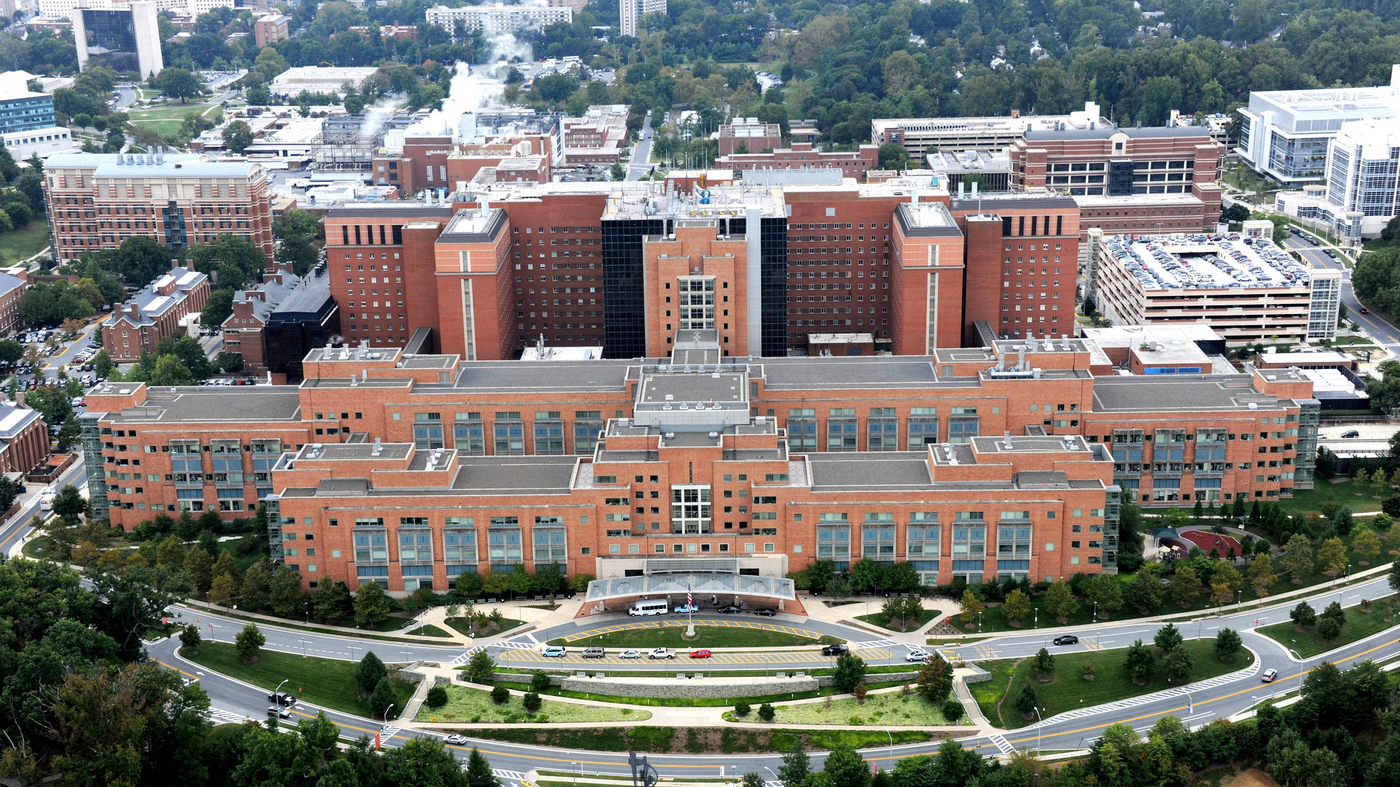
(Reuters) – The National Institutes of Health is awarding $129.3 million to nine companies to support scaling-up coronavirus testing and manufacturing new testing technologies, the U.S. health agency said on Wednesday.

The funding is part of NIH’s Rapid Acceleration of Diagnostics (RADx) initiative that was launched in April to speed up innovation in the development, commercialization, and implementation of technologies for COVID-19 testing.

NIH said three of the selected companies, MatMaCorp, Maxim Biomedical Inc and MicroGEM International, offer point-of-care tests that produce immediate results.

The remaining six – Aegis Sciences, Broad Institute, Ceres Nanoscience Inc, Illumina Inc, PathGroup and Sonic Healthcare – offer lab-based tests.

The funding will help significantly expand national testing in September, with the laboratories managing collection, analysis and reporting of tens of thousands of tests a day, the agency said in a statement.

In July, NIH made a similar contribution of $248.7 million to seven companies.

“Diagnostic testing is a critical component of the nation’s strategy to meet the challenge of the COVID-19 pandemic,” said NIH Director Francis Collins.

(Reporting by Vishwadha Chander in Bengaluru; Editing by Shinjini Ganguli)

GM CEO Barra, Ivanka Trump talk jobs in a 2020 battleground

By Joseph White

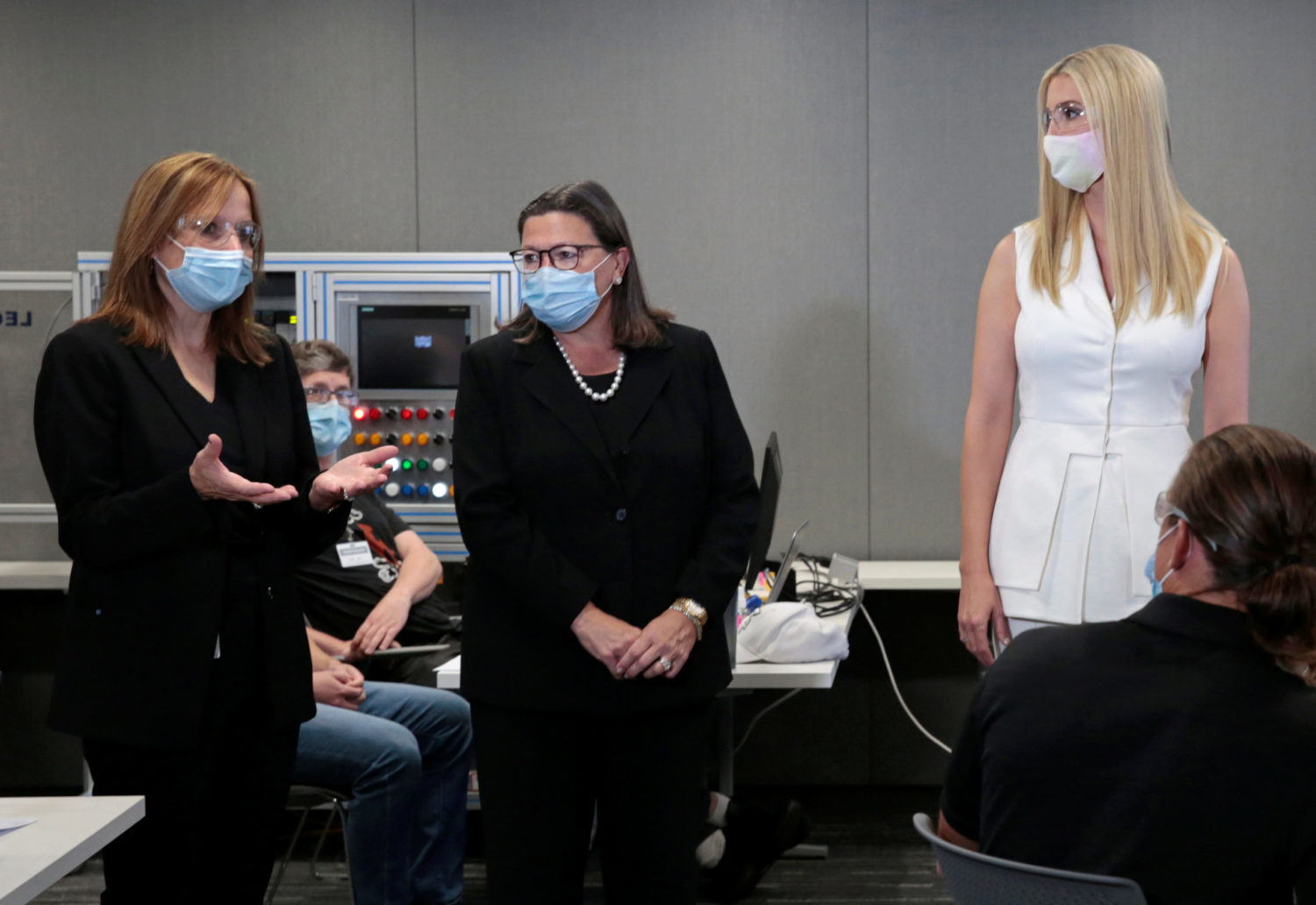
WARREN, Mich. (Reuters) – General Motors Co Chief Executive Mary Barra hosted Ivanka Trump, daughter and adviser to U.S. President Donald Trump, for a tour on Wednesday of a GM worker training center in one of the hottest battlegrounds of the U.S. presidential race.

GM and White House officials said the meeting at GM’s technical center in Warren, Michigan, was scheduled long ago, and was not a political event.

Still, the campaign context behind the location, the subject – manufacturing jobs – and the timing of the visit was inescapable.

Warren is in Macomb County, north of Detroit, which will be pivotal to winning Michigan’s electoral votes in November. Preserving U.S. manufacturing jobs has been a focus of President Trump’s administration since its first day.

Big U.S. corporations face a challenge during a charged campaign season. Barra and GM have not endorsed a candidate in the presidential contest, and will not, company officials said. Still, GM has much at stake in policy decisions Trump – or his successor – will make on issues such as tailpipe emissions, autonomous vehicle safety rules, trade and taxes.

GM is among several corporations supporting White House programs to promote investments in worker training. Ivanka Trump is leading those efforts, including an advertising campaign called “Find Something New.”

Among the students in the GM program who met with Barra and Trump was Zephirin Hunt, who started with GM as a temporary worker at the automaker’s Flint truck assembly plant. Now, Hunt said, he is a skilled trades worker at an assembly plant near Lansing, Michigan, pursuing a course of training in electronic machine and robot controls. “Every 890 hours,” of training, “we get a raise,” Hunt said.

GM and Barra have had an up and down relationship with the president, who attacked Barra and the automaker for a November 2018 decision to close an assembly plant in Lordstown, Ohio. That shutdown was part of a broader retrenchment at GM in 2019 that resulted in the closure of a transmission plant in Warren, and thousands of layoffs at the GM technical center.

Trump has also blasted GM for investing in China, and criticized the company earlier this year during a negotiation that led to GM building ventilators in response to the COVID-19 pandemic.

GM has sided with Trump in a legal fight with the state of California over its authority to set stiffer vehicle emissions standards than those established by the U.S. government, however.

(Reporting by Joe White in Warren, Additional reporting by David Shepardson in Washington; Editing by Tom Brown)

U.S. CDC reports 184,083 deaths from coronavirus

(Reuters) – The U.S. Centers for Disease Control and Prevention (CDC) on Wednesday said the number of deaths due to the new coronavirus had risen by 1,033 to 184,083 and reported 6,047,692 cases, an increase of 43,249 cases from its previous count.

The CDC reported its tally of cases of the respiratory illness known as COVID-19, caused by a new coronavirus, as of 4 p.m. ET on Sept. 1 compared with its previous report a day earlier.

The CDC figures do not necessarily reflect cases reported by individual states.

(Reporting by Dania Nadeem in Bengaluru; Editing by Vinay Dwivedi)

U.S. passenger railroad Amtrak to furlough 2,000 workers

By David Shepardson

WASHINGTON (Reuters) – U.S. passenger railroad Amtrak will furlough more than 2,000 workers as a result of the steep decline in travel demand from the coronavirus pandemic.

Amtrak said in a statement that despite other cuts, “significant reductions remain necessary due to the slow recovery of ridership and revenue. Approximately 1,950 agreement team members will be furloughed” and 100 management jobs will be cut in the coming weeks.

In May, Amtrak said it needed a new $1.475 billion bailout and disclosed plans to cut its workforce by up to 20% in the coming budget year.

The company, which has been hit hard by the coronavirus pandemic, received $1 billion in emergency funding from Congress in April. Amtrak, a government-owned corporation that gets annual subsidies from Congress, has said previously it employs about 20,000 workers.

Ridership and revenue levels are down 95% year over year since the pandemic began, Amtrak has said.

U.S. House of Representatives Transportation Committee Chairman Peter DeFazio said the committee’s panel overseeing rail issues would hold a hearing on Sept. 9 with Amtrak Chief Executive Bill Flynn.

“It’s time for Republicans in the Senate to stop sitting on these important bills and do their job to protect Amtrak employees and so many others currently in need,” DeFazio, a Democrat, said.

Much of the U.S. transportation sector has been battered by COVID-19.

Transit agencies are urging Congress to approve $32 billion to $36 billion on top of a $25 billion bailout approved by Congress in March. Urban transit systems have been devastated by millions of workers staying home rather than commuting and a sharp decline in tourism.

Private U.S. bus companies are seeking $15 billion in government assistance.

U.S. airports want another $10 billion in government assistance on top of an earlier $10 billion bailout, while passenger airlines want a further $25 billion in payroll assistance.

United Airlines said on Wednesday it planned to cut 16,370 jobs as early as Oct. 1 without new government assistance.

(Reporting by David Shepardson; Editing by Peter Cooney)

U.S. to require approvals on work of Chinese diplomats in America

By Humeyra Pamuk and David Brunnstrom

WASHINGTON (Reuters) – The United States said on Wednesday it would now require senior Chinese diplomats to get State Department approval before visiting U.S. university campuses and holding cultural events with more than 50 people outside mission grounds.

Washington cast the move as a response to what it said was Beijing’s restrictions on American diplomats based in China. It comes as part of a Trump administration campaign against alleged Chinese influence operations and espionage activity.

The State Department said it also would take action to help ensure all Chinese embassy and consular social media accounts were “properly identified.”

“We’re simply demanding reciprocity. Access for our diplomats in China should be reflective of the access that Chinese diplomats in the United States have, and today’s steps will move us substantially in that direction'” U.S. Secretary of State Mike Pompeo told a news briefing.

It was the latest U.S. step to restrict Chinese activity in the United States in the run-up to the November presidential election, in which President Donald Trump has made a tough approach to China a key foreign policy platform.

Pompeo also said Keith Krach, the State Department’s undersecretary for Economic Growth, had written recently to the governing boards of U.S. universities alerting them to threats posed by the Chinese Communist Party.

“These threats can come in the form of illicit funding for research, intellectual property theft, intimidation of foreign students and opaque talent recruitment efforts,” Pompeo said.

He said universities could ensure they had clean investments and endowment funds, “by taking a few key steps to disclose all (Chinese) companies’ investments invested in the endowment funds, especially those in emerging-market index funds.”

On Tuesday, Pompeo said he was hopeful Chinese Confucius Institute cultural centers on U.S. university campuses, which he accused of working to recruit “spies and collaborators,” would all be shut by the end of the year.

Last month, Pompeo labeled the center that manages the dozens of Confucius Institutes in the United States “an entity advancing Beijing’s global propaganda and malign influence” and required it to register as a foreign mission.

The State Department announced in June it would start treating four major Chinese media outlets as foreign embassies, calling them mouthpieces for Beijing.

It took the same step against five other Chinese outlets in February, and in March said it was slashing the number of journalists allowed to work at U.S. offices of major Chinese media outlets to 100 from 160 due to Beijing’s “long-standing intimidation and harassment of journalists.”

(Reporting by Humeyra Pamuk and David Brunnstrom; Editing by Chizu Nomiyama and Bill Berkrot)

United Airlines to cut 16,370 jobs as the pandemic rages

By Tracy Rucinski

CHICAGO (Reuters) – United Airlines is preparing to furlough 16,370 workers when federal aid expires on Oct. 1 as the coronavirus pandemic continues to devastate the airline industry, it said on Wednesday.

Chicago-based United had over 90,000 employees before the pandemic brought the industry to a near standstill in March. It warned in July that 36,000 jobs were at risk of involuntary furloughs as demand remained weak.

Some 7,400 employees have opted to take early retirement or departure packages and the company is working through several other voluntary temporary leave programs to further reduce the number of furloughs, United officials said.

The leaves would give the company flexibility to call back staff once travel returns, they said.

Airlines received $25 billion in U.S. government stimulus funds in March meant to cover payrolls and protect jobs through September, when the industry had hoped for a rebound.

As bailout money runs out without a travel recovery in sight, airlines and unions have lobbied Washington for another $25 billion but talks have stalled as Congress has struggled to reach agreement on a broader coronavirus assistance package.

U.S. passenger airlines are still collectively losing more than $5 billion a month as 30% of planes remain parked. Passenger travel demand is down about 70% and, on average, planes that are flying are half-full.

United’s schedule for September is 63% smaller than a year ago.

United’s cuts will affect around 2,850 pilots, 6,920 flight attendants, 2,010 mechanics and 1,400 management and administrative positions, among others, though negotiations continue with pilots to reduce the final number.

Rival American Airlines last week said it would lay off 19,000 workers without federal aid. Including voluntary departures or leaves, its 140,000 pre-pandemic workforce will shrink by 30%.

Delta Air Lines plans to lay off nearly 2,000 pilots without wage concessions, but has not said how many jobs for workers including flight attendants and mechanics are at risk.

President Donald Trump has said his administration would help U.S. airlines but has not given any details.

Congress also approved another $25 billion in loans for airlines under the first stimulus package, but not all of them are tapping the funds.

(Reporting by Tracy Rucinski in Chicago; Editing by Matthew Lewis and Richard Chang)