White House calls on America’s most critical companies to improve cyber defenses

By Christopher Bing and Nandita Bose

WASHINGTON (Reuters) – The White House is signaling to U.S. critical infrastructure companies, such as energy providers that they must improve their cyber defenses because additional potential regulation is on the horizon.

U.S. President Joseph Biden signed a national security memorandum on Wednesday, launching a new public-private initiative that creates “performance controls” for cybersecurity at America’s most critical companies, including water treatment and electrical power plants.

The recommendations are voluntary in nature, but the administration hopes it will cause companies to improve their cybersecurity ahead of other policy efforts, said a senior administration official.

The announcement comes after multiple high profile cyberattacks this year crippled American companies and government agencies, including a ransomware incident which disrupted gasoline supplies.

“These are the thresholds that we expect responsible owners and operators to go,” said the official. “The absence of mandated cybersecurity requirements for critical infrastructure is what in many ways has brought us to the level of vulnerability that we have today.”

“We are pursuing all options we have in order to make the rapid progress we need,” they added.

Biden on Tuesday warned that if the United States ended up in a “real shooting war” with a “major power” it could be the result of a significant cyber attack on the United States, highlighting what Washington sees as a growing threat posed by hackers from Russia, China, Iran and North Korea.

“The federal government cannot do this alone,” said the official. “Almost 90% of critical infrastructure is owned and operated by the private sector. Securing it requires a whole of nation effort.”

The official described the current state of cybersecurity rules for critical infrastructure companies as “patchwork” and “piecemeal.”

“We’ve kicked the can down the road for a long time,” said the official.

(Reporting by Christopher Bing; Editing by Lincoln Feast.)

Biden revives Trump’s Africa business initiative; focus on energy, health

By Doyinsola Oladipo and Andrea Shalal

WASHINGTON (Reuters) -The Biden administration on Tuesday announced a new push to expand business ties between U.S. companies and Africa, with a focus on clean energy, health, agribusiness and transportation infrastructure on the continent.

U.S. industry executives welcomed the interest, but said dollar flows will lag until the administration wraps up its lengthy review of Trump administration trade measures and sets a clear policy on investments in liquefied natural gas.

Dana Banks, senior director for Africa at the White House National Security Council, told a conference the administration planned to “re-imagine” and revive Prosper Africa, an initiative launched by former-President Donald Trump in 2018, as the “centerpiece of U.S. economic and commercial engagement with Africa.”

Travis Adkins, deputy assistant administrator for Africa at the U.S. Agency for International Development (AID), added: “We’re looking at the ways in which we (can) foster two-way trade, looking at mutually beneficial partnerships that work together to mobilize investment, create jobs, and … shared opportunities on both sides of the Atlantic.”

President Joe Biden, who requested nearly $80 million for the initiative in his budget proposal in May, aims to focus it on women and equity, with an expanded role for small- and medium-sized businesses, Banks said.

The administration’s goal was to “reinvigorate Prosper Africa as the centerpiece of U.S. economic and commercial engagement with Africa,” she said.

“This is an area that is a priority both at home and abroad,” Banks told Reuters ahead of the conference, adding that African countries were eager to expand their cooperation with the United States.

U.S. business executives warn the United States is in danger of being overtaken by China and Europe, which are already investing and signing trade agreements across the continent.

“We can’t wait another year to devise an Africa policy; we need to be bold in our thinking,” said Scott Eisner, president of the U.S. Chamber of Commerce’s U.S.-Africa Business Center.

He said many companies had started to eye investments in Kenya given the Trump administration’s talks with Nairobi on a bilateral free trade agreement, but that those plans were on ice until the policy review was completed.

The U.S. Trade Representative’s office had no immediate comment on the status of the review.

Another hurdle is uncertainty about the administration’s policy on LNG projects.

Nigeria and other countries are eager to secure U.S. investment in such plans, but are waiting to see whether the administration will back LNG investments even as it seeks to halve U.S. fossil-fuel emissions.

“We’ve committed as an institution to have over 50% of our investments focused on activities that combat climate change,” said Kyeh Kim, a senior official at Millennium Challenge Corporation, an independent U.S. foreign aid agency, said.

(Reporting by Andrea Shalal and Doyinsola Oladipo; additional reporting by Valerie Volcovici; editing by Tim Ahmann, Gerry Doyle and Dan Grebler)

Texas power grid passes test, more to come as heat wave lingers

(Reuters) – The Texas power grid passed the first of what could be many tests over the next week by meeting very high demand on Monday without problems as homes and businesses cranked up their air conditioners to escape the latest heat wave.

The United States has been beset by extreme weather events this year, including February’s freeze in Texas that knocked out power to millions, and record heat in the Pacific Northwest earlier this summer.

High temperatures over the next week were expected to reach the mid 90s Fahrenheit (35 Celsius) in Houston and the low 100s in Austin, Dallas and San Antonio, according to AccuWeather.

The Electric Reliability Council of Texas (ERCOT), which operates the grid in most of the state, said power use hit a preliminary 72,856 megawatts (MW) on Monday and would reach 72,925 MW on July 30, 73,275 MW on Aug. 1 and 74,160 MW on Aug. 2.

Those peaks were lower than ERCOT forecast on Monday and would remain below July’s 74,244-MW record and the all-time high of 74,820 MW in August 2019. One megawatt can power around 200 homes in the summer.

Officials at ERCOT were not immediately available to say if Monday’s peak was the highest this year.

ERCOT has already broken monthly records, including 70,219 MW in June and 69,692 MW in February when millions of Texans were left without power, water and heat for days during a deadly storm as ERCOT scrambled to prevent an uncontrolled collapse of the grid after an unusually large amount of generation shut.

Despite Monday’s high demand, real-time prices remained below $100 per megawatt hour (MWh).

That compares with an average of $208/MWh at the ERCOT North so far in 2021 due primarily to price spikes over $8,000 during the February freeze. The 2020 average was just $26.

(Reporting by Scott DiSavino; Editing by Steve Orlofsky)

Bangkok to convert disused train carriages into COVID-19 ward

BANGKOK (Reuters) – Authorities in Thailand’s capital Bangkok plan to convert 15 disused railway carriages into a 240-bed COVID-19 isolation ward for patients with less severe symptoms, the city’s governing body said on Tuesday.

Thailand has been battling its biggest coronavirus outbreak since the pandemic began. The Southeast Asian country reported 14,150 new cases and 118 deaths on Tuesday, bringing the total number of reported cases to 526,828 and 4,264 deaths so far.

“Some modifications are still to be done such as removing the top bunk beds, installing window nets, as well as water and electricity systems,” the Bangkok Metropolitan Administration (BMA) said in a statement. “More toilets and bathrooms will be built outside the carriages.”

The surge in cases in Bangkok has put pressure on the city’s medical system, said the statement, which added that the BMA was seeking to increase the overall number of hospital beds available to COVID-19 patients in the city.

The makeshift train ward will serve as an isolation center for patients on hospital waiting lists and will be ready for use by July 30, the BMA said.

Authorities have faced public criticism over the pace of Thailand’s vaccination rollout, which has fallen behind some neighbors.

Thailand aims to inoculate 50 million people by the end of the year, but so far only 5.6% of its more than 66 million population are fully inoculated, while 18.9% have received at least one dose.

(Reporting by Juarawee Kittisilpa and Patpicha Tanakasempipat, Writing by James Pearson, Editing by Raissa Kasolowsky)

Canada border guards vote to strike days ahead of U.S. border reopening

By Moira Warburton

VANCOUVER (Reuters) – Canadian border guards and customs officials voted on Tuesday to go on strike just days ahead of the reopening of the border with the United States, unions representing the workers said, after working for three years without a contract.

A strike would slow down commercial traffic at the land border, the unions said, as well as impact international mail and collection of duties and taxes. But a spokesperson for the Canada Border Services Agency (CBSA) said 90% of employees have been identified as “essential” so will continue to work in the event of a strike.

Last week, Canada announced plans to reopen its border to fully vaccinated Americans on Aug. 9, and allowing international travelers starting on Sept. 7. The border has been shut for non-essential travel for more than 16 months because of the coronavirus pandemic.

The Public Service Alliance of Canada (PSAC) and the Customs and Immigration Union (CIU) said in a joint statement that strike action could begin as soon as Aug. 6 after 8,500 members voted in favor of the action. Contract talks reached an impasse in December 2020, the unions said.

“Taking strike action is always a last resort, but we’re grappling with systemic workplace harassment issues that must be addressed,” Mark Weber, CIU national president, said.

CBSA spokesperson Judith Gadbois said officers have proven their resilience since the beginning of the pandemic by helping to prevent the spread of the virus and its variants.

“We expect that our officers will continue to fulfill their duties with the highest level of integrity and professionalism.”

(Reporting by Moira Warburton in Vancouver; Additional reporting by Anna Mehler-Paperny in Toronto; editing by Grant McCool)

Blast in German industrial park kills one, four others missing

BERLIN (Reuters) -An explosion in a German industrial park on Tuesday killed at least one person and injured 31 others, setting off a fierce blaze that sent a pall of smoke over the western city of Leverkusen. Four people were still missing.

Emergency services took three hours to extinguish the fire at the Chempark site, home to chemicals companies Bayer and Lanxess, that flared up after the blast at 9:40 a.m. (0740 GMT), park operator Currenta said.

“We are deeply shaken by the tragic death of one colleague,” said Chempark chief Lars Friedrich, adding that a search was underway for the four missing people.

Police said five of the 31 injured people were affected seriously enough to need intensive care.

“This is a tragic moment for the city of Leverkusen,” said Uwe Richrath, mayor of the city, which lies north of Cologne.

The area and surrounding roads were sealed off for much of the day.

Police told residents living nearby to stay indoors and shut doors and windows in case there were toxic fumes. Currenta said locals should also turn off air conditioning systems while it measured the air around the site for possible toxic gases.

Chempark’s Friedrich said it was not clear what had caused the explosion, which led to a fire starting in a tank containing solvents.

“Solvents were burned during the incident, and we do not know precisely what substances were released,” Friedrich added. “We are examining this with authorities, taking samples.”

Sirens and emergency alerts on the German civil protection agency’s mobile phone app warned citizens of “extreme danger.”

Leverkusen is less than 50 km (30 miles) from a region hit last week by catastrophic floods that killed at least 180 people.

More than 30 companies operate at the Chempark site in Leverkusen, including Covestro, Bayer, Lanxess and Arlanxeo, according to its website.

Bayer and Lanxess in 2019 sold Chempark operator Currenta to Macquarie Infrastructure and Real Assets for an enterprise value of 3.5 billion euros ($4.12 billion).

($1 = 0.8492 euros)

(Reporting by Maria Sheahan, Madeline Chambers, Caroline Copley; Editing by William Maclean, Edmund Blair and Gareth Jones)

Britain reports highest deaths from COVID-19 since March as Johnson urges caution

By Alistair Smout and Paul Sandle

LONDON (Reuters) -Britain reported its highest number of deaths and people in hospital with coronavirus since March on Tuesday, with Prime Minister Boris Johnson urging caution despite a week of lower reported numbers of infection.

Britain reported 131 new deaths from COVID-19, the highest daily total since March 17, though it came after just 14 deaths were reported on Monday, suggesting the weekend might have impacted when deaths were reported.

The number of COVID-19 patients in British hospitals has also steadily risen to 5,918, also the highest since March, following a spike in cases earlier this month.

The number of new infections has fallen each day for the last seven days, though Johnson stressed the pandemic was not over.

“It is very, very important that we don’t allow ourselves to run away with premature conclusions about (lower case numbers),” Johnson told broadcasters, noting it would take a while for the lifting of restrictions in England to feed through to the data.

“People have got to remain very cautious and that remains the approach of the government.”

Johnson has lifted restrictions in England and is betting he can get one of Europe’s largest economies firing again because so many people are now vaccinated, a decision which marks a new chapter in the response to the novel coronavirus.

Imperial College epidemiologist Neil Ferguson said the effective end of Britain’s pandemic could be just months away as vaccines have so dramatically reduced the risk of hospitalization and death.

“We’re not completely out of the woods but the equation has fundamentally changed,” Ferguson, whose modelling of the virus’s likely spread at the outset of the pandemic in early 2020 alarmed governments across the world, told the BBC.

“I’m positive that by late September, October time we will be looking back at most of the pandemic.”

ON THE WAY DOWN

Johnson lifted COVID-19 restrictions in England on July 19. New daily cases in the current wave peaked two days earlier at 54,674 and have since fallen dramatically, to 23,511 new cases on Tuesday.

The closure of schools for summer, the end of the Euro 2020 soccer championships and warmer weather are among factors epidemiologists say might have reduced social mixing indoors and therefore cases, even as England’s economy has fully reopened.

Case numbers have been falling for longer in Scotland, where the recent peak in new infections was on July 1, than in England, corresponding to an earlier elimination from the Euros.

“Both of them seem to coincide in some ways with the end of activity in the Euro 2020 tournament,” Rowland Kao, an epidemiologist at the University of Edinburgh, told Reuters, adding that changes in testing patterns might mean that the sharpness of the drop is overstated in daily testing figures.

“(Cases) may go up again, because we’re only just going to be starting to see the effect of the complete release of restrictions associated with July 19 in England. So there may still be rises yet to come.”

Britain has one of the highest official fatality rates from COVID-19 in the world, with 129,303 deaths, but vaccinations and lockdowns have greatly slowed the rate since March.

Scotland’s National Clinical Director Jason Leitch said a gradual return to usual social activity would help smooth the end of the current wave, but that the next few weeks would be unpredictable.

“On the way down is always bumpier than the exponential rise on the way up,” he told Reuters.

(Reporting by Sarah Young and Alistair Smout; Additional reporting by Paul Sandle; Editing by Guy Faulconbridge, Janet Lawrence, Catherine Evans, William Maclean and Mike Harrison)

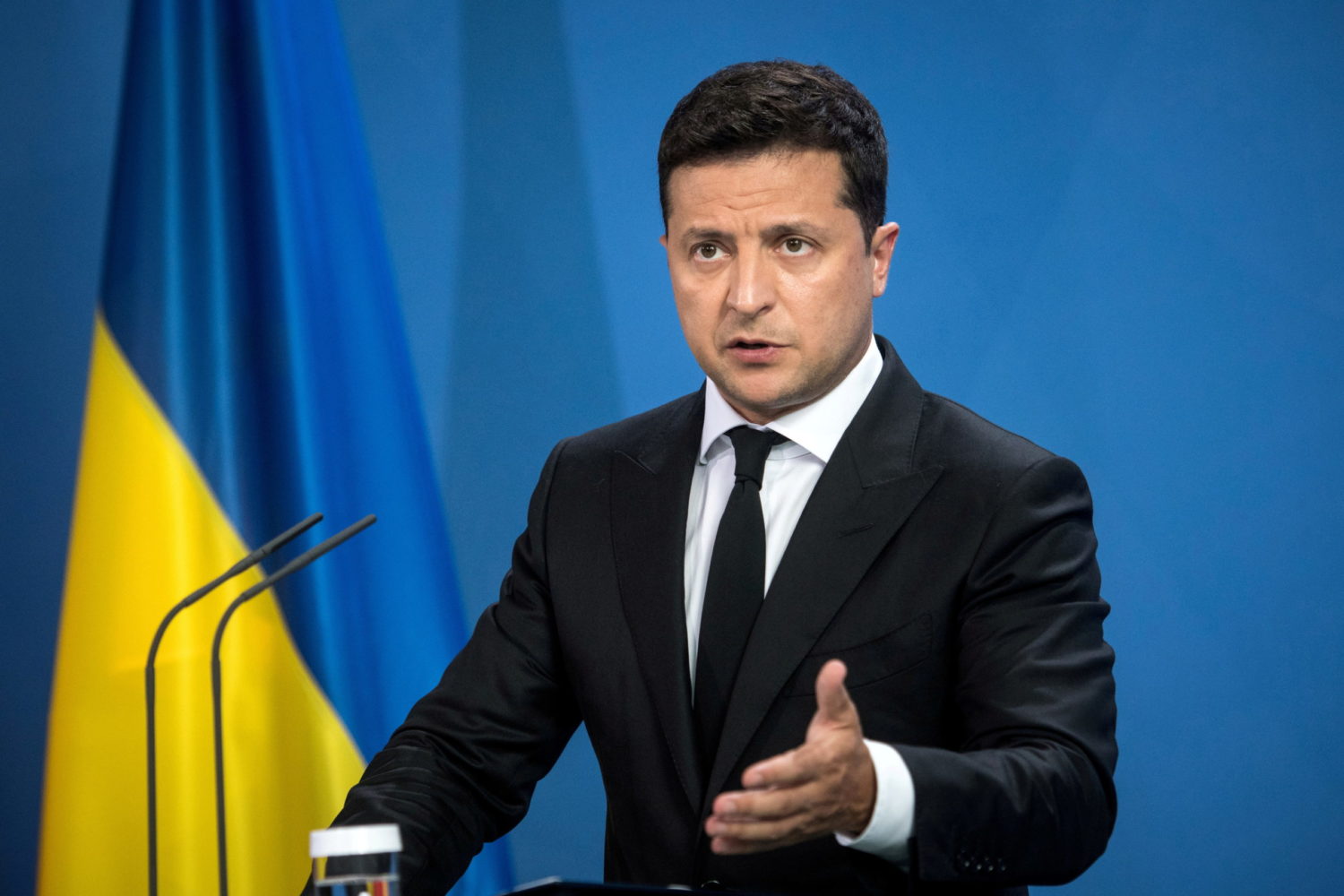
Ukrainian president fires head of the armed forces, citing disputes

KYIV (Reuters) – Ukraine’s President Volodymyr Zelenskiy has dismissed the head of the armed forces, Ruslan Khomchak, his spokesman said at a briefing on Tuesday, citing tensions between the armed forces and the defense ministry.

Khomchak will be moved to a post on the national security and defense council. He will be replaced by Valery Zaluzhny, who heads the military’s northern command. Ukrainian troops have fought Russian-backed separatists in a conflict that Kyiv says has killed 14,000 people since 2014.

“Commander-in-Chief Ruslan Khomchak is leaving his post, this is the president’s decision,” Zelenskiy’s spokesman Sergii Nykyforov told a briefing.

“The president wants to see synergy between the ministry of defense and the armed forces of Ukraine, but unfortunately we do not see synergy, but on the contrary we see conflicts.”

The Ukrainian media in recent months have reported disputes between the defense ministry and Khomchak. Khomchak in March denied any rift: telling the news outlet gordon.ua: “Here is a working relationship where everyone has his own opinion, they can argue, they can discuss, they can come to something.”

Ukraine has urged its Western backers to speed up its entry into the NATO military alliance as a deterrent against Russia, though NATO members say Kyiv must reform its armed forces and tackle corruption to be able to apply.

(Reporting by Natalia Zinets; writing by Matthias Williams; editing by Barbara Lewis)

U.S. to speed up asylum processing at border while fast-tracking deportations

By Ted Hesson

WASHINGTON (Reuters) – The Biden administration will speed up processing of asylum claims at the U.S.-Mexico border while also fast-tracking expulsions of some migrant families, according to a plan unveiled by the White House on Tuesday.

President Joe Biden, a Democrat, has reversed many of the restrictive immigration policies of his Republican predecessor, former President Donald Trump. But border arrests have risen to 20-year highs in recent months, fueling attacks by Republicans, who say Biden encouraged more migration.

The 21-point plan aims to create a “fair, orderly and humane immigration system” but notes that “won’t be achieved overnight.” Details of the plan have been previously foreshadowed by the administration in its annual budget request to Congress and other announcements.

The administration aims to speed up processing of asylum claims at the southern border by authorizing asylum officers to rule on cases, according to the plan, bypassing the back-logged federal immigration courts. A draft rule to make that change has been under review at the White House budget office since early July.

The administration also said it would use a process known as expedited removal to resolve the cases of some families caught at the U.S.-Mexico border more rapidly, potentially deporting them. However, the document provided few details about the new policy.

Two sources familiar with the move said the fast-track deportations would apply only to families that do not claim a fear of persecution in their home country.

Several of the proposals in the blueprint will likely be scrutinized by lawmakers when Homeland Security Secretary Alejandro Mayorkas testifies on the administration funding requests at a Senate committee on Tuesday.

Among the budget requests, the Biden administration is seeking funding that would allow some migrant families and other vulnerable individuals to receive legal representation as their immigration cases move through the U.S. court system.

(Reporting by Ted Hesson in Washington; Editing by Ross Colvin and Dan Grebler)

South, North Korea reopen hotlines as leaders seek to rebuild ties

By Hyonhee Shin

SEOUL (Reuters) -South and North Korea have restored hotlines that Pyongyang severed a year ago when ties deteriorated sharply, and the two countries’ leaders are renewing efforts to rebuild relations, Seoul’s presidential office said on Tuesday.

The decision on the hotlines was made by South Korean President Moon Jae-in and North Korean leader Kim Jong Un who have exchanged multiple letters since April when they marked the third anniversary of their first summit, said Moon’s press secretary, Park Soo-hyun.

North Korea’s state news agency, KCNA, also said all inter-Korean communication channels resumed operation at 10 a.m. Tuesday (0100 GMT) in line with an agreement between Moon and Kim.

The hotlines are a rare tool to bridge the two Koreas, but it was unclear whether their reconnection would expedite any meaningful restart of negotiations aimed at dismantling Pyongyang’s nuclear and missile programs.

“The two leaders have explored ways to recover relations by exchanging letters on several occasions, and agreed to restore severed hotlines as a first step for that process,” Park said in a statement. “They have also agreed to regain trust as soon as possible and foster progress on relations again.”

KCNA touted the reopening of the hotlines as “a big stride in recovering mutual trust and promoting reconciliation.”

A senior official of the U.S. administration, which has sought unsuccessfully to persuade North Korea to return to talks over its nuclear program, welcomed the announcement.

“The United States supports inter-Korean dialogue and engagement,” the official said. “Diplomacy and dialogue are essential to achieving complete denuclearization and to establishing permanent peace on the Korean Peninsula.”

NUCLEAR STALEMATE

North Korea cut the lines in June 2020 as cross-border ties soured after a failed second summit in February 2019 between Kim and then U.S. President Donald Trump, which Moon had offered to mediate.

Then the North blew up a joint liaison office, launched on its soil in 2018 to foster better ties with the South, plunging relations to their lowest ebb under Moon.

Seoul’s defense ministry confirmed that twice-daily regular communication was resumed via a military hotline on Tuesday.

The Unification Ministry, which handles inter-Korean affairs, also said telephone lines installed at the border truce village of Panmunjom were restored.

Moon had called for a revival of the hotlines and offered a video summit with Kim to avoid the coronavirus, but Pyongyang has previously responded with scathing criticism, saying it had no intention to talk to Seoul.

North Korea has not formally confirmed any COVID-19 outbreaks, but it closed its borders and took strict anti-virus measures, seeing the pandemic as a matter of national survival.

Park said Moon and Kim have agreed to work together to fight the pandemic but did not discuss any possible summit, in-person or virtual.

The exchange of letters came ahead of Moon’s summit with U.S. President Joe Biden in May, where the leaders displayed their willingness to engage the North.

But it still remains to be seen whether Pyongyang was ready to return to negotiations, with Biden’s administration seeking a “reliable, predictable and constructive” way to bring progress.

“It’s just a reconnection of the lines they’d cut unilaterally,” said Moon Seong-mook, a retired South Korean military general who previously led inter-Korean talks.

“North Korea would still wonder what’s the point in talking to the South, as the North wants substantive easing of sanctions, but there’s nothing we can do on that.”

James Kim of the Asan Institute for Policy Studies in Seoul said Pyongyang might mean to show some willingness to respond to U.S. overtures, but warned against reading too much into the latest move.

“We need to see some seriousness on Pyongyang’s part to move towards denuclearization for us to say that there is genuine progress,” Kim said.

(Reporting by Hyonhee Shin; Additional reporting by Sangmi Cha and Jack Kim in Seoul and David Brunnstrom in Washington; Editing by Christopher Cushing, Gerry Doyle, Raju Gopalakrishnan and Giles Elgood)