Fake flyers and face-mask fear: California fights coronavirus discrimination

By Andrew Hay and Maria Caspani

(Reuters) – A flyer in Los Angeles’ Carson area, with a fake seal of the World Health Organization, tells residents to avoid Asian-American businesses like Panda Express because of a coronavirus outbreak. A Los Angeles middle schooler is beaten and hospitalized after students say he is as an Asian-American with coronavirus.

And over 14,000 people sign a petition urging schools in the Alhambra area to close over coronavirus risks, even though there is only one case of the virus in Los Angeles County, with its population of 10.1 million.

These are some of the hoaxes, assaults and rumors Los Angeles authorities spoke out against on Thursday to stamp out anti-Asian bigotry bubbling to the surface in California, where over half of the 15 U.S. coronavirus cases are located.

Bullying and assaults of Asian-Americans are being reported from New York to New Mexico, sparked by unfounded fears that they are somehow linked to a virus that originated in China.

With by far the largest Asian-American population of any U.S. state, officials in California are aggressively trying to get ahead of such hate crimes before they spread.

“We’re not going to stand for hate,” Los Angeles County Supervisor Hilda Solis told reporters, flanked by law enforcement officials. She urged residents to report crimes to a special 211 number.

Existing prejudice against Asians has combined with media images from China to create fears that Asian-Americans are more likely to be virus carriers. The discrimination could get worse given chances the virus may spread in U.S. communities in the weeks and months ahead, said Robin Toma, head of the Los Angeles County Human Relations Commission.

Face masks commonly warn by Asians to protect against germs or prevent their spread have become a flashpoint, with wearers insulted or attacked out of fears they have the virus, he said at the news conference.

“We need you to step up and speak out when you see it happening to others,” he said.

FACE MASKS A TRIGGER

Anti-Asian sentiment emerged in 2003 during the outbreak of Severe Acute Respiratory Syndrome, or SARS, which also originated from China. That was before the emergence of social media platforms like Twitter, where racism, hoaxes and slurs get amplified.

The issue is not isolated to California.

New York City designer Yiheng Yu works in an office where many colleagues have recently returned from China and where she and others wear face masks as a precaution.

On one occasion when she wore a mask outside her office she was accosted by a woman.

“She started yelling, ‘Are you Crazy? Get the heck out of here,” said Yu, 34. “I realized it was because I was wearing a mask.”

Even coughs can provoke fear, said Ron Kim, a New York state assembly member representing a Queens district with a large Asian and Asian-American population.

“I had a staff member who was in the Albany train station and she was coughing a little bit and someone approached her asked if she had the virus,” said Kim, who on Feb. 7 established the Asian American Health Advisory Council to educate New Yorkers about the virus.

“We live in a very fear-driven society as it is, so if we add an extra layer it’s bound to happen, people are going to be ugly,” he added.

Manjusha Kulkarni, head of A3PCON, which represents Los Angeles County’s more than 1.5 million Asian-American and Pacific Islander residents, saw an urgent need for information to separate coronavirus fact from fiction.

“Businesses and restaurateurs have seen a steep decline in their patronage,” Kulkarni said of Asian proprietors. “We only have one case of the coronavirus here in LA.”

(Reporting by Andrew Hay in New Mexico and Maria Caspani in New York; Editing by Bill Tarrant and Leslie Adler)

Russia alarmed by U.S. Air Force visit to Norwegian island

MOSCOW/OSLO (Reuters) – Russia said on Thursday it was alarmed by a trip to a Norwegian outpost in the Arctic by a U.S. Air Force unit and urged Oslo to refrain from what it said were de-stabilizing moves in the strategic region.

A squadron of U.S. Air Force staff visited Norway’s air base on the island of Jan Mayen in the North Atlantic in November to test the airfield and to see whether U.S. C-130J Super Hercules military transport planes can land there.

Tensions have been rising in the energy-producing Arctic as climate change has opened up the region, and Russia has built up its own military presence there and touted the potential of the Northern Sea Route across its northern flank.

Moscow has repeatedly raised concerns over NATO-member Norway’s military spending, its moves to develop its military infrastructure and the deployment of foreign military personnel in the country.

Commenting on the U.S. visit to the island, the Russian Foreign Ministry told Reuters Moscow believed Norway’s recent military activity was ultimately aimed at Russia and that such actions destabilize the region.

“…the sheer fact of the possible presence of the U.S. Air Force on the island, albeit occasional, is alarming,” it said.

“We hope Oslo will be responsible and far-sighted in building its policy in the north and will refrain from actions that undermine regional stability and damage bilateral relations,” the ministry said.

Earlier this month, Moscow accused Norway of restricting its activities on the archipelago of Svalbard, a remote chain of islands in the Arctic, and said it wanted talks with Oslo to have the issue resolved.

The U.S. Air Force visit has also raised questions in Oslo.

Norwegian Defense Minister Frank Bakke-Jensen has played down the implications of the visit on the security situation in the north and Norway’s relationship with Russia.

“Individual transport flights to Jan Mayen with planes from allied countries will not impact the security policy picture in the north,” he told parliament.

He said a request to help with transport flights to Jan Mayen was sent to allied countries in 2019 as Norway’s air force was stretched.

He said planes from military forces from Austria, Sweden, Denmark and France had flown to Jan Mayen between 2017 and 2019.

“Jan Mayen will not be used for military activities,” he said.

(Reporting by Maria Kiselyova in Moscow and Gwladys Fouche in Oslo; editing by Tom Balmforth and Timothy Heritage)

U.S., Taliban have negotiated proposal for seven-day reduction in violence: Pentagon chief

(Reuters) – U.S. Defense Secretary Mark Esper said on Thursday that the United States and the Taliban had negotiated a proposal for a seven-day reduction in violence.

Sources had told Reuters that a U.S.-Taliban peace deal could be signed this month if the Taliban significantly reduces violence, which could lead to an eventual withdrawal of U.S. troops from Afghanistan.

“The United States and the Taliban have negotiated a proposal for a seven-day reduction in violence,” Esper told reporters during a news conference in Brussels at NATO headquarters.

“I’m here today consulting with allies about this proposal, and we’ve had a series of productive bilateral and collective meetings about the path forward,” he added.

The tentative timeline shared with Reuters by sources came a day after Afghan President Ashraf Ghani said there had been a possible breakthrough in U.S.-Taliban talks in Qatar.

The talks had been deadlocked in part over a U.S. demand that the insurgents agree to sharply reduce violence as part of any American troop withdrawal accord.

There are about 13,000 U.S. troops as well as thousands of other NATO personnel in Afghanistan, 18 years after a U.S.-led coalition invaded the country following the Sept. 11, 2001, al Qaeda attacks on the United States.

“It will be a continual evaluative process as we go forward – if we go forward,” Esper added.

(Reporting by Idrees Ali and Phil Stewart; Editing by Catherine Evans and Jonathan Oatis)

U.S. reports 15th coronavirus case; White House bashes China’s response

(Reuters) – U.S. health officials reported a 15th confirmed case of coronavirus in the United States on Thursday as the White House criticized China’s lack of transparency and response to the outbreak.

The latest U.S. case came from a patient who was among the Americans evacuated from Wuhan, China – the epicenter of the outbreak – and placed under federal quarantine at Lackland Air Force Base in San Antonio, Texas, the U.S. Centers for Disease Control and Prevention (CDC) said a statement.

It was the third evacuee and first at Lackland to test positive, the CDC said, while noting that there will likely be additional cases among people recently returned from China.

The U.S. government has flown about 800 people from Hubei province, many of them government employees and their families, placing them under 14-day quarantine at U.S. military bases.

“The individual is currently isolated and receiving medical care at a designated hospital nearby,” the CDC said, making Texas the seventh state to have a reported case.

The fast-spreading virus has killed 1,370 people and infected about 60,000, nearly all in China, constraining the world’s second largest economy and handing the ruling Communist Party one of its most difficult tests in years.

In central China’s Hubei province, officials said 242 people died on Wednesday, the biggest daily rise since the flu-like virus emerged in the provincial capital Wuhan in December. That followed a forecast earlier this week by China’s senior medical adviser that the epidemic may end there by April.

“We’re a little disappointed in the lack of transparency coming from the Chinese, these numbers are jumping around… there was some surprise,” top Trump administration economic adviser Larry Kudlow told reporters at the White House.

The sudden increase appeared to be largely due how Chinese officials had been confirming cases. Hubei previously only allowed infections to be confirmed by a specific test that was in short supply. It has now begun identifying cases using more common lung scans.

As a result, another 14,840 new cases were reported in the province on Thursday, up from 2,015 new cases nationwide a day earlier.

The Trump administration was also very disappointed that Beijing had not accepted a U.S. invitation to send a team of CDC experts to help China’s response to the outbreak, Kudlow said.

U.S. President Donald Trump earlier this month praised efforts by his Chinese counterpart in fighting the virus, saying “President Xi strongly leads what will be a very successful operation.”

Kudlow said overall U.S.-China relations were still good, and that the two countries remained engaged. At the presidential level, he added, relations “were doing fine.”

(Reporting by Manas Mishra, Daniel Trotta, Jeff Mason and Susan Heavey; Editing by Steve Orlofsky and Bill Berkrot)

Taiwan says U.S. flies bombers near island after China’s drills

TAIPEI (Reuters) – Three U.S. Air Force planes, including two B-52 bombers, flew near Taiwan on Wednesday, the island’s defense ministry said, after Taiwan’s air force scrambled earlier in the week to intercept Chinese jets.

The United States is Taiwan’s most important international backer, even in the absence of formal diplomatic ties, and is also the island’s main source of arms.

Tensions spiked between Taiwan and China, which claims the island as its own, on Sunday and Monday, as Taiwan sent F-16s to shadow approaching Chinese bombers and fighters.

Taiwan’s Defense Ministry said one U.S. MC-130, a special mission aircraft based on the C-130 Hercules transport aircraft, flew down the Taiwan Strait in a southerly direction on Wednesday.

The two U.S. B-52 bombers skirted Taiwan’s east coast, also in a southerly direction, the ministry added.

The U.S. Air Force has a major base on the southern Japanese island of Okinawa, which is near Taiwan.

Speaking in Singapore, a senior U.S. State Department official, Clarke Cooper, referred to the Chinese flights and told CNBC it was “completely inappropriate of China to take such an aggressive act.”

“That aggressive act is not just a reflection on China’s relationship with Taiwan, it certainly is reflective about how China may be looking at the entire region in total,” said Cooper, the assistant secretary for political-military affairs.

On Tuesday, a State Department spokeswoman said China should “immediately cease its coercive efforts” and resume dialogue with Taipei.

China has described its exercises on Sunday and Monday as actions to guard national sovereignty.

It has been flying what it calls “island encirclement” drills since 2016 when Taiwan President Tsai Ing-wen first took office. Beijing believes Tsai, who won re-election last month, wishes to push the island’s formal independence.

Tsai says Taiwan is an independent country called the Republic of China, its official name.

Taiwan has urged China to focus its efforts on fighting the new coronavirus rather than menacing the island.

Taiwan Foreign Ministry spokeswoman Joanne Ou said in a statement earlier on Wednesday that China’s military activities had only caused anger on the island and harmed the peaceful development of relations across the strait.

“Our government will continue to adopt a pragmatic and restrained stance, prudently handle cross-strait relations, and deepen cooperation with countries with similar ideals, including the United States, in response to the rising Chinese military threat,” she added.

(Reporting by Yimou Lee and Ben Blanchard in Taipei and David Brunnstrom and Humeyra Pamuk in Washington; Editing by Catherine Evans, Andrew Cawthorne and Paul Simao)

U.S. CDC says not yet invited to assist with coronavirus investigation in China

(Reuters) – The U.S. Centers for Disease Control and Prevention (CDC) said on Wednesday it had not yet been invited to send in experts to assist with the investigation of the coronavirus outbreak that has killed over 1,000 people.

An advance team of World Health Organization medical experts arrived in China on Monday to help investigate the outbreak, and the United States has been waiting for approval to send its experts as part of the WHO team.

(Reporting by Saumya Sibi Joseph in Bengaluru; Editing by Shinjini Ganguli)

Migrants raped and trafficked as U.S. and Mexico tighten borders, charity says

By Christine Murray

MEXICO CITY (Thomson Reuters Foundation) – Central American migrants are being kidnapped, raped and trafficked in Mexico as they seek to enter the United States amid a migration crackdown, a medical charity said on Tuesday.

In Mexico’s Nuevo Laredo city – separated from the United States by the Rio Grande – almost 80% of migrants treated by Medecins Sans Frontieres (MSF) in the first nine months of 2019 said they had been victims of violence, including kidnapping.

“They’re treated as if they aren’t really people,” Sergio Martin, Mexico coordinator for MSF, told the Thomson Reuters Foundation. “They’ve suffered violence … and what they find on their journey is more violence.”

Mexico has ramped up efforts to stop Central American migrants, often fleeing violent crime and poverty, reaching the U.S. border under pressure from President Donald Trump who threatened to put import tariffs on its goods.

It has deployed the National Guard to stop migrants crossing northwards and increased detentions and deportations.

Mexico’s immigration authority and interior ministry did not immediately respond to requests for comment. President Andres Manuel Lopez Obrador has said he wants to apply immigration laws while respecting migrants’ human rights.

The United States has sent 57,000 non-Mexican migrants back to Mexico to await their U.S. asylum hearings, restricted asylum criteria and limited the number of claims it receives daily at each port of entry.

In September, 18 of 41 patients in Nuevo Laredo who had been sent back to Mexico to wait for U.S. asylum processing told MSF they had recently been kidnapped.

The U.S. Department of Homeland Security did not immediately respond to a request for comment.

“We think that as a direct result of many of these policies there are people who are suffering more violence,” said Martin.

“It’s easier for them to fall into human trafficking networks or into extortion networks, and no one look for them.”

MSF found 78% of almost 3,700 patients in Mexico who sought mental health care in 2018 and 2019 showed signs of exposure to violence, including assault, sexual violence and torture.

Some patients said they had been kidnapped in Mexico for long periods for forced labour, sexual exploitation or recruitment to work for criminal groups.

Almost one in four female migrants told MSF they had experienced sexual violence on their journeys.

The MSF data was based on some 26,000 health consultations with migrants in 2018 and 2019, testimonials and a survey.

(Editing by Katy Migiro. Please credit the Thomson Reuters Foundation, the charitable arm of Thomson Reuters, that covers humanitarian news, women’s and LGBT+ rights, human trafficking, property rights, and climate change. Visit http://news.trust.org)

Some 70,000 Valentines sent to 104-year-old in tribute to military veterans

By Nathan Frandino

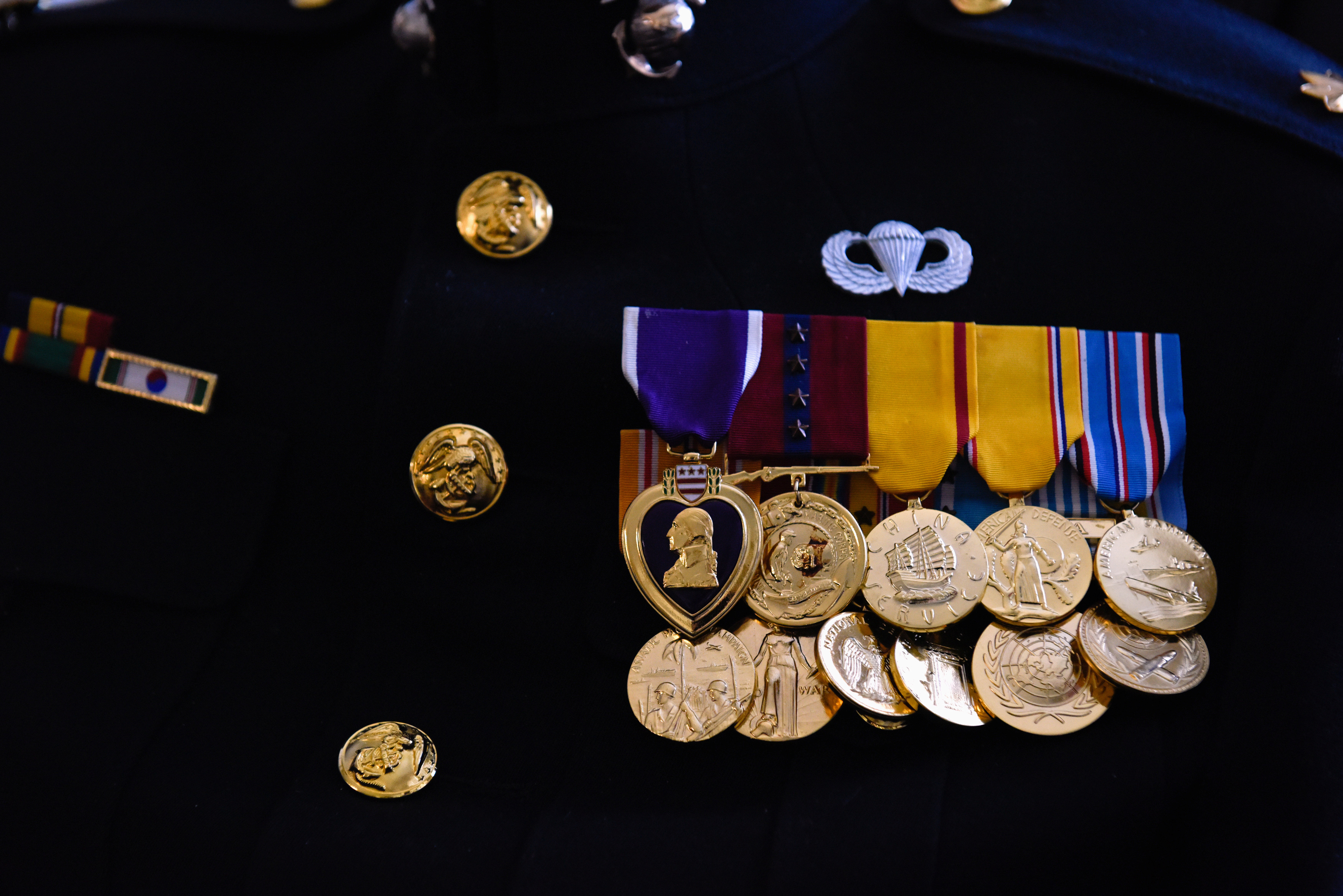
STOCKTON, Calif. (Reuters) – William White, a 104-year-old U.S. Marine veteran who earned a Purple Heart in World War Two, is celebrating Valentine’s Day this year like never before, surrounded by a mountain of 70,000 love letters and well-wishes sent from all over the world.

The cards and notes to “Major Bill,” a retired major who lives in an assisted living facility in Stockton, California, began pouring in after a fellow resident launched a social media campaign called “Operation Valentine,” asking friends and strangers alike to send greetings to honor White.

Major Bill White, a 104-year-old Marine veteran who fought and was injured in the World War Two battle for Iwo Jima, wearing dress blues featuring the Purple Heart at his home at an assisted living facility, where he is soliciting cards for Valentine’s Day in Stockton, California, U.S. January 31, 2020. Picture taken January 31, 2020. REUTERS/Kate Munsch

At the outset, the goal was a modest 100 cards – about one for every one of White’s birthdays – but the response has outstripped all expectations.

“It’s just too fantastic,” said White, surrounded by waist-high stacks of postal boxes filled with cards.

On a recent day, White’s great-granddaughter Abigail Sawyer, 9, delivered a bundle of cards from her fourth grade class, many of them decorated with the American flag.

A week before Valentine’s Day, which lands on Friday this year, at least 70,000 pieces of correspondence had arrived from people in every U.S. state and several foreign countries.

So much mail has been delivered that White’s family has had to enlist volunteers to help open the cards and read the warm wishes to White, who retired after 35 years of active service, including time in the Pacific theater of WWII, when he was wounded at Iwo Jima.

For those sending Valentines, White represents something bigger than himself. Many of them have conveyed a deep appreciation not only to White for his service, but to all veterans who died too soon to hear their gratitude.

A woman identified only as Jane told White that her late grandfather also fought in World War Two as a U.S. Army paratrooper. Had he lived, she said, he would be turning 100 years old this year.

“I miss him so much,” she wrote. “By sending you this card, I feel as though I am sending my grandfather a card.”

It’s all new to White, who said he never really celebrated Valentine’s Day, even when his wife of 42 years was alive.

“It’s something I’ve never heard of or seen,” White said. “All of a sudden here, like a ton of bricks. I’m sort of speechless.”

(Writing by Barbara Goldberg; Editing by Frank McGurty and Chizu Nomiyama)

Thousands of Iranians mark revolution anniversary amid peak tensions with U.S.

DUBAI (Reuters) – Tens of thousands of Iranians poured into the streets of Tehran and other cities on Tuesday morning to commemorate the 41st anniversary of the Islamic revolution, against a backdrop of escalating tensions with the United States.

State TV showed video footage of rallies in at least half a dozen cities outside the capital, including Mashhad, Ahvaz and Kerman, with people holding signs that read, “Death to America” and “Death to Israel”.

Iran almost got into a full-blown conflict with the United States last month after a U.S. drone strike killed top Iranian military commander Qassem Soleimani in Baghdad on Jan. 3, prompting Iran to retaliate with a missile barrage against a U.S. base in Iraq days later.

Tensions spiked between Iran and the United States after U.S. President Donald Trump withdrew from a multilateral nuclear deal with Iran in 2018 and reimposed sanctions in a bid to pressure Tehran to negotiate over its ballistic missile program and ties with regional proxy groups.

Missiles were put on display as part of the anniversary celebrations, according to the Tasnim news agency. Iran’s state TV showed archival footage of missile launches and underground missile storage facilities as part of its anniversary coverage.

The missile program is not intended for attacks on neighboring countries, Iranian President Hassan Rouhani said on Monday.

(Reporting by Babak Dehghanpisheh; Editing by Stephen Coates)

Exclusive: More than 100 U.S. troops diagnosed with brain injuries from Iran attack – officials

By Idrees Ali and Phil Stewart

WASHINGTON (Reuters) – The U.S. military is preparing to report a more than 50% jump in cases of traumatic brain injury stemming from Iran’s missile attack on a base in Iraq last month, U.S. officials told Reuters on Monday.

The officials, who spoke on condition of anonymity ahead of an announcement, said there were over 100 cases of TBI, up from the 64 previously reported last month.

The Pentagon declined to comment, but in the past had said to expect an increase in numbers in the weeks after the attack because symptoms can take time to manifest and troops can sometimes take longer to report them.

No U.S. troops were killed or faced immediate bodily injury when Iran fired missiles at the Ain al-Asad base in Iraq in retaliation for the U.S. killing of Revolutionary Guard General Qassem Soleimani in a drone strike at the Baghdad airport on Jan. 3.

The missile attacks capped a spiral of violence that had started in late December. Both sides have refrained from further military escalation, but the mounting number of U.S. casualties could increase pressure on the Trump administration to respond, perhaps non-militarily.

Army General Mark Milley, chairman of the Joint Chiefs of Staff, said last month that the service members suffering from traumatic brain injuries had been diagnosed with mild cases. He added the diagnosis could change as time went on.

Symptoms of concussive injuries include headaches, dizziness, sensitivity to light and nausea.

Pentagon officials have repeatedly said there has been no effort to minimize or delay information on concussive injuries. But the disclosures following Tehran’s attack has renewed questions over the U.S. military’s policy regarding how it internally reports suspected brain injuries and whether they are treated publicly with the same urgency as loss of limb or life.

U.S. President Donald Trump appeared to play down the brain injuries last month, saying he “heard that they had headaches and a couple of other things” following the attack, prompting criticism from lawmakers and a U.S. veterans group.

Various health and medical groups for years have been trying to raise awareness about the seriousness of brain injuries, including concussions.

Since 2000, about 408,000 service members have been diagnosed with traumatic brain injury, according to Pentagon data.

(Reporting by Idrees Ali and Phil Stewart; Editing by Franklin Paul, Dan Grebler and Lisa Shumaker)