U.S. to execute only Native American on federal death row

By Jonathan Allen

(Reuters) – The United States is set to execute Lezmond Mitchell, a convicted murderer and the only Native American on federal death row, on Wednesday, despite opposition from the Navajo Nation, which says the government is infringing tribal sovereignty.

Mitchell, a Navajo, is set to be killed with lethal injections of pentobarbital, a powerful barbiturate, at 6 p.m. in the Department of Justice’s execution chamber in Terre Haute, Indiana.

His lawyers and Jonathan Nez, the Navajo Nation president, have asked U.S. President Donald Trump for clemency, and Mitchell has asked the U.S. District Court in Washington to delay the execution while this is considered.

On Tuesday night, the U.S. Supreme Court rejected his bid for a stay based on his lawyers’ argument that racial bias may have tainted the jury at his trial.

Absent intervention, Mitchell, 38, will become the fourth man to be executed by the U.S. government this summer after an informal 17-year hiatus, which was caused in part by legal challenges to lethal injection protocols and difficulties obtaining deadly drugs.

Mitchell and an accomplice, Johnny Oslinger, were convicted of murdering a 9-year-old Navajo girl, Tiffany Lee, and her grandmother Alyce Slim in 2001 on the tribe’s territory, which spans four states in the U.S. Southwest.

According to prosecutors, the men stabbed Slim more than 30 times, put the body in the backseat of her car alongside the granddaughter as they drove elsewhere before killing the girl later and decapitating both bodies.

Mitchell was sentenced to death in an Arizona federal court over the objection of Navajo officials, who said the tribe’s cultural values prohibited taking human life “for vengeance.” At least 13 other tribes joined the Navajo Nation in urging Trump this month to commute Mitchell’s sentence to life in prison.

Oslinger was a teenager at the time and ineligible for the death sentence.

Under the Major Crimes Act, the federal government has jurisdiction over certain major crimes occurring on Indian territory, including murder but usually cannot pursue capital punishment for a Native American for a crime on tribal land without the tribe’s consent.

Navajo officials, along with other leaders of other tribes, have opposed the death penalty, including in Mitchell’s case. But John Ashcroft, attorney general under then-President George W. Bush, overrode federal prosecutors in Arizona who said they would defer to the tribe’s position against pursuing a capital case.

In what Mitchell’s lawyers deride as a legal loophole, federal prosecutors successfully pursued a capital case against Mitchell for carjacking, a capital crime that is not among those listed in the Major Crimes Act.

(Reporting by Jonathan Allen; Editing by Cynthia Osterman)
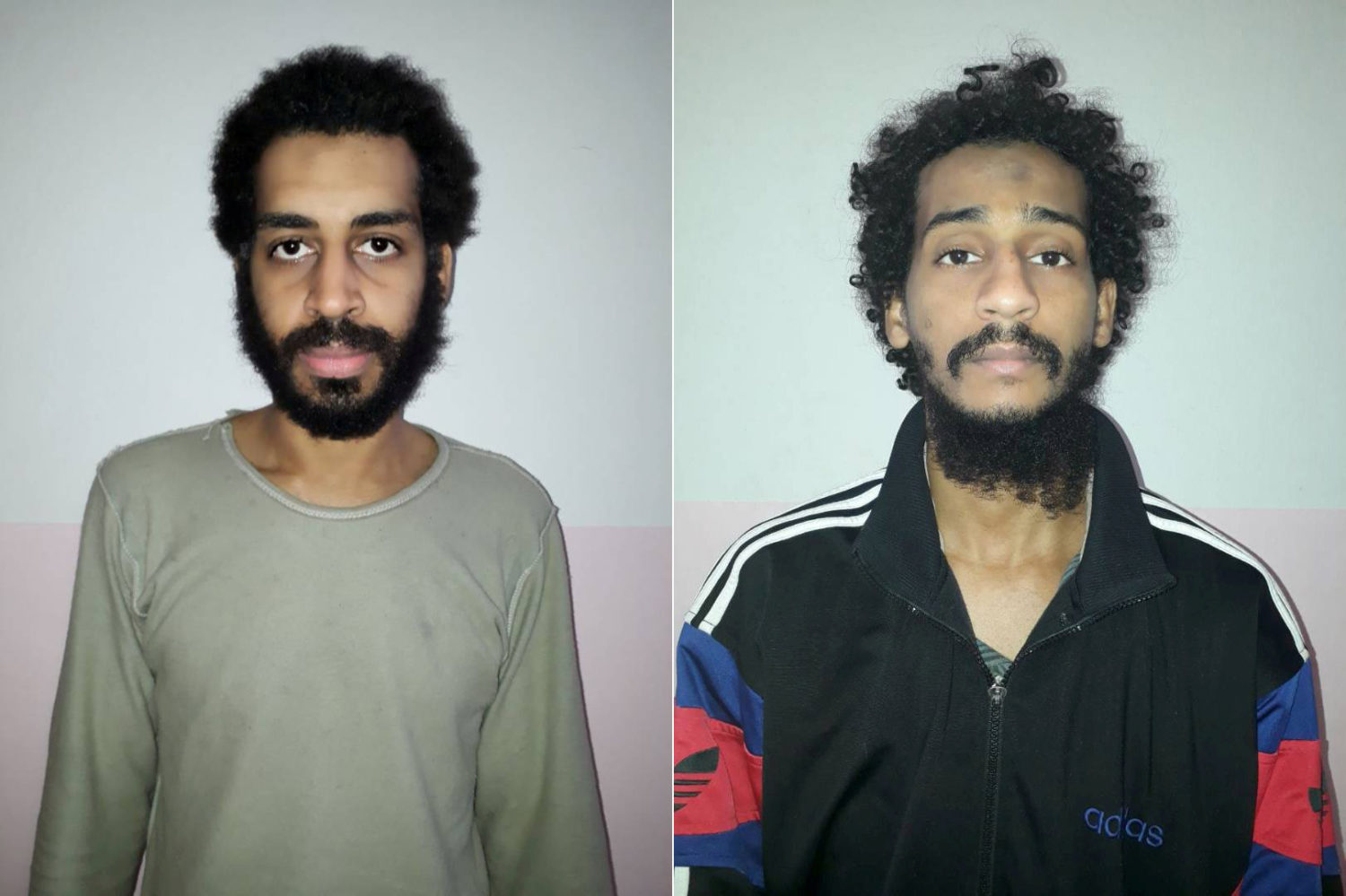
UK court lifts bar on evidence transfer over Islamic State ‘Beatles’

LONDON (Reuters) – Britain’s Supreme Court on Wednesday lifted a bar which prevented the government from giving evidence to U.S. authorities about an alleged Islamic State execution squad, nicknamed “the Beatles”, after reassurances were given that the men would not face the death penalty.

The U.S. Department of Justice is seeking the extradition of Britons Alexanda Kotey and El Shafee Elsheikh, who are accused of the killing and torture of Western hostages in Syria.

U.S. Attorney General William Barr said last week that U.S. prosecutors would not seek the death penalty against the men or carry out executions if they were imposed, an issue which had been a stumbling block for Britain handing over captured militants.

In March, Britain’s Supreme Court had ruled that data protection laws meant Britain could not provide material to the United States or other foreign countries in cases which could lead to a death penalty. That decision followed legal action brought by Elsheikh’s mother, Maha El Gizouli.

The British courts imposed a block on the transfer of evidence while her case was ongoing. But the Supreme Court said it had released an order on Wednesday which formally ended El Gizouli’s action and thus ended the legal prohibition.

“The order concludes the proceedings in the Supreme Court, which means that the stay or the stop on providing material to the U.S. government is removed,” a court spokeswoman said.

There was no immediate response from Britain’s Home Office (interior ministry).

Kotey and Elsheikh are being held by the U.S. military in an unidentified overseas location after they were captured in 2019 but Barr said it was becoming untenable to continue to hold them.

The pair were members of a four-strong Islamic State unit that was known as the Beatles because they were English speakers.

They are alleged to have detained or killed Western hostages, including U.S. journalists James Foley and Steven Sotloff and aid workers Kayla Mueller and Peter Kassig.

One member, Mohammed Emwazi, known as “Jihadi John”, was believed to have been killed in a 2015 U.S.-British missile strike.

The U.S. Justice Department wants Britain to turn over evidence it has on Kotey and Elsheikh to allow them to be tried in the United States.

Barr had said if Britain did not turn over the material by Oct. 15, the United States would turn over the men for prosecution in the Iraqi justice system.

(Reporting by Michael Holden; Editing by Angus MacSwan)

White House says Trump could act unilaterally to avoid U.S. airline layoffs

WASHINGTON (Reuters) – President Donald Trump could take executive action to avoid massive layoffs at U.S. airlines, while the coronavirus pandemic weighs on air travel and talks on a new COVID-19 stimulus bill remain stall in Congress, White House Chief of Staff Mark Meadows said on Wednesday.

“We’re looking at other executive actions,” Meadows said in an online interview with Politico. “If Congress is not going to work, this president is going to get to work and solve some problems. So hopefully, we can help out the airlines and keep some of those employees from being furloughed.”

His remarks came a day after American Airlines said its workforce will shrink by 40,000, including 19,000 involuntary cuts, in October without an extension of government aid.

Meadows said he has spoken to American Airlines, as well as United Airlines, which has warned that 36,000 jobs are on the line, and to Delta Air Lines, which announced furloughs of nearly 2,000 pilots on Monday.

“So we’ve raised this issue. It would take a CARES package, I believe, to do it,” Meadows said, referring to a $3 trillion coronavirus relief package that Congress passed earlier this year.

Talks between Meadows, Treasury Secretary Steven Mnuchin, House of Representatives Speaker Nancy Pelosi and Senate Democratic leader Chuck Schumer ended in early August, with top Democrats and the administration far apart on new legislation. Meadows told Politico that he is not optimistic that negotiations will restart soon.

(Reporting by David Morgan; Editing by Chizu Nomiyama and Alistair Bell)

U.S. cities sue ATF over untraceable ‘ghost guns’

By Brad Brooks

(Reuters) – Chicago and three other cities on Wednesday sued the Bureau of Alcohol, Tobacco, Firearms and Explosives (ATF), demanding it correct how it interprets what is a firearm and halt the sale of untraceable “ghost gun” kits increasingly used in crimes.

The lawsuit is the first of its kind filed against the ATF, according to lawyers for the cities of Chicago, San Jose, Columbia, South Carolina, and Syracuse, New York. It was filed in the Southern District of New York state.

So-called “ghost gun” or “80% gun” kits are self-assembled from parts purchased online or at gun shows. The parts that are assembled are not classified as a firearm by the ATF. For that reason they can be legally sold with no background checks and without serial numbers to identify the finished product.

The lawsuit argues the ATF and the Department of Justice “refuse to apply the clear terms of the Gun Control Act” which the suit says defines regulated firearms as not only working weapons “but also their core building blocks – frames for pistols, and receivers for long guns.”

The ATF says on its website that receivers in which the fire-control cavities are solid “have not reached the ‘stage of manufacture’ which would result in the classification of a firearm.”

The ATF said in an emailed statement that its “regulatory and enforcement functions are focused and clearly defined by laws.” The bureau emphasized that it investigates criminal possession and other criminal use of privately made firearms.

Everytown for Gun Safety, an advocacy group that is a plaintiff in the lawsuit along with the cities, argues that until about 2006, the ATF did require unfinished components that clearly were going to be used to make guns to carry a serial number and anyone buying them undergo a background check.

“The ATF used to interpret the Gun Control Act the right way – they would look at how quickly a frame or receiver could be converted into an operable weapon,” said Eric Tirschwell, managing director for the litigation arm of Everytown. “If it was pretty quickly, they would say ‘yeah, that’s a firearm.'”

TECHNOLOGY TROUBLES

It’s unknown how many ghost guns are in circulation, but law enforcement agencies are unanimous in saying numbers are undeniably growing. Police in Washington D.C. last year recovered over 100 ghost guns – a 342% increase over 2018. They are already on pace this year to double the number found.

The ATF has said upward of 30% of the illegal weapons it has confiscated in some areas of California are ghost guns.

Chicago Mayor Lori Lightfoot, whose city has been beset by gun violence, demanded the ATF close the ghost gun loophole and regulate the sale of gun parts that are marketed to easily be used to build guns.

“Individuals with dangerous histories shouldn’t be able to order lethal weapons on the internet with a few quick clicks,” Lightfoot said.

But Rick Vasquez, a Virginia-based firearms consultant and former ATF technical expert who evaluated guns and gun products to help the bureau determine if they were legal, said anyone wanting to address the proliferation of kit guns should pass new laws in Congress.

The continued rapid advancement of tools and technology widely available to the public meant it was getting to the point where even rudimentary “chunks of metal” can be turned into firearms, Vasquez said.

“How do you regulate that? The ATF can’t do it. This situation is uncontrollable because of technology, and I’m not sure what anyone can do about it.”

(Reporting by Brad Brooks in Lubbock, Texas; Editing by Lincoln Feast.)

Mnuchin to testify Sept. 1 before House coronavirus panel

WASHINGTON (Reuters) – U.S. Treasury Secretary Steven Mnuchin will face lawmakers’ questions over stalled coronavirus aid negotiations between the Trump administration and Congress next week when he testifies before a House of Representatives panel, lawmakers said on Wednesday.

The Sept. 1 hearing “will examine the urgent need for additional economic relief for children, workers, and families and the Administration’s implementation of key stimulus programs,” the House Select Subcommittee on the Coronavirus Crisis said in a statement.

The hearing will be Mnuchin’s first congressional testimony since talks on a new round of $1 trillion to $3 trillion in federal coronavirus aid collapsed in early August.

No intensive talks between Mnuchin, White House Chief of Staff Mark Meadows, House Speaker Nancy Pelosi and Senate Democratic leader Chuck Schumer have taken place since then.

President Donald Trump subsequently signed an executive order partially extending supplemental unemployment benefits and deferring payment of some payroll taxes, but implementation details are unclear.

The focus of congressional action also shifted to the U.S. Postal Service, with House Democrats last Saturday passing a $25 billion funding bill aimed at thwarting planned service cuts and ensuring delivery of mail-in ballots for the November election. Republicans have declared the measure dead.

(Reporting by Susan Heavey and David Lawder; Editing by Andrew Heavens and Nick Macfie)

Hurricane Laura takes aim at Texas-Louisiana coast, expected to become Category 4

(Reuters) – Hurricane Laura was expected to rapidly strengthen to a Category 4 hurricane on Wednesday on a steady track to hit the Texas-Louisiana Gulf Coast after dark, causing catastrophic damage, the National Hurricane Center said.

The storm, already a Category 3 on the five-step Saffir-Simpson scale for measuring hurricane intensity early Wednesday, was about 290 miles (465 km) southeast of Galveston, Texas, with maximum sustained winds of 115 miles (185 km) per hour, the Miami-based forecaster said. Category 4 hurricanes can pack winds of up to 156 miles (250 km) per hour.

More than 420,000 Texas residents and another 200,000 people in neighboring Louisiana were under mandatory evacuation orders as state and federal emergency management teams rushed to provide shelter accommodations and get first responders in place for possible rescues.

“You only have a few hours to prepare and evacuate for #HurricaneLaura. Wherever you are by noon is where you’ll have to ride out the storm. Be smart and be safe,” Louisiana Governor John Edwards tweeted Wednesday morning.

The storm was moving at about 15 miles (24 km) per hour. Storm surge along the Gulf Coast could raise water levels to as high as 12 feet to 15 feet (3.7 meters to 4.6 meters) in Intracoastal City and Morgan City, Louisiana, and Laura was expected to drop 5 to 10 inches (13 to 25 cm) of rain over the region, the National Hurricane Center (NHC) said.

“This storm surge could penetrate up to 30 miles inland from the immediate coastline in southwestern Louisiana and far southeastern Texas,” the NHC said in a Wednesday morning advisory. “All preparations to protect life and property should be rushed to completion in the next few hours.”

The storm was also expected to spawn tornadoes Wednesday night over Louisiana, far southeastern Texas, and southwestern Mississippi, the NHC said. It added there would likely be widespread flooding in urban areas from far eastern Texas across Louisiana and Arkansas from Wednesday to Thursday.

‘PREPARE FOR THE WORST’

In Texas, many residents spent Tuesday packing up and bracing their homes and businesses for the anticipated pummeling by Laura starting on Wednesday.

“We’ve been through this before; we’re prepared. Everybody downtown has boarded up their businesses and people are leaving the city,” said Gina Spagnola, president of the Galveston Chamber of Commerce, as she boarded up windows on her own waterfront home on Tuesday.

Hidalgo County, Texas, urged voluntary evacuation in the coastal region surrounding Houston, and shelters were set up in San Antonio, Dallas and Austin.

Houston, about 45 miles (70 km) north of the open water of the Gulf of Mexico, was pummeled in 2017 by Hurricane Harvey, which killed at least 68 people and caused $125 billion in property damage. Hurricane Laura is forecast to dissipate quickly after landfall, with the greatest danger more from wind and storm surges than rain.

Lina Hidalgo, the top executive for Harris County, which encompasses Houston, warned of deadly winds and a destructive storm surge after Laura makes landfall late Wednesday or early Thursday. She said that put millions of lives at risk as the storm moved westward and took aim at the fourth-biggest city in the United States.

“This storm certainly can cause unprecedented devastation,” Hidalgo said at a news conference on Tuesday. “We truly have to say: Prepare for the worst.”

(Reporting by Gabriella Borter; editing by Jonathan Oatis)

U.S. rejects U.N. rights panel upholding access to abortions during pandemic

An exam room at the Planned Parenthood South Austin Health Center is shown in Austin, Texas, U.S. June 27, 2016. REUTERS/Ilana Panich-Linsman

By Stephanie Nebehay

GENEVA (Reuters) – The United States on Wednesday hit back at a U.N. women’s rights panel that said some U.S. states limited access to abortions during the COVID-19 pandemic, rejecting its interference and the notion of “an assumed right to abortion”.

“The United States is disappointed by and categorically rejects this transparent attempt to take advantage of the COVID-19 pandemic to assert the existence of such a right,” the U.S. mission in Geneva said in a release posted on Twitter.

“This is a perversion of the human rights system and the founding principles of the United Nations,” it said, citing an Aug. 11 letter it sent to the U.N. experts responding to the “spurious allegations”.

The U.N. working group on discrimination against women and girls said on May 27 that some U.S. states “appear to be “manipulating the COVID-19 crisis to curb access to essential abortion care”.

The panel of five independent U.N. experts said that states including Texas, Oklahoma, Alabama, Iowa, Ohio, Arkansas, Louisiana and Tennessee had issued COVID-19 emergency orders suspending procedures not deemed immediately medically necessary to restrict access to abortion.

“This situation is also the latest example illustrating a pattern of restrictions and retrogressions in access to legal abortion care across the country,” Elizabeth Broderick, panel vice-chair, said at the time.

The U.S. statement cited allegations of forced abortions and sterilizations in China’s western region of Xinjiang and urged the panel to focus on “actual human rights abuses”.

A lack of comment on such issues was “one of the reasons that the United States and others increasingly see the U.N.’s human rights system as utterly broken”.

U.S. President Donald Trump, seeking re-election in November, works closely with evangelical Christians and puts their causes of restricting abortion and preserving gun ownership at the top of his policy agenda.

(Reporting by Stephanie Nebehay; Editing by Nick Macfie)

Two dead as gunfire erupts at Wisconsin protests over shooting of Black man

By Brendan McDermid and Stephen Maturen

KENOSHA, Wis. (Reuters) – Two people died and a third was wounded after street protests over the police shooting of a Black man erupted into gun violence late Tuesday and early Wednesday in Kenosha, Wisconsin, police said.

The Lake Michigan city of about 100,000 has been rocked by civil unrest since Sunday, when police shot Jacob Blake, 29, in the back at point-blank range. The incident, captured on video, has reignited protests over racism and police use of force in the United States.

The third straight night of protests, which coincided with the second night of the Republican National Convention, had appeared to turn calm after police fired tear gas and rubber bullets at protesters who defied a curfew.

But with a combustible mix of demonstrators still roaming the streets – including self-appointed militias armed with rifles – tensions boiled over shortly before midnight, leading to chaotic scenes of people running and screaming amid a volley of gunfire and others tending to gunshot wounds.

It remained uncertain what prompted the initial gunfire, though it involved a white man with a rifle who wrangled with and fired on other civilians, then walked past several police cars without being arrested, video on social media showed.

The Kenosha protests have drawn mostly peaceful demonstrators under the Black Lives Matter banner, but a range of white and Black people have caused trouble late at night, setting fires, vandalizing public property and bashing vehicles with baseball bats.

The Kenosha Guard, a group identifying itself as a local militia on Facebook, posted a message warning authorities ahead of time they would be present on city streets.

“We are unaware if the armed citizen was answering the Kenosha Guard Militia’s call to arms,” the group later posted on Facebook. “Just like with the shooting of Jacob Blake, we need all the facts and evidence to come out before we make a judgement. God Bless and stay safe Kenosha!”

Democratic Wisconsin Governor Tony Evers deployed 250 members the National Guard to help restore order after the first night of unrest. But U.S. Representative Bryan Steil, a Republican whose district includes Kenosha, said more force was needed.

Republican President Donald Trump had offered to deploy federal law enforcement officers, Steil said.

“Last night the situation went from bad to worse,” Steil said in a statement. “The violence must be stopped.”

Anti-racism protesters also clashed with police in Portland, Oregon, and Louisville, Kentucky, on Tuesday night, part of a wave of national protests that have continued since the May 25 death of George Floyd, a Black man who died after a white Minneapolis police officer knelt on his neck.

CHAOS ON VIDEO

Social media videos show crowds in Kenosha chasing the gunman down the street after they believed he had shot another man. The gunman falls to the ground where he comes under attack, but he fires a number of rounds, appearing to hit a man in the torso who falls to the ground and seriously wounding another man in the arm.

As the crowd disperses around him, the man walks freely down the street with his hands in the air and rifle hanging in front of him.

Several police vehicles, apparently responding to the mayhem, drive past the man without stopping him. There have been no reports of an arrest.

Kenosha police said in a statement that two people died and a third gunshot victim was taken to a hospital with serious injuries, though he was expected to live. They pleaded for witnesses to come forward, asking for additional video or photos beyond those posted on social media.

Other videos showed a white man who appeared to be shot in the head as several people rushed to his aid, frantically trying to treat his wound and keep him alive.

Yet another video showed a white man with a severe arm wound sitting on the ground and being aided by an armed man as police approached.

BLAKE ‘FIGHTING FOR LIFE’

The protests began in Kenosha, located between Milwaukee and Chicago, on Sunday after video of Jacob Blake’s shooting that afternoon went viral.

After struggling with police, Blake broke free and walked around his SUV to the driver’s side, where he was shot in the back after opening the door. Three of his young sons were in the car, witnesses said.

Blake was hit by four of the seven shots fired and left paralyzed and “fighting for his life,” his family and lawyers said on Tuesday, hours before the latest round of civil unrest broke out in Kenosha.

Blake underwent another round of lengthy surgery on Tuesday to stabilize his spine with rods and screws, and it may take days or weeks to determine the extent of the damage, Patrick Salvi Sr., a lawyer for Blake’s family, told CNN on Wednesday.

Salvi also said Kenosha officials have been “tight-lipped” about their investigation into the shooting, depriving the family of the police officers’ version of what happened.

“Anyone watching that video cannot understand why in God’s name the officer starts shooting at point-blank range at Jacob,” Salvi said. “We’re going to find out.”

The Wisconsin Department of Justice is leading the investigation and has yet to comment.

(Additional reporting by Daniel Trotta, Nathan Layne, Peter Szekely, Susan Heavey, Kanishka Singh and Ann Maria Shibu; Editing by Andrew Heavens, Nick Macfie and Jonathan Oatis)

Factbox: Coronavirus in U.S. Congress: 17 members have tested or been presumed positive

WASHINGTON (Reuters) – At least 17 members of the U.S. House of Representatives and Senate – nine Republicans and seven Democrats – have tested positive or are presumed to have had COVID-19, with Senator Bill Cassidy becoming the latest on Thursday.

Here is a look at lawmakers affected by the virus:

RESIDENT COMMISSIONER JENNIFFER GONZALEZ COLON

Gonzalez, resident commissioner of Puerto Rico and the U.S. territory’s sole representative in Congress, said that she tested positive for COVID-19 on Facebook, days after accompanying federal officials on a visit to Puerto Rico’s pharmaceutical industry.

SENATOR BILL CASSIDY

Cassidy, a Louisiana Republican, decided to self-quarantine for 14 days and contact those with whom he may have had contact after testing positive for the virus, according to a statement released by his office on Aug. 20.

“I am strictly following the direction of our medical experts and strongly encourage others to do the same,” the 62-year-old senator, himself a physician, said in the statement.

REPRESENTATIVE RODNEY DAVIS

Davis, an Illinois Republican, said in a statement on Aug. 5 that he tested positive for the novel coronavirus after running a fever.

“If you’re out in public, use social distancing, and when you can’t social distance, please wear a mask,” Davis, 50, said in the statement.

REPRESENTATIVE RAUL GRIJALVA

Grijalva, an Arizona Democrat, tested positive for the coronavirus and went into isolation, he said in a statement on Aug. 1.

Grijalva expressed frustration with the reluctance of some Republican lawmakers to wear masks, which can slow the spread of the coronavirus.

REPRESENTATIVE LOUIE GOHMERT

The Texas Republican, 66, a staunch conservative, said on July 29 he tested positive in a prescreening at the White House but did not have any symptoms.

“It’s really ironic, because a lot of people have made a big deal out of my not wearing a mask a lot. But in the last week or two, I have worn a mask more than I have in the whole last four months.”

REPRESENTATIVE MORGAN GRIFFITH

The Virginia Republican, 62, a member of the conservative Freedom Caucus, said in mid-July that he had tested positive. His office said he did not have significant symptoms.

REPRESENTATIVE TOM RICE

The South Carolina Republican, 62, said on Facebook in mid-June that he, his wife and son had all tested positive for the coronavirus but all were “on the mend.”

SENATOR TIM KAINE

The Virginia Democrat and former vice presidential candidate, 62, said in mid-May that he and his wife had tested positive for coronavirus antibodies.

SENATOR BOB CASEY

Casey, 60, a Pennsylvania Democrat, tested positive for coronavirus antibodies in May, but pledged to keep wearing a mask.

REPRESENTATIVE NEAL DUNN

The Florida Republican, 67, a former surgeon, said in April that he had gone to the emergency room after not feeling well and later tested positive for the coronavirus.

REPRESENTATIVE JOE CUNNINGHAM

A Democrat from South Carolina, Cunningham, 38, said on March 27 he had tested positive for the coronavirus.

REPRESENTATIVE MIKE KELLY

Kelly, 72, a Republican from Pennsylvania, tested positive for the coronavirus in late March at a drive-through testing site. He told an interviewer that it took him about a month to recover and that he lost 30 pounds (14 kg).

SENATOR RAND PAUL

The Kentucky Republican, 57, said on March 22 that he had tested positive and was in quarantine, but was feeling fine. After he returned to work, Paul still did not wear a mask and said it was because he believed he was immune.

REPRESENTATIVE MARIO DIAZ-BALART

The Florida Republican, 58, tested positive in mid-March, saying the symptoms “pretty much hit me like a ton of bricks.” After his health improved, Diaz-Balart said he would participate in a plasma donation program to help people with serious or life-threatening infections of COVID-19.

REPRESENTATIVE BEN MCADAMS

The Utah Democrat also caught the virus in March. He was hospitalized and needed oxygen. After his release, he warned others to take the virus seriously. “I’m young, I’m 45 years old, I’m healthy, I exercise every day, and it hit me really hard,” he told ABC.

REPRESENTATIVE NYDIA VELAZQUEZ

Velazquez, 67, a Democrat from New York, said in March that she had been diagnosed with a presumed case of the coronavirus, although she had not been tested.

REPRESENTATIVE SETH MOULTON

The Massachusetts Democrat, 41, said in March that he and his wife were in self-quarantine after experiencing coronavirus-like symptoms. The congressman said they did not, however, qualify for testing.

(Reporting by Susan Cornwell and David Morgan; Editing by Scott Malone and Alistair Bell)

U.S. imposes sanctions on Chinese national over fentanyl trafficking

WASHINGTON (Reuters) – The U.S. Treasury Department on Tuesday imposed sanctions on a Chinese national, accusing him of trafficking fentanyl to the United States.

It said in a statement that Taotao Zhang, a chemist and chemical supplier, had shipped illicit synthetic opioids to the United States. The Treasury also blacklisted Hong Kong-based Allyrise Technology Group Co, Limited, of which Zhang is director, accusing it of being a front company for his financial transactions.

Fentanyl is a cheap opioid painkiller 50 times more potent than heroin that has played a major role in an opioid crisis in the United States, where more than 28,000 synthetic opioid-related overdose deaths were recorded in 2017.

U.S. officials say China is the main source of illicit fentanyl. President Donald Trump has accused Chinese President Xi Jinping of failing to meet promises to help stop the flow of the drug into the United States, a charge Beijing rejects.

“The United States remains committed to protecting vulnerable Americans by targeting individuals peddling this deadly drug,” Treasury Deputy Secretary Justin Muzinich said.

Tuesday’s action freezes any U.S. assets of Zhang and the Hong Kong-based company and generally bars Americans from dealing with them.

The Treasury’s Office of Foreign Assets Control said it coordinated the move with the U.S. Attorney’s Office for the District of New Jersey and the Drug Enforcement Administration.

(Reporting by Daphne Psaledakis; editing by Grant McCool)