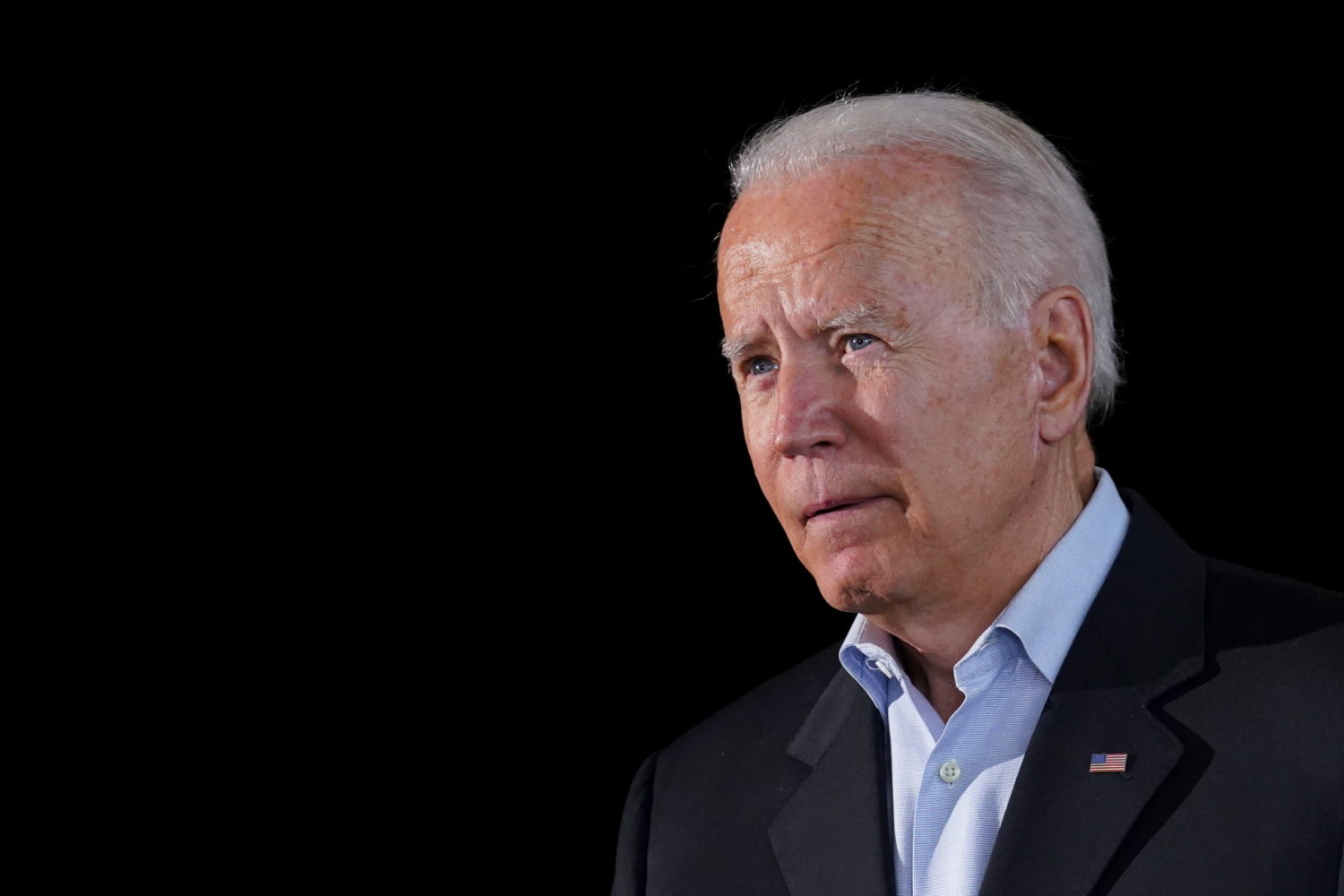
Biden backs taking sexual assault prosecutions away from military commanders -officials

WASHINGTON (Reuters) – President Joe Biden is backing a recommendation that military prosecutions of sexual assaults be taken away from the chain of command and given to independent prosecutors to better serve the victims, administration officials say.

The change recommended by an independent review commission would represent a major shift in how the military has handled sexual assaults and related crimes for decades. It comes several years after the advent of the #MeToo response to sexual assault, harassment and discrimination against women by men in various walks of life.

But implementation of Biden’s decision could take until 2023 to implement, and his Democratic administration stopped short of endorsing legislation by the leading advocate of the change in the Senate, Democrat Kirsten Gillibrand, whose bill would also make broader military justice reforms.

Advocates and lawmakers like Gillibrand have been calling for years for military commanders to be taken out of the decision-making process when it comes to prosecuting sexual assault cases, arguing they are inclined to overlook them.

Sexual assault and harassment in the U.S. military is largely underreported, according to the military itself, and the Pentagon’s handling of it has come under renewed scrutiny.

The independent commission’s report was critical of the military’s handling of sexual assault cases, from a lack of trust in military commanders to issues with the military justice system. The commission last month recommended taking prosecution of those and related cases away from the commanders of victims’ units and giving them to independent prosecutors.

“We have heard for many years that there is no tolerance for sexual harassment and sexual assault, but we learned that in practice there is quite a lot of tolerance,” an administration official said, speaking on the condition of anonymity.

“We found that the military justice system is not well equipped to handle sensitive cases like sexual assault, sexual harassment and domestic violence.”

Biden’s decision was widely expected after his defense secretary, Lloyd Austin, on June 22 publicly backed the findings of the independent review commission recommending the move.

The 13-member commission was formed in February and included a number of retired military officials and experts on the issue.

Gillibrand’s bill would remove military commanders from decisions on pursuing sexual assault cases, but also do the same for other major crimes, turning such decisions over to trained prosecutors. It has majority support in the Senate.

A second Biden administration official praised Gillibrand’s efforts on the issue but declined to address her legislation, saying the independent review commission only focused on sexual assault and related crimes, officials said.

“(Biden) is really pleased to see that there is a growing consensus that these crimes should be taken out of the chain of command. And we’re going to now look to Congress to work out the details for legislating that change,” the second official said. Gillibrand’s bill, which has 64 co-sponsors, has been blocked from consideration on the floor of the Senate by the top Democrat and Republican on the Senate Armed Services Committee.

Democrat Jack Reed, who chairs the committee, favors removing the military’s chain of command from prosecuting cases of sexual assault but sees the legislation as too broad.

(Reporting by Phil Stewart. Additional reporting by Idrees Ali; editing by Jonathan Oatis)

U.S. Supreme Court to hear Maine dispute over religious schools

By Andrew Chung

(Reuters) -The U.S. Supreme Court on Friday took up a challenge by two families with children attending Christian schools to a Maine tuition assistance program that bars taxpayer money from being used to pay for religious educational institutions in a case that could further narrow the separation of church and state.

The justices agreed to hear an appeal by the families of a lower court ruling in favor of the state that concluded that Maine’s program did not violate the U.S. Constitution’s First Amendment right to the free exercise of religion.

The case is the latest one for the court that pits the free exercise of religion against another element of the First Amendment: the separation of church and state that prohibits government establishment of an official religion or favoring one religion over another.

Some sparsely populated areas of Maine lack public secondary schools, so state law allows public funds to be used to pay for tuition at certain private schools of a parent’s choice as long as they are “nonsectarian.”

The case involves two sets of parents – David and Amy Carson, and Troy and Angela Nelson – who sued the state in 2018 in federal court, arguing that by the tuition assistance program’s exclusion of religious schools discriminates against them based on religion.

The Carsons pay out of pocket to send their daughter to Bangor Christian Schools in Maine’s third-largest city. The Nelsons would like to send both of their children to a Christian school called Temple Academy in Waterville, Maine, but can afford the tuition for only one, so their son attends Temple Academy while their daughter does not.

The schools, both of which are private and nonprofit, describe themselves as seeking to instill a “Biblical worldview” in their students. Bangor Christian Schools does not hire teachers who are gay or transgender, and would potentially expel openly gay or transgender students, according to court papers. Temple Academy does not hire gay teachers and likely would not accept gay, transgender or non-Christian students, court papers said.

The families contended that they are entitled to tuition help given the U.S. Supreme Court’s recent rulings siding with religiously based institutions, including its decision last year endorsing Montana tax credits that can help pay for students to attend religious schools. The families are represented by the Institute for Justice conservative legal group.

The Boston-based 1st U.S. Circuit Court of Appeals ruled against the families last year, deciding that Supreme Court precedents did not forbid states from barring public funds from religious entities based on how those dollars would be used.

While states cannot disqualify religious schools from public aid programs simply because of their religious status or affiliation, Maine is not required to subsidize schools that would use the money to provide religious instruction, the 1st Circuit decided.

The families appealed to the Supreme Court, whose conservative majority has taken an expansive view of religious rights.

“States should not be permitted to withhold an otherwise available education benefit simply because a student would make the private and independent choice to use that benefit to procure an education that includes religious instruction,” they said in a court filing.

Maine Attorney General Aaron Frey, defending the law, said in a court filing that religious schools willing to provide a secular education may receive public funds.

“In excluding sectarian schools, Maine is declining to fund explicitly religious activity that is inconsistent with a free public education,” Frey wrote.

(Reporting by Andrew Chung in New York; Editing by Will Dunham)

Era ends, war looms as U.S. forces quit main base in Afghanistan

KABUL (Reuters) -American troops pulled out of their main military base in Afghanistan on Friday, leaving behind a piece of the World Trade Center they buried 20 years ago in a country that the top U.S. commander has warned may descend into civil war without them.

“All American soldiers and members of NATO forces have left the Bagram air base,” said a senior U.S. security official on condition of anonymity.

Though a few more troops have yet to withdraw from another base in the capital Kabul, the Bagram pullout brings an effective end to the longest war in American history.

The base, an hour’s drive north of Kabul, was where the U.S. military has coordinated its air war and logistical support for its entire Afghan mission. The Taliban thanked them for leaving.

“We consider this withdrawal a positive step. Afghans can get closer to stability and peace with the full withdrawal of foreign forces,” Taliban spokesman Zabihullah Mujahid told Reuters.

Other Afghans were more circumspect. “The Americans must leave Afghanistan and there should be peace in this country,” said Kabul resident Javed Arman. But he added: “We are in a difficult situation. Most people have fled their districts and some districts have fallen. Seven districts in Paktia province have fallen and are now under Taliban control.”

For the international forces, more than 3,500 of whom died in Afghanistan, the exit came with no pageantry. A Western diplomat in Kabul said the United States and its NATO allies had “won many battles, but have lost the Afghan war”.

It was at Bagram, by a bullet-ridden Soviet-built air strip on a plain hemmed in by the snow-capped peaks of the Hindu Kush, that New York City firefighters and police were flown to bury a piece of the World Trade Center in December, 2001, days after the Taliban were toppled for harboring Osama bin Laden.

It was also here that the CIA ran a “black site” detention center for terrorism suspects and subjected them to abuse that President Barack Obama subsequently acknowledged as torture.

Later it swelled into a sprawling fortified city for a huge international military force, with fast food joints, gyms and a café serving something called “the mother of all coffees.” Two runways perpetually roared. Presidents flew in and gave speeches; celebrities came and told jokes.

An Afghan official said the base would be officially handed over to the government at a ceremony on Saturday.

The U.S. defense official said General Austin Miller, the top U.S. commander in Afghanistan “still retains all the capabilities and authorities to protect the force” stationed in the capital, Kabul.

Earlier this week, Miller told journalists in Kabul that civil war for Afghanistan was “certainly a path that can be visualized”, with Taliban fighters sweeping into districts around the country in recent weeks as foreign troops flew home.

Two other U.S. security officials said this week the majority of U.S. military personnel would most likely be gone by July 4, with a residual force remaining to protect the embassy.

That would be more than two months ahead of the timetable set by Biden, who had promised they would be home by Sept. 11, the 20th anniversary of the attack that brought them here.

Washington agreed to withdraw in a deal negotiated last year with the Taliban under Biden’s predecessor Donald Trump, and Biden rejected advice from generals to hang on until a political agreement could be reached between the insurgents and the U.S.-backed Kabul government of President Ashraf Ghani.

“MANAGE THE CONSEQUENCES”

Last week, Ghani visited Washington. Biden told him: “Afghans are going to have to decide their future, what they want.” Ghani said his job was now to “manage the consequences” of the U.S. withdrawal.

In exchange for the U.S. withdrawal, the Taliban have promised not to allow international terrorists to operate from Afghan soil. They made a commitment to negotiate with the Afghan government, but those talks, in the Qatari capital Doha, made little progress.

In a statement, the U.S. Embassy in Afghanistan this week said the United States was firmly committed to assist Afghanistan and will provide security assistance of $3 billion in 2022.

“We urge an end to violence, respect for the human rights of all Afghans and serious negotiations in Doha so that a just and durable peace may be achieved,” the embassy stated.

The Taliban refuse to declare a ceasefire. Afghan soldiers have been surrendering or abandoning their posts. Militia groups that fought against the Taliban before the Americans arrived are taking up arms to fight them again.

A senior western diplomat said the United States has asked three Central Asian nations – Kazakhstan, Tajikistan and Uzbekistan – to temporarily provide home to about 10,000 Afghan citizens who had either worked with the U.S. or allied forces.

Several European nations were also providing refuge to hundreds of Afghan employees and their families as they faced direct threat from the Taliban.

Since Biden’s announcement that he would press ahead with Trump’s withdrawal plan, insurgents have made advances across Afghanistan, notably in the north, where for years after their ouster they had a minimal presence.

Fighting was intensifying between government forces and the Taliban in the northeastern province of Badakshan, officials said on Friday.

(Reporting by Afghanistan bureau; Writing by Peter Graff, Editing by William Maclean)

One trapped, several hurt in Washington building collapse

WASHINGTON (Reuters) -Search and rescue crews were attempting on Thursday to free a construction worker trapped inside a partially-built five-story building that collapsed during a rain storm in Washington.

Four other construction workers were removed from the debris shortly after the building in the U.S. capital came down at about 3:30 pm (1930 GMT), said John Donnelly, assistant chief of D.C. Fire and EMS.

The rescued workers were taken from the scene about 5 miles (8 km) north of the Capitol building to a local hospital. They had non-life-threatening injuries, Donnelly said.

The trapped worker was conscious and in contact with fire crews as they sought to free him from the rubble, Donnelly said, adding: “We are talking to him and I view that as a good thing.”

Images showed dozens of firefighters swarming over piles of wood left behind by the collapse, using saws and heavy equipment to move large pieces.

Last week, a condominium tower collapsed in Surfside, Florida as most residents slept. Searchers there have recovered 18 bodies and say another 145 people remain missing.

President Joe Biden traveled to the scene of the 12-story Champlain Towers South in Florida on Thursday.

(Reporting by Trevor Hunnicutt in Washington and Dan Whitcomb in Los Angeles; editing by Rosalba O’Brien)

White House sending special teams to COVID-19 hot spots to combat Delta variant

By Andrea Shalal and Carl O’Donnell

WASHINGTON (Reuters) – The White House on Thursday said it would send out special teams to hot spots around the United States to combat the highly contagious Delta coronavirus variant, and urgently called on Americans who have not been vaccinated to get shots.

White House COVID-19 senior adviser Jeffrey Zients told reporters the “surge response” teams would be ready to speed additional testing supplies and therapeutics to communities that were experiencing increases in COVID-19 cases.

The seven-day-average number of COVID-19 cases in the United States has risen 10% since last week, U.S. Centers for Disease Control and Prevention Director (CDC) Rochelle Walensky said on a Tuesday press call.

The more easily transmitted Delta variant, which was first detected in India, is thought to have become the second most prevalent coronavirus variant in the United States, she added.

“It is clear that communities where people remain unvaccinated are communities that remain vulnerable,” Walensky said, adding that 1,000 counties in the United States have vaccination rates below 30%.

Zients said federal personnel will assist communities with public health staffing and the CDC will provide assistance in containing potential outbreaks.

The United States remains a world leader in COVID-19 vaccinations, with more than 180 million Americans having received at least one shot.

(Reporting by Lisa Lambert, Carl O’Donnell and Andrea Shalal; Editing by Jonathan Oatis and Bill Berkrot)

U.S. Supreme Court invalidates California charity donor disclosure

By Lawrence Hurley

WASHINGTON (Reuters) -The U.S. Supreme Court on Thursday backed two conservative nonprofit groups that challenged California’s requirement that tax-exempt charities provide the state the identities of top financial donors – a decision that could imperil some political donor disclosure laws and buttress “dark money” donations.

The justices, in a 6-3 ruling, sided with the Americans for Prosperity Foundation and the Thomas More Law Center in finding that the California attorney general’s policy, in place for the past decade, violates the U.S. Constitution’s First Amendment guarantees of freedom of speech and association.

The court’s conservatives were in the majority, with its liberal members dissenting, just as they were in the other decision on their final day of rulings for their current nine-month term. In the other case, the court upheld Republican-backed ballot curbs in Arizona in a ruling that makes it earlier for states to enact voting restrictions.

Democratic-governed California, the most populous U.S. state, had said the donor information is required as part of the state attorney general’s duty to prevent charitable fraud.

“We are left to conclude that the Attorney General’s disclosure requirement imposes a widespread burden on donors’ associational rights,” Chief Justice John Roberts wrote in the ruling.

The state’s interest in “amassing sensitive information for its own convenience is weak,” Roberts added.

The Thomas More Law Center is a conservative Catholic legal group. The Americans for Prosperity Foundation, which funds education and training on conservative issues, is the sister organization of Americans for Prosperity, a conservative political advocacy group – both founded by conservative billionaire businessman Charles Koch and his late brother David.

“Stripping our office of confidential access to donor information – the same information about major donors that charities already provide to the federal government – will make it harder for the state to fight fraud and prevent the misuse of charitable contributions,” California’s Democratic Attorney General Rob Bonta said.

Americans for Prosperity Foundation CEO Emily Seidel said the ruling “protects Americans from being forced to choose between staying safe or speaking up,” alluding to her group’s concerns that donors could face threats if their identities become public.

‘A BULL’S-EYE’

The decision could make it easier for groups to withhold donor identities in other contexts, allowing for the entrenchment of untraceable “dark money” political donations that shield the identity of the donor.

The Supreme Court in the past has been hostile to political campaign finance restrictions – it ruled in 2010 that corporations and other outside groups could spend unlimited funds in elections – but had upheld disclosure requirements.

Liberal Justice Sonia Sotomayor wrote in a dissenting opinion that the court has reversed this previous approach.

“Today’s analysis marks reporting and disclosure requirements with a bull’s-eye. Regulated entities who wish to avoid their obligations can do so by vaguely waving toward First Amendment ‘privacy concerns,'” Sotomayor wrote.

Sotomayor said the court struck down the requirement without any evidence that donors would face negative consequences if their identities become public.

University of California, Irvine School of Law election law expert Rick Hasen wrote on his blog that the ruling will make it “much harder to sustain campaign finance disclosure laws going forward.”

Democratic congressional leaders fumed. Senate Majority Leader Chuck Schumer called the decision “jaw-dropping” and said it will make it “much harder to expose the evils of dark money in our political system.”

California required charities to provide a copy of the tax form they file with the U.S. Internal Revenue Service listing donors who contribute big amounts of money. Larger groups had to disclose donors who contributed $200,000 or more in any year. That information was not posted online and was kept confidential but some had become public.

The San Francisco-based 9th U.S. Circuit Court of Appeals in 2018 reversed a judge’s ruling in favor of the groups, prompting the appeal to the Supreme Court, which heard arguments in March.

Some congressional Democrats had urged conservative Justice Amy Coney Barrett, who was part of the majority in the ruling, not to participate in the case because Americans for Prosperity spent money last year to support her Senate confirmation to the court.

The two groups that challenged California’s mandate were backed by nonprofit organizations spanning the ideological spectrum. Liberal groups, including the American Civil Liberties Union, had urged a narrower ruling against California.

(Reporting by Lawrence Hurley; Editing by Will Dunham)

Iran names hardline cleric as top judge amid calls for probe into past abuses

DUBAI (Reuters) -Iran’s supreme leader promoted a hardline cleric to serve as head of the judiciary on Friday, amid international calls for investigations into allegations of abuses.

Gholamhossein Mohseni Ejei, now the judiciary’s deputy head, will replace Ebrahim Raisi, who takes office in August as president after winning a June 18 election.

Ejei was put on U.S. and EU sanctions blacklists a decade ago for his role in a crackdown on a popular uprising when he served as intelligence minister during a disputed election.

The choice of someone with such a high profile as a hardliner could draw further attention to allegations of past abuses by Iran at a time when the new U.S. administration is trying to negotiate a thaw with Tehran.

This week, a U.N. expert called for a new investigation into Raisi’s alleged role in the deaths of thousands of political prisoners when he served as a judge in the 1980s. Raisi denies wrongdoing.

Rights groups have criticized the election of Raisi in a vote in which prominent rivals were barred from standing.

In a statement, Khamenei urged Ejei to “promote justice, restore public rights, ensure legitimate freedoms, and oversee the proper implementation of laws, prevent crime, and resolutely fight corruption,” state news agency IRNA reported.

The U.N. investigator on human rights in Iran, Javaid Rehman, told Reuters this week there should be an independent inquiry into allegations of state-ordered executions of thousands of political prisoners in 1988, and the role played by Raisi as Tehran deputy prosecutor at the time.

“As I have described in my reports, there is a widespread and systemic impunity in the country for gross violations of human rights, both historically in the past as well as in the present,” he said. “There are very few if any real avenues for accountability in line with international standards within domestic channels.”

Iran has repeatedly dismissed the criticism of its human rights record as baseless and a result of a lack of understanding of its Islamic laws. It says its legal system is independent and not influenced by political interests.

Amnesty International and Human Rights Watch said last month that Raisi’s election was a blow for human rights and called for him to be investigated over his role in the 1988 executions.

(Reporting by Dubai newsroom, Stephanie Nebehay in Geneva, Robin Emmot in Brussels and Arshad Mohammed in Washington; Editing by William Maclean and Howard Goller)

In a first, U.S. warns of dangers of systemic racism in human trafficking report

By Daphne Psaledakis and Jonathan Landay

WASHINGTON (Reuters) – An annual U.S. State Department report released on Thursday said discriminatory policies perpetuated human trafficking, drawing a link between the two for the first time.

U.S. Secretary of State Antony Blinken said in the Trafficking in Persons report that systemic racism creates inequities, in turn undercutting Washington’s battle against human trafficking.

A State Department official said it was the first time the report drew a connection to systemic racism.

The United States has been re-examining its treatment of African Americans since nationwide protests last year sparked by the murder of George Floyd, a Black man, by a white police officer.

U.S. authorities have warned of increased threats from white supremacist groups.

“While U.S. efforts to combat human trafficking have grown in magnitude and sophistication over the years, the United States still struggles with how to address the disparate effects of human trafficking on racial minority communities,” the report said.

It cited the effect of the COVID-19 pandemic on human trafficking, as traffickers capitalized on the pandemic and governments diverted resources to fight the health crisis.

The report looked at countries and territories and ranked them into four tiers, downgrading countries such as Ethiopia but upgrading others.

ETHIOPIA

The United States faulted Ethiopia for not demonstrating increased efforts to eliminate trafficking.

The report highlighted the conflict in Ethiopia’s Tigray region that has killed thousands of people, displaced more than 2 million people and pushed hundreds of thousands to the brink of famine.

The report said that since the conflict began in November, international organizations increasingly reported armed actors were responsible for committing human rights abuses and gender-based violence, including potential trafficking crimes.

Ethiopians seeking asylum in Sudan were increasingly vulnerable to trafficking and unaccompanied children in the conflict areas may be vulnerable to recruitment by non-state armed groups, the report also warned.

BELARUS

Belarus was cited for “key achievements” even if, as the report said, resident Alexander Lukashenko’s government did not “fully meet the minimum standards for the elimination of trafficking.”

The report made no mention of Lukashenko’s brutal crackdown on ongoing protests over his claim of victory in a 2020 presidential election widely seen as being rigged.

SAUDI ARABIA

Saudi Arabia, a key U.S. ally in the Middle East, was cited for “making significant efforts” toward eliminating human trafficking, the report said.

However, the government failed to meet minimum standards in a number of areas, including fining, jailing and deporting foreign workers for prostitution or immigration violations even though many may have been trafficking victims, the report said.

ISRAEL

The report said Israel, Washington’s closest Middle Eastern ally, had worked to eliminate human trafficking, but its efforts “were not serious and sustained” compared to the previous reporting period even accounting for the impact of the COVID-19 pandemic.

Victim identification policies “sometimes re-traumatized” victims and delayed their access to necessary care, sometimes for years, while the government reduced its overall efforts to investigate, prosecute and convict traffickers, it said.

Official policies toward foreign workers “increased their vulnerability to trafficking,” the report said, while the only police unit officially charged with identifying trafficking victims remained under-staffed for a fifth straight year.

TURKEY

The United States added Turkey to the list of countries implicated in the use of child soldiers over the past year, placing a NATO ally for the first time in such a list, in a move likely to further complicate fraught ties between Ankara and Washington.

MALAYSIA

The State Department downgraded Malaysia to the worst ranking after a string of complaints by rights groups and U.S. authorities over the alleged exploitation of migrant workers in plantations and factories.

(Reporting by Daphne Psaledakis, Jonathan Landay, Doyinsola Oladipo and Humeyra Pamuk; Editing by Phil Stewart and Howard Goller)

U.S. adds Turkey to list of countries implicated in use of child soldiers

By Humeyra Pamuk

WASHINGTON (Reuters) – The United States on Thursday added Turkey to a list of countries that are implicated in the use of child soldiers over the past year, placing a NATO ally for the first time in such a list, in a move that is likely to further complicate the already fraught ties between Ankara and Washington.

The U.S. State Department determined in its 2021 Trafficking in Persons (TIP) that Turkey was providing “tangible support” to the Sultan Murad division in Syria, a faction of Syrian opposition that Ankara has long supported and a group that Washington said recruited and used child soldiers.

In a briefing call with reporters, a senior State Department official also made a reference to the use of child soldiers in Libya, saying Washington was hoping to work with Ankara on the issue to address it.

“With respect to Turkey in particular…this is the first time a NATO member has been listed in the child soldier prevention act list,” the State Department official said. “As a respected regional leader and member of NATO, Turkey has the opportunity to address this issue, the recruitment and use of child soldiers in Syria and Libya,” he said.

Turkey has carried out three cross-border operations in Syria against the so-called Islamic State, as well as U.S.-backed Kurdish militia and has frequently used factions of armed Syrian fighters on top of its own forces.

Some of these groups have been accused by human rights groups and the United Nations of indiscriminately attacking civilians and carrying out kidnappings and lootings. The United Nations had asked Ankara to rein in these Syrian rebels while Turkey rejected the allegations, calling them ‘baseless.’

Turkey has also been involved in the Libyan conflict. Ankara’s support has helped the Tripoli-based government reverse a 14-month assault from eastern forces backed by Egypt and Russia.

Governments placed on this list are subject to restrictions, according to the State Department report, on certain security assistance and commercial licensing of military equipment, absent a presidential waiver.

It was not immediately clear whether any restrictions would automatically apply to Turkey.

It was also not immediately clear if the placing of Turkey on this list would have an impact on its ongoing negotiations with the United States to run Afghanistan’s Kabul airport once Washington withdraws its troops.

Turkey has offered to guard and run Hamid Karzai airport after NATO’s withdrawal and has been holding talks with the United States on logistic and financial support for the mission.

The mission could be a potential area of cooperation between Ankara and its allies amid strained ties, as the security of the airport is crucial for the operation of diplomatic missions out of Afghanistan after the withdrawal.

To carry out this task, Ankara has sought various financial and operational support, and President Joe Biden, in a meeting last month with Turkish President Tayyip Erdogan had said that U.S. support would be forthcoming, Biden’s national security advisor Jake Sullivan had said.

(Reporting by Humeyra Pamuk; Editing by Aurora Ellis)

U.S. labor market recovery gaining steam; worker shortages an obstacle

By Lucia Mutikani

WASHINGTON (Reuters) – The number of Americans filing new claims for unemployment benefits fell more than expected last week, while layoffs plunged to a 21-year low in June, suggesting the labor market recovery from the COVID-19 pandemic was gaining traction.

But a shortage of willing workers is hampering hiring, with other data on Thursday showing a measure of employment at factories contracting in June for the first time in seven months. Manufacturers said they were experiencing “difficulty in hiring and retaining direct labor,” the Institute for Supply Management (ISM) said in its survey of national factory activity, noting that these challenges “across the entire value chain continue to be the major obstacles to increasing growth.”

One respondent in primary metals said “lack of labor is killing us.”

The data was released ahead of Friday’s closely watched employment report for June, which according to a Reuters survey of economists will likely show nonfarm payrolls increasing by 700,000 jobs last month after rising by 559,000 in May. The unemployment rate is forecast to tick down to 5.7% from 5.8%.

The economy is experiencing a boom in demand following a reopening made possible by vaccinations against the coronavirus, with more than 150 million Americans fully immunized.

“America’s back to work and an important milestone was reached where new claims are back below the 400,000 barrier after a hiccup at the start of June,” said Chris Rupkey, chief economist at FWDBONDS in New York. “Summer is always the strongest season for hiring each year, and this year is no exception.”

Initial claims for state unemployment benefits dropped 51,000 to a seasonally adjusted 364,000 for the week ended June 26, the Labor Department said. That was the lowest number since March 2020, when mandatory shutdowns of nonessential businesses were enforced to slow the first wave of COVID-19 infections.

The improvement in claims had appeared to stall in mid-June. Though claims remain above the 200,000-250,000 range that is viewed as consistent with a healthy labor market, they have tumbled from a record 6.149 million in early April 2020.

Economists polled by Reuters had forecast 390,000 applications for the latest week. There was a big decline in filings in Pennsylvania, which reversed the prior week’s surge. The state last month upgraded its filing system, and the transition could be causing volatility in the data. There were also large drops in claims in California, Kentucky and Texas.

The claims data could become noisy in the weeks ahead as 25 states with mostly Republican governors pull out of federal government-funded unemployment programs, including a $300 weekly check, which businesses complained were encouraging the jobless to stay at home. The early termination began on June 5 and will run through July 31, when Louisiana, the only one of those states with a Democratic governor, ends the weekly check.

For the rest of the country, these benefits will lapse on Sept. 6. There is no evidence so far of a surge in job searches in the 20 states that have already ended the federal benefits.

A survey this week by job search engine Indeed found that while the vast majority of the unemployed indicated they would like to start looking for work in the next three months, many did not express a sense of urgency. But rising vaccinations, dwindling savings and the opening of schools in the fall will be key to pulling them back into the labor force.

The claims report showed the number of people continuing to receive benefits after an initial week of aid rose 56,000 to 3.469 million during the week ended June 19. There were 14.7 million people receiving benefits under all programs in mid-June, slightly down from 14.8 million early in the month.

Stocks on Wall Street were trading mostly higher. The dollar edged up against a basket of currencies. U.S. Treasury prices fell.

EMPLOYEE POACHING

In a separate report on Thursday, ISM said its index of national factory activity slipped to 60.6 last month from 61.2 in May. A reading above 50 indicates expansion in manufacturing, which accounts for 11.9% of the U.S. economy.

A measure of factory employment contracted for the first time since November. Companies reported hiring or attempting to hire. A significant number reported “employee turnover due to wage dynamics in the markets,” ISM’s Timothy Fiore said.

“It appears that companies are paying up to steal workers from other firms,” said Conrad DeQuadros, senior economic advisor at Brean Capital in New York.

Lack of affordable child care and fears of contracting the coronavirus have also been blamed for keeping workers, mostly women, at home. There were a record 9.3 million job openings at the end of April and 9.3 million people were officially unemployed in May.

A third report from global outplacement firm Challenger, Gray & Christmas showed job cuts announced by U.S.-based employers tumbled 16.7% to 20,476 in June, the lowest level since June 2000. Layoffs plummeted 88% compared to June 2020.

There were 67,975 job cuts in the second quarter, the fewest since the April-June period in 1997. In the first half of this year, layoffs dropped 87% to 212,661, the lowest total for the January-June period since 1995.

“We’re seeing the rubber band snap back,” said Andrew Challenger, senior vice president at Challenger, Gray & Christmas. “Companies are holding on tight to their workers during a time of record job openings and very high job seeker confidence. We haven’t seen job cuts this low since the Dot-Com boom.”

(Reporting by Lucia Mutikani; Editing by Paul Simao)