Factbox: Latest on the worldwide spread of the coronavirus

(Reuters) – The Euro 2020 soccer tournament was blamed for a surge in cases as fans have flocked to stadiums, bars and spectator zones across Europe to watch the action while the pandemic still raged.

DEATHS AND INFECTIONS

EUROPE

* Europe’s drug regulator said the vaccines approved in the European Union offered protection against all coronavirus variants, including Delta, but called for active monitoring by vaccine manufacturers to stay alert.

* Prime Minister Boris Johnson said he was confident Britons fully vaccinated against COVID-19 would be able to travel abroad this year.

* A 10-week decline in new infections across Europe has come to an end and a new wave of infections is inevitable if citizens and lawmakers do not remain disciplined, the head of WHO in Europe, Hans Kluge, told a news briefing.

ASIA-PACIFIC

* President Joko Widodo said that Indonesia will impose emergency measures until July 20 to contain an exponential spike in cases that has strained the medical system.

* Japan is considering an extension of two weeks to a month for coronavirus prevention measures in Tokyo and other areas, Japanese media said.

AMERICAS

* Bolivia’s government is looking to stabilize the country’s economy, which last year plunged the most in over half a century, with a mix of fiscal spending, vaccines and gold.

* Dominican health authorities will on Thursday begin distributing a third dose of vaccine in an effort to protect against more contagious new variants.

MIDDLE EAST AND AFRICA

* The United States will begin shipping the first batch of vaccines it has donated to Africa from this weekend, a special envoy of the African Union said, as the continent sees a surge in cases fueled by variants.

* The South African Medical Association threatened to take the government to court because scores of new junior doctors cannot find work placements despite staff shortages during the pandemic.

* Police in Uganda have arrested two nurses and were hunting for a man who had posed as a doctor to sell and administer fake vaccines to hundreds of people, authorities said, amid a rising second wave of infections.

MEDICAL DEVELOPMENTS

* Indian drugmaker Zydus Cadila said it has applied for emergency use approval of its three-dose vaccine that showed efficacy of 66.6% in an interim study and could become the second home-grown shot if regulators consent.

* CureVac said its COVID-19 vaccine was 48% effective in the final analysis of its pivotal mass trial, only marginally better than the 47% reported after an initial read-out two weeks ago.

ECONOMIC IMPACT

* Global stock markets rose on strong European and U.S. shares on Thursday, with stocks brushing off a rapid re-acceleration in coronavirus cases and oil and the dollar extending their first-half rallies.

* Mexico’s factories deteriorated for a 16th straight month in June amid the ongoing COVID-19 crisis and local restrictions, though the pace of contraction was the slowest since the effects of the pandemic first hit Mexico, a survey showed.

* Turkey’s pandemic-era ban on layoffs and a government wage support system, both adopted in early 2020, expired as most remaining restrictions were also lifted, setting the stage for a rise in unemployment.

* The IMF’s executive board approved the second review of Jordan’s four-year reform program and commended it for meeting its fiscal targets despite the fallout from the coronavirus, the finance ministry said.

(Compiled by Federico Maccioni, Amy Caren Daniel and Jagoda Darlak; Edited William Maclean)
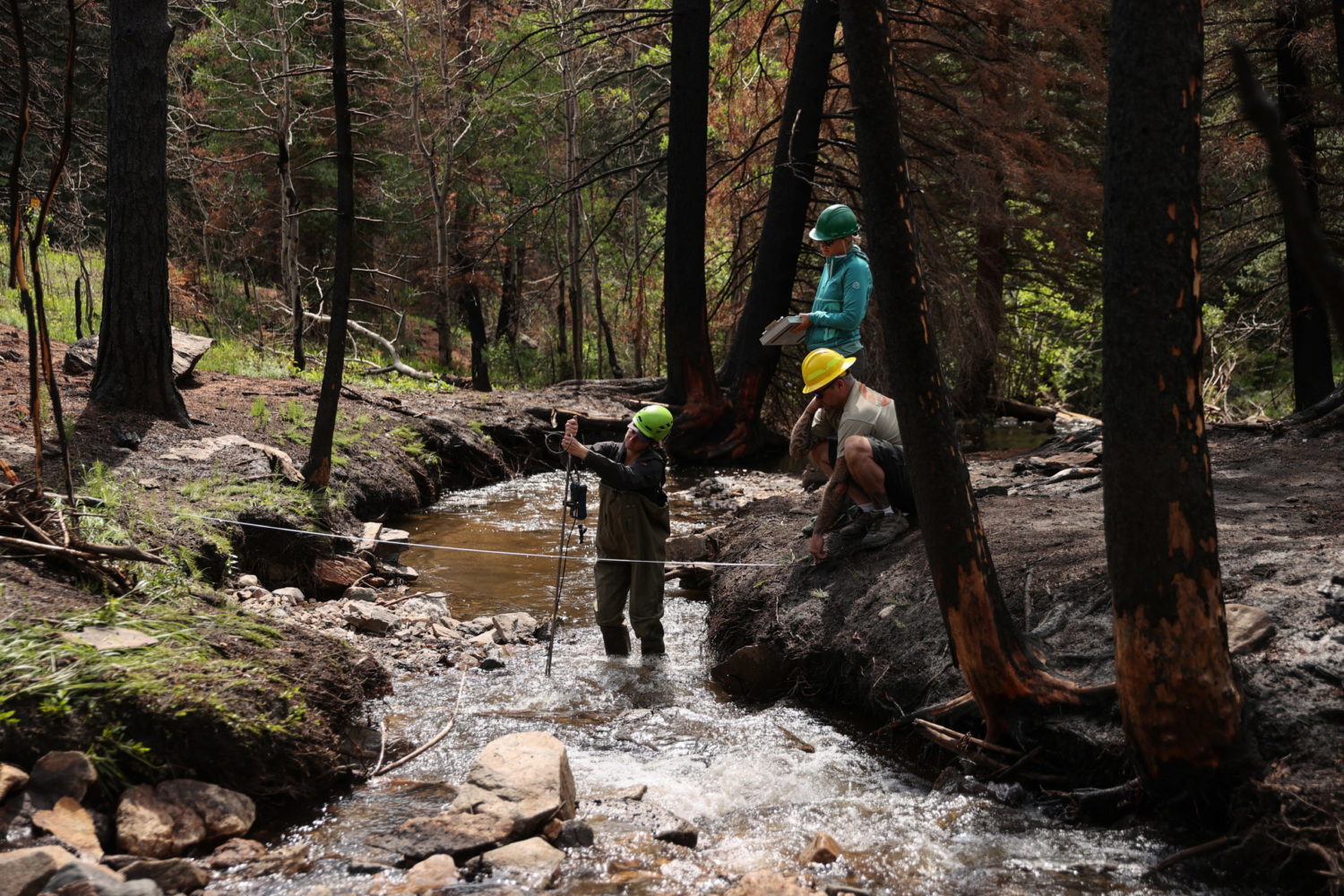
U.S. West faces little-known effect of raging wildfires: contaminated water

By Donna Bryson

FORT COLLINS, Colo. (Reuters) – Early this spring, water bills arrived with notes urging Fort Collins Utilities customers to conserve. The Colorado customers may have thought the issue was persistent drought in the U.S. West.

But the problem was not the quantity of water available. It was the quality.

Utilities are increasingly paying attention to a little-known impact of large-scale fires: water contamination.

Huge forest fires last year denuded vast areas of Colorado’s mountains and left them covered in ash – ash that with sediment has since been washed by rains into the Cache la Poudre River. The river is one of two sources for household water in this college town of 165,000. With more and fiercer storms expected this year, officials worry about water quality worsening beyond what treatment systems can handle.

The problem could apply to watersheds across the U.S. West, which has faced ever-increasing extremes in heat, drought and wildfire amid climate change in recent years. The United States relies on water originating on forested land for about 80% of its freshwater supply, according to a government report.

“If a wildfire is not in my watershed, it will be in someone else’s watershed,” said Sean Chambers, director of water and sewer in the nearby northern Colorado town of Greeley.

So far, Chambers and other northern Colorado utilities managers have avoided clogged pipes simply by skipping the Cache la Poudre water and using other supplies. But they worry that’s not a long-term solution, and so they sent out those notes pleading with customers to voluntarily conserve: Water lawns sparingly. Don’t let the hose run on the sidewalk when washing your car.

THE COST OF WATER

Corporate headhunter Jim Croxton moved to Fort Collins so he could take in the mountain scenery while fishing.

“I really don’t care about how big the fish are,” Croxton said after buying a half dozen flies at a Fort Collins fishing and guide shop. “I just like to be out in” nature.

He had considered drought to be the West’s water concern. But the utility’s letter urging conservation struck a chord; he had read about polluting fires affecting recreational fishing, too.

“Water in the West is a central issue,” Croxton said.

Fort Collins water rates rose 2% from January. That works out to less than $1 per month for the typical home, and generates about $600,000 toward covering an estimated $45 million in potential fire-related measures, according to calculations prepared for Fort Collins City Council.

Those measures include laying mulch on burn scars to hold down soil, and funding further fire impact research. To make up the balance, officials in Fort Collins, Greeley and other communities are pooling resources and seeking state and federal help.

Katrina Jessoe is an economist at UC Davis who has advised utilities on seeking funding to decontaminate water supplies from pollutants such as fertilizers.

“You can’t get around the fact that the cost of water is getting higher,” which could be a concern for low- and middle-income earners, Jessoe said.

Water managers say they need also to explore new ways of raising funds and making capital improvements to deal with fire-related contamination, for example, removing tastes and odors left by algae fed by nutrients in the sediments washed into reservoirs. The tastes and odors don’t mean the water is unsafe, but customers don’t like it.

Water managers are “making decisions right now that will affect whether or not this is a livable place in 50 years, 100 years,” said John Matthews, who heads the Alliance for Global Water Adaptation, a nonprofit that advises on adapting water systems for climate change.

UNPRECEDENTED FIRES

The two fires that have marred the watersheds relied on by Fort Collins, Greeley, Thornton and other towns were notable not just for the devastation they caused, but for having burned at such high elevation.

“We really don’t understand these high-elevation fires very well, because they haven’t happened very often,” said Matt Ross, an ecosystem scientist at Colorado State University who is studying how last year’s fires are impacting algae blooms now.

The Cameron Peak Fire broke out in August and was the first in Colorado history to consume more than 200,000 acres, including swathes of the Arapahoe and Roosevelt national forests and Rocky Mountain National Park. The East Troublesome came close, burning 193,812 acres across the Continental Divide.

In both cases, flames tore through forests where rivers originate and where snowpack – that frozen reservoir – builds up over winter.

Given the large region burned, researchers need to understand how long it will take for vegetation to grow back, so it can keep sediment from washing into water sources, said biogeochemist Chuck Rhoades at the U.S. Forest Service.

“The implications are that people need to think a little bit more about how to manage and sustain reservoirs,” Rhoades said.

(Reporting by Donna Bryson; Editing by Katy Daigle and Lisa Shumaker)

Forest fire guts small western Canada town after days of record-breaking heat

(Reuters) -A wildfire that began after three days of record-breaking temperatures has destroyed most of the small western Canadian town of Lytton and damaged a nearby hydro power station, a local politician said on Thursday.

Lytton, in central British Columbia, was evacuated a day earlier. This week it broke Canada’s all-time hottest temperature record three times.

Officials braced for more sizzling weather and the threat of more wildfires from a deadly heat wave that also ravaged the U.S. Northwest with record-high temperatures.

“The town has sustained structural damage and 90% of the village is burned, including the center of the town,” Brad Vis, a Member of Parliament for Mission-Matsqui-Fraser Canyon, said in a Facebook post.

He said the fire also caused extensive damage to BC Hydro stations and highways, limiting access to Lytton by road.

Amateur video footage showed residents scrambling to get out of town in their cars as fires burned down trees and some structures. The fire spread so swiftly that people were forced to leave behind their belongings and pets.

Lytton Mayor Jan Polderman ordered everyone in the town of 250 to vacate late on Wednesday.

“It’s dire. The whole town is on fire,” Polderman told the CBC. “It took, like, a whole 15 minutes from the first sign of smoke to, all of a sudden, there being fire everywhere.”

Residents of another 87 properties north of Lytton were also ordered to leave on Wednesday.

Lytton set a record of 49.6 degrees Celsius (121.28 degrees Fahrenheit) on Tuesday. The previous high in Canada, known for brutally cold winters, was 45 degrees Celsius, set in Saskatchewan in 1937.

On Wednesday, strong winds gusting up to 71 kph (44 mph) were recorded in the area, further flaming the fires.

In British Columbia, at least 486 sudden deaths were reported over five days to Wednesday, nearly three times the usual number that would occur in the province over that period, the B.C. Coroners Service said on Wednesday.

(Reporting by Denny Thomas in Toronto; Editing by Howard Goller and David Gregorio)

U.S. House approves $715 billion infrastructure bill

By David Morgan

WASHINGTON (Reuters) – The Democratic-controlled U.S. House of Representatives approved a $715 billion surface transportation and water infrastructure bill on Thursday in what Democrats see as an early step toward sweeping infrastructure legislation that Congress hopes to complete in September.

The bill, which includes provisions from President Joe Biden’s initial $2.3 trillion infrastructure proposal, authorizes additional spending for roads, bridges, highway safety, electric vehicle charging stations, rail, transit, drinking and wastewater infrastructure.

It also funds programs that would provide money for major projects, including an $11.6 billion plan to connect New Jersey and New York’s Penn Station in midtown Manhattan via four modern transportation tubes beneath the Hudson River.

The 221-201 vote sends the legislation to the Democratic-led Senate. The legislation’s spending level was increased by amendments and earmarks, but House aides could not immediately say by how much.

The action marks the first time that the House has voted to pass legislation containing earmarks, since Democrats and Republicans reinstituted the practice of allowing lawmakers to add pet projects to spending bills earlier this year.

The bill designates more than 1,470 projects amounting to nearly $5.7 billion in spending, according to the U.S. House Transportation & Infrastructure Committee. Nearly 1,070 projects worth just under $4 billion were sought by Democrats.

Republicans secured 403 projects valued at nearly $1.7 billion.

The legislation is necessary to reauthorize U.S. surface transportation programs by a Sept. 30 deadline.

House Democratic aides say the measure could also help a bipartisan working group in the U.S. Senate covert their $1.2 trillion infrastructure framework into legislative text. Biden has endorsed the bipartisan deal and the Democratic-led Senate hopes to pass legislation by the end of this month.

House Democrats are also working to produce a related landmark reconciliation bill that would address climate change, expand social programs and pay for new initiatives with tax hikes on U.S. corporations and the wealthy – objectives that Republicans reject.

House and Senate Democrats are aiming to pass a budget resolution with reconciliation instructions this month, and then give final congressional approval to bipartisan infrastructure legislation and the reconciliation bill in September. The initiatives could cost $6 trillion, all told.

Thursday’s House surface transportation bill contains $343 billion for roads, bridges and safety – including $4 billion for electric vehicle charging infrastructure.

The measure also calls for $109 billion for transit and $95 billion for rail, including tripling funding for the U.S. passenger railroad, Amtrak, to $32 billion, $117 billion for drinking water infrastructure and more than $51 billion for wastewater infrastructure.

It would authorize $4.1 billion for grants to buy electric transit buses, create a $500 million grant program to reduce traffic gridlock in large metropolitan areas and $1 billion to address the shortage of parking for commercial motor vehicles and allow for heavier electric vehicles on U.S. roads and mandate additional safety features in new school buses.

(Reporting by David Morgan; Editing by Dan Grebler)

Biden in Florida to comfort families as search at collapse site paused over safety concerns

By Katanga Johnson and Steve Holland

SURFSIDE, Fla. (Reuters) – President Joe Biden visited Florida on Thursday to comfort the families of those killed and missing in last week’s condominium collapse, as the search-and-rescue operation was temporarily suspended due to concerns about the stability of the remaining structure.

Biden, whose personal experience with tragedy has marked his political career, was set to reprise the role of “consoler-in-chief” a week after the 12-story building partially caved in as residents slept.

The confirmed death toll remained at 18, after the discovery of six more bodies in the ruins of the Champlain Towers South condo, including two children, aged 4 and 10. Another 145 people are missing and feared trapped in the rubble, with hopes of finding any survivors dimming with each passing day.

After arriving in Miami, Biden attended a briefing with local officials, including Governor Ron DeSantis, who is widely seen as a potential Republican presidential candidate in 2024.

Biden told them he would deliver “whatever you need” and said he expected the federal government would cover the full costs for the county and state.

“We’re not going anywhere,” he said. “This is life or death.”

Workers at the site were instructed to stop just after 2 a.m. on Thursday, when movement in the debris raised concerns that the part of the building still standing could collapse, officials said.

“The search-and-rescue operation will continue as soon as it is safe to do so,” Miami-Dade County Mayor Daniella Levine Cava said at a news briefing. Officials said they were unsure when that would happen.

Authorities said they have not given up on locating survivors. But nobody has been pulled alive from the wreckage since the early hours of the disaster in the oceanfront town of Surfside, adjacent to Miami Beach.

Miami-Dade County Fire Chief Alan Cominsky said rescuers did hear signs of life during their initial efforts last week.

“They were searching for a female voice, is what we heard for several hours,” he said. “Eventually, we didn’t hear her voice anymore.”

Officials are also keeping a watchful eye on Tropical Storm Elsa, which formed over the Atlantic and could reach south Florida by Monday, potentially hampering search operations.

SEARCH-AND-RESCUE

Among those traveling with Biden on Thursday were U.S. Representative Debbie Wasserman Schultz, whose district includes the collapse site; Federal Emergency Management Agency Administrator Deanne Criswell; and Liz Sherwood-Randall, White House homeland security adviser.

Biden had delayed his visit to Florida to avoid interrupting rescue efforts.

FEMA has dispatched five urban search-and-rescue teams – each comprised of 80 members – to assist in sifting through the rubble, White House spokesperson Karine Jean-Pierre told reporters aboard Air Force One.

DeSantis said workers have removed some 1,400 tons of material from the collapse site.

Thursday’s trip is Biden’s second visit to the scene of a disaster since he became president in January.

In February, he traveled to Texas after a winter storm left millions without power or clean water for days and killed several people.

After his briefing, the president planned to thank first responders and rescue crews before meeting with victims’ families. He is scheduled to deliver remarks shortly before 4 p.m. in Miami.

Biden’s ability to connect his own hardships with the grief and anguish of others has become a defining feature of his public life, having endured the deaths of his first wife, a daughter and a son.

Investigators have not determined what caused nearly half of the 40-year-old condo complex to crumble in one of the deadliest building collapses in U.S. history.

But a 2018 report prepared by engineering firm Morabito Consultants ahead of a building safety recertification process found structural deficiencies in the 136-unit complex that are now the focus of inquiries.

The Washington Post reported late on Wednesday that the majority of the board of the Surfside condominium, including its president, resigned in 2019, partly in frustration over what was seen as the sluggish response to the report.

(Reporting By Katanga Johnson in Surfside and Steve Holland in Bal Harbor; Additional reporting by Jarrett Renshaw, Francisco Alvarado, Brendan O’Brien, Peter Szekely, Kanishka Singh and Trevor Hunnicutt; Writing by Joseph Ax; Editing by Giles Elgood, Steve Orlofsky and Sonya Hepinstall)

‘No reason to celebrate’: Canada Day muted as country reckons with dark colonial history

By Steve Scherer

OTTAWA (Reuters) -Multiple cities scrapped Canada Day celebrations on Thursday after the discovery of hundreds of remains of children in unmarked graves at former indigenous schools sparked a reckoning with the country’s colonial past.

Calls to scale back or cancel celebrations snowballed after, beginning in May, almost 1,000 unmarked graves were found at former residential schools in British Columbia and Saskatchewan that were mainly run by the Catholic Church and funded by the government.

Traditionally the holiday is celebrated with backyard barbecues and fireworks much like July 4 in the United States, however this year Canadian Prime Minister Justin Trudeau said the day would be “a time for reflection.”

A #CancelCanadaDay march was being held in Ottawa, the capital, and Toronto was hosting rallies to honor the victims and survivors of Canada’s residential school system. The schools forcibly separated indigenous children from their families, in what the Truth and Reconciliation Commission called “cultural genocide” in 2015.

“Canada is having a reckoning with its history,” said Akwasi Owusu-Bempah, a University of Toronto sociology professor who studies race, crime and criminal justice.

“I don’t think we can celebrate this country for what it is without recognizing this country for what it isn’t: a utopia and a bastion of equality and freedom and equal opportunity for all members of society,” he said.

Canada’s reputation for tolerance was built on its efforts, starting in the 1970s, to create a multicultural society, but inequalities abound both for indigenous communities and among visible minorities, data show.

In his Canada Day message on Thursday, Trudeau said the discovery of the remains of hundreds of children at former residential schools “have rightfully pressed us to reflect on our country’s historical failures,” and the injustices that still exist for indigenous peoples and many others in Canada.

“This Canada Day, let’s recommit to learning from and listening to each other so we can break down the barriers that divide us, rectify the injustices of our past, and build a more fair and equitable society for everyone.

STARK DISPARITIES

Indigenous people, who make up less than 5% of the population, face higher levels of poverty and violence and shorter life expectancies.

The unemployment rate for visible minorities, who make up more than 20% of the total population, was 11.4% in May compared with 7.0% for whites, according to Statistics Canada. In 2020, the unemployment rate for indigenous people in Ontario was 12.5% compared with 9.5% for non-indigenous people.

Some 30% of visible minorities and indigenous peoples feel treated like outsiders in their own country, according to an Angus Reid Institute poll on diversity and racism published on June 21.

The discovery of the remains and a deadly attack on a Muslim family in June that killed three generations of members has led to soul-searching in Canada about the country’s oft-touted reputation for tolerance. The suspect is accused of murder and domestic terrorism.

Hate crimes against Muslims rose 9% to 181 in 2019, according to the latest data by StatCan. Some 36% of indigenous people and 42% of visible minorities said Canada is a racist country, according to the Angus Reid survey.

A number of Muslim women who wear hijabs have also been attacked in Alberta in recent weeks, while in Quebec a law banning public servants from wearing the hijab is facing legal challenges, and critics have called the measure a form of institutionalized racism.

New Democrat lawmaker Mumilaaq Qaqqaq, who is Inuk, said she felt unsafe in the House of Commons as an indigenous woman, and last month announced she would not be running for re-election.

“I don’t think there’s any reason for celebration (on Canada Day),” Qaqqaq said.

(Reporting by Steve Scherer, additional reporting by Julie Gordon; Editing by Aurora Ellis)

U.S. Supreme Court backs voting restrictions in Arizona

By Andrew Chung

(Reuters) -The U.S. Supreme Court on Thursday endorsed two Republican-backed ballot restrictions in Arizona that a lower court found had disproportionately burdened Black, Latino and Native American voters, handing a defeat to voting rights advocates and Democrats who had challenged the measures.

The 6-3 ruling, with the court’s conservative justices in the majority, held that the restrictions on early ballot collection by third parties and where absentee ballots may be cast did not violate the Voting Rights Act, a landmark 1965 federal law that prohibits racial discrimination in voting.

The court’s three liberal justices dissented from the decision.

The decision comes at a time when states are pursuing a series of Republican-backed voting restrictions in the wake of former President Donald Trump’s claims of widespread election fraud and irregularities in his 2020 loss to now-President Joe Biden.

The ruling represented a victory for the Arizona Republican Party and the state’s Republican attorney general, Mark Brnovich. They had appealed a lower court ruling that had deemed the restrictions unlawful.

The case involves a 2016 Arizona law that made it a crime to provide another person’s completed early ballot to election officials, with the exception of family members or caregivers. Community activists sometimes engage in ballot collection to facilitate voting and increase voter turnout. Ballot collection is legal in most states, with varying limitations. Republican critics call the practice “ballot harvesting.”

The other restriction at issue was a longstanding Arizona policy that discards ballots cast in-person at a precinct other than the one to which a voter has been assigned. In some places, voters’ precincts are not the closest one to their home.

The case raised questions over whether fraud must be documented in order to justify new curbs.

Democrats have accused Republicans at the state level of enacting voter-suppression measures to make it harder for racial minorities who tend to support Democratic candidates to cast ballots. Many Republicans have justified new restrictions as a means to reduce voter fraud, a phenomenon that election experts have said is rare in the United States.

Republicans are seeking to regain control of the U.S. Congress from the Democrats in the 2022 mid-term elections.

The Arizona legal battle concerned a specific provision called Section 2 of the Voting Rights Act that bans voting policies or practices that result in racial discrimination. Section 2 has been the main tool used to show that voting curbs discriminate against minorities since the Supreme Court in 2013 gutted another section of the statute that determined which states with a history of racial discrimination needed federal approval to change voting laws.

Arizona Republicans said in court papers that voting restrictions have partisan effects and impact elections. Invalidating the out-of-precinct policy would reduce Republican electoral prospects because it would increase Democratic turnout, they told the justices during March 2 arguments in the case.

The Republicans said that “race-neutral” regulations on the time, place or manner of an election do not deny anyone their right to vote and that federal law does not require protocols to maximize the participation of racial minorities.

The Democratic National Committee and the Arizona Democratic Party sued over the restrictions. Arizona’s Democratic Secretary of State Katie Hobbs has backed the challenge to the measures.

The San Francisco-based 9th U.S. Circuit Court of Appeals last year found Arizona’s restrictions violated the Voting Rights Act, though they remained in effect for the Nov. 3 election in which Joe Biden, a Democrat, defeated Donald Trump, a Republican, in the state.

The 9th Circuit also found that “false, race-based claims of ballot collection fraud” were used to convince Arizona legislators to enact that restriction with discriminatory intent, violating the U.S. Constitution’s prohibition on denying voting rights based on race.

U.S. Senate Republicans on June 23 blocked Democratic-backed legislation that would broadly expand voting rights and establish uniform national voting standards to offset the wave new Republican-led voting restrictions in states.

Biden has sharply criticized Republican-backed state voting restrictions. Biden called a measure signed by Georgia’s Republican governor in March “an atrocity” and likened it to racist “Jim Crow” laws enacted in Southern states in the decades after the 1861-65 U.S. Civil War to legalize racial segregation and disenfranchise Black people.

(Reporting by Lawrence Hurley in Washington and Andrew Chung in New York; Editing by Will Dunham)

Brazil sees most June fires in Amazon rainforest since 2007

BRASILIA (Reuters) – Brazil recorded the most fires in the Amazon rainforest in 14 years for the month of June, government data showed on Thursday, amid worries that an extreme drought in many parts of the region could fuel worse fires in months to come.

National space research agency Inpe recorded 2,308 hot spots in the Brazilian Amazon in June, a 2.7% rise from the same month a year ago, when fires had reached a 13-year high.

While the number of fires in June only amount to a fraction of those seen at the peak of the dry season in August and September, environmental advocates fear it’s a sign of worse to come.

“With a high number of fires already at the start of the Amazon Summer, when there is naturally a decline in rains in the Amazon, this number will likely rise,” Greenpeace Brasil said in a statement.

Scientists warn that dry weather along the Amazon’s so-called “arc of deforestation” and in the Pantanal wetlands could drive a worse fire season. Hydroelectric plants across the country have reported the lowest water inflows in 91 years amid intense drought, according to the Mines and Energy Ministry.

Fires in the Amazon are overwhelmingly man-made, with natural blazes extremely rare. Generally, loggers illegally cut down valuable trees and then land-grabbers set a fire to clear the space for cattle. Fire can also be used as part of traditional agriculture.

Dry weather increases the odds of fires running out of control.

President Jair Bolsonaro earlier this week banned most outdoor fires in the country for 120 days as a precaution and deployed the military to protect the region from fires and deforestation.

Those policy moves repeat steps taken in 2019 and 2020 that failed to lower deforestation and fires. For the full year of 2020, fires in the Amazon reached a four-year high, while deforestation hit a 12-year high, according to Inpe.

(Reporting by Jake Spring; Editing by Mark Potter)

Delta variant gains ground in U.S., men do worse with COVID-19

By Nancy Lapid

(Reuters) – The following is a roundup of some of the latest scientific studies on the novel coronavirus and efforts to find treatments and vaccines for COVID-19, the illness caused by the virus.

Highly contagious Delta variant gaining ground in U.S.

The highly transmissible Delta variant of SARS-CoV-2, first identified in India, has become the most prevalent variant among new COVID-19 cases in the United States, according to California-based genomics company Helix. The company’s computer models indicate that Delta now accounts for around 40% of new U.S. cases, Dr. William Lee, vice president of science at Helix, said in a statement provided to Reuters. The models, based on 27,717 virus samples from 687 counties across the United States, also indicated that the worrisome Gamma variant, first identified in Brazil, accounts for about 15% of new cases. Helix researchers have noted occasional cases of an “offspring” variant of Delta called Delta-plus, but they “aren’t seeing any evidence suggesting that these are driving the growth of Delta around the country yet,” Lee said. Earlier in June, the researchers reported on the medical website medRxiv ahead of peer review that the percentage of new COVID-19 cases due to the variant first identified in Britain, known as Alpha, had dropped from 70% in mid-April 2021 to 42% six weeks later. Now, Lee said, Alpha “is down to around 20%.” Lee said his team has submitted an update to the previous medRxiv preprint and is waiting for approval.

Regardless of health status, men do worse with COVID-19

Men appear more likely than women to experience severe outcomes from COVID-19 regardless of whether the men have underlying health conditions, according to a new study. Researchers in New York City who tracked roughly 5,000 patients of both sexes who were diagnosed in early 2020 found that men were sicker when first diagnosed and had a higher need for intensive care treatment and higher rates of death than women. This was true even though the men on average were younger and less likely than women to have risk factors such as obesity and high blood pressure that previously have been linked with poor COVID-19 outcomes. Among women, the likelihood of severe COVID-19 outcomes did seem to be related to their health status, the researchers said in a report published on Wednesday in the journal Communications Medicine. A second analysis of another group of roughly 1,600 patients in New York City diagnosed later in the year showed similar patterns. The authors noted that because their information on patients’ pre-existing medical problems may have been incomplete, larger studies are needed to confirm their findings and to explain the causes.

Moderna vaccine antibodies neutralize variants in lab study

The mRNA vaccine from Moderna Inc can defend against emerging variants with only modestly reduced effectiveness, laboratory experiments indicated. Moderna researchers studied blood serum obtained from eight volunteers who had received the second dose of the vaccine a week earlier. They found the vaccine had produced antibodies capable of neutralizing all variants, including additional versions of the Beta variant first identified in South Africa and three lineages of variants first identified in India, including the Kappa and Delta variants. The analysis did show some reduction of neutralization, by 2.1 fold against Delta, 3.3-3.4 fold against Kappa and 3.2 fold against Gamma, which was first identified in Brazil. “These new data are encouraging and reinforce our belief that the Moderna COVID-19 vaccine should remain protective against newly detected variants,” Moderna Chief Executive Stéphane Bancel said. The Moderna data was posted on Monday on the bioRxiv medical website ahead of peer review. Earlier in June, researchers reported in the journal Nature that the mRNA vaccine from Pfizer and BioNTech elicited antibodies that could neutralize all tested variants, including Delta, although at reduced strength.

(Reporting by Nancy Lapid and Mrinalika Roy; Editing by Will Dunham)

Myanmar’s army rulers threaten those who call them junta

(Reuters) – Myanmar’s military authorities threatened on Wednesday to take legal action against foreign news organizations that describe them as a junta and their seizure of power in February as a coup d’etat.

Many foreign publications, including Reuters, have used the terms to describe the army-led State Administration Council and the overthrow of elected leader Aung San Suu Kyi.

The military-controlled Ministry of Information published the warning in its Global New Light of Myanmar newspaper.

“Some foreign news agencies were warned not to further apply the usage of military council/military junta/junta for the government in the future and not to quote and exaggerate the false news,” the statement said.

“Action will be taken against them under the existing laws if they apply wrong usages, quote and exaggerate fake news and disseminate false information.”

Neither the director of the Ministry of Information nor a spokesman for the ruling council answered calls from Reuters seeking further comment.

The military government has consistently said that it took power in accordance with the constitution, alleging fraud in elections swept by Suu Kyi’s party in November. Its allegations had been dismissed by the then electoral commission and international observers.

Western countries have condemned the takeover as a coup and imposed limited sanctions on Myanmar’s military rulers.

The junta has been criticized by press freedom groups for detaining scores of journalists, revoking the licenses of several independent media organizations and restricting internet access.

Military ruler Min Aung Hlaing has described the media as crucial for freedom of expression and democracy, while also calling on local media to prevent the infiltration of foreign ideas.

Some journalists were part of a prisoner release on Wednesday.

(Writing by Matthew Tostevin; Editing by Nick Tattersall)