U.S. government extends deadline to sign up for Obamacare insurance plans

(Reuters) – The U.S. government said on Monday the deadline for signing-up for 2020 insurance plans under the Affordable Care Act (ACA) has been extended by three days to Dec. 18 to accommodate those who experienced issues while attempting to enroll.

There were website glitches and call center delays reported on Sunday, the earlier deadline for the 2020 open enrollment, and the extension should help the final enrollment tally, said Evercore ISI analyst Michael Newshel.

“The post-Thanksgiving ramp-up in sign-ups was better than expected, and the momentum bodes well for the key final surge into the deadline this Sunday, December 15,” Newshel said in a note last week.

Last year, the number of people who signed up for 2019 health plans fell 4% to 8.5 million people from 2018, but saw a typical trend of last-minute shopping in the final week.

The Centers for Medicare and Medicaid Services runs enrollment for insurance plans created by the ACA, often called Obamacare, through the online marketplace, HealthCare.gov, for 38 states.

(Reporting by Manojna Maddipatla in Bengaluru; Editing by Shinjini Ganguli)

Take Five: What’s the deal?

LONDON (Reuters) –

1/AFTER PHASE ONE COMES PHASE TWO

U.S. President Donald Trump and Chinese officials have agreed to a “phase one” trade deal that includes cutting U.S. tariffs on Chinese goods.

Washington has agreed to suspend tariffs on $160 billion in Chinese goods due to go into effect on Dec. 15, Trump said, and cut existing tariffs to 7.5%.

The agreement covers intellectual property, technology transfer, agriculture, financial services, currency, and foreign exchange, according to Washington’s Trade Representative.

Neither side offered specific details on the amount of U.S. agricultural goods Beijing had agreed to buy – a key sticking point of the lengthy deal negotiations. News of the trade deal saw U.S. stocks romp to fresh record levels. But few doubt that the rollercoaster is over yet.

While Trump announced that “phase two” trade talks would start immediately, Beijing made it clear that moving to the next stage of the trade negotiations would depend on implementing phase one first. While markets cheered the December rally, few expect the trade deal rollercoaster ride to be quite over yet.


2/MORE NICE SURPRISES, PLEASE!

First clues as to whether euro zone powerhouse Germany can avoid a fourth quarter recession emerge on Monday when advance PMI readings for November are released globally.

The economic activity surveys, a key barometer of economic health, come after Citi’s economic surprise index showed euro zone economic data beating consensus expectations at the fastest pace since February 2018. The latest surprise was a 1.2% rise in German exports in October, defying forecasts of a contraction.

Hopes are high that exports and private consumption, which helped Germany skirt recession, will hold up. Last month’s PMI data showed manufacturing remained in deep contraction across the bloc.

A Reuters poll showed expectations of a modestly higher 46.0 manufacturing reading in the euro zone but that’s still far below the 50-mark which separates growth from contraction. Services, which have held up better so far, are expected to grow modestly from November, at 52.0.

Graphic: Citi surprise index most positive since Feb 2018, https://fingfx.thomsonreuters.com/gfx/mkt/12/9901/9813/Citi%20index.png

3/BEWARE THE BOJ

Japan’s central bank meets on Thursday with the global economic outlook “relatively bright,” according to Governor Haruhiko Kuroda.

Growth green shoots, a possible U.S.-China trade deal and something nearing certainty on Brexit has got almost everyone expecting the BOJ will do very little: Interest rates are at -0.1% and the bank has eased off bond buying – even though the bank’s balance sheet is bursting with negative-yielding paper.

The government has flagged a gigantic $122 billion stimulus package to keep things moving after next year’s Olympics. Yet the business mood is dire with Friday’s “tankan” survey at its lowest reading since 2013. Big manufacturers – especially automakers – are gloomiest, as the trade war takes its toll.

The Bank of Japan has justified standing pat on the view that robust domestic demand will cushion the hit. It blames the weather and a sales tax for recent patchy data. But another week of dollar weakness will not have gone unnoticed in Tokyo, where a cheaper yen is much desired. A surprise on Tuesday export data forecast to show further contraction and Thursday’s inflation reading could jolt yen longs out of their slumber.

4/JOHNSON, AND MORE JOHNSON

A thumping election win for Prime Minister Boris Johnson has raised hopes that 3-1/2 years of Brexit-fuelled chaos will finally end.

Expectations that he may swing slightly nearer the centre of his Conservative Party, sidelining the fiercest eurosceptics, and ease the path towards a free-trade deal with the European Union have sent sterling and British shares surging.

Yet there are signs of caution, with sterling stalling around $1.35. Further gains will hinge on Johnson’s new cabinet, how the global growth and trade war backdrop pans out and what the Bank of England might do.

At the central bank’s Dec. 19 meeting, markets will watch for any shifts in its views on inflation, the UK economy and the interest rate outlook for 2020. While policymakers have skewed dovish of late amid a torrent of dismal data and sub-target inflation, the election result – and a hoped-for growth recovery – have seen money markets halve the probability of an end-2020 cut to 25%.

Without more clarity, investors might just be wary of chasing sterling much higher.

Graphic: UK economic indicators, https://fingfx.thomsonreuters.com/gfx/mkt/12/9958/9869/GB.png

5/SWEDEN RETURNS TO ZERO?

While most central banks are busy pondering whether to hold or cut interest rates, Sweden may swim against the tide and deliver a 25 basis-point rate hike on Dec. 19. That will end half a decade of negative interest rates in the country and make it the first in Europe to pull borrowing costs from sub-zero territory.

Policymakers flagged a rate hike in October and recent data showing inflation rising to 1.7% — just off the 2% target — cemented those expectations. The crown’s rallied to eight-month highs versus the euro, up almost 5% since October.

The proposed interest rate increase has its critics, who cite still-sluggish inflation and factory activity at its weakest since 2012.

Meanwhile, neighbouring Norway’s policy meeting, scheduled for the same day, may be less exciting as no change is expected. Investors remain baffled by the Norwegian crown’s weakness – despite policy makers delivering four rate hikes since Sept 2018, it’s at near record lows to the euro.

Graphic: Swedish crown , https://fingfx.thomsonreuters.com/gfx/mkt/12/9961/9872/crown.png

(Reporting by Alden Bentley in New York, Tom Westbrook in Singapore, Sujata Rao, Elizabeth Howcroft and Yoruk Bahceli in London, compiled by Karin Strohecker; edited by Philippa Fletcher)

The U.S. will phase out China tariffs, Beijing officials say

BEIJING/WASHINGTON (Reuters) – The United States has agreed to phase out tariffs on Chinese goods, Chinese officials said at a press conference in Beijing Friday evening.

The two countries have achieved major progress in their phase one trade negotiations, Beijing officials said, and agreed on the text of a phase one deal.

The deal will provide more protection for foreign companies in China, and Chinese companies in the United States, Chinese officials said.

U.S. sources said Thursday that Washington has set its terms for a trade deal with China, offering to suspend some tariffs on Chinese goods and cut others in exchange for Beijing’s buying more American farm goods, but Beijing had no comment during the day on Friday in Asia.

The silence had raised questions over whether the two sides can agree a truce in their trade war before a new round of tit-for-tat tariffs takes effect on Sunday.

A source briefed on the status of bilateral negotiations said Thursday the United States would suspend tariffs on $160 billion in Chinese goods expected to go into effect on Sunday and roll back existing tariffs.

(Reporting by Vincent Lee, writing by Heather Timmons; Editing by Nick Zieminski)

U.S. asylum seekers sent to Guatemala preferring to return to home countries

U.S. asylum seekers sent to Guatemala preferring to return to home countries
By Sofia Menchu

GUATEMALA CITY (Reuters) – U.S. asylum seekers sent to Guatemala under a new Trump administration program have mostly preferred to return to their country of origin instead of staying in the Central American nation, Guatemala’s Interior Minister said on Thursday.

The new effort began after the administration of U.S. President Donald Trump brokered an agreement with the Guatemalan government in July. The deal will allow U.S. immigration officials to force migrants requesting asylum at the U.S.-Mexican border to apply for asylum in Guatemala first.

The program initially will be applied at a U.S. Border Patrol station in El Paso, Texas. The first phase will target adults from Honduras and El Salvador.

Interior Minister Enrique Degenhart said that a total of 24 people have been sent to Guatemala under the program.

Of those “only two have requested asylum (in Guatemala),” Degenhart said during a visit by Acting U.S. Homeland Security Secretary Chad Wolf.

While the asylum agreement with Guatemala will start slowly, the Trump administration intends to make few exceptions. Federal immigration officials have been instructed not to apply the program to unaccompanied children, migrants with valid U.S. travel documents, or cases of public interest, according to U.S. Citizenship and Immigration Services officials and documents.

“For those in the region who may be weighing the option of taking the dangerous journey north, I’d strongly urge you against it,” said Wolf, in prepared remarks. “Simply requesting asylum at the Southwest border no longer guarantees release into the interior like it once did. We have ended catch and release,” Wolf added.

(Reporting by Sofia Menhu; Writing by Anthony Esposito; Editing by Sandra Maler)

U.S. warns North Korea against ‘ill-advised behavior’ as deadline looms

By Matt Spetalnick and Jane Chung

WASHINGTON/SEOUL (Reuters) – The United States warned North Korea on Thursday against any resumption of “unfortunate ill-advised behavior” after Pyongyang raised international concerns by setting an end-of-year deadline for Washington to reconsider its diplomatic approach.

Assistant Secretary of State David Stilwell said that “we have heard threats before,” when asked whether Washington was concerned about a return to long-range missile tests by North Korea, which has vowed to take an unspecified “new path” if the United States is not more flexible in stalled nuclear talks.

North Korea said earlier on Thursday the United States had nothing to offer it in possible renewed talks aimed at getting Pyongyang to give up its nuclear and missile programs, a day after Washington said it was ready to take “concrete steps” toward securing a deal.

It criticized the United States for convening a U.N. Security Council meeting on Wednesday, calling it a “foolish thing” that would help Pyongyang make a clear decision on which path it would take.

“The U.S. talks about dialogue, whenever it opens its mouth, but it is too natural that the U.S. has nothing to present before us though dialogue may open,” a North Korean Foreign Ministry representative said in a statement carried by the state news agency, KCNA.

The 15-member Security Council met on Wednesday as concerns grow internationally that North Korea could restart ICBM test launches suspended since 2017, because denuclearization talks between Pyongyang and Washington have stalled.

Pyongyang has conducted a recent series of weapons tests and resumed personal insults against U.S. President Donald Trump, stirring fears the two countries could return to a collision course, as they were before Trump and North Korean leader Kim Jong Un held their first summit last year.

Speaking at a think tank event in Washington on Thursday, Stilwell suggested it was unclear “whether they actually carry out those threats in light of where the president has said he wants to go.””He wants to work with North Korea. He wants to help build their economy. But there’s also the reminder that you can’t have any more of this unfortunate ill-advised behavior,” Stilwell said.

‘CONCRETE STEPS’

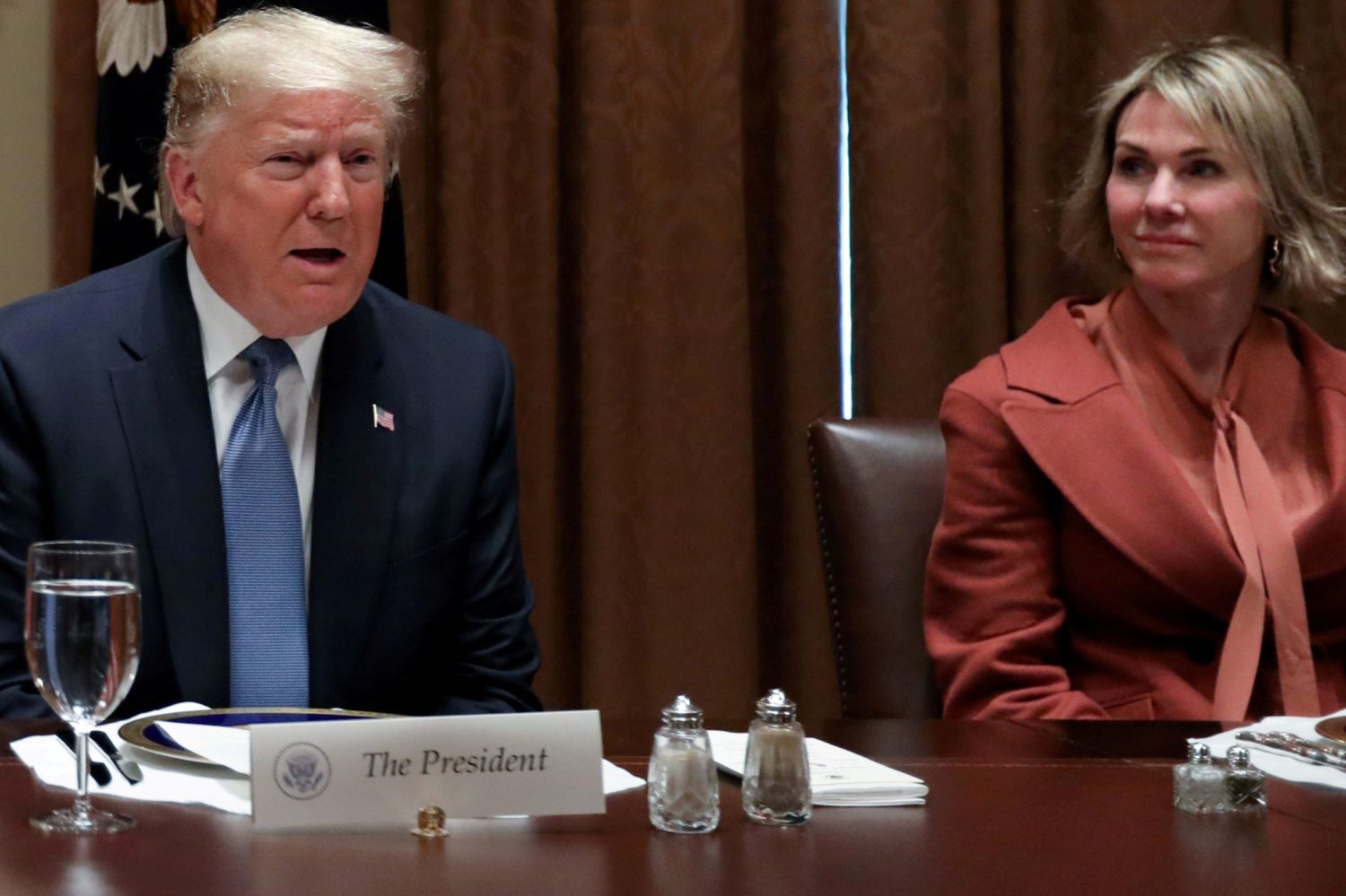
The U.S. envoy to the United Nations, Kelly Craft, said on Wednesday the United States was ready “to simultaneously take concrete steps” toward a deal on North Korea’s nuclear and missile programs but that the Security Council must be prepared to respond to any provocations.

“The U.S. talked about a ‘corresponding measure’ in the meeting. However, as we already declared, we have nothing to lose more and we are ready to take a countermeasure corresponding to anything that the U.S. opts for,” the Foreign Ministry representative said.

North Korea also defended its right to missile and weapons tests, while calling the United States “bandit-like” in the statement.

The U.S. special representative for North Korea, Stephen Biegun, is expected to visit Seoul next week to meet South Korean officials, leading to speculation he could try to salvage talks by reaching out to North Korea ahead of the deadline.

China’s U.N. ambassador, Zhang Jun, said on Wednesday it was imperative the Security Council ease sanctions on North Korea in a bid to support talks between Pyongyang and Washington and “head off a dramatic reversal” of the situation.

(Reporting by Matt Spetalnick, Jane Chung, Sangmi Cha and Josh Smith; Editing by Angus MacSwan and Peter Cooney)

House panel recommends Trump be impeached for abuse of power

WASHINGTON (Reuters) – The U.S. House Judiciary Committee on Friday recommended that President Donald Trump be impeached for abuse of power, clearing the way for a vote in the full House of Representatives next week.

The impeachment article approved by the panel accuses Trump of abusing his power by trying to force Ukraine to investigate political rival Joe Biden, a leading contender for the Democratic nomination to run against Trump next year.

Trump has denied wrongdoing.

The committee will vote later on a separate article of impeachment accusing Trump of obstructing the congressional Ukraine investigation.

(Reporting by Susan Cornwell; Editing by Tim Ahmann and Susan Heavey)

Trump says U.S. and China ‘very close’ to trade deal as fresh tit-for-tat tariffs loom

Trump says U.S. and China ‘very close’ to trade deal as fresh tit-for-tat tariffs loom
BEIJING/WASHINGTON (Reuters) – China and the United States are in close communication on trade, officials in Beijing and Washington said, days before tit-for-tat tariffs are due to go into effect.

U.S. President Donald Trump on Thursday said on the United States was “very close” to nailing down a trade deal with China. “Getting VERY close to a BIG DEAL with China,” Trump posted on Twitter. “They want it, and so do we.”

During a regular briefing on Wednesday in Beijing, Gao Feng, spokesman at the Chinese commerce ministry, told reporters “The two sides’ economic and trade teams are maintaining close communication.”

Stock markets jumped on Trump’s tweet, and the S&P 500 <.SPX> shot to a record high, gaining 0.85% on the day.

U.S. negotiators have offered to cut existing tariff rates on $360 billion in Chinese goods by as much as 50%, one person briefed on the negotiations said. They have also offered to suspend tariffs due to go into effect on Dec. 15, the Wall Street Journal reported on Thursday.

The White House had no comment on any offers.

Gao declined to comment on possible retaliatory steps if Washington imposes more tariffs on Chinese goods this weekend.

The United States is due to impose tariffs on almost $160 billion of Chinese imports such as video game consoles, computer monitors and toys on Dec. 15.

Trump is expected to meet top trade advisers on Thursday afternoon to discuss the move, sources told Reuters previously.

Trump’s son-in-law Jared Kushner has recently taken a larger role in U.S.-China trade negotiations, and is among the advisers pushing the 50% tariff rollback, one person briefed on the talks said.

Analysts at Capital Alpha Partners said Thursday they expect Trump to announce a delay in the Dec. 15 tariffs as soon as Thursday for more than 30 days.

A decision to proceed with the Dec. 15 levies could roil financial markets and scuttle U.S.-China talks until after the U.S. presidential election next November. The 17-month-long trade war between the world’s two largest economies has slowed global growth and dampened profits and investment for companies around the world.

The countries agreed in October to conclude a preliminary trade agreement, but Beijing is balking at U.S. demands that it promise to buy a specific amount of agricultural goods. Beijing is also demanding rollbacks of existing tariffs imposed by the United States.

Beijing has said it would retaliate if the United States escalates the trade dispute.

In August, China said it would impose 5% and 10% in additional tariffs on $75 billion of U.S. goods in two batches. Tariffs on the first batch kicked in on Sept. 1, hitting U.S. goods including soybeans, pork, beef, chemicals and crude oil.

The tariffs on the second batch of products are due to be activated on Dec. 15, affecting goods ranging from corn and wheat to small aircraft and rare earth magnets.

China also said that it will reinstitute on Dec. 15 an additional 25% tariff on U.S.-made vehicles and 5% tariffs on auto parts that had been suspended at the beginning of 2019.

(Reporting by Gabriel Crossley and Jeff Mason; Writing by Ryan Woo and Heather Timmons; Editing by Kim Coghill and Jonathan Oatis)

Boston Marathon bomber seeks to avoid death penalty

Boston Marathon bomber seeks to avoid death penalty
By Tim McLaughlin

BOSTON (Reuters) – Lawyers for Boston Marathon bomber Dzhokhar Tsarnaev on Thursday will try to persuade a federal appeals court that the death sentence he faces is unfair because it was handed down by a tainted jury.

Tsarnaev’s defense team, in briefs filed with the 1st U.S. Circuit Court of Appeals in Boston, have argued that the publicity and manhunt leading to his capture in April 2013 biased the pool of potential jurors, including one actual juror who joined the unanimous vote for the death penalty.

The then-19-year-old Tsarnaev and his 26-year-old brother Tamerlan sparked five days of panic in Boston when they detonated a pair of homemade pressure cooker bombs at the marathon’s finish line, killing three people and injuring more than 200.

The pair eluded capture for days, punctuated by a gunbattle with police in Watertown, Massachusetts, in which Tamerlan was killed. Boston and most of its suburbs were locked down for a day as armed officers and troops conducted a house-to-house search for Dzhokhar.

Tsarnaev, now 26, was sentenced to death in 2015 after a jury found him guilty of killing three people in the April 15, 2013 bombing – Martin Richard, 8; Chinese exchange student Lingzi Lu, 26, and restaurant manager Krystle Campbell – and murdering Massachusetts Institute of Technology police officer Sean Collier, 26, three days later as the brothers attempted to flee.

Tsarnaev is not expected to be present during two hours of oral arguments at the same federal courthouse in Boston where he was convicted. His lawyers are asking the appeals court to reverse his death sentence.

“Tsarnaev was tried in a community still suffering from his crimes,” his defense team argued in court papers. “Two of the jurors who voted to sentence him to death lied during (jury selection), including the foreperson, who falsely denied calling Tsarnaev a ‘piece of garbage’ on Twitter, and, as the government concedes, failed to disclose that she and her family had sheltered in place in their Dorchester home during the manhunt.”

U.S. Justice Department lawyers say Tsarnaev received a fair trial and the jury was picked from a population mostly opposed to the death penalty. During his trial, a poll by the Boston Globe showed that about two-thirds of Massachusetts residents favored a life sentence for Tsarnaev.

During the trial, the family of the youngest victim, Richard, also asked prosecutors to consider taking the death penalty off the table.

(Reporting By Tim McLaughlin; Editing by Scott Malone and Grant McCool)

U.S. watchdog finds $6.7 billion in questionable Medicare payments to insurers

By Chad Terhune

(Reuters) – A U.S. government watchdog is raising fresh concerns that health insurers are exaggerating how sick Medicare patients are, receiving billions of dollars in improper payments as a result.

Health insurers selling Medicare Advantage plans to seniors and the disabled received an estimated $6.7 billion in 2017 after adding diagnoses to patients’ files that were not supported by their medical records, according to a report released on Thursday by the U.S. Health and Human Services (HHS) Inspector General’s Office.

Inspectors found that Medicare Advantage insurers had added diagnoses for diabetes, heart disease and other conditions in 99.3% of chart reviews of patient information, even though they did not appear in records from doctors, hospitals or other medical providers. Insurers deleted incorrect diagnoses less than 1% of the time, they found.

The additional diagnoses boosted government payments to insurers by an estimated $6.9 billion, while the deleted information trimmed payouts by nearly $200 million, producing a net benefit of $6.7 billion for the companies.

“We could not see any services with the diagnosis and that raised a number of concerns,” Linda Ragone, a regional inspector general in Philadelphia and co-author of the report, said in a phone interview. “There is a vulnerability here that needs to be addressed.”

The report highlighted a group of 4,616 Medicare Advantage enrollees for whom insurers added a diagnosis that resulted in a higher payment, even though there was no record of the person receiving any medical services during the year under review.

Medicare Advantage plans are privately-run alternatives to traditional Medicare. They served 22 million people – or 1 in 3 of those eligible for the government healthcare program – at a cost of $210 billion in 2018.

The report did not identify specific insurers. UnitedHealth Group Inc <UNH.N>, Humana Inc <HUM.N> and CVS Health Corp <CVS.N> through its ownership of Aetna, are among the biggest sellers of Medicare Advantage plans. Together, the three companies have 54% of the market, according to the Kaiser Family Foundation.

America’s Health Insurance Plans (AHIP), an industry trade group, said the rate of improper payments in the Medicare Advantage program has been decreasing.

“Everyone agrees that Medicare Advantage payments must be fair and accurate, and we continue to work with (Medicare) to improve payment accuracy,” said AHIP spokeswoman Kristine Grow.

The U.S. government pays Medicare Advantage insurers based on a risk score for each enrollee. The formula pays more for sicker patients, creating a financial incentive for insurers to inflate risk scores.

The U.S. Centers for Medicare and Medicaid Services (CMS) should be doing more to prevent insurers from exploiting this vulnerability, the inspector general said.

In a Nov. 1 letter to the inspector general’s office cited in the report, CMS challenged the $6.7 billion estimate of payments linked to chart reviews as too high. The agency agreed with the report’s recommendations for increased oversight and audits.

CMS in a statement said it is “committed to ensuring that Medicare Advantage plans submit accurate information to CMS so that payments to plans are appropriate.”

Prior to these findings, Medicare estimated it had made $40 billion in overpayments to insurers from 2013 to 2016 due to diagnoses submitted by health plans not supported by medical records.

(Reporting by Chad Terhune; Editing by Bill Berkrot)

U.S. ready to be flexible with North Korea, warns against provocations: Trump’s U.N. envoy

By Michelle Nichols

UNITED NATIONS (Reuters) – The United States is “prepared to be flexible” in negotiations aimed at getting North Korea to give up its nuclear and missile programs but Pyongyang must engage and avoid provocations, U.S. Ambassador to the United Nations Kelly Craft said on Wednesday.

“We have not asked North Korea to do everything before we do anything,” Craft told reporters before a U.N. Security Council meeting on North Korea.

“We are prepared to be flexible, but we cannot solve this problem alone. The DPRK must do its part and it must avoid provocations. It must engage in this process,” she said.

The United States requested the meeting of the 15-member council as concerns grow internationally that North Korea could resume nuclear or long-range missile testing – suspended since 2017 – because denuclearization talks between Pyongyang and Washington have stalled.

North Korean leader Kim Jong Un has given U.S. President Donald Trump until the end of 2019 to show flexibility. North Korea’s U.N. ambassador, Kim Song, declared on Saturday, however, that denuclearization was off the table.

Trump then warned that Kim risked losing “everything” if he resumes hostility and that North Korea must denuclearize. Trump and Kim have met three times since June 2018, but no progress toward a deal has been made.

U.S. top nuclear negotiator Stephen Biegun met privately with U.N. Security Council ambassadors on Wednesday ahead of the public meeting.

(Reporting by Michelle Nichols; Editing by Jonathan Oatis and Peter Cooney)