‘From bad to worse’ – Dashed hopes may deter many Iranians from polls

By Babak Dehghanpisheh

DUBAI (Reuters) – Confrontation with America, economic hardship and an airline tragedy have battered Iranians’ confidence in their leaders, posing a potential problem for the authorities in a parliamentary election this week.

As the Feb. 21 vote nears, Iranians are in a gloomy mood, exhausted by a succession of crises that have helped to shred the hopes for a better life they harbored only four years ago.

That does not bode well for leaders seeking a big turnout at the ballot box: In their view, crowded polling stations would signal to arch-foe Washington that Iran is unbowed by sanctions and the killing of a prominent general in a U.S. strike.

Allies of Supreme Leader Ayatollah Ali Khamenei have ensured hardliners dominate the field — meaning that, whatever the turnout, security hawks seeking a more confrontational approach with Washington may tighten their control of the legislature.

But a meager showing would still rattle Iran’s leaders and embolden critics both in the country and outside who argue the Islamic Republic needs to change domestic and foreign policy.

“I’m a person who has voted before. My hope was that things would get a little better when I voted in the past. Now, all the red lines have been crossed,” said a doctor in Tehran whose clinic is struggling to source specialized medicine.

“This time, I have no hope and I will definitely not vote,” she said by phone, asking not to be identified discussing political matters.

Four years ago, things looked very different. Rouhani and his allies won big gains in parliamentary elections, and many hoped a nuclear deal agreed with world powers in 2015 would pull Iran out of political isolation and boost the economy.

“WE HAVEN’T SEEN ANY PROGRESS”

Those aspirations crumbled after President Donald Trump quit the pact in 2018 and reimposed sanctions in an effort to put stricter limits on Iran’s nuclear work, curb its ballistic missile program and end its involvement in regional proxy wars.

“The main root of everything is the economy,” Ali, a mobile phone shop employee in the central city of Isfahan, said by telephone, asking not to reveal his surname.

“If an individual doesn’t have the money to take home bread to his wife and family then he’ll stop praying and even lose his beliefs,” said Ali, who works more hours since his boss kept the store open in traditional afternoon resting periods in the hope customers could wander in. Ali does not plan to vote next week.

“I voted for several years and it didn’t make any difference. We haven’t seen any progress to say we want this or that candidate to come forward,” he said.

The authorities have been under pressure since last year when protests over a fuel price hike were met with the bloodiest crackdown since the 1979 Islamic revolution, killing hundreds.

A U.S. drone strike that felled top commander Qassem Soleimani in January in Iraq rallied Iranians around a common cause. But the show of support was quickly replaced by angry protests over efforts to cover up the accidental shooting down of a Ukrainian airliner that killed all 176 aboard.

The elite Revolutionary Guards apologized for the calamity, but that did not appease thousands protesting in several cities.

“This year, things are going from bad to worse,” said a Tehran resident and homemaker, who does not plan to vote and also asked not to be named.

“After the plane crash, the government has lost a lot of their supporters,” said the resident, who added that the establishment needed the election to show the world “how many supporters they have” after the string of crises.

Even before the latest troubles, sanctions that cut Iran’s crude oil exports by more than 80 percent were placing a painful squeeze on living standards.

The rial has slumped, trading on the free market at about 140,000 against the dollar against its official rate of 42,000, according to foreign exchange website Bonbast.com

VOTING FOR “HARD REVENGE”

The currency plunge has disrupted Iran’s foreign trade and boosted inflation, which the IMF expects at 31% this year.

In the eastern city of Birjand, Hamed said he has no time for elections as he frets about his business filming and photographing weddings, with only one in 10 customers asking for albums after the cost of photo paper rose six-fold since 2018.

“We’re focused on prices and having to call customers and asking them to pay,” Hamed told Reuters by phone, also declining to give his surname due to sensitivities. “We have nothing to do with politicians and politics.”

Analysts expect a lower turnout than the 62% in the 2016 parliamentary elections, with smaller, more conservative cities where families pressure kin to vote seeing a larger showing.

But Khamenei, Iran’s highest authority, has tried to drum up nationalistic sentiment to secure a strong turnout.

“It’s possible that someone doesn’t like me but if they like Iran they must come to the ballot box,” he said in a speech.

Supporters echoed the call on social media.

“A better election can also be another #hard_revenge,” a Twitter user named Teiaaraa posted two weeks ago, referring to a phrase used by state media for the Iranian strikes on Iraq bases that left over 100 U.S. soldiers with traumatic brain injuries.

(Reporting By Babak Dehghanpisheh; additional reporting by Davide Barbuscia; Editing by Ghaida Ghantous, William Maclean)

Utah Senate votes to decriminalize polygamy among consenting adults

Utah Senate votes to decriminalize polygamy among consenting adults
By Jennifer Dobner

SALT LAKE CITY (Reuters) – The Utah state Senate voted unanimously on Tuesday to effectively decriminalize polygamy among consenting adults, approving a bill to reduce the penalty for plural marriage from a felony to an infraction on par with a traffic ticket.

The Republican-sponsored bill easing the law on polygamy, a practice with deep religious roots in the predominantly Mormon Western state, now moves to the Utah House of Representatives, where it is likely to face greater resistance.

Under current law, the practice of polygamy in Utah – typically involving a man who cohabitates with and purports to marry more than one wife – is treated as a third-degree felony punishable by up to five years in prison.

If the newly passed Senate bill becomes law, punishments for plural marriage would be limited to fines of up to $750 and community service. No jail time could be imposed.

The chief sponsor of the measure, Senator Diedre Henderson, said the intent of the bill is not to legalize polygamy but to lower the penalties so that those from polygamous communities who are victims of crimes can come forward without fear of being prosecuted themselves.

The legislation also would make it easier for otherwise law-abiding polygamists to obtain access to critical services such as medical or mental health care, education or even employment without fear.

Opponents of decriminalization say the current law should not be changed because polygamy is inherently dangerous and harmful to women and children, particularly young girls, some of whom have been forced into marriages with older men.

Polygamy is a remnant of the early teachings of the Utah-based Church of Jesus Christ of Latter-day Saints, whose members fled persecution over the practice to settle the Utah territory in 1847. The church disavowed polygamy in 1890 as a condition of Utah statehood, and today members of the faith found to be practicing plural marriage are excommunicated.

Fundamentalist Mormons, said to number more than 30,000 across the Western United States, believe they are adhering to the truest form of Mormon doctrine, which promises polygamists glorification in heaven.

(Reporting by Jennifer Dobner in Salt Lake City; Editing by Steve Gorman and Matthew Lewis)

U.S. imposes new rules on state-owned Chinese media over propaganda concerns

U.S. imposes new rules on state-owned Chinese media over propaganda concerns
By Jonathan Landay

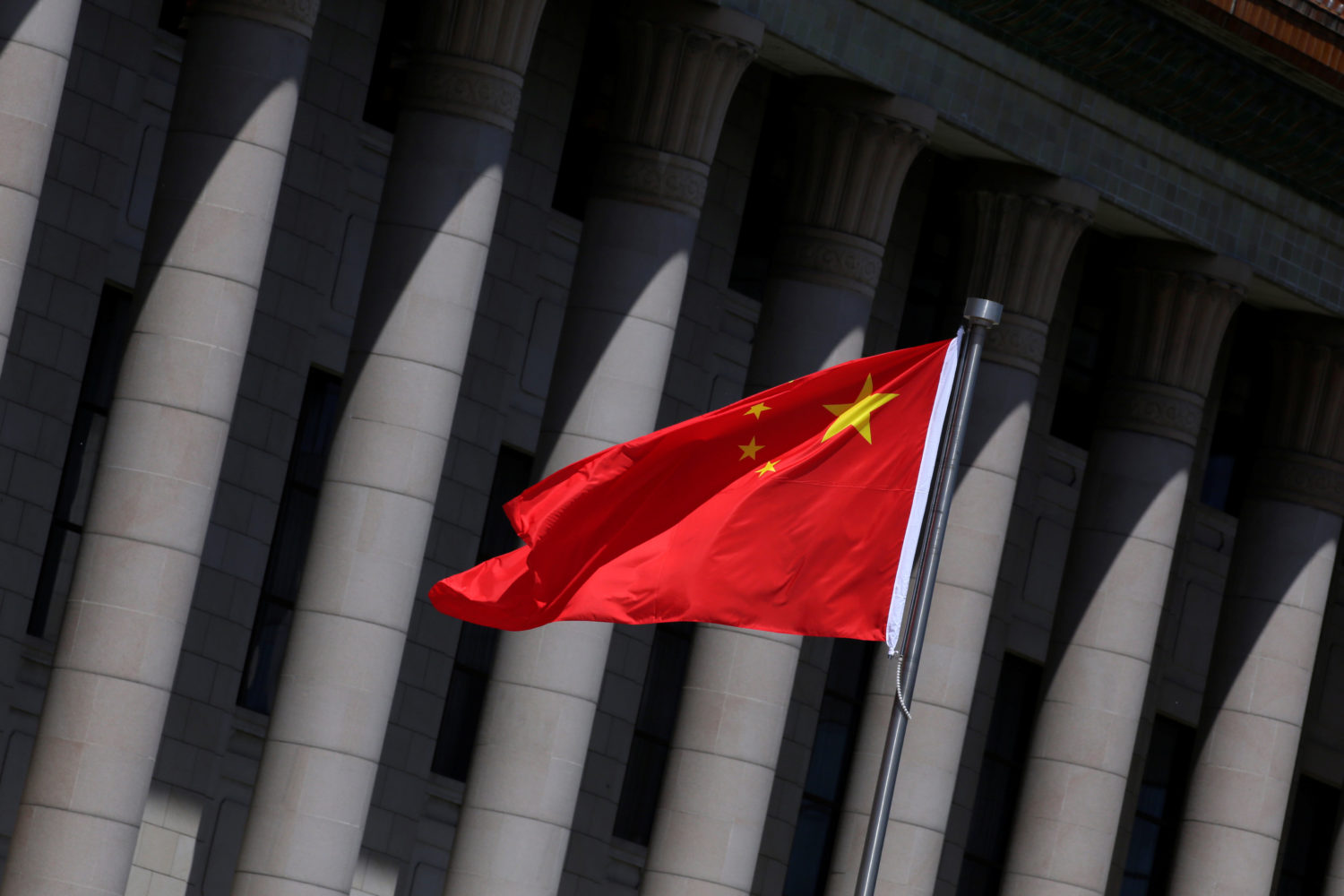
WASHINGTON (Reuters) – The Trump administration said on Tuesday said it will begin treating five major Chinese state-run media entities with U.S. operations the same as foreign embassies, requiring them to register their employees and U.S. properties with the State Department.

Two senior state department officials said the decision was made because China has been tightening state control over its media, and Chinese President Xi Jinping has made more aggressive use of them to spread pro-Beijing propaganda.

“The control over both the content and editorial control have only strengthened over the course of Xi Jinping’s term in power,” said one official. “These guys are in fact arms of the CCP’s (Chinese Community Party’s) propaganda apparatus.”

Beijing was not informed in advance of the decision and would be notified on Tuesday afternoon, one official said.

Beijing’s control of China’s state-owned media has become “more and more draconian,” the second official said.

Both officials spoke to reporters on condition of anonymity.

Tensions between the two superpowers have escalated since President Donald Trump came to office three years ago, with disputes ranging from trade tariffs to accusations of Chinese spying in the United States and to U.S. support for Taiwan.

Tuesday’s decision, the officials said, is not linked to any recent developments in Sino-U.S. relations and has been under consideration for some time.

The new determination is being applied to the Xinhua News Agency, China Global Television Network, China Radio International, China Daily Distribution Corp. and Hai Tian Development USA, Inc., the officials said.

China Daily is an English-language newspaper published by the Chinese Communist Party. Hai Tian Development USA distributes the People’s Daily, the official newspaper of the party’s Central Committee.

The five entities’ U.S. operations will have to disclose their personnel rosters and hiring and firing decisions and register properties in the United States that they rent or own with the State Department, the officials said.

They also will have to seek advanced approval before they lease or purchase new U.S. properties, they said.

Asked if there are concerns that Beijing will retaliate against Western media based in China, one official noted that foreign news outlets there already work under strict rules and that the new disclosure rules impose no restrictions on the five state-owned Chinese entities’ U.S. operations.

“These guys operate in a far more liberal environment here in the United States than any foreign press enjoy in the People’s Republic of China, the official said.

(Reporting by Jonathan Landay; Editing by Mary Milliken and David Gregorio)

Russia’s Lavrov, after Pompeo meeting, says felt more constructive U.S. approach

MOSCOW (Reuters) – Russian Foreign Minister Sergei Lavrov said on Monday after meeting U.S. Secretary of State Mike Pompeo last week that he had felt a more constructive approach from Washington when it came to the U.S.-Russia strategic dialogue.

The two top diplomats met on the sidelines of the Munich Security Conference on Friday in an encounter that neither side has so far spoken about in detail.

“I felt certain small moves toward a more constructive approach by our American partners,” Lavrov said on his ministry’s website on Monday.

Lavrov said the two men had spoken about issues related to strategic dialogue between Russia and the United States and about arms control.

The last remaining major arms control treaty between Moscow and Washington, the New START accord, expires next year. Russia has said it is ready to extend it, but U.S. officials have called it flawed and outdated.

The treaty is the last major nuclear arms control treaty between the world’s two biggest nuclear powers and limits the number of strategic nuclear warheads they can deploy.

(Reporting by Maria Tsvetkova; Editing by Andrew Osborn)

China approves imports of live poultry from U.S.

By Dominique Patton

BEIJING (Reuters) – China has approved the import of all poultry products from the United States, the Ministry of Agriculture and Rural Affairs said on its website on Monday, including breeding birds in addition to poultry meat approved late last year.

Beijing had banned all trade in poultry products from the United States since 2015 due to outbreaks of avian influenza there.

But it lifted the ban on poultry meat imports in November 2019 as a concession to the United States ahead of finalizing a limited trade deal.

The new announcement would also allow for the import of live birds, said Li Jinghui of the China Poultry Association, benefiting companies including Aviagen and Cobb-Vantress Inc, both based in the United States and among the world’s biggest poultry breeding companies.

Nobody at the China offices of Aviagen or Cobb could immediately be reached by phone.

Imports of live poultry from the U.S. were worth $38.7 million in 2013, dwarfed by other poultry products such as chicken feet.

However, the U.S. ban had a significant impact on China’s poultry producers, who needed the breeders to replenish their stock.

Opening up imports of live birds again is part of the trade deal, said Li, although he added that it may not have a major impact.

Both Aviagen and Cobb have increased production of their birds, known as ‘grandparent stock’, in other locations such as New Zealand to meet demand from China.

Two of China’s leading poultry firms, Shandong Yisheng Livestock and Poultry Breeding Co Ltd and Fujian Sunner Development Co Ltd., have also begun their own breeding programs to reduce their reliance on imports.

China is the world’s second-largest poultry producer and has been ramping up output to fill a huge meat shortage after a disease epidemic decimated its pig herd.

But prices have plunged in recent weeks because of measures taken by Beijing to tackle a coronavirus outbreak that has killed more than 1,700 people.

Restrictions on moving livestock and extended holidays in many areas have paralyzed the supply chain, leaving farmers stuck with large inventories of birds and eggs and slashing demand as restaurants and canteens stay shut.

Containers of frozen chicken feet from the U.S. have also been caught up in the logistics logjam, with many diverted away from China because of a lack of capacity to store additional cargoes.

(Reporting by Dominique Patton; Editing by Kim Coghill and Christian Schmollinger)


No let up in Taliban attacks, fresh orders awaited over deal with U.S.

By Abdul Qadir Sediqi and Jibran Ahmad

KABUL (Reuters) – Taliban fighters attacked Afghan government forces overnight, and militant commanders said on Monday insurgency operations would go-ahead until they receive fresh instructions based on a deal with the United States to reduce violence in the country.

Last week, a senior U.S. administration official said negotiations with Taliban representatives in Qatar had resulted in and agreement in principle for a week-long reduction of violence, but the seven-day period had not commenced. The official said the agreement covered all Afghan forces, and would be closely monitored.

“Our leadership hasn’t conveyed any message about a ceasefire to us,” a Taliban commander in Helmand, a southern province that has seen some of the fiercest fighting.

Commanders in Paktika and Nangarhar – two other provinces regarded as strongholds for the Taliban – also said they would continue their attacks as planned.

On Sunday night, Taliban fighters attacked Afghan government forces manning a checkpoint in the northern province of Kunduz. According to a statement by Taliban spokesperson Zabiullah Mujahid, they killed 19 security personnel.

The Afghan defense ministry confirmed the attack in a statement but put the death toll at five. It also said retaliatory air strikes were conducted against the militants.

A Taliban spokesman also issued a statement on Monday saying a Afghan military helicopter had been shot down in Nimroz province, but an official there said the helicopter made an emergency landing and had not been attacked.

Despite the violence on the ground, a senior Taliban leader in Doha confirmed a deal with the United States is set to be signed by the end of February in a “signing ceremony” in Doha.

Leaders of the United Nations, European Union and Islamic nations and neighboring countries would be invited to the attend, Mawlavi Abdul Salam Hanafi, deputy chief of the Taliban’s Doha office, was quoted as saying by Nunn Asia – a pro-Taliban website with strong links to the group’s leadership.

“Soon after signing the peace accord, the United States will release 5,000 of our prisoners and we will free 1,000 of theirs,” Hanafi said.

Successful implementation of the deal would move the United States closer to a further drawdown of troop levels in Afghanistan, meeting an objective for U.S. President Donald Trump, who has vowed to stop the “endless wars” as he seeks re-election in November.

There remains a long way to go to a peace settlement and end to the nearly two-decade-old U.S. military presence that began shortly after the 9/11 attacks by al Qaeda. U.S. officials have been clear that the 13,000 U.S. troops will be cut to about 8,600 this year, with or without a withdrawal deal.

(Writing by Gibran Peshimam; Additional Reporting by Sardar Razmal in Kunduz, Afghanistan; Editing by Simon Cameron-Moore)

Hundreds of Americans flown home from cruise ship, 14 with coronavirus

By David Stanway and Stephen Lam

SHANGHAI/TRAVIS AIR FORCE BASE, Calif. (Reuters) – More than 300 American cruise liner passengers, including 14 who tested positive for coronavirus, were flown home to military bases in the United States, after two weeks under quarantine off Japan.

The cruise ship Diamond Princess, with more than 400 cases by far the largest cluster outside China, has become the biggest test so far of other countries’ ability to contain an outbreak that has killed 1,770 people in China and five elsewhere.

Ground crew in anti-contamination suits met a chartered jet that touched down at Joint Base San Antonio in Texas, and passengers could be seen climbing down the stairs wearing face masks in the pre-dawn mist. Another flight landed at Travis Air Force Base in California hours earlier. Those arriving were taken into a two-week quarantine.

Although U.S. officials said passengers with coronavirus symptoms would not be taken, 14 passengers found at the last minute to have tested positive were permitted to board the planes. The U.S. State Department said the infected passengers were kept in isolation on the flights.

Across mainland China, officials said the total number of coronavirus cases rose by 2,048 to 70,548. That was slightly more new cases than were reported on Sunday, but hundreds fewer than reported on Saturday.

Chinese authorities say the stabilization in the number of new cases is a sign that measures they have taken to halt the spread of the disease are having an effect.

However, epidemiologists say it is probably still too early to say how well the outbreak is being contained within China and its central Hubei province, where the virus first appeared. Official figures of new cases have leveled off in the past, only to jump suddenly after changes in methodology.

China has responded to the COVID-19 virus by locking down Hubei’s provincial capital Wuhan, a megacity of 11 million people, and imposing restrictions in a number of other cities.

But the ruling Communist Party is also under pressure to prevent the economy from crashing and get people back to work.

China’s central bank cut the interest rate on its medium-term lending, a move that is expected to pave the way for a reduction in the benchmark loan prime rate on Thursday. Beijing has also announced plans for cuts in taxes and fees.

Even so, economists expect China’s economic growth to slow. Ratings agency Moody’s on Monday lowered its 2020 GDP growth forecast to 5.2%, making it likely China would miss a goal to double GDP over the decade to 2020.

CRUISE SHIPS

Around half of all known cases of the virus outside China have been found aboard the Diamond Princess, where around 400 people have tested positive since the cruise liner was ordered to stay under quarantine off Japan on Feb. 3.

Several other countries have announced plans to follow the United States in bringing passengers home. Around half of the 3,700 passengers and crew are Japanese.

Matthew Smith, an American passenger who remained on the ship after refusing to board the voluntary repatriation flights, tweeted that staying behind was the “best decision ever”.

“US Gov’t said they would not put anyone on the planes who was symptomatic, and they ended up knowingly and intentionally putting on 14 people who actually have the virus,” he wrote.

Authorities around the world were also trying to track down passengers from another cruise liner, the Westerdam, which was turned away from ports across Southeast Asia for two weeks before docking in Cambodia on Thursday.

One American passenger who disembarked in Cambodia tested positive for the virus in Malaysia on Saturday.

Carnival Corp., which operates both cruise liners, said it was cooperating with authorities in trying to trace other passengers from the Westerdam. None of the other 1,454 passengers and 802 crew had reported any symptoms, it said.

“Guests who have already returned home will be contacted by their local health department and be provided further information,” a statement from the company’s Holland America Line unit said. Hundreds of passengers are still in Cambodia, either on the ship or in hotels.

“We will all be tested for the coronavirus today and tomorrow by the Cambodian Ministry of Health,” said passenger Holley Rauen, a public health nurse and midwife from Fort Myers, Florida. “We have no idea when we get to get home.”

CHINA BACK TO WORK?

After an extended Lunar New Year holiday, China needs to get back to work or suffer severe economic consequences. There is a proposal to delay the opening of the annual session of parliament, due on Feb. 24.

Some cities remain in lockdown, streets are deserted, employees are nervous, and travel bans and quarantine orders are in place around the country. Many factories have yet to re-open, disrupting supply chains in China and beyond.

In Japan, where data showed on Monday that the economy had already shrunk last quarter at the fastest pace in almost six years, the impact of the virus is expected to show up in the current quarter, stoking fears of recession.

Trade-dependent Singapore downgraded its 2020 economic growth forecast and has said recession is possible. It is set to unveil measures to cushion the blow on Tuesday.

Organizers of the Tokyo Marathon have decided to limit the March 1 race to top-level athletes, banning 38,000 general participants, a person with knowledge of the issue told Reuters.

Japan’s Imperial Household Agency said it would cancel Emperor Naruhito’s public birthday address on Feb. 23, his first since his coronation last year. The event regularly attracts tens of thousands of people to the inner grounds of the Imperial Palace in the heart of Tokyo.

(Reporting by David Stanway in Shanghai; Claire Baldwin in Sihanoukville; John Geddie and Aradhana Aravindan in Singapore; Additional reporting by Farah Master in Hong Kong, Sophie Yu in Beijing, Hilary Russ in New York and Daniel Trotta; Writing by Peter Graff; Editing by Mike Collett-White and Nick Macfie)

U.S., Taliban reach violence reduction pact that could lead to U.S. withdrawal

By Paul Carrel, Jonathan Landay and Humeyra Pamuk

MUNICH/WASHINGTON (Reuters) – The United States has reached agreement with the Taliban on a weeklong reduction of violence that could lead to U.S. troop withdrawal from Afghanistan, a senior administration official said on Friday, while cautioning that Taliban needed to honor commitments for the accord to stick.

The announcement followed protracted negotiations in the Qatari capital Doha between the United States and the Taliban and a meeting between U.S. Secretary of State Mike Pompeo, Defense Secretary Mark Esper and Afghan President Ashraf Ghani during the Munich Security Conference.

A deeper agreement paving the way for a major U.S. troop withdrawal from Afghanistan could be a political boost for U.S. President Donald Trump, who has repeatedly promised to stop “endless wars” as he seeks re-election in November.

“It was violence that derailed the signing of the agreement in September. Now we have an agreement on the reduction of violence. And, should the Talibs implement what they’ve committed to doing, we will move forward with the agreement,” the senior administration official told reporters in Munich.

He added that the agreement was very specific and covered all Afghan forces, saying the U.S. military would be monitoring violence levels to verify whether or not the Taliban was honoring it.

“And our commitment, in terms of reduction of forces which is both conditions based and in phases is very much tied to delivery on the commitments that they have made, and will be,” the official said.

There are about 13,000 U.S. troops as well as thousands of other NATO personnel in Afghanistan, 18 years after a U.S.-led coalition invaded the country following the Sept. 11, 2001 al Qaeda attacks on the United States.

The United States is aiming to cut troop numbers to about 9,000, a Western diplomat told Reuters earlier this week.

Doha has been the venue for talks between the warring sides since 2018 even as fighting has continued across the country, killing hundreds of civilians and soldiers as the Taliban have expanded their territorial control.

Last month the Special Inspector General for Afghanistan Reconstruction, a U.S. government agency, assessed that there had been a record-high number of attacks by the Taliban and other anti-government forces in the last three months of 2019.

The Taliban stages near-daily attacks and though they are negotiating with U.S. envoy Zalmay Khalilzad, the armed group refuses to talk directly to Ghani’s government, calling it a “puppet” of the West.

Once the reduction of violence holds within the seven-day period, the talks would then expand into the next phase, dubbed the inter-Afghan dialogue, involving all parties.

“We’d like to see the Afghan government select a delegation that could go to negotiations. It should be an inclusive delegation that by the government. And then ceasefire comprehensive and permanent ceasefire that ends the Afghan war which will be the one of the first topics of the of the negotiations,” the official said.

He added, while the seven-day clock had not yet begun, he hoped it would “very soon.”

(Additional reporting by Doina Chiacu; Editing by Mary Milliken and Tom Brown)

Oklahoma to resume lethal injections after plan to use gas for executions stalls

By Jonathan Allen

(Reuters) – Oklahoma intends to resume executions of condemned inmates using lethal injections after suspending capital punishment in 2015 following a series of botched executions, state officials said on Thursday.

The state had been developing a new execution protocol in which it would instead asphyxiate inmates using nitrogen gas, a plan Attorney General Mike Hunter unveiled in 2018.

But development of the new gassing protocol was taking too long and the state has since found a new supply of lethal drugs, Hunter said at a news conference in Oklahoma City alongside Governor Kevin Stitt.

“It is important that the state is implementing our death penalty law with a procedure that is humane and swift for those convicted of the most heinous of crimes,” said Stitt, a Republican.

Lawyers for death-row inmates said the announcement would revive their ongoing challenge to Oklahoma’s lethal injection protocol, which they say lacks transparency and breaches the U.S. Constitution’s ban on “cruel and unusual” punishment in its current form.

“Oklahoma’s history of mistakes and malfeasance reveals a culture of carelessness around executions that should give everyone pause,” Dale Baich, a federal defender representing some of the inmates, said in a statement.

Until 2015, Oklahoma had one of the busiest execution chambers in a country where a majority of states and the federal government allow capital punishment, a practice most countries have abolished.

The state’s executions stopped after serious errors. In 2014, an inmate convulsed and took more than 40 minutes to die after the state used an untested combination of three lethal drugs. In 2015, another inmate was executed using the wrong drug.

Oklahoma is returning to the same three-drug combination used in the botched 2014 execution, Hunter said, but has updated its protocol to include better training and oversight. The drugs are midazolam, a sedative; vecuronium bromide, a muscle relaxant; and potassium chloride, which stops the heart.

Hunter declined to say how the drugs were being obtained, citing state secrecy laws. He said development of the gassing method would continue in case lethal injection drugs again become unavailable.

The European Union bans the sale of drugs for use in executions, and pharmaceutical companies have refused to sell such drugs to U.S. prison systems. Several states have complained that they are no longer able to obtain the drugs.

There are 47 inmates on Oklahoma’s death row, Hunter said. A federal court ordered the state to give those inmates at least 150 days notice of a new protocol, and no execution dates have been set.

Death-penalty experts criticized the state for not changing the drugs it planned to use.

“No improvement in the protocol will address the fact that midazolam is an inappropriate drug to use in executions,” said Robert Dunham, director of the Death Penalty Information Center, a non-profit watchdog group. “Midazolam is not capable of knocking somebody out and keeping them insensate during the period in which other drugs are administered.”

(Reporting by Jonathan Allen; Editing by Chizu Nomiyama and Dan Grebler)

Trump administration taking $3.8 billion more from military for Mexico border wall

By Patricia Zengerle

WASHINGTON (Reuters) – The U.S. Defense Department sent Congress a request to shift nearly $4 billion from the military budget to pay for a wall on the border with Mexico, a central promise of President Donald Trump’s campaign for the White House four years ago and bid this year for a second term.

Lawmakers said they received a request on Thursday to reprogram more than $3.8 billion from funding for the National Guard and weapons programs, setting the stage for a possible confrontation with Democrats.

Democratic aides said $1.5 billion would come from the National Guard, and the rest from funds for procurement, including the Lockheed Martin Corp F-35 fighter jet program, Lockheed C-130 transport aircraft, Boeing Co P-8 Poseidon maritime patrol aircraft, Bell Boeing V-22 Osprey tilt-rotor aircraft, and shipbuilding.

Congressional Democrats, who opposed Trump’s past diversion of billions of dollars in military spending to the border wall project, said the decision was dangerous and misguided.

“President Trump is once again disrespecting the separation of powers and endangering our security by raiding military resources to pay for his wasteful border wall,” Democratic Representatives Nita Lowey, chairwoman of the House of Representatives Appropriations Committee, and Pete Visclosky, chairman of the Defense Appropriations subcommittee, said in a statement.

The criticism was bipartisan.

The top Republican on the U.S. House Armed Services Committee, Representative Mac Thornberry, said the move by the Pentagon was “contrary to Congress’s constitutional authority.”

A senior Pentagon official said U.S. Defense Secretary Mark Esper had approved about $3.8 billion in funding being diverted to build 177 miles (290 km) of border wall.

Last month, the Pentagon received a request from within the Trump administration to build roughly 270 miles (435 km) of wall on the border, which would have cost about $5.5 billion.

“The transfer of funds is based on what the law allows and that the items to be funded are a higher priority than the items (from) which the funds were transferred,” Robert Salesses, the deputy assistant secretary of defense for homeland defense integration, told Reuters.

The American Civil Liberties Union, or ACLU, said it would challenge the latest border wall transfer.

The Trump administration has vowed to build at least 400 miles (640 km) of wall along the border by November 2020, when Americans will vote for president. In his 2016 campaign, Trump said Mexico would pay for the wall. The Mexican government has consistently refused to do so.

Trump’s hard-line immigration policies, particularly for immigrants who come across the southern border with Mexico, have been a signature of his political campaign and first term in the White House.

(Reporting by Patricia Zengerle; Additional reporting by Idrees Ali, Mike Stone and Ted Hesson; editing by Jonathan Oatis)