U.S. says blocking visas of some Chinese graduate students and researchers

By David Brunnstrom and Ryan Woo

WASHINGTON/BEIJING (Reuters) – The United States is blocking visas for certain Chinese graduate students and researchers to prevent them from stealing sensitive research, the acting head of the U.S. Department of Homeland Security, said on Wednesday.

Chad Wolf repeated U.S. charges of unjust business practices and industrial espionage by China, including attempts to steal coronavirus research, and accused it of abusing student visas to exploit American academia.

“We are blocking visas for certain Chinese graduate students and researchers with ties to China’s military fusion strategy to prevent them from stealing and otherwise appropriating sensitive research,” he said in a speech in Washington.

Wolf said the United States was also “preventing goods produced from slave labor from entering our markets, demanding that China respect the inherent dignity of each human being,” an apparent reference to alleged abuses of Muslims in China’s Xinjiang region.

Wolf did not give details.

U.S. Customs and Border Protection officials have prepared orders to block imports of cotton and tomato products from Xinjiang over accusations of forced labor, though a formal announcement has been delayed.

Sino-U.S. relations have sunk to historic lows with the world’s two biggest economies clashing over issues ranging from trade and human rights to Hong Kong and the coronavirus.

Earlier, some Chinese students enrolled in U.S. universities said they received emailed notices from the U.S. embassy in Beijing or U.S. consulates in China on Wednesday informing them that their visas had been canceled.

Nearly 50 students holding F-1 academic visas including postgraduates and undergraduates said in a WeChat chatroom the notices stated they would have to apply for new visas if they wanted to travel to the United States.

Many in the chatroom said they were majoring in subjects such as science, technology, engineering and mathematics. Some said they were postgraduates who obtained bachelor’s degrees at Chinese universities with links to the People’s Liberation Army.

In late May, sources with knowledge of the matter told Reuters Washington was planning to cancel the visas of thousands of Chinese graduate students believed to have links to China’s military.

(Reporting by David Brunnstrom in Washington, Ryan Woo in Beijing; Editing by Richard Chang)

New York City restaurants can resume indoor dining on Sept 30: governor

(Reuters) – New York City restaurants will be able to resume indoor dining at 25-percent capacity with some restrictions on Sept. 30, New York Governor Andrew Cuomo told a news conference on Wednesday.

Cuomo said the restrictions will include mandatory temperature checks at the door and requiring one member of each party to provide contact information to enable contact tracing should there be a COVID-19 outbreak.

Cuomo also said the state would establish a whistleblowing system whereby patrons can report restaurants not in compliance.

(Reporting by Nathan Layne in Wilton, Connecticut, Editing by Franklin Paul and David Gregorio)

Two killed as violence spills from Mexico protest against water flow to U.S.

By Jose Luis Gonzalez

LA BOQUILLA DAM, Mexico (Reuters) – Two people died in a gunfight with Mexico’s military police near a protest at a dam that diverts water to the United States, the National Guard said on Wednesday, as tensions rose between protesters and officials in the drought-hit region.

Mexicans in the northern border state of Chihuahua, angry at the water being funneled across the border, on Tuesday evening hurled Molotov cocktails and rocks at security troops, eventually occupying the La Boquilla dam and closing the sluice gates.

The violence, which Mexican President Andres Manuel Lopez Obrador called “regrettable,” comes amid plans to divert additional water to the United States due to the so-called ‘water debt’ Mexico has accumulated as part of a 1944 bilateral treaty that regulates water sharing between the neighbors.

The National Guard said on Twitter that some of its agents from La Boquilla on Tuesday night detained three people found with tear gas and a firearm ammunition magazine, and took them for processing to the city of Delicias.

There, the National Guard unit was shot at and “repelled the aggression,” according to the statement. One person died at the scene and another from their injuries later in hospital, it said.

Chihuahua Attorney General Cesar Peniche told reporters that investigators called to the scene found a car hit by at least three bullets. Inside the vehicle, a woman had been killed by gunfire while a man was injured. Local police told investigators that the National Guard had left the scene shortly before, Peniche said.

News channel Milenio named the two killed as Jessica Silva and Jaime Torres, a couple who worked in agriculture and who had protested at La Boquilla.

A Reuters witness said groups of residents in towns surrounding the La Boquilla dam clashed with National Guard troops earlier on Tuesday after they refused to turn off the dam floodgates.

The residents lobbed Molotov cocktails, rocks and sticks at the security forces, who were clad in riot gear and retaliated with tear gas, the witness said and images show. Eventually, the protesters stormed the dam premises and shut the floodgates themselves.

When asked about the situation at his regular news conference on Wednesday, Lopez Obrador said the National Guard had been “prudent” to withdraw to avoid inflaming tensions.

He did not mention the deaths, which the National Guard reported on Twitter after the briefing.

Lopez Obrador has sought to assuage concerns of Mexican farmers and voters about water rights, while protecting delicate relations with the United States.

He has also warned that Mexico could face sanctions if it did not divert water, after building up a deficit in recent years by receiving more water than it has given back.

(Additional reporting and writing by Drazen Jorgic and Daina Beth Solomon, Editing by Rosalba O’Brien)

U.S. regulator calls climate change a systemic risk

(Reuters) – Climate change poses a “slow motion” systemic threat to the stability of the U.S. financial system requiring urgent action from financial regulators, including the Federal Reserve and the Securities Exchange Commission.

That is one of the findings of a landmark report commissioned by the U.S. Commodity Futures Trading Commission and put together by a panel convened about 10 months ago by Rostin Behnam, one of two Democrats on the five-member CFTC.

The panel’s 35 members, including representatives of Goldman Sachs Group Inc., the Dairy Farmers of America, and The Nature Conservancy among others, approved the report on Tuesday.

“The physical impacts of climate change are already affecting the United States, and … the transition to net-zero emissions may also impact many segments of the economy,” the 196-page report said.

“Both physical and transition risks could give rise to systemic and sub-systemic financial shocks, potentially causing unprecedented disruption in the proper functioning of financial markets and institutions.”

A sudden shift in perceptions of the risks from frequent wildfires and intense hurricanes could bring a sudden drop in asset prices, for instance, that cascades through a community and spill more broadly into markets, the report said.

And because the COVID-19 pandemic has depleted household wealth, government budgets and business balance sheets, the economy is more vulnerable than before, it added, “increasing the probability of an overall shock with systemic implications.”

The report’s release comes less than two months ahead of a national election that pits Republican President Donald Trump, who says climate change is a hoax, against Democratic challenger Joe Biden, who calls climate change an “existential threat.”

Its first recommendation is to “establish a price on carbon” that is hefty enough to push businesses and markets to cut use of carbon dioxide-producing fuels such as oil and gas. Taxing carbon would require action by Congress.

But the report’s dozens of other recommendations amount to a call for a sweeping rewrite of financial market rules and norms that could go forward without any new laws and no matter who wins the presidency.

Among the proposals: requiring banks to address climate-related financial risks and listed companies to disclose emissions, and to stress test community banks for their resilience to climate change.

Regulators in Europe have worked for years on efforts to calibrate and mitigate climate risks to financial markets.

Regulators in the United States, where politicians regularly cast doubt on the fact that burning fossil fuels is affecting the earth’s climate, have lagged far behind on such work.

Only recently has the Federal Reserve begun to acknowledge the potential for climate change to destabilize the financial system, and to think about possible responses.

The report urges financial authorities to integrate climate risk “into their balance sheet management and asset purchases, particularly relating to corporate and municipal debt.”

It also calls for them to do research into the financial implications of climate change and join international climate-focused groups, such as the Network for Greening the Financial System, all of which appear to specifically apply to the Fed.

(Reporting by Ann Saphir in Berkeley, Calif.; Editing by Clarence Fernandez)

U.S. COVID-19 deaths surpass 190,000; Iowa and South Dakota emerge as new hotspots

By Anurag Maan

(Reuters) – Coronavirus deaths in the United States topped 190,000 on Wednesday along with a spike in new cases in the U.S. Midwest with states like Iowa and South Dakota emerging as the new hotspots in the past few weeks.

Iowa currently has one of the highest rates of infection in the nation, with 15% of tests last week coming back positive. Nearby South Dakota has a positive test rate of 19% and North Dakota is at 18%, according to a Reuters analysis.

The surge in Iowa and South Dakota is being linked to colleges reopening in Iowa and an annual motorcycle rally last month in Sturgis, South Dakota.

Kansas, Idaho and Missouri are also among the top 10 states for positive test rates.

New coronavirus infections have fallen for seven weeks in a row for the United States with a death rate of about 6,100 per week from COVID-19 in the last month.

On a per capita basis, the United States ranks 12th in the world for the number of deaths, with 58 deaths per 100,000 people, and 11th in the world for cases, with 1,933 cases per 100,000 residents, according to a Reuters analysis.

U.S. confirmed cases are highest in the world with now over 6.3 million followed by India with 4.4 million cases and Brazil with 4.2 million. The U.S. death toll is also the highest in the world.

The U.S. Centers for Disease Control and Prevention had forecast last month that the U.S. death toll will reach 200,000 to 211,000 by Sept. 26.

The University of Washington’s health institute last week forecasted that the U.S. deaths from the coronavirus will reach 410,000 by the end of the year.

(Reporting by Anurag Maan in Bengaluru; Editing by Lisa Shumaker)

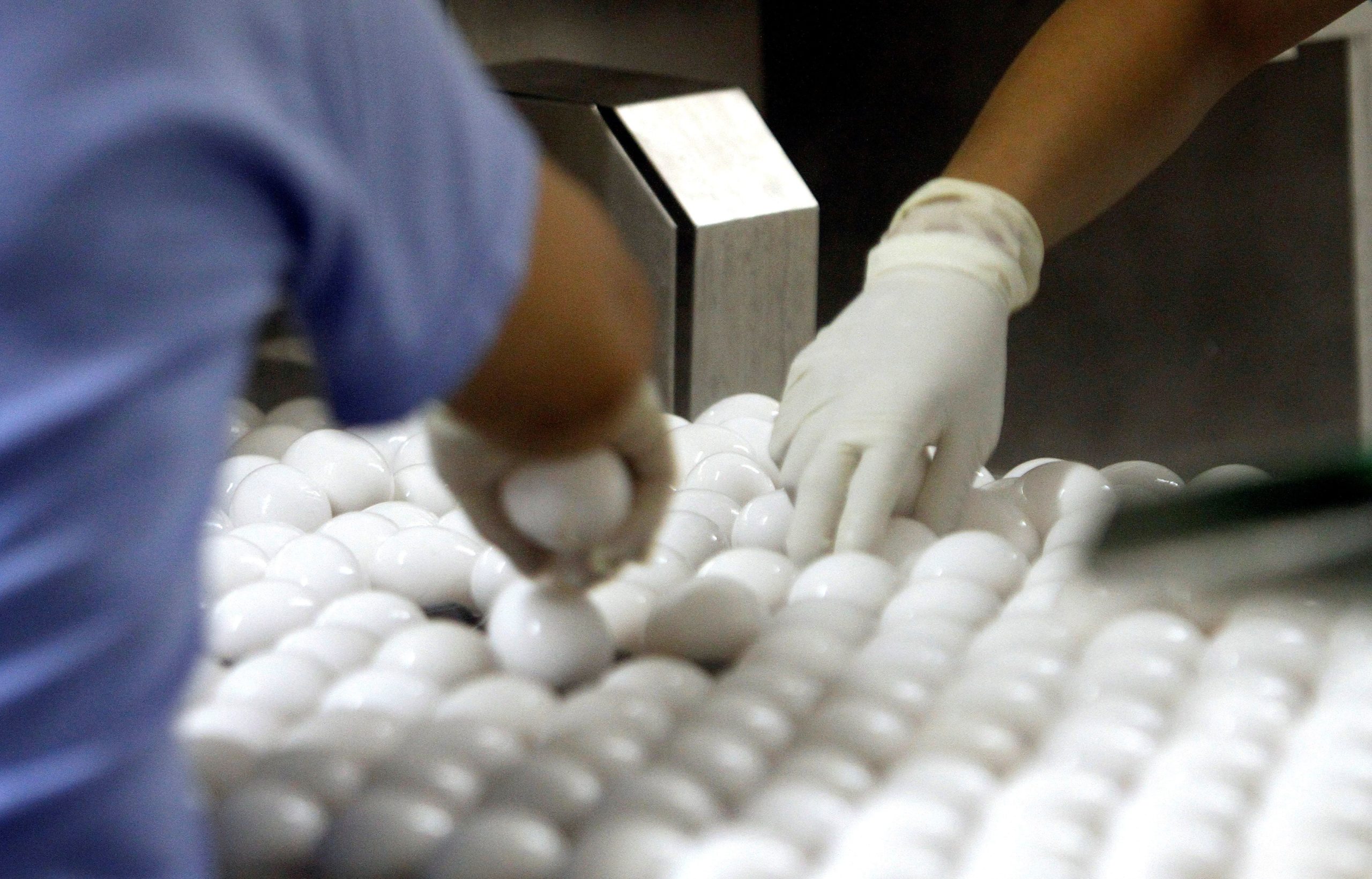
Trump administration rolls back U.S. inspection rules for egg products

By Tom Polansek

CHICAGO (Reuters) – The Trump administration said on Wednesday it will stop requiring U.S. plants that produce egg products to have full-time government inspectors, in the first update of inspection methods in 50 years.

Under a new rule that takes effect immediately, the U.S. Department of Agriculture will allow companies like Cargill Inc and Sonstegard Foods to use different food-safety systems and procedures designed for their factories and equipment.

The change marks the Trump administration’s latest move to ease government regulations over the nation’s food system. Some inspectors and public-interest groups have warned food safety may suffer as a result.

The new rule affects 83 plants that USDA has been inspecting, according to the agency. USDA will also assume oversight from the Food and Drug Administration of additional facilities that produce egg substitutes.

Inspectors will visit plants once per shift, instead of being there whenever egg products are being processed.

The change, first proposed in 2018, makes inspections consistent with those for meat and poultry products, said Paul Kiecker, administrator of USDA’s Food Safety and Inspection Service. Inspectors will operate under a “patrol” system, in which they will cover multiple plants each day, he said.

“We feel very confident that, based on the once per shift that we have them there, we’ll still be able to verify that they’re producing safe product,” he said.

Environmental group Food & Water Watch said in 2018 the patrol system may make inspections less effective.

The new rule aims to make better use of inspectors and allow companies to develop new food-safety procedures, Kiecker said.

Companies must implement standard operating procedures for sanitation and food-safety management systems known as Hazard Analysis and Critical Control Points.

“We are giving them more of the responsibility to ensure that they are producing safe products,” Kiecker said.

The coronavirus pandemic disrupted egg product sales this spring, as closures of restaurants, schools and offices reduced demand.

(Reporting by Tom Polansek; Editing by Tom Brown)

AstraZeneca pauses coronavirus vaccine trial

LONDON (Reuters) – AstraZeneca has suspended global trials of its experimental coronavirus vaccine after an unexplained illness in a participant, knocking the British drugmaker’s shares on Wednesday as prospects for an early rollout dimmed.

The vaccine to combat COVID-19, which AstraZeneca is developing with the University of Oxford, has been described by the World Health Organization as probably the world’s leading candidate and the furthest developed.

However, AstraZeneca said on Tuesday it had paused trials, including late-stage ones, to allow an independent committee to review safety data, and it was working to minimize any potential impact on the timeline.

“It is obviously a challenge to this particular vaccine trial,” Britain’s Health Secretary Matt Hancock told Sky News.

The stakes are high because AstraZeneca, Britain’s largest drugmaker by market value, has already agreed to supply close to three billion doses to governments across the globe.

This is more than any other vaccine project, but asked whether the pause would set back the development process, Britain’s Hancock said: “Not necessarily, it depends on what they find when they do the investigation”.

Most states will contribute financially to developing the vaccine, even if the trial fails.

‘ROUTINE ACTION’

Britain’s medical regulator said it is urgently reviewing information available to determine whether trials can restart as quickly as possible.

A New York Times report citing a person familiar with the situation said a participant based in Britain was found to have transverse myelitis, an inflammatory syndrome that affects the spinal cord and is often sparked by viral infections.

Whether this was directly linked to AstraZeneca’s vaccine remains unclear, it said. AstraZeneca declined to comment.

A person familiar with the situation told Reuters the illness occurred in the British trial which began in May with more than 12,000 participants, from 5 years old to beyond 70.

The U.S. trial, with a targeted 30,000 participants, was launched last week for the vaccine AZD1222, which is also in late-stage clinical trials in Brazil and South Africa.

Additional trials are planned in Japan and Russia, with a targeted 50,000 participants globally.

South Korea said it would look into the suspension and review its plan to participate in manufacturing the vaccine and health ministry official Yoon Tae-ho added such suspensions of clinical trials were not rare “as various factors interact”.

This was echoed by Germany’s Leukocare, which is working on a vaccine similar to AstraZeneca’s but is at an earlier stage.

“When you are inoculating 20,000 people, it is a foregone conclusion that at some point you will have severe adverse events. As soon as a link to the vaccine can clearly be ruled out, the trial continues,” CEO Michael Scholl said.

Immune related conditions such as inflammations, however, would be subject to particular scrutiny, he added.

The Oxford vaccine is designed to instruct human cells to make distinguishing parts of the coronavirus. That allows the immune system to build an arsenal against future infections.

A harmless virus known as adenovirus is used to bring the genetic instruction into the body, an approach which is also being pursued by China’s CanSino, Russia’s Gamaleya institute or Johnson & Johnson.

Backers of the Gamaleya candidate, the first Russian COVID-19 vaccine, underscored the difference between their jab, based on a adenovirus in humans, and the British contender with an adenovirus found in monkeys.

“We have consistently drawn attention to human adenoviral platform being much safer and much more studied than any other new platform,” the head of Russia’s sovereign wealth fund Kirill Dmitriev told Reuters.

In choosing a monkey virus, AstraZeneca, as well as Leukocare, are trying to avoid the risk of the immune system attacking the vector, due to a previous bout with an adenovirus.

The decision to put the trial on hold has impacted clinical trials being conducted by other vaccine makers, which are looking for signs of similar reactions, Stat said.

Serum Institute of India said its trials of AstraZeneca’s vaccine were ongoing and had not faced any issues.

The U.S. National Institutes of Health, which is providing funding for AstraZeneca’s trial, declined to comment.

Moderna said in an emailed statement it was “not aware of any impact” to its ongoing COVID-19 vaccine study.

Leading U.S. and European vaccine developers pledged on Tuesday to uphold scientific safety and efficacy standards for their experimental vaccines.

Nine companies, including AstraZeneca, Moderna and Pfizer, issued an “historic pledge” after concerns that safety standards might slip under political pressure to rush out a vaccine.

The other signatories were Johnson & Johnson, Merck & Co, GlaxoSmithKline, Novavax Inc, Sanofi and BioNTech.

(Reporting by Guy Fauconbridge, Estelle Shirbon, Kate Kelland in London, Deena Beasley; Additional reporting by Peter Henderson in San Francisco, Rocky Swift in Tokyo, Sangmi Cha in Seoul and Miyoung Kim in Singapore; Editing by Alexander Smith)

Portland police arrest 11 after overnight protests

(Reuters) – Police arrested 11 people in Portland as protests continued to take place after 100 days of demonstrations in the Oregon city against racism and police brutality.

Tuesday night, a group began gathering at the site of the Saturday Market and marched in the street to the area of Transit Police Department offices, the police said in a statement.

As the crowd arrived, some stood on the train rails, which interfered with trains getting through the area. Other members of the group stood in the street, blocking vehicular traffic, the police added.

The police said they ordered the demonstrators to disperse. Some adhered while others continued to march around in the streets and threw projectiles such as eggs and water bottles toward officers.

Portland police said they used some munitions to control the crowd but no CS gas, the main component of tear gas.

The police did not mention any injuries but said they made 11 arrests on charges such as interfering with a peace officer, disorderly conduct, resisting arrest and attempting escape.

Portland has seen nightly protests for over three months that have at times turned into violent clashes between demonstrators and officers, as well as between right- and left-wing groups.

Demonstrations erupted around the United States following the death in May of George Floyd, a Black man, after a Minneapolis police officer knelt on his neck for nearly nine minutes.

(Reporting by Rama Venkat in Bengaluru; Editing by Steve Orlofsky)

Norwegian lawmaker nominates Trump for Nobel Peace Prize

By Gwladys Fouche

OSLO (Reuters) – A Norwegian lawmaker has nominated Donald Trump for the Nobel Peace Prize for 2021 for helping broker a deal between Israel and the United Arab Emirates, the second time he has put forward the U.S. president for the honor.

Thousands of people are eligible to nominate candidates for the Nobel Peace Prize, including members of parliaments and governments, university professors and past laureates.

The Norwegian Nobel Committee, which decides on the award, declined to comment.

“It is for his contribution for peace between Israel and the UAE. It is a unique deal,” Christian Tybring-Gjedde, a member of parliament for the right-wing Progress Party, told Reuters.

Tybring-Gjedde, who nominated Trump for the 2019 award for his diplomatic efforts with North Korea, said he also nominated him this year because of the U.S. troop withdrawal from Iraq.

Nominations for this year’s award closed on Jan. 31 and the winner will be announced on Oct. 9 in Oslo.

(Reporting by Gwladys Fouche, Editing by Angus MacSwan)

United States formally announces troop reduction in Iraq

WASHINGTON (Reuters) – The United States military on Wednesday announced that it would be reducing its presence in Iraq from 5,200 to 3,000 troops this month, formalizing a move that had been long expected.

Last month, Reuters reported that the United States was expected to reduce its troops presence in Iraq by about a third.

The United States has around 5,200 troops that were deployed in Iraq to fight the Islamic State militant group. Officials in the U.S.-led coalition say Iraqi forces are now mostly able to handle the remnants of Islamic State on their own.

“We are continuing to expand on our partner capacity programs that enable Iraqi forces and allow us to reduce our footprint in Iraq,” Marine General Frank McKenzie, the head of U.S. Central Command, said during a visit to Iraq.

A senior administration official had said on Tuesday that President Donald Trump would be announcing a reduction of U.S. troops from Iraq.

The United States and Iraq in June affirmed their commitment to the reduction of U.S. troops in the country in coming months, with no plans by Washington to maintain permanent bases or a permanent military presence.

In 2016 Trump campaigned on ending America’s “endless wars,” but U.S. troops remain in countries like Afghanistan, Iraq and Syria, albeit in smaller numbers.

Last month during a meeting with the Iraqi prime minister, Trump redoubled his promise to withdraw the U.S. troops still in Iraq.

Trump’s meeting with the Iraqi leader came amid a new spike in tensions between Washington and Tehran after Washington said it would seek to reinstate all previously suspended U.S. sanctions on Iran at the United Nations.

Iraq’s parliament had voted earlier this year for the departure of foreign troops from Iraq, and United States and other coalition troops have been leaving as part of a drawdown.

(Reporting by Idrees Ali; Editing by Steve Orlofsky)