U.S. construction spending increases to record high

WASHINGTON, (Reuters) – U.S. construction spending increased by the most in nearly two years in January, but the upbeat news is likely to be overshadowed by financial market fears that the fast-spreading coronavirus could tip the economy into recession.

The Commerce Department said on Monday that construction spending surged 1.8% to a record high of $1.369 trillion as investment in both private and public projects increased. Data for December was revised up to show construction outlays rising 0.2% instead of decreasing 0.2% as previously reported.

Economists polled by Reuters had forecast construction spending would increase 0.6% in January. Construction spending advanced 6.8% on a year-on-year basis in January.

The coronavirus epidemic, which has killed at least 3,000 people and infected more than 80,000, has left financial markets

fearing the end of the longest economic expansion on record, now in its 11th year.

U.S. stock indexes suffered their worst week since the 2008 global financial crisis last week as investors sold equities and bought U.S. Treasuries. The yield on the two-year Treasury note fell below 1% for the first time since 2016.

In January, spending on private construction projects jumped 1.5% to the highest level since February 2018, after gaining 0.1% in December. It was boosted by a 2.1% surge in spending on homebuilding after a 1.5% increase in December.

Residential construction is being supported by lower mortgage rates. Residential investment increased solidly in the second half of 2019, after contracting for six straight quarters, the longest such stretch since the last recession.

Spending on nonresidential structures, which includes manufacturing plant and mining exploration, shafts and wells, increased 0.8% in January. Spending on nonresidential structures fell 1.5% in December. The government in its fourth-quarter GDP report last week said spending on nonresidential structures contracted in 2019 by the most since 2016.

Outlays on private non-residential structures have been depressed by a manufacturing downturn due to trade tensions and cheaper energy products.

Investment in public construction projects increased 2.6% in January after gaining 0.6% in December.

Spending on state and local government construction projects surged 2.0% after rising 0.5% in December. Outlays on federal government construction projects soared 9.9% in January to the highest level since May 2012.

That followed a 1.5% increase in December.

((Reporting by Lucia Mutikani; Editing by Paul Simao))

Gatherings banned, travel restricted as coronavirus cases grow worldwide

By Steve Holland and Julia Harte

WASHINGTON (Reuters) – Leaders in Europe, the Middle East and the Americas rolled out bans on big gatherings and stricter travel restrictions as cases of the new coronavirus spread around the world.

The United States on Saturday reported its first death from the disease, a man in his 50s in Washington state, where officials said two of the state’s three cases have links to a nursing home with dozens of residents showing disease symptoms.

Although most Americans face a low risk from the virus, more U.S. deaths could be imminent following the nation’s first, CNN quoted Vice President Mike Pence as saying.

“We know there will be more cases,” Pence told CNN’s Jake Tapper in a clip released on Saturday, echoing President Donald Trump’s earlier comments that additional cases in America were “likely.”

Travelers from Italy and South Korea would face additional screening, Trump and top officials told a White House news briefing, warning Americans against traveling to coronavirus-affected regions in both countries.

Pence said an entry ban on travelers from Iran would be expanded to include any foreign nationals who have visited Iran in the last 14 days.

The United States may also restrict travel on its southern border with Mexico, officials said. However, they encouraged Americans to travel around the country, including states that have recorded some of its more than 60 cases.

The outbreak is disrupting flight demand and many airlines have suspended or modified services in response. After Saturday’s press conference, the White House held a call with airlines to discuss new travel restrictions.

American Airlines Inc said late on Saturday it was suspending all U.S. flights to Milan.

NEW CASES

Ecuador on Saturday reported its first case, in a woman who had traveled from Madrid, while Mexico reported four cases, all in people who had visited Italy.

Brazilian officials confirmed that country’s second case, a patient in São Paulo who recently visited Italy.

As governments worldwide stepped up efforts to halt the spread of the virus, France announced a temporary ban on public gatherings with more than 5,000 people in confined spaces. It reported 16 new cases for a total of 73, and canceled a half-marathon of 40,000 runners scheduled for Sunday.

Switzerland said it is banning events expected to draw more than 1,000 people.

More than 700 tourists remain quarantined at a hotel in the Canary Islands, after several Italian guests there tested positive for coronavirus.

Schools and universities in Italy, which is experiencing Europe’s worst outbreak of the disease, will stay closed for a second consecutive week in three northern regions. The country has reported more than 1,100 cases and 29 deaths.

Analysts have warned that the outbreak looks set to shunt Italy’s fragile economy into its fourth recession in 12 years, with many businesses in the wealthy north close to a standstill and hotels reporting a wave of cancellations.

FOCUS ON IRAN

Iraq reported five new cases of the disease, bringing its total to 13, and Qatar reported its first Saturday, leaving Saudi Arabia as the only Gulf state not to have signaled any coronavirus cases.

The majority of infections in other Gulf countries have been linked to visits to Iran or involve people who have come into contact with people who had been there.

Armenia reported its first infection on Sunday, in a citizen returning from neighboring Iran.

Tehran has ordered schools shut until Tuesday and extended the closure of universities and a ban on concerts and sports events for a week. Authorities have also banned visits to hospitals and nursing homes as the country’s case load hit nearly 600.

One Iranian lawmaker, elected in Feb. 21 polls, has died from the disease along with more than 40 other Iranians, and several high-ranking officials have tested positive for the virus.

Azerbaijan said on Saturday it had closed its border with Iran for two weeks to prevent the spread of coronavirus. Two Azerbaijanis who traveled to Iran have tested positive for the disease and quarantined.

Mainland China reported 573 new confirmed coronavirus cases on Feb. 29, up from 427 the previous day, national health officials said on Sunday in China. The number of deaths stood at 35, down from 47 the previous day, taking the toll in mainland China to 2,870.

A man wearing a face mask is seen at a checkpoint for registration with a body temperature measurement tool in his hand near a residential compound, as the country is hit by a novel coronavirus outbreak in Beijing, China March 1, 2020. REUTERS/Stringer

The epidemic, which began in China, has killed almost 3,000 people worldwide, the ministry said.

Thailand reported its first death from the virus on Sunday, while in Australia, a former passenger on the Diamond Princess cruise ship quarantined off Japan died in the western city of Perth.

Churches closed in South Korea as many held online services instead, with authorities looking to rein in public gatherings, as 376 new infections took the tally to 3,526 cases.

(Reporting by Steve Holland and Julia Harte; Additional reporting by Reuters reporters worldwide; Writing by Heather Timmons; Editing by Daniel Wallis and Clarence Fernandez)

Washington state confirms second U.S. coronavirus death; New York reports first case

By Brad Brooks and David Shepardson

(Reuters) – Health officials in Washington state said late Sunday that a nursing home resident had died after contracting coronavirus, while New York’s governor confirmed his state’s first positive case, as the virus moved out of its West Coast foothold.

The coronavirus, which emerged in China late last year, has decimated global markets as it quickly moves around the world. It appeared poised for a spike in the United States, in part because of more testing to confirm cases.

Florida late Sunday declared a public health emergency as it confirmed its first two cases.

Trump administration officials worked Sunday to soothe nerves and calm fears that a global recession was looming, arguing that the public and media were over-reacting and saying that stocks would bounce back because the American economy was fundamentally strong.

The total number of confirmed cases in the United States is more than 75 with two reported deaths, both in Washington state. Globally there have been more than 87,000 cases and nearly 3,000 deaths in 60 countries, according to the World Health Organization.

In the United States, a cluster of cases is centered on a nursing home near Seattle.

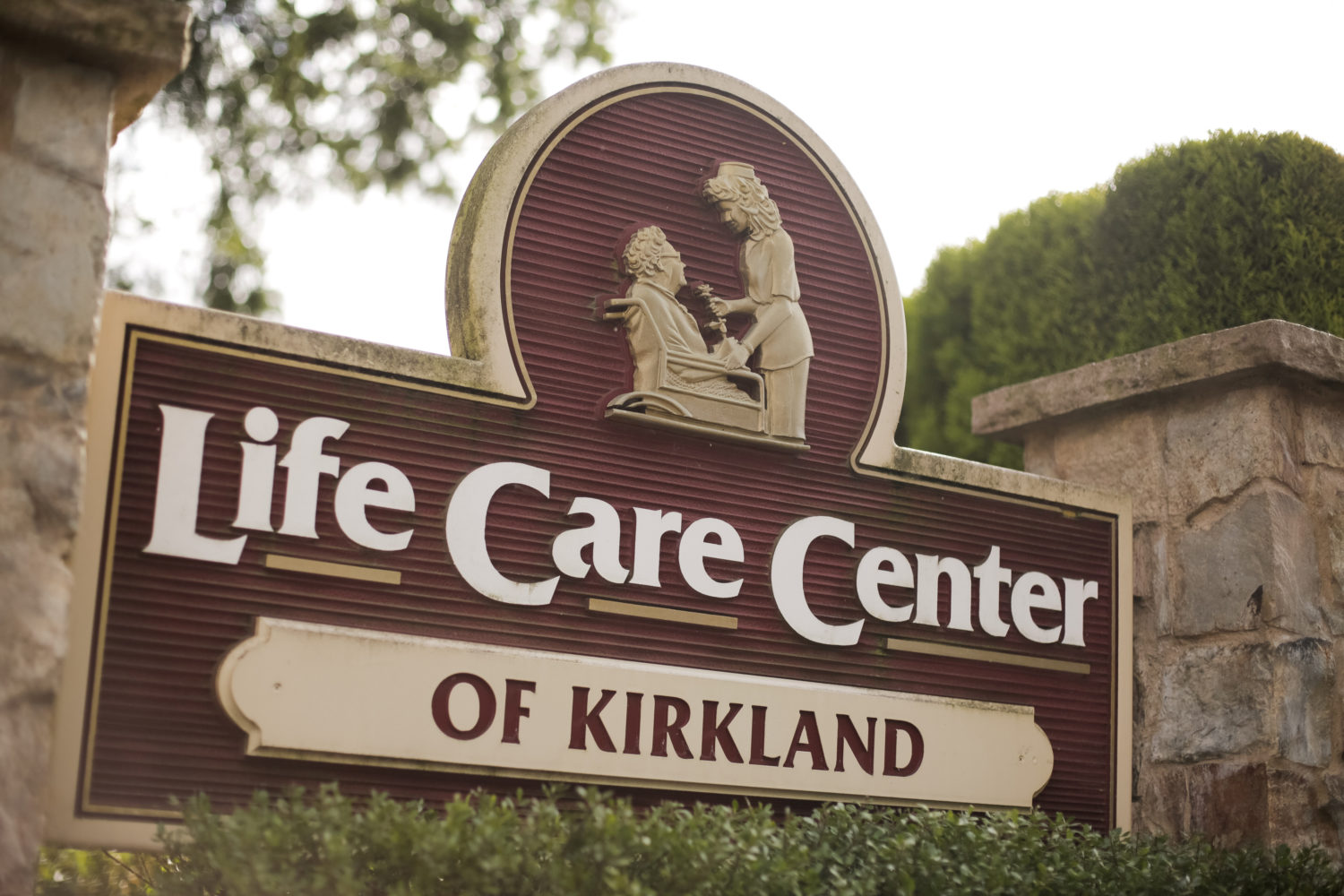
The Seattle and King County public health department confirmed late Sunday that a man in his 70s who was a resident of the LifeCare long-term care facility in Kirkland and had coronavirus had died the day before.

A sign at the entrance to Life Care Center of Kirkland, the long-term care facility linked to the two of three confirmed coronavirus cases in the state, is pictured in Kirkland, Washington, U.S. March 1, 2020. REUTERS/David Ryder

On Saturday, the department had reported the first death of a coronavirus patient in the United States, a man in his 50s who was living in Kirkland – the same city where the nursing home is located. Six of the 10 confirmed coronavirus cases in Washington state have been residents or workers at LifeCare.

State officials said an additional 27 residents of the nursing home and 25 staff members were reporting symptoms of the virus, which can be similar to that of the common flu.

New York Governor Andrew Cuomo confirmed on Twitter his state’s first coronavirus case, a woman in her 30s who caught the virus during a recent trip to Iran and was now in home quarantine.

Cuomo did not say where the woman lived, but the New York Times reported she was in the Manhattan borough of New York City, citing state officials.

“The patient has respiratory symptoms, but is not in serious condition and has been in a controlled situation since arriving in New York,” Cuomo said.

Stock markets plunged last week, with an index of global stocks setting its largest weekly fall since the 2008 financial crisis, and more than $5 trillion wiped off the value of stocks worldwide.

A key energy conference in Houston that brings together oil ministers and energy firms was canceled on Sunday with the organizers of CERAWeek noting that border health checks were becoming more restrictive and companies had begun barring non-essential travel to protect workers.

A world economy conference with Pope Francis due to take place in Italy later this month was also canceled.

‘WE’RE READY’

Trump said on Sunday that travelers to the United States from countries at high risk of coronavirus would be screened before boarding and on arrival, without specifying which countries.

Delta Air Lines Inc said on Sunday it was suspending until May flights to Milan in northern Italy, where most of that country’s coronavirus cases have been reported. Flights will continue to Rome. American Airlines Group Inc announced a similar move late on Saturday.

The United States has 75,000 test kits for coronavirus and will expand that number “radically” in coming weeks, U.S. Health and Human Services Secretary Alex Azar told ABC’s “This Week” on Sunday.

Vice President Mike Pence, appointed last week to run the White House’s coronavirus response, said the government had contracted 3M Co to produce an extra 35 million respiratory masks a month. He urged Americans not to buy the masks, which he said were only needed by healthcare workers. Honeywell International Inc is the other major U.S. mask producer.

He also told Fox News that clinical trials of a coronavirus vaccine would start in six weeks but that a vaccine would likely not be available this season.

Democrats, who will challenge Trump for the presidency in the Nov. 3 election, have criticized his administration for downplaying the crisis and not preparing for the disease to spread in the United States.

Pence said Americans should brace for more cases but that the “vast majority” of those who contracted the disease would recover.

“Other than in areas where there are individuals that have been infected with the coronavirus, people need to understand that for the average American, the risk does remain low. We’re ready,” Pence told NBC’s “Meet the Press.”

(Reporting by Brad Brooks in Austin, Texas; David Shepardson and Andrea Shalal in Washington; and Rich McKay in Atlanta; Editing by Lisa Shumaker, Daniel Wallis and Peter Cooney)

Additional U.S. coronavirus cases are ‘likely,’ Trump says

WASHINGTON (Reuters) – President Donald Trump said additional coronavirus cases in the United States were “likely” but that the country was prepared for any circumstance, at a news conference on Saturday after reports of the first U.S. patient death from the virus.

The first U.S. death from the flu-like illness was a medically high-risk patient in her late fifties in the state of Washington, Trump told reporters at the White House conference.

Trump said he would meet with pharmaceutical companies on Monday to discuss potential vaccines. The global spread of the illness has prompted the United States to consider imposing entry restrictions at the U.S.-Mexico border.

(Reporting by Steve Holland, Editing by Rosalba O’Brien)

First coronavirus death in U.S. reported in Washington state

First coronavirus death in U.S. reported in Washington state
By Gabriella Borter and Steve Gorman

(Reuters) – Washington state health officials reported the first patient death from coronavirus in the United States on Saturday, according to a news release, as federal and local health officials scramble to contain the rapidly spreading disease.

Health officials in King County, Washington said they would provide an update on the patient who died at 1:00 p.m. Pacific Time (2100 GMT), and that the patient was among one of the state’s new cases of the disease.

“Health officials will be providing the latest updates regarding novel coronavirus cases in King County, including new people identified with the infection, one of whom died,” the news release said.

The report of the first coronavirus death in the United States capped a week of stock market upheaval and escalating concern among state and federal health officials about the spread of the disease, which has infected more than 60 people in the United States and spread across 46 countries.

Most of the U.S. cases have occurred in travelers from China, where the virus originated.

But public health officials have also identified four “presumptive” coronavirus cases believed to have emerged from community transmission of the infection, signaling a turning point in strategies needed to contain the disease in the United States.

The U.S. Centers for Disease Control and Prevention (CDC) issued a statement late on Friday citing three cases of unknown origin newly diagnosed by state public health authorities – one each in California, Oregon and Washington state.

If confirmed by the CDC, along with a similar case of unknown origin announced on Wednesday in California, that would bring to four the number of diagnosed individuals in the United States with no history of travel to a country where the virus is circulating and no close contact with an infected person.

Taken together, the four cases are a sign the virus is now spreading within at least four separate locations on the U.S. West Coast spanning nearly 900 miles (1,448 km), from California’s Silicon Valley region in Santa Clara County north to the Puget Sound near Seattle.

U.S. health authorities say it means the respiratory disease that has infected nearly 80,000 people and killed more than 2,800 in China is no longer an imported phenomenon but has taken up residence in the United States.

“What we know now is that the virus is here, present at some level, but we still don’t know to what degree,” said Dr. Sara Cody, chief public health officer for Santa Clara County, speaking of the newly diagnosed case there, the latest of three in her county and the 10th detected in California.

“This case does signal to us that it is now time to shift how we respond,” she told a news conference on Friday.

Local media reported that the illness of two of the patients – a school employee in Oregon and an elementary school student in Washington – have already led to their respective schools being closed temporarily.

The three latest patients – and a fourth new case believed to be travel-related in Washington state – were diagnosed based on results obtained in their respective states from CDC-supplied test kits and are considered “presumptive positive” cases pending CDC confirmatory testing, the U.S. agency said.

Even as confirmation was pending there, local authorities were already working to trace close contacts the patients had with others in a bid to curb transmission.

Reuters graphics on the new coronavirus: https://graphics.reuters.com/CHINA-HEALTH-GRAPHICS/0100B5CD3DP/index.html

PERSON-TO-PERSON TRANSMISSION

Until this week, the CDC had counted just 15 confirmed cases in six states as having been detected through the U.S. public health system since Jan. 21. Most were contracted by individuals while traveling in China. Only two person-to-person transmissions were documented among them, both between married couples.

A swab to be used for testing novel coronavirus is seen in the supplies of Harborview Medical Center’s home assessment team during preparations to visit the home of a person potentially exposed to novel coronavirus at Harborview Medical Center in Seattle, Washington, U.S. February 29, 2020. REUTERS/David Ryder

An additional 47 cases have been confirmed among people recently repatriated, either from the Diamond Princess cruise ship quarantined in Japan or from the Chinese city of Wuhan, the supposed epicenter of the outbreak, according to the CDC.

Health officials said the advent of locally transmitted infections means authorities need to expand their focus from detecting a relatively limited number of cases, identifying close contacts and isolating them, to one that also emphasizes greater prevention among the public at large.

In particular, individuals should be more vigilant about basic hygiene measures, such as washing hands often, avoiding touching their faces, covering coughs and sneezes and staying home from school or work whenever ill, Cody said.

She said schools should plan for increased absenteeism and explore options for expanding learning at home, while businesses likewise allow more work-from-home arrangements, revise their sick leave policies and replace in-person meetings with video or telephone conferences whenever possible.

“I do understand that this whole situation may feel overwhelming and it’s difficult to think about the possible disruption to our everyday lives, especially when we’re still uncertain about what this may look like,” Cody said. “But we do need everyone to start thinking about what actions we can take now so we can be prepared for the possibility for further spread of the virus.”

Coronavirus is spread primarily through tiny droplets coughed or sneezed directly from an infected person into the face of someone nearby, as opposed to the more contagious “airborne” transmission of a virus like measles, which can remain suspended in enclosed spaces and be breathed in hours after being exhaled by sick individuals, experts say.

Coronavirus can also survive on surfaces, such as handrails and door knobs, for “a very long period of time,” and be picked up by hand that way, though the virus is “very susceptible” to cleaning products, Dr. Christopher Braden, deputy director of the CDC’s National Center for Emerging and Zoonotic Infectious Diseases, said on Friday in Santa Clara County.

Still, “It’s mostly a person-to-person transmission that we are concerned about for our communities,” he added.

For the online coverage of the coronavirus outbreak click, https://www.reuters.com/live-events/coronavirus-6-id2921484

(Reporting by Steve Gorman and Dan Whitcomb in Los Angeles; Editing by Daniel Wallis and Paul Simao)

Mixed messages, test delays hamper U.S. coronavirus response

By Julie Steenhuysen, Andrew Hay and Brad Brooks

(Reuters) – Even as U.S. officials warn of an inevitable outbreak of coronavirus in the United States, and are alerting Americans to take precautions, some health agencies charged with protecting the public appear unprepared to deal with the threat.

Barely more than a handful of public health departments across the country are able to test for the novel virus, which began in China and has spread to at least 44 countries. The federal government has less than 10% of the protective masks required to protect healthcare workers and the public. And Washington still does not have adequate funding in place to support health departments’ efforts, though more money is on the way.

Conflicting messaging from the White House and top U.S. officials regarding the severity of the threat has only added to the uncertainty.

The U.S. Centers for Disease Control and Prevention (CDC) this week for the first time advised American businesses, schools, hospitals and families to prepare for domestic acceleration of the virus, which has infected more than 80,000 people worldwide and killed nearly 3,000.

President Donald Trump on Wednesday assured Americans that the risk of coronavirus transmission in the United States was “very low.” Despite an explosion of cases in China over the past two months, the Trump administration only this week put in a request for $2.5 billion to aid in the response, an amount both Republicans and Democrats have said is too small.

Critics of the federal response say the United States squandered precious weeks by focusing too narrowly on keeping the coronavirus from crossing U.S. borders rather than marshalling resources to prepare American communities for a widespread domestic outbreak that officials now say was inevitable.

“This has been a realistic risk for a month, and the signal to trigger that kind of preparedness has only been going out in the last few days in an explicit way,” said Jeremy Konyndyk, a senior policy fellow at the Center for Global Development in Washington. “That’s a huge problem.”

An employee carries cans of freeze dried food to put into boxes as part of personal protection and survival equipment kits ordered by customers preparing against novel coronavirus, at Nitro-Pak in Midway, Utah, U.S. February 27, 2020. REUTERS/George Frey

FEW BEING TESTED

There are 60 confirmed U.S. cases of the novel coronavirus, which causes the disease known as Covid-19, U.S. health officials said on Wednesday. But experts admit they have no way of knowing the true figure because access to testing at present is severely limited.

So far, the U.S. strategy has focused almost exclusively on testing infected travelers, using a test that looks for genetic material from the virus in saliva or mucus. As of February 23, fewer than 500 people from 43 states had been or are being tested for the virus.

Currently, just seven state and local health departments have the ability to screen for the virus, the Association of Public Health Laboratories (APHL) said on Wednesday. CDC-developed tests issued three weeks ago were producing inaccurate results in some labs, so new tests had to be made and cleared by the U.S. Food and Drug Administration (FDA), leaving many labs with no local testing capability, the group said.

The CDC and FDA have worked out a fix that will allow 40 more public health labs to do testing by the end of next week, the APHL’s Chief Executive Scott Becker told Reuters.

In the meantime, the burden has fallen largely on the CDC, which does testing for most of the country on its campus in Atlanta.

“Unfortunately, we are now in the bottom tier in countries capable of doing population-based testing,” said Dr. Michael Osterholm, director of the Center for Infectious Disease Research and Policy at the University of Minnesota.

U.S. patients typically wait 24 to 48 hours to find out whether they have tested positive and need to be quarantined, health officials said, during which time those who are infected can spread the virus to others

The CDC’s test is restricted solely for use by public health labs, but if the virus begins spreading widely in the United States, hospitals will need to be able to do the tests themselves, public health experts say. Such testing is typically done using kits produced by commercial companies. Several privately developed tests are in the works, but none have yet won approval from the FDA.

Some health experts also fault the narrow testing criteria that the United States is using to screen for potential infections. Currently, individuals with flu-like symptoms are only tested for the coronavirus if they have traveled to a country where the virus is spreading. This has raised concerns that there are far more cases in the United States than are currently recorded.

“If the majority of testing is all around airports or travelers, we won’t know whether it’s circulating in communities,” said Dr. Tom Inglesby, director of the Center for Health Security of the Johns Hopkins Bloomberg School of Public Health.

Those worries were reinforced on Wednesday when the CDC confirmed the first U.S. case of coronavirus in a California patient with no apparent travel history. The University of California Davis said in a statement the patient was transferred to the hospital with severe pneumonia and the hospital requested testing. But since the patient didn’t fit the CDC’s criteria, those tests were delayed by several days.

On Thursday, CDC said it is broadening those criteria to allow testing when the virus is suspected.

MASKS IN SHORT SUPPLY

Around 15 state health departments contacted by Reuters raised concerns about challenges they would face in the event of community spread, including worries about not having enough personal protective gear to safeguard frontline medical workers.

The U.S. Department of Health and Human Services on Tuesday estimated that the United States would need 300 million face masks to protect healthcare workers and the public from people infected with the virus. The country has fewer than 20 million of the kind of masks needed to protect healthcare workers in the Strategic National Stockpile, a government repository of medical supplies needed to address public health emergencies.

“There is a real concern the availability of this equipment may be limited, in part because of the public buying it in a panic when they don’t need it,” said Matt Zavadsky, head of the National Association of Emergency Medical Technicians.

President Donald Trump’s administration is considering invoking special powers through a law called the Defense Production Act to quickly expand domestic manufacturing of protective masks and clothing to combat the coronavirus in the United States, two U.S. officials told Reuters.

With no Covid-19 vaccine or proven anti-viral medicine available, states are planning to isolate sick people in their homes, both to slow community spread and reduce pressure on hospitals, according to the CDC.

Their ability to track a rapidly expanding web of patients who test positive, and all the people with whom they have had contact, is of major concern, according to chief epidemiologists in several states.

Health departments in some states have purchased disease surveillance software to help them with that task. The state of Washington’s system, for instance, tracks patients and people they have had contact with, and asks them about their condition. If someone reports symptoms that merit hospitalization, the patient and doctors are informed of that.

The CDC said in a news conference on Tuesday that transmission of the virus could be slowed by the closure of schools and businesses and the cancellations of concerts and other mass gatherings.

But exactly who would make those decisions or how they would be enforced isn’t clear and could vary widely throughout the nation.

In Texas, for example, such decisions may be made by local officials, said Chris Van Deus, a spokesman with the Texas health department.

“Texas is a home rule state so the buck really stops with county judges and mayors,” Van Deus said.

Another concern is a flood of patients into health systems that are already overburdened in many parts of the country, particularly during winter flu season.

Washington state is considering temporary drive-through care facilities to stop potential coronavirus carriers entering healthcare facilities, mindful that hospitals can amplify outbreaks, as was the case with the viruses that cause MERS and SARS.

New Mexico is working with healthcare systems to turn outpatient facilities into care units if needed, said State Epidemiologist Michael Landen.

“The biggest challenge is getting a consistent message to the public with respect to their options with dealing with this virus,” Landen said.

(Reporting by Julie Steenhuysen in Chicago, Andrew Hay in Taos, New Mexico and Brad Brooks in Austin, Texas; Editing by Marla Dickerson)

Exclusive: U.S. mulls using sweeping powers to ramp up production of coronavirus protective gear

By Ted Hesson and Alexandra Alper

WASHINGTON (Reuters) – President Donald Trump’s administration is considering invoking special powers through a law called the Defense Production Act to rapidly expand domestic manufacturing of protective masks and clothing to combat the coronavirus in the United States, two U.S. officials told Reuters.

The use of the law, passed by Congress in 1950 at the outset of the Korean War, would mark an escalation of the administration’s response to the outbreak. The virus first surfaced in China and has since spread to other countries including the United States.

U.S. health officials have told Americans to begin preparing for the spread of the virus in the United States.

The law grants the president the power to expand industrial production of key materials or products for national security and other reasons. The biggest producers of face masks in the United States include 3M Corp and Honeywell International Inc.

Trump, a Republican seeking re-election on Nov. 3, has faced criticism from Democrats over his administration’s response to the outbreak.

Health and Human Services (HHS) Secretary Alex Azar told lawmakers this week that the United States needs a stockpile of about 300 million N95 face masks – respiratory protective devices – for medical workers to combat the spread of the virus. The United States currently has only a fraction of that number available for immediate use, Azar testified.

During an interagency call on Wednesday, officials from HHS and the Department of Homeland Security (DHS) discussed the possibility of invoking the Defense Production Act for the manufacture of “personal protective equipment” that can be worn to prevent infection, according to a DHS official.

Such equipment can include masks, gloves and body suits.

Azar said at a congressional hearing on Wednesday that China controls “a lot of the raw materials as well as the manufacturing capacity” related to face masks.

“Very little of this stuff is apparently made in the (United) States, so if we’re down to domestic capability to produce, it could get tough,” the DHS official told Reuters.

A White House official confirmed that the administration was exploring the use of the law to spur manufacturing of protective gear. Both the DHS official and the White House requested anonymity to discuss the issue.

“Let’s say ‘Company A’ makes a multitude of respiratory masks but they spend 80% of their assembly lines on masks that painters wear and only 20% on the N95,” the White House official said. “We will have the ability to tell corporations, ‘No, you change your production line so it is now 80% of the N95 masks and 20% of the other.'”

“It allows you to basically direct things happening that need to get done,” the official added.

HHS declined to comment. DHS did not immediately respond to a request for comment.

‘VERY LOW’

Trump said on Wednesday the coronavirus risk to the United States remained “very low,” but that federal health officials were prepared to take action and that Vice President Mike Pence would take control of the U.S. response.

Chuck Schumer, the top Senate Democrat, on Thursday accused Trump of “towering and dangerous incompetence” and said the president “must get his act together” on the coronavirus threat.

Invoking the Defense Production Act is one of a number of options under consideration by the administration to combat the virus, the officials said, and no final decision has been made. Trump invoked the law in 2017 to address technological shortfalls in a vaccine production capability and other items such as microelectronics.

The law grants the president broad authority to “expedite and expand the supply of resources from the U.S. industrial base to support military, energy, space, and homeland security programs,” according to a summary on the Federal Emergency Management Agency website.

Azar testified on Wednesday that the United States has a stockpile of around 12 million of the N95 masks that are in line with certifications from the U.S. National Institute for Occupational Safety and Health (NIOSH). HHS also has another 5 million N95 masks that are no longer NIOSH certified, Azar said, perhaps because they are past the expiration date.

In addition to those masks, the U.S. government has a stockpile of 30 million “gauze type” surgical masks, which the U.S. Centers for Disease Control and Prevention has said are less effective because they are loose-fitting.

Azar said the government needs a stockpile of approximately 300 million N95 masks.

U.S. Food and Drug Administration Commissioner Stephen Hahn said in a written statement on Thursday that the agency had heard reports of increased market demand for some types of protective medical gear and “supply challenges,” but was not aware of specific shortages.

CDC Director Robert Redfield testified at a House subcommittee on Thursday that he would ask ordinary Americans not to buy N95 masks at this time.

“There’s no role for these masks in the community,” he said. “These masks need to be prioritized for healthcare professionals.”

(Reporting by Ted Hesson and Alexandra Alper; Additional reporting by Michael Erman, Jeff Mason, Mike Stone and David Brunnstrom; Editing by Ross Colvin, Will Dunham and Daniel Wallis)

California monitoring 8,400 people for possible coronavirus

By Andrew Hay and Hilary Russ

(Reuters) – California is monitoring more than 8,400 people who arrived on commercial flights for coronavirus symptoms from “points of concern,” but the state lacks test kits and has been held back by federal testing rules, Governor Gavin Newsom said on Thursday.

California has only 200 test kits, but has appealed for testing protocols to be expanded to include Americans who may catch the virus as it spreads through U.S. communities, Newsom told a news briefing in Sacramento, the state capital.

Newsom said the U.S. Centers for Disease Control and Prevention (CDC) has assured the state that testing protocols will be advanced and access to test kits will expand “exponentially” in the coming days.

California on Wednesday reported a coronavirus case of unknown origin, making it potentially the first incident of the virus spreading within U.S. communities.

“It is not surprising that we have seen these mini outbreaks occur around the world,” said Dr. Jeffrey Klausner, an epidemiology professor at the University of California, Los Angeles Fielding School of Public Health. “We know the virus is easily spread.”

The female patient, who lives in northern California’s Solano County, was not initially tested for the new coronavirus because she did not meet criteria laid out by the CDC, according to a statement by UC Davis Medical Center in Sacramento, where she is being treated.

REPATRIATED CITIZENS

Dr. Sonia Angell, California’s state public health officer, said local, state and federal health investigators were contacting and isolating individuals who may have been exposed to the patient.

Solano County is the home of Travis Air Force Base, one of the U.S. military bases in California that have acted as quarantine centers for U.S. citizens repatriated from Wuhan, China, the epicenter of the current coronavirus outbreak.

“She had to be exposed from someone else with coronavirus. We know that people with infection were taken to places of isolation or quarantine in that general area,” Klausner said.

UC Davis said no one on its main campus has tested positive for the virus, known as COVID-19, but “out of an abundance of caution,” three campus residents are currently in isolation. One of them, who is showing symptoms of illness, has been tested for the virus, but the results are not yet in.

The CDC’s protocol had called for coronavirus testing in individuals with a fever or respiratory illness who have a travel history or contact that could have led to exposure to the virus.

California officials said this protocol had to be expanded in light of the “inevitable” local spread within the United States. At least 33 people had tested positive for the virus, but five have since left the state, official said.

“The case from yesterday is giving the CDC a lot to consider on revising those protocols so more individuals will be tested,” said Mark Ghaly director of California’s Health and Human Services Agency, referring to the woman from Solano County.

MORE KITS AND PERSONNEL

CDC Director Robert Redfield told a U.S. congressional hearing on Thursday that more test kits were being sent to California and the agency now backs expanded testing.

“When a clinician or a public health individual suspects coronavirus, then we should be able to get a test for coronavirus, so that’s the current guidance that went out today,” he said.

Newsom said the CDC has pledged to send more personnel to California to track the potential spread of the virus.

With new infections reported around the world now surpassing those in mainland China, the World Health Organization’s director general, Tedros Adhanom Ghebreyesus, said on Thursday even rich nations should prepare.

“No country should assume it won’t get cases, that would be a fatal mistake, quite literally,” Tedros said, pointing to Italy, where 17 people have died in Europe’s worst outbreak.

(Reporting by Hilary Russ and Andrew Hay; Additional reporting by Deena Beasley; Editing by Bill Tarrant, Bill Berkrot and Leslie Adler)

Schools shut, travel curbed as world races to fight coronavirus

By Colin Packham and Parisa Hafezi

SYDNEY/DUBAI (Reuters) – Governments battling coronavirus epidemics from Iran to Australia shut schools, canceled big events and stocked up on medical supplies on Thursday in a race to contain the outbreak’s rapid global spread.

For the first time, new infections reported around the world surpassed those in mainland China, where the flu-like disease emerged two months ago from an illegal wildlife market but is on the decline after an aggressive containment campaign.

In Japan, where cases rose to 200, there was particular concern after a female tour bus guide tested positive for a second time – one of very few worldwide to do so.

Tokyo has halted big gatherings and sports events for two weeks, and is closing schools early for the spring break. But it still plans to go ahead with the 2020 Olympics, whose cancellation or relocation would be a massive blow for Japan.

The coronavirus has mainly battered China, causing 78,596 cases and 2,746 deaths. But it has spread to another 44 countries with 3,246 cases and 51 deaths reported.

Though meeting the dictionary definition of a pandemic – widespread contagion across a large region – the World Health Organization (WHO) has so far held back from using that term.

“This virus has pandemic potential,” WHO chief Tedros Adhanom Ghebreyesus told reporters in Geneva. “This is not a time for fear. This is a time for taking action to prevent infection and save lives no

MACRON: CRISIS COMING

Australian Prime Minister Scott Morrison ordered hospitals to ensure sufficient medical supplies, protective gear and staff. U.S. President Donald Trump put his vice president, Mike Pence, in charge of America’s response, while France’s President Emmanuel Macron rallied the nation.

“We have a crisis before us. An epidemic is on its way,” Macron said at a Paris hospital where a 60-year-old Frenchman this week became the second person to die from the coronavirus in France.

Germany, too, has warned of an impending endemic. And Greece, which is a gateway for refugees from the Middle East and beyond, announced tighter border controls, with particular attention on islands used by migrants.

Spooked by the impact on China, the heart of corporate supply chains, and the increasing effect on other countries, stocks sank deeper into the red and oil prices fell.

Global markets have dropped for six straight days, wiping out more than $3.6 trillion in value.

“All of us are very worried about what is currently happening with respect to the spread of the coronavirus,” European Central Bank (ECB) executive board member Isabel Schnabel said during a speech in London.

Klaas Knot, seen as one the ECB’s most hawkish members, also expressed concern but noted that after the 2002-03 SARS epidemic, also originating in China, its economy then rebounded to grow from the world’s sixth to its second biggest now.

A rash of countries have had their first cases in recent days, the latest being Denmark with a man back from a ski holiday in Italy, and Estonia with someone returning from Iran.

There is no cure for the virus that can lead to pneumonia, and a vaccine may take up to 18 months to develop.

New cases in South Korea took its total to 1,261 with 12 deaths, while Europe’s hotspot Italy had 453 infections and 12 deaths, and Iran reported 245 cases and 26 fatalities.

In Singapore, authorities said a 12-year-old student at the elite Raffles Institution school was among the three new cases confirmed on Thursday, taking the city state’s tally of infections to 96.

MISINFORMATION ‘EPIDEMIC’

Urging people to avoid unnecessary travel, Tehran extended its closure of cinemas, cultural events and conferences for another week. Iran’s outbreak has added to the isolation of a nation already under U.S. sanctions.

Desperate to stave off a probable recession, Italy warned that the “epidemic of misleading information” could do worse harm than the virus itself.

The coronavirus has played havoc with global aviation and tourism as airlines cancel flights, countries ban visitors from hot spots and nervous passengers put off travel.

The United States is managing 59 cases – most Americans repatriated from a cruise ship quarantined in Japan where almost 700 cases developed. But Trump said the risk was “very low” in the United States which was “very, very ready”.

Chinese authorities said the number of new deaths stood at 29 on Thursday, its lowest daily tally since Jan. 28. There were just 433 new cases in mainland China over the previous day, compared to 586 in nations and territories elsewhere.


(Reporting by Ryan Woo, Yilei Sun and Lusha Zhang in Beijing, Daniel Leussink in Tokyo, Aradhana Aravindan in Singapore, Parisa Hafez in Dubai, Stephanie Nebehay in Geneva, Sudip Kar-Gupta and Michel Rose in Paris, Crispian Balmer and Gavin Jones in Rome; Writing by Andrew Cawthorne; Editing by Nick Macfie)

World scrambles to curb fast-spreading coronavirus

By Colin Packham and Parisa Hafezi

SYDNEY/DUBAI (Reuters) – The coronavirus’ rapid spread in Iran, Italy, South Korea and elsewhere left alarmed governments and people across the globe rushing on Thursday to implement emergency measures.

For the first time, new infections around the world in the past 24 hours surpassed those in mainland China, where the flu-like disease emerged two months ago but is on the decline after an aggressive containment campaign.

In Japan, where cases rose to 200, there was particular concern after a female tour bus guide tested positive for a second time – one of very few worldwide to do so.

Tokyo has halted big gatherings and sports events for two weeks, and is closing schools early for the spring break. But it still plans to go ahead with the 2020 Olympics, whose cancellation or relocation would be a massive blow for Japan.

The coronavirus has mainly battered China, causing 78,596 cases and 2,746 deaths. But it has spread to another 44 countries with 3,246 cases and 51 deaths reported.

Though meeting the dictionary definition of a pandemic – widespread contagion across a large region – the World Health Organization (WHO) has so far held back from using that term.

“There is every indication that the world will soon enter a pandemic phase of the coronavirus,” Australian Prime Minister Scott Morrison said as he ordered hospitals to ensure sufficient medical supplies, protective gear and staff.

U.S. President Donald Trump put his vice president, Mike Pence, in charge of America’s response, while France’s President Emmanuel Macron rallied the nation.

“We have a crisis before us. An epidemic is on its way,” Macron said at a Paris hospital where a 60-year-old Frenchman this week became the second person to die from the coronavirus in France.

(Live blog: Online site for coronavirus news – https://www.reuters.com/live-events/coronavirus-6-id2921484)

MARKETS DOWN FOR SIXTH DAY

Spooked by the impact on China, the world’s second-biggest economy and the heart of corporate supply chains, and the increasing effect on other countries, stock markets sank deeper into the red and oil prices fell

Global markets have dropped for six straight days, wiping out more than $3.6 trillion in value.

A rash of countries have had their first cases in recent days, the latest being Denmark with a man back from a ski holiday in Italy, and Estonia with someone returning from Iran.

There is no cure for the virus that can lead to pneumonia, and a vaccine may take up to 18 months to develop.

New cases in South Korea took its total to 1,261 with 12 deaths, while Europe’s hotspot Italy had 453 infections and 12 deaths, and Iran reported 245 cases and 26 fatalities.

Urging people to avoid unnecessary travel, Tehran extended its closure of cinemas, cultural events and conferences for another week. Iran’s outbreak has added to the isolation of a nation already under U.S. sanctions.

The coronavirus has played havoc with global aviation and tourism as airlines cancel flights, countries ban visitors from hot spots and nervous passengers put off travel.

News that a Korean Air flight attendant who worked on flights between Seoul and Los Angeles later tested positive was likely to unnerve passengers further.

The United States is managing 59 cases – most of them Americans repatriated from a cruise ship quarantined in Japan where almost 700 cases developed. But Trump said the risk was “very low” in the United States which was “very, very ready”.

Chinese authorities said the number of new deaths stood at 29 on Thursday, its lowest daily tally since Jan. 28. There were just 433 new cases in mainland China in the last 24 hours, compared to 586 in nations and territories elsewhere.

Interactive graphic tracking global spread of coronavirus: open https://graphics.reuters.com/CHINA-HEALTH-MAP/0100B59S39E/index.html in an external browser)

(Reporting by Ryan Woo, Yilei Sun and Lusha Zhang in Beijing, Daniel Leussink in Tokyo, Parisa Hafez in Dubai, Stephanie Nebehay in Geneva, Sudip Kar-Gupta and Michel Rose in Paris; Writing by Robert Birsel and Andrew Cawthorne; Editing by Nick Macfie)