Wildfire near French resort of Saint-Tropez kills two people

MARSEILLE, France (Reuters) -A wildfire burning in the hills behind the French Riviera resort of Saint-Tropez since Monday has killed at least two people, local authorities said on Wednesday.

Some 1,100 firefighters as well as water-bombing aircraft are fighting the blaze that has scorched more than 7,000 hectares of land and forced the evacuation of several thousand people from their homes and campsites.

Firefighters have so far been unable to contain the blaze as a strong ‘mistral’ wind fans the flames across a tinderbox landscape. New fires broke out on several flanks during Wednesday.

Holidaymakers on the Mediterranean coast watched from their sun-loungers as paddleboards as thick plumes of smoke blew across the sky. Police had to shut down one stretch of motorway because of poor visibility.

The blaze broke out in the Plaine de Maures nature reserve, some 50 km from Saint-Tropez. The fire had swept through half of the reserve, causing an irreversible loss to biodiversity, junior government minister Berangere Abba said.

“We have some hope conditions will ease tonight, but there are no guarantees,” local prefect Evence Richard told a news conference.

Two people had been killed and 24 hurt, among them five firemen, he said, adding that it was still too early for those evacuated to return home or to their holiday lodgings.

President Emmanuel Macron on Tuesday left his nearby summer retreat to thank the firefighters for their efforts.

Waves of extreme heat have hit much of the Mediterranean region in recent weeks, with wildfires in Spain, Greece and Turkey raising uncomfortable questions over global warming and countries’ preparedness.

(Reporting by Marc Leras in Marseille and Sudip Kar-Gupta and Richard Lough in Paris; Editing by Tom Hogue, Giles Elgood and Philippa Fletcher)

Deadly Jalalabad protests as Taliban consolidate Islamist rule

KABUL (Reuters) -At least three people were killed in anti-Taliban protests in the Afghan city of Jalalabad on Wednesday, witnesses said, as the militant group tried to set up a government and Western countries stepped up evacuations of diplomats and civilians.

More than a dozen people were injured after Taliban militants opened fire on protesters in the eastern city, two witnesses and a former police official told Reuters.

The Taliban have promised peace following their sweep into Kabul, saying they will not take revenge against old enemies and will respect the rights of women within the framework of Islamic law.

The witnesses said the deaths took place when local residents tried to install Afghanistan’s national flag at a square in the city, some 150 km (90 miles) from the capital on the main road to Pakistan.

Taliban spokesmen were not immediately reachable for comment.

As the Taliban consolidated power, one of their leaders and co-founders, Mullah Abdul Ghani Baradar, returned to Afghanistan for the first time in more than 10 years. A Taliban official said leaders would show themselves to the world, unlike in the past when they lived in secret.

“Slowly, gradually, the world will see all our leaders,” the senior Taliban official told Reuters. “There will be no shadow of secrecy.”

But thousands of Afghans, many of whom helped U.S.-led foreign forces over two decades, are desperate to leave the country.

More than 2,200 diplomats and civilians have been evacuated from Afghanistan on military flights, a Western security official said on Wednesday.

“We are continuing at a very fast momentum, logistics show no glitches as of now,” the Western security official told Reuters.

The Taliban held their first news briefing since their return to Kabul on Tuesday, suggesting they would impose their laws more softly than during their harsh 1996-2001 rule.

“We don’t want any internal or external enemies,” Zabihullah Mujahid, the Taliban’s main spokesman, told reporters.

Women would be allowed to work and study and “will be very active in society but within the framework of Islam”, he said.

During their rule, also guided by sharia religious law, women were prevented from working, girls were not allowed to go to school and women had to wear all-enveloping burqas to go out and then only when accompanied by a male relative.

‘TIME WILL TELL’

British Prime Minister Boris Johnson, echoing leaders of other Western countries, said the Taliban would be judged on their actions.

“We will judge this regime based on the choices it makes, and by its actions rather than by its words, on its attitude to terrorism, to crime and narcotics, as well as humanitarian access and the rights of girls to receive an education,” Johnson told parliament.

Britain has said it will welcome up to 5,000 Afghans during the first year of a new resettlement program that will prioritize women, girls and religious and other minorities.

Many Afghans are skeptical of the Taliban promises. Some said they could only wait and see.

“My family lived under the Taliban and maybe they really want to change or have changed but only time will tell and it’s going to become clear very soon,” said Ferishta Karimi, who runs a tailoring shop for women.

Mujahid said the Taliban would not seek retribution against former soldiers and government officials, and were granting an amnesty for ex-soldiers as well as contractors and translators who worked for international forces.

“Nobody is going to harm you, nobody is going to knock on your doors,” he said, adding that there was a “huge difference” between the Taliban now and 20 years ago.

The Taliban, who have fought to expel foreign forces since they were overthrown in 2001, seized Kabul on Sunday as U.S.-led Western forces withdrew under a deal that included a Taliban promise not to attack them as they leave.

U.S. forces running the airport had to stop flights on Monday after thousands of frightened Afghans swamped the airfield looking for a flight out. Flights resumed on Tuesday as the situation came under control.

Seventeen people were wounded on Wednesday in a stampede at a gate to the airport, a NATO security official said, adding that civilians seeking to leave had been told not to gather unless they had a passport and visa to travel. He said he had not heard any reports of violence by Taliban fighters at the airport.

Britain said it had managed to bring out about 1,000 people a day while Germany flew 130 people out. France said it had moved out 25 of its nationals and 184 Afghans, and Australia said 26 people had arrived on its first flight back from Kabul.

“Everyone wants out,” said one Afghan man who arrived in Frankfurt on Wednesday with his wife and son on a flight via Tashkent. “We saved ourselves but we couldn’t rescue our families.”

(Reporting by Kabul newsroom; Writing by Robert Birsel and Jane Merriman; Editing by Simon Cameron-Moore, Nick Macfie and Catherine Evans)

Haitians sheltering in tents grow impatient for aid after devastating quake

By Laura Gottesdiener

LES CAYES, Haiti (Reuters) – Haitians left homeless by a devastating earthquake that killed about 2,000 people voiced anger over a lack of government aid as they spent a fourth night in the open on Wednesday, many without clean water and food.

Prime Minister Ariel Henry, who flew to visit the worst-affected town of Les Cayes in southwest Haiti soon after Saturday’s quake of magnitude 7.2, had praised the dignity shown by survivors and promised a rapid escalation of aid.

But by late Tuesday, as storm clouds threatened a second night of heavy rain, residents of a mushrooming tent city in Les Cayes said help was scant.

“No one from the government has come here. Nothing has been done,” said Roosevelt Milford, a pastor who had visited radio and television stations in the area, pleading for airtime.

“We need help,” Milford said in a simple message delivered over the airwaves on behalf of the hundreds camping out in soggy fields since the quake destroyed their homes.

Nearby, displaced residents used machetes to shave down the edges of wooden poles to be staked into the ground to support makeshift tents.

Tropical Storm Grace, which ploughed across southern Haiti the previous night, had swept away many shelters and inundated the field, adding to the misery.

“We have the will to do everything but we don’t have the money or resources,” Milford said. “And we need to prepare for the rain coming tonight.”

He and others complained that they lacked even the most basic types of aid, such as food, clean drinking water, and shelter from the rain.

In a country with high levels of violent crime, residents set up their own security teams to keep watch at night, paying particular attention to the safety of women and girls, he added.

Security concerns about the gang-controlled areas on the route from the capital Port-au-Prince, as well as quake damage to some roads, have made access to some of the worst-affected zones difficult for aid and rescue teams.

The U.N. Office for the Coordination of Humanitarian Affairs said on Tuesday that successful negotiations with armed groups had permitted a humanitarian convoy to reach Les Cayes. Media said a truce had been agreed with the gangs.

Jerry Chandler, the head of Haiti’s Civil Protection Agency, which handles emergency response, said the government was sending aid to affected areas by land. In the first days after the quake, many medics and aid workers had rushed in by plane.

However, flash flooding and landslides in the wake of Tropical Storm Grace, which swept past Jamaica by Tuesday afternoon, worsened the difficulties of reaching remote communities.

Haiti, the poorest country in the Americas, is still recovering from a quake 11 years ago that killed more than 200,000. The latest calamity comes just over a month after the July 7 assassination of President Jovenel Moise plunged the country into political turmoil.

HOSPITALS DAMAGED

Authorities said on Tuesday that the earthquake had killed at least 1,941 people, but with rescuers still pulling bodies from the rubble the tally looks set to rise.

In a rare piece of good news, authorities said 16 people were pulled from the wreckage on Tuesday, though as time passes, hopes for survivors dim.

Quake damage has hampered the work of several major hospitals. Doctors in makeshift tents have battled to save the injured, from young children to the elderly.

The United Nations said it had allocated $8 million in emergency relief funds.

Latin American countries such as Chile, Colombia, the Dominican Republic, Mexico, Panama and Venezuela sent food, medicine and supplies, while the United States also dispatched supplies and search and rescue teams.

Dozens in the Les Cayes tent city hailed from the nearby poor neighborhood of Impasse Filadelfia, where crumbling cement homes, contorted tin roofs and soaked mattresses lined narrow dirt roads.

Water surged into the modest homes after a fast-moving river that edges the neighborhood burst its banks during the quake.

There, too, more than a dozen residents told Reuters that they had not seen any government representatives since the earthquake.

“We are crying out for help,” said one of them, Claudel Ledan. “All our houses collapsed and we need help from the government urgently.”

(Reporting by Laura Gottesdiener in Les Cayes; Editing by Daniel Flynn and Clarence Fernandez)

U.S. plans to double number of asylum officers in Biden border overhaul

By Ted Hesson

WASHINGTON (Reuters) – President Joe Biden’s administration will unveil a major overhaul of the U.S. asylum system on Wednesday, including a plan to double staff, in an effort to speed processing at the U.S.-Mexico border where migrant arrests have soared to 20-year highs this year.

The new proposed rule would authorize asylum officers to decide whether or not to approve a claim for protection at the Mexico border, bypassing backlogged immigration courts where cases can often take years to be resolved by judges, according to a summary of the regulation and Reuters interviews with U.S. officials.

The Biden administration aims to hire an additional 1,000 asylum officers and another 1,000 support staff, said a senior Department of Homeland Security (DHS) official, who declined to be named ahead of an official announcement. The hiring spree would more than double the current crop of about 800 asylum officers and would be funded either by Congress or immigration application fee hikes.

“We hope that we will be able to assess claims within three months of arrival,” the senior official said. “A lot of that will depend on the number of asylum officers that are hired.”

The new process is the biggest proposed change to the asylum system since Biden took office in January, and a key part of a 21-point immigration plan unveiled in July.

The proposal for the reworked asylum process comes as arrests at the U.S.-Mexico border have risen to the highest monthly levels in two decades, giving opposition Republicans ammunition to hammer Biden, a Democrat, for rolling back many of former President Donald Trump’s restrictive immigration policies.

“If we can determine who is a legitimate asylum seeker and who is not earlier in the process, I think that drives down some of the incentives for irregular migration,” the official said.

Biden’s asylum overhaul is overshadowed by his decision to keep in place a Trump-era border expulsion policy known as Title 42, which the administration says is needed to limit the spread of COVID-19 during the pandemic.

Title 42, issued by the U.S. Centers for Disease Control and Prevention (CDC), blocks most migrants caught at the border from even being considered for asylum.

‘EXPEDITED REMOVAL’

The proposal will go through a 60-day period of public comment, followed by a government review. The process to finalize it could stretch into early 2022, the DHS official said.

The regulation would apply to immigrants who are placed in fast-track deportation proceedings known as “expedited removal” on or after the rule’s effect date.

The changes could enable more migrants in the expedited removal program to be released from custody, with the possibility of being enrolled in an alternative form of monitoring as their cases are processed.

Currently, expedited removal is typically only applied to immigrants in detention. That greatly limits its application, particularly for families, due to limited space for family detention, the official said.

The expedited removal provision could trigger backlash both among immigration hardliners and liberals, since it would allow immigrants to be released from custody while also expanding the use of the fast-track deportation process.

(Reporting by Ted Hesson in Washington; Editing by Mica Rosenberg, Aurora Ellis and Ross Colvin)

Wildfires outside Jerusalem contained, Israeli fire brigade says

JERUSALEM (Reuters) – Wildfires in wooded hills near Jerusalem were contained on Tuesday, the Israeli fire brigade said, after crews waged a three-day battle joined by Palestinian firefighters and the Israeli Air Force.

No serious injuries were reported in the worst fires in the Jerusalem area for years.

Evacuated residents of several outlying small communities were able to return home on Monday, and Israel withdrew on Tuesday a request for international air support to fight the fires, which burned more than 4,200 acres (17,000 hectares).

National Fire and Rescue chief Dedi Simchi said in broadcast remarks after nightfall on Tuesday that the flames had been “fully contained.”

Several fire trucks from the Palestinian Authority (PA) took part in operations on Tuesday. Israeli media and leaders highlighted the assistance, but official Palestinian news outlets made no immediate mention of the aid.

“I would like to thank PA Chairman (Mahmoud) Abbas for his initiative to send the firefighters who came to assist Israel today. Mutual care and saving human lives are common interests to us all,” Israeli Defense Minister Benny Gantz said in a statement.

The PA exercises limited self-rule in the Israeli-occupied West Bank under 1990s interim peace deals with Israel. U.S.-brokered talks on a final agreement collapsed seven years ago.

A U.S.-made, Israeli Air Force C-130J “Super Hercules” transport plane joined smaller aircraft on Tuesday in dumping chemical retardant on the wildfires.

(Reporting by Jeffrey Heller; Editing by Mark Heinrich)

House Democrats tee up second voting-rights measure

By Susan Cornwell

WASHINGTON (Reuters) – U.S. Democrats said Tuesday they would seek to advance another voting rights measure in the House of Representatives with the hopes of breaking a Senate logjam on the issue, but the odds of doing so remained long.

Democrats want to pass federal voting rights legislation to try to counteract a wave of voting restrictions passed by Republican-led state legislatures. But Senate Republican Leader Mitch McConnell has said voting rules should be left to the states.

House Democrats announced Tuesday they were introducing a bill to restore key protections of the Voting Rights Act of 1965, which outlawed discriminatory voting practices. The bill is named after the late Representative John Lewis, a civil rights icon who died last year. A House vote is expected Tuesday.

The U.S. Supreme Court struck down portions of the Voting Rights Act in 2013 and again in 2021. The bill would seek to redress the court’s objections with an updated formula for which jurisdictions are subject to additional federal scrutiny, said a statement from the sponsor, Representative Terri Sewell.

Another voting reform bill has been passed by the House but was blocked by Senate Republicans in June.

Senate Majority Leader Chuck Schumer said last week that the chamber, divided 50-50 along party lines, will consider more voting rights legislation in September.

(Reporting by Susan Cornwell; Editing by Andy Sullivan and Nick Zieminski)

Taliban vows to provide safe passage to Kabul airport, U.S. official says

WASHINGTON (Reuters) -The Taliban has told the United States it will provide safe passage for civilians to reach the airport in Afghanistan’s capital Kabul, U.S. national security adviser Jake Sullivan said on Tuesday.

Sullivan also told a White House news briefing that the United States believes the Kabul evacuation can go until Aug. 31 and it is talking to the Taliban about the exact timetable.

Thousands of U.S. troops have been flown into Kabul to assist in evacuation efforts after the collapse of Afghanistan’s military and government after swift advances by Taliban forces.

“The Taliban have informed us that they are prepared to provide the safe passage of civilians to the airport, and we intend to hold them to that commitment,” Sullivan said.

“We believe that this can go till the 31st. We are talking to them about what the exact timetable is for how this will all play out, and I don’t want to negotiate in public on working out the best modality to get the most people out in the most efficient way,” Sullivan added.

Sullivan said it is premature to say whether the United States recognizes the Taliban as the legitimate governing power in Afghanistan.

“Right now there is a chaotic situation in Kabul where we don’t even have the establishment of a governing authority,” Sullivan said. “Ultimately, it’s going to be up to the Taliban to show the rest of the world who they are and how they intend to proceed. The track record has not been good but it’s premature to address that question at this point.”

Sullivan said most people seeking to leave Afghanistan have been able to reach the airport, but the United States is addressing with the Taliban some reports of people being turned away.

“This is an hour-by-hour issue, and it’s something we’re very clear-eyed about, and very focused on holding the Taliban accountable to follow through on its execution,” he said.

Army Major General William Taylor, with the U.S. military’s Joint Staff, told a news briefing earlier on Tuesday that 4,000 U.S. troops would be at the airport by the end of the day – an increase of 1,000 – and the aim is to have one flight taking off per hour.

(Reporting by Steve Holland, Lisa Lambert, Tim Ahmann, David Brunnstrom, adnrea Shala and Daphne Psaledakis; Editing by Chris Reese and Will Dunham)

Lebanese parliament to discuss fuel crisis on Friday

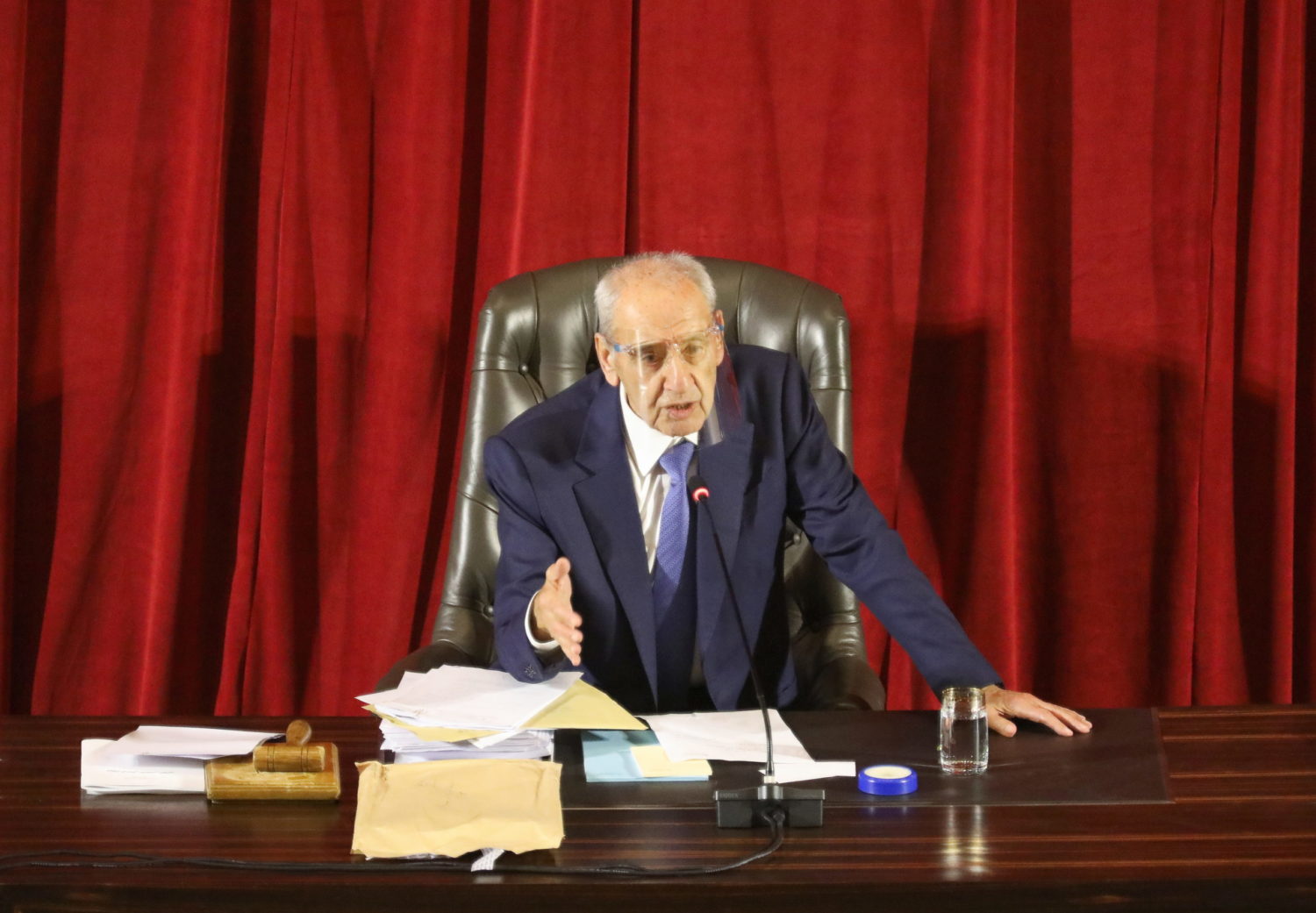
BEIRUT (Reuters) -The Lebanese parliament will convene on Friday to discuss what to do about a fuel crisis that has brought much of the country to a halt and sparked deadly violence.

Speaker Nabih Berri called the session to discuss “appropriate action” over crippling fuel shortages, a crunch point in a two-year financial meltdown that marks Lebanon’s worst crisis since the 1975-90 civil war.

A rocket-propelled grenade was fired near a Beirut petrol station during a dispute over gasoline, a security source said. Gunmen opened fire on soldiers who had detained a man who tried to fill his car by force. The station caught fire.

The steadily worsening fuel crisis has hit a low in the last week, with power blackouts forcing some hospitals, bakeries, and businesses to scale down or close.

A senior U.N. official said water supplies and essential health services were threatened, warning of a humanitarian catastrophe. “A bad situation only stands to get worse unless an instant solution is found,” said Najat Rochdi, the U.N. humanitarian coordinator for Lebanon.

Last week, the central bank announced it could no longer finance imports of gasoline and diesel at heavily discounted exchange rates, effectively ending a subsidy scheme which promises to increase prices sharply.

Governor Riad Salameh has been at odds with the government over the move, as the government says it should have been done only after the provision of prepaid cash cards for the poor.

Salameh has said he can resume subsidizing imports only if a law is passed allowing him to dip into the mandatory reserves.

The crisis has sparked a renewed push by Lebanon’s squabbling politicians to agree on a cabinet that can start tackling the financial crisis, which has depressed the currency by more than 90%.

“We still have a few meters (yards) left in the race, but god willing we are sorting it out appropriately,” Prime Minister-designate Najib Mikati said after meeting with President Michel Aoun on Tuesday.

Despite deepening poverty, Lebanon’s ruling elite have failed to form a new cabinet since Prime Minister Hassan Diab quit after last year’s devastating Beirut port explosion.

The past week has seen repeated violence at gas stations. At least 28 people were killed in northern Lebanon at the weekend when a fuel tanker exploded as people rushed to get a share.

Asked about local media reports of two new diesel shipments carrying 80 million liters imported at the previous subsidized rate of 3,900 Lebanese pounds to the dollar, Salameh said they had been pre-approved in July.

The parallel market rate on Tuesday was 18,500 pounds to the dollar.

Local broadcasters MTV and al-Jadeed had reported on Tuesday that a third shipment of gasoline had been rejected by the central bank. Salameh said it would have to abide by a new circular.

“The new circular will determine the price of sayrafa as a base for the dollar [letter of credit],” he said.

Sayrafa is the central bank’s currency exchange platform.

Sayyed Hassan Nasrallah, head of the Iran-backed Hezbollah group, said on Sunday it would begin bringing diesel and gasoline from Iran with delivery dates to be announced soon.

(Reporting by Nafisa Eltahir, Laila Bassam, and Tom Perry; Editing by Tom Perry and Mark Heinrich)

Canadian lumber producers to shed lofty profit gains as demand recedes

By Rithika Krishna

(Reuters) – North American timber producers are expected to see a dip in current-quarter profit after lumber demand for do-it-yourself home projects decreased following the easing of most restrictions that kept people in their houses.

Lofty lumber prices, the sustained needs of home builders and industrious homeowners during the pandemic pushed their second-quarter profit to record levels. But the DIY market, which accounts for 20% of lumber sales, is leveling.

Canada’s West Fraser Timber Co Ltd, Canfor Corp and Interfor Corp are projected to report combined earnings of about $803 million in the third quarter, according to Refinitiv estimates, about a third of what they posted in the second quarter.

However, lumber supply is expected to tick up as saw mill owners take advantage of recent bumper profits to build more mills and add workers, which will help ease a protracted labor shortage.

“Revival in supply and weak demand from renovations and the repair sector will put a lid on prices,” said Samuel Burman, commodities economist at Capital Economics.

Burman expects lumber prices to hover around $500 to $600 per thousand board feet for the rest of this year, with supply set to rise around 6% in 2021 compared to pre-pandemic levels.

Lumber futures touched a record high of $1,711 per thousand board feet in May. However, futures contract for lumber with delivery in November traded at just $483 per thousand board feet.

In July, U.S.-based Weyerhaeuser Co said it expects third-quarter earnings to be “significantly” lower than the second. Canfor, which breezed past market expectations in the second quarter, hinted at future demand challenges in late July.

“The second quarter was probably the greatest quarter in the history for the lumber producers … they never made money like they did in the second quarter and they probably won’t make money like that again in the near future,” said Mark Wilde, analyst with BMO Capital Markets.

The windfall from high lumber prices, however, encouraged Canfor and smaller rivals like privately held Tolko and Roseburg Forest Products to open new saw mills.

“The new supply will weigh on pricing,” said George Staphos at Bank of America (BofA) research, adding that some new equipment and capacity installations could go into 2022 and beyond.

(Reporting by Rithika Krishna in Bengaluru; Editing by Sweta Singh, Bernard Orr)

Taliban risk military strikes if they host terrorists again, NATO warns

By Sabine Siebold

(Reuters) -The Taliban must not let Afghanistan become a breeding ground for terrorism again, NATO said on Tuesday, warning that the alliance after its withdrawal still has the military power to strike any terrorist group from a distance.

“Those now taking power have the responsibility to ensure that international terrorists do not regain a foothold,” NATO Secretary-General Jens Stoltenberg told reporters in his first news conference since the fall of Kabul to the Taliban.

“We have the capabilities to strike terrorist groups from a distance if we see that terrorist groups again try to establish themselves and plan, organize attacks against NATO allies and their countries,” he added.

The fight against al Qaeda, the militant organization responsible for the 9/11 attacks whose leadership was hosted by the Taliban, was the main reason for the West’s intervention in Afghanistan in 2001 in what was to become NATO’s first major operation beyond Europe.

But as the alliance wrapped up military operations this summer after almost two decades, the Taliban rapidly advanced, capturing the biggest cities in days.

The sudden takeover of the capital, Kabul, caused thousands of people to flee to the city’s airport, which is still being held by the U.S. military, desperate to get on evacuation flights.

In Brussels, a female Afghan journalist on the verge of tears asked Stoltenberg what the West would do for all those vulnerable back in her country, leaving the NATO chief visibly moved.

Stoltenberg called on the Taliban to facilitate the departure of all those who want to leave the country, and said that Western defense allies had agreed to send more evacuation planes to Kabul.

At the same time, he expressed frustration with the Afghan leadership, blaming it for the Taliban’s easy success.

“Part of the Afghan security forces fought bravely,” Stoltenberg said. “But they were unable to secure the country, because ultimately the Afghan political leadership failed to stand up to the Taliban and to achieve the peaceful solution that Afghans desperately wanted.”

(Additional reporting by John Chalmers, Marine Strauss, Foo Yun Chee, Francesco Guarascio; Editing by John Chalmers and Jonathan Oatis)