U.S. Supreme Court rejects Republican challenge to Obamacare law

By Lawrence Hurley

WASHINGTON (Reuters) -The U.S. Supreme Court on Thursday rejected a Republican bid that had been backed by former President Donald Trump’s administration to invalidate the Obamacare healthcare law, ruling that Texas and other challengers had no legal standing to file their lawsuit.

The 7-2 ruling authored by liberal Justice Stephen Breyer did not decide broader legal questions raised in the case about whether a key provision in the law, which is formally called the Affordable Care Act, was unconstitutional and, if so, whether the rest of the statute should be struck down.

The provision, called the “individual mandate,” originally required Americans to obtain health insurance or pay a financial penalty.

It marked the third time the court has preserved Obamacare since its 2010 enactment.

“The Affordable Care Act remains the law of the land and will continue to provide millions of Americans with healthcare,” said Sabrina Singh, a spokeswoman for Vice President Kamala Harris. “Today is a good day.”

Breyer wrote that none of the challengers, including Texas and 17 other states and individual plaintiffs, could trace a legal injury to the individual mandate.

President Joe Biden’s administration in February urged the Supreme Court to uphold Obamacare, reversing the position taken by the government under Trump, who left office in January.

After Texas and other states sued, a coalition of 20 states including Democratic-governed California and New York and the Democratic-controlled House of Representatives intervened in the case to try to preserve Obamacare after Trump refused to defend the law.

“For more than a decade, the Affordable Care Act has been the law of the land, providing health coverage and a multitude of protections to tens of millions of Americans across the nation, and today’s decision solidifies those protections for generations to come,” New York Attorney General James said.

The two dissenting justices were conservatives Samuel Alito and Neil Gorsuch. Justice Amy Coney Barrett, a Trump appointee whose confirmation hearing last fall included many questions from Democrats over whether she would vote to strike the law down, was in the majority in the ruling.

Republicans fiercely opposed Obamacare when it was proposed, failed to repeal it when they controlled both chambers of Congress and have been unsuccessful in getting courts to invalidate the law, which was Democratic former President Barack Obama’s signature domestic policy achievement. The Trump administration did take steps to hobble the law.

The Supreme Court has a 6-3 conservative majority bolstered by the October confirmation in a Republican-led Senate of Trump’s third appointee, Amy Coney Barrett, but the Republican Obamacare challengers still came away disappointed. The Supreme Court in 2012 and 2015 also fended off previous Republican challenges to Obamacare.

Biden has pledged to expand healthcare access and buttress Obamacare. Biden and other Democrats had criticized Republican efforts to strike down the law at a time when the United States was grappling with a deadly coronavirus pandemic.

If Obamacare had been struck down, up to 20 million Americans stood to lose their medical insurance and insurers could have once again refused to cover people with pre-existing medical conditions. Obamacare expanded the Medicaid state-federal healthcare program and created marketplaces for private insurance.

In 2017, Trump signed a Republican-backed tax law that eliminated the financial penalty under the individual mandate, which gave rise to the Republican lawsuit. The tax law meant the individual mandate could no longer be interpreted as a tax provision and was therefore unlawful, the Republican challengers argued.

The Supreme previously upheld Obamacare by deeming the financial penalty under the individual mandate a tax permissible under the Constitution’s language empowering Congress to levy taxes.

The impetus for the Supreme Court case was a 2018 ruling by a federal judge in Texas that Obamacare as structured following the 2017 change violated the U.S. Constitution and was invalid in its entirety. The New Orleans-based 5th U.S. Circuit Court of Appeals agreed that the individual mandate was unconstitutional but did not rule that the entire law should be stricken.

Biden’s administration notified the court of the government’s new position in February in a letter filed by Deputy Solicitor General Edwin Kneedler. The Biden administration believes that the individual mandate was constitutional and, even if it was not, the rest of the law should remain in place, Kneedler wrote.

(Reporting by Lawrence Hurley; Additional reporting by Trevor Hunnicutt; Editing by Will Dunham)

EU and UK say Hong Kong newspaper raid shows China cracking down on dissent

By Guy Faulconbridge and Robin Emmott

LONDON/BRUSSELS (Reuters) – The European Union and Britain on Thursday said a police raid on Hong Kong’s pro-democracy tabloid Apple Daily showed that China was using a new national security law to crack down on dissent and silence the media rather than deal with public security.

Just days after the world’s richest democracies scolded China over human rights at a Group of Seven summit and the NATO military alliance warned Beijing over its ambitions, Hong Kong police made dawn arrests of Apple Daily newspaper executives.

Five hundred Hong Kong police officers sifted through reporters’ computers and notebooks at the daily, the first case in which authorities have cited media articles as potentially violating the national security law.

The raid “further demonstrates how the national security law is being used to stifle media freedom and freedom of expression in Hong Kong,” EU spokesperson Nabila Massrali said in a statement.

“It is essential that all the existing rights and freedoms of Hong Kong residents are fully protected, including freedom of the press and of publication.”

Britain’s Foreign Secretary Dominic Raab also said the raid was aimed at silencing dissent.

“Freedom of the press is one of the rights China promised to protect in the Joint Declaration and should be respected,” Raab said, referring to an accord guaranteeing autonomy for Hong Kong when London handed over its colony to China in 1997.

Hong Kong Security Secretary John Lee described the newsroom as a “crime scene” and said the operation was aimed at those who use reporting as a “tool to endanger” national security.

Western leaders say Chinese President Xi Jinping, 68, is cracking down on Hong Kong, which Britain handed back to China in 1997, and Western security officials have expressed apprehension about Xi’s next target.

Britain and its allies say the national security law breaches the “one country, two systems” principle enshrined in the 1984 Sino-British treaty that guaranteed Hong Kong’s autonomy.

China has repeatedly warned Britain and the United States to stop meddling in its affairs and says many Western powers are gripped by an “imperial hangover” after years of humiliating China during the 19th and 20th Centuries.

(Reporting by Guy Faulconbridge and Robin Emmott; Editing by Alistair Smout and Peter Graff)

Texas, California call for power restraint during heatwave

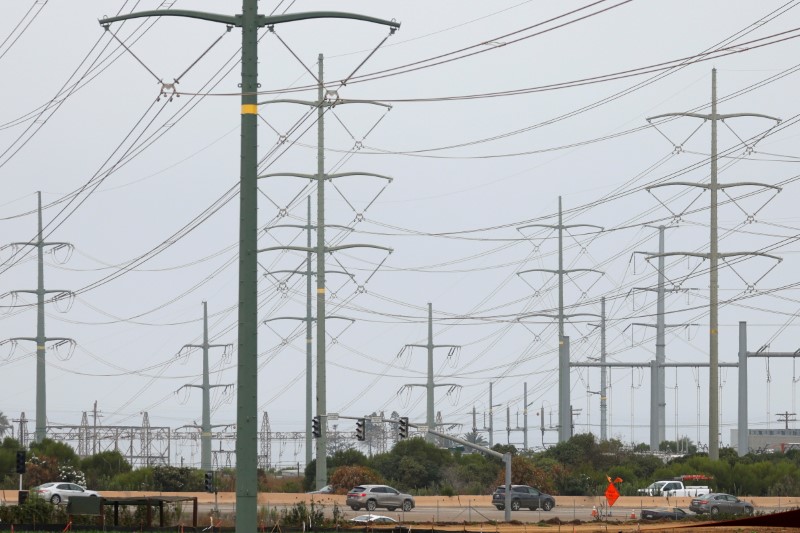
(Reuters) -Texas and California urged consumers to conserve energy this week to reduce stress on the grid and avoid outages as homes and businesses crank up air conditioners to escape a scorching heatwave blanketing the U.S. Southwest.

High temperatures were expected to top 110 degrees Fahrenheit (43 Celsius) through the weekend in parts of several states including California, Arizona and Nevada.

“The public’s help is essential when extreme weather or other factors beyond our control put undue stress on the electric grid,” said Elliot Mainzer, chief executive of the California ISO, which operates the grid in most of California.

Over the past year, Texas and California imposed rotating or controlled outages to prevent more widespread collapses of their power systems – California during a heatwave in August 2020 and Texas during a brutal freeze in February 2021.

The Electric Reliability Council of Texas (ERCOT), the state’s grid operator, expects Thursday’s demand to break the June record set on Monday. In February, ERCOT imposed rotating outages as extreme cold froze natural gas pipes and wind turbines, leaving millions of customers without power – some for days.

ERCOT has been under fire for the design of its system, which is not connected to other U.S. grids to avoid federal oversight, and because they do not operate a “capacity” market that keeps power generation on stand-by during extreme weather events.

The California ISO said its Flex Alert, or call for conservation, “is critical because when temperatures hit triple digits across a wide geographic area, no state has enough energy to meet all the heightened demand.”

The ISO said evening is the most difficult time of day because demand remains high but solar energy diminishes. So far this year, solar has provided 22% of the grid’s power.

Real-time prices in ERCOT have remained below $100 per megawatt hour (MWh) since Tuesday evening as more power plants returned to service from forced outages that caused prices to soar over $1,900 for two 15-minute periods on Monday.

(Reporting by Scott DiSavino; Editing by Nick Zieminski and Edmund Blair)

COVID-19 out of control in Afghanistan as cases up 2,400% in a month

KABUL (Reuters) -The COVID-19 pandemic is spiraling out of control in Afghanistan, with cases rising 2,400% in the past month, hospitals filling up and medical resources quickly running out, the International Federation of Red Cross and Red Crescent Societies said on Thursday.

More than a third of tests last week came back positive, the IFRC said.

“Afghanistan is at a crisis point in the battle to contain COVID-19 as hospital beds are full to capacity in the capital Kabul and in many areas,” said Nilab Mobarez, Acting President of the Afghan Red Crescent Society, in a statement released by the International Federation of Red Cross and Red Crescent Societies.

The surge was putting intense strain on a country where millions already live in poverty and health resources are scarce.

Health authorities on Thursday registered 2,313 positive cases and a record 101 deaths from COVID-19 in the last 24 hours. Officials and experts have said low testing means those official figures are probably a dramatic undercount.

Afghanistan’s fragile health system has been damaged by decades of war. Violence has risen in recent months, with U.S.-led foreign forces withdrawing by September and peace negotiations between the Afghan government and insurgent Taliban largely stalled.

Major hospitals have closed their doors this week to new COVID-19 patients after an influx of cases left them with a lack of beds and oxygen shortages.

The IFRC warned that lack of vaccine access and hesitancy were exacerbating the situation. Less than 0.5% of Afghans have been fully vaccinated.

Around 700,000 doses of China’s Sinopharm vaccine arrived in the country last week, allowing authorities to start the next round of its vaccination campaign.

The IFRC was working with Afghan authorities to provide more resources and try and boost medical oxygen production, according to Necephor Mghendi, the head of Afghanistan Country Delegation for IFRC.

“More international support is needed to help win this race against this virus, so we can save thousands of lives,” he said.

(Reporting by Kabul bureau; Editing by Peter Graff)

U.S. won’t back global tax plan with carve-outs for China – Yellen

By Andrea Shalal

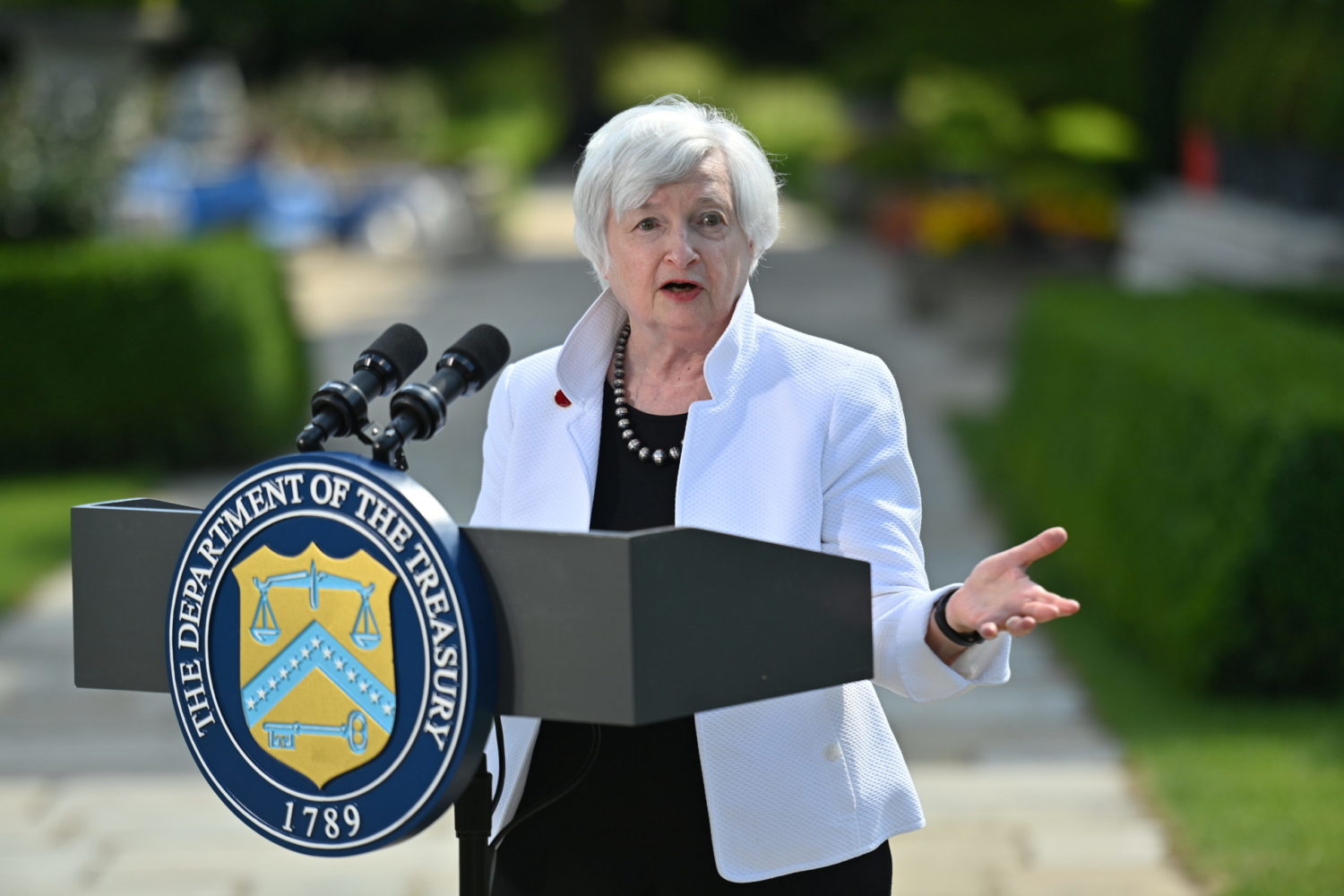
WASHINGTON (Reuters) – The United States will not agree to any type of special treatment for China or other countries that would weaken a global minimum tax regime, U.S. Treasury Secretary Janet Yellen said on Wednesday.

Yellen said the United States and other countries were continuing their efforts to convince China to support plans endorsed on Sunday by the Group of Seven advanced economies.

She said she was hopeful Beijing would decide it was in its interest to support the plans – which calls for a global corporate mininum tax of at least 15% – but made clear that Washington would not endorse a weak agreement.

“We would not agree to any type of carve-out that would meaningfully weaken a robust global minimum tax regime. Not for China, not for other countries,” Yellen told the Senate Finance Committee at a hearing.

“We want this to work and not be filled with loopholes.”

G7 finance officials on June 5 agreed to support a minimum corporate tax rate of at least 15%, a move endorsed by G7 leaders on Sunday.

But some countries, including China, are reluctant to give up tax incentives to advance policy priorities ranging from boosting research and development to attracting foreign investment, including special economic zones with low taxation to attract foreign investment.

One official briefed on the G7 talks told Reuters that China was against the 15% agreed by the G7 and winning carve-outs would be its condition for getting behind the rate.

Finance officials from the Group of 20 major economies – which include China – will focus on the U.S. global minimum tax proposal when they meet in Venice in July.

Yellen told senators that the United States was pursuing every avenue to ensure that countries suspended or rolled back digital services taxes that Washington says discriminates against U.S. technology companies, but would keep tariffs as an option if that does not happen.

She said she had engaged in “very constructive” bilateral conversations with the Irish finance minister on the issue, and believed the entire European Union would ultimately support an increase in global minimum taxes.

She said she was hoping for progress on the tax issue, which is being negotiated under the leadership of the Organization for Economic Cooperation and Development, by the time the leaders of the Group of 20 major economies meet in October.

Yellen said U.S. moves to raise its corporate minimum tax would help provide momentum for a broad-based agreement. She said the United States was also proposing changes to prevent foreign companies working in the United States from shifting their profits offshore.

Asked about rising consumer and durable goods prices, Yellen said the Biden administration was monitoring inflation “very carefully” and took the issue seriously.

“No one wants to return to the bad high inflation days of the 70s,” Yellen told the committee.

She said the current burst of inflation reflected the difficulty of reopening the U.S. economy, and the Biden administration was also taking steps to deal with bottlenecks in certain supply chains that had resulted in higher prices.

(Reporting by Andrea Shalal; additional reporting by Dan Burns; Editing by Chizu Nomiyama, Diane Craft and Andrea Ricci)

U.S. import prices accelerate in May; export prices surge

WASHINGTON (Reuters) – U.S. import prices increased more than expected in May as the cost of petroleum products rose and supply chain bottlenecks boosted prices of other goods, adding to signs that inflation was heating up amid a reopening economy.

Import prices rose 1.1% last month after gaining a 0.8% in April, the Labor Department said on Wednesday. The seventh straight monthly gain lifted the year-on-year increase to 11.3%, the largest rise since September 2011. Import prices surged 10.8% on a year-on-year basis in April.

Economists polled by Reuters had forecast import prices, which exclude tariffs, rising 0.8%. Part of the acceleration in the year-on-year prices reflected the dropping of last spring’s weak readings from the calculation.

Data this month showed strong increases in producer and consumer prices in May. Vaccinations against COVID-19, trillions of dollars from the government and record-low interest rates are whipping up demand, leaving companies scrambling for raw materials and labor. But the higher inflation is largely viewed as transitory, with supply chains expected to adjust.

Imported fuel prices jumped 4.0% last month after rising 1.6% in April. Petroleum prices increased 3.8%, while the cost of imported food fell 0.4%. Excluding fuel and food, import prices rose 1.0%. These so-called core import prices advanced 0.7% in April.

The report also showed export prices jumped 2.2% in May after rising 1.1% in April. Prices for agricultural exports rose 6.1%, the largest gain since in November 2010.

Nonagricultural export prices rose 1.7%, lifted by industrial supplies and materials and consumer goods.

Export prices surged 17.4% year-on-year, the largest rise since the series started in September 1983, after advancing 14.9% in April.

(Reporting By Lucia Mutikani; Editing by Chizu Nomiyama)

U.S. House panel to vote on antitrust bills next week

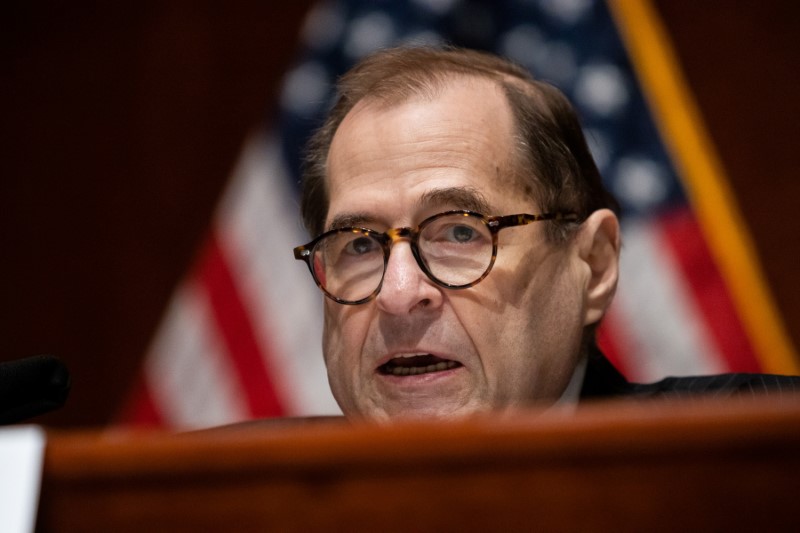
WASHINGTON (Reuters) -The U.S. House Judiciary Committee’s antitrust panel next week will begin reviewing five recently introduced antitrust bills including several targeting the market power of Big Tech, Committee chair Jerry Nadler said on Wednesday.

Five antitrust bills were introduced last week in the House of Representatives. They will be marked up in committee to consider changes and then voted on by the panel to decide whether the full House should vote on the measures.

Two of the bills introduced last week address the issue of giant companies, such as Amazon.com Inc and Alphabet Inc’s Google, creating a platform for other businesses and then competing against those same businesses.

These bills — one of which would force companies to sell businesses — have attracted the most opposition. Some pro-tech groups have said they could mean the end of popular promotions like Amazon Prime free shipping and iMessage in iPhones.

A third bill would require a platform to refrain from any merger unless it can show the acquired company does not compete with any product or service the platform is in. A fourth would require platforms to allow users to transfer their data elsewhere if they desire, including to a competing business.

The House members also introduced a fifth bill which is a companion to a Klobuchar measure that has already passed the Senate and would increase the budgets of antitrust enforcers and make companies planning the biggest mergers pay more. Observers have said that this bill was the most likely of the five to become law.

(Reporting by Diane Bartz, Editing by Franklin Paul and David Gregorio)

New York grapples with growing presence of homeless in midtown Manhattan

By Peter Szekely and Angela Moore

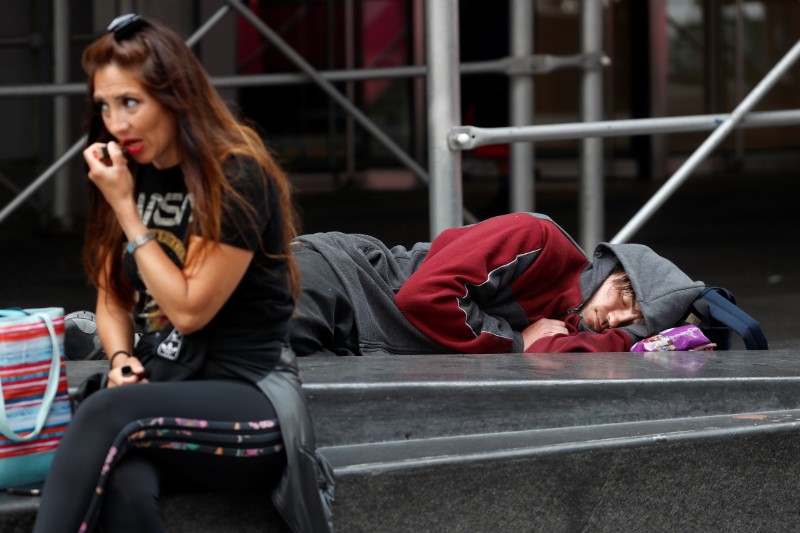
NEW YORK (Reuters) – An influx of homeless people into Manhattan’s Hell’s Kitchen neighborhood after an emergency move by New York City to ease crowding in shelters has been a fact of pandemic life for the neighborhood since last spring.

Many of the newcomers, living in nearby hotel rooms contracted by the city, have been largely inconspicuous. But others with mental health and drug problems have become a growing presence in Hell’s Kitchen and adjacent Times Square.

As the city looks to welcome back tourists and office workers a with the pandemic lifting, the complaints have grown louder.

A city with people camped on sidewalks is much different than the one suburban commuters left when they started working from home as much of the country locked down in March 2020.

“They make me feel like I wish I could do something,” said Rachel Goldstein, an IT director, as she emerged from Penn Station, a major rail hub, last week for her first on-site workday since the pandemic began.

Giselle Routhier, policy director for the Coalition for the Homeless advocacy group, faulted the state and city for not providing enough mental health services and for “shuffling people” between locations.

“What we actually need for the city to do is to offer folks on the streets access to single occupancy rooms where they can come inside and feel that they’re safe from the elements and from the spread of the coronavirus,” she said.

Longer term, the city needs “more robust housing production for extremely low-income and homeless households, particularly for single adults,” many of whom were pushed into homelessness by the economic fallout of the pandemic, Routhier said.

Several of the eight Democrats running for mayor in next Tuesday’s primary election also have called for converting hotels into housing for the homeless.

As the pandemic raged last spring, the Department of Homeless Services (DHS) relocated 10,000 people from crowded shelters to 67 hotels whose tourism, business and convention bookings had dried up.

A portion of them, more than one-fifth, were packed into hotels in the Chelsea and Hell’s Kitchen neighborhoods west of Times Square and the Theater District, the New York Post reported, citing a letter from Manhattan Borough President Gale Brewer that it obtained.

In a precinct that includes Times Square, reports of assaults and robberies have shot up 185% and 173%, respectively, so far this year, even as citywide assaults rose by only 8% and robberies fell 5%, according to New York Police Department statistics.

ARRAY OF COMPLAINTS

Scott Sobol, 44, a real estate agent who lives in Hell’s Kitchen, believes only a few of the homeless residents were responsible for the additional complaints, and faulted officials for not vetting them for mental health issues, drug problems and criminal histories.

“What (neighbors) want is to stop getting harassed on the street,” he said. “If a homeless rehabilitation center can coexist with a sense of polite life, we have no issues with it.”

A DHS spokesperson on Tuesday did not immediately reply to a request for comment.

“Right now, there are a lot of homeless people hanging around, a lot of pee on every corner,” added Min Kim, 69, who owns the Star Lite Deli in Times Square. “Tourists will be coming back, and it’s not really good for them.”

Eric Gourley, 42, a drifter who has been in the city for a week, sleeping on park benches and sidewalks, said he sympathizes with business owners who have complained about the behavior of some homeless people.

“Some of it, I understand,” he said on a Midtown street last week. “Some of these homeless people are out here, they’re getting high, they’re getting drunk.”

“We heard the complaints from the communities and that’s why we increased the presence,” said Terrance Monahan, a senior adviser to Mayor Bill de Blasio for COVID-19 recovery and safety planning who retired earlier this year as the NYPD’s chief of department. “People need to feel safe.”

De Blasio has said the relocation of the 10,000 homeless residents was a temporary move, but has not offered a timeline for their return to shelters, where he said more services are available.

Deborah Padgett, a New York University professor who has researched homelessness, opposes the move, saying that hotels provide the privacy and dignity that homeless residents need to rebuild their lives.

“To me it makes no sense to send them back to the crowded, unsafe shelters,” said Padgett, who “It’s very easy to identify the troublemakers … and they could be transferred out of the hotel.”

(Reporting by Peter Szekely and Angela Moore in New York; Additional reporting by Shannon Stapleton in New York)

UK extends COVID ban on business evictions until 2022

By William Schomberg and David Milliken

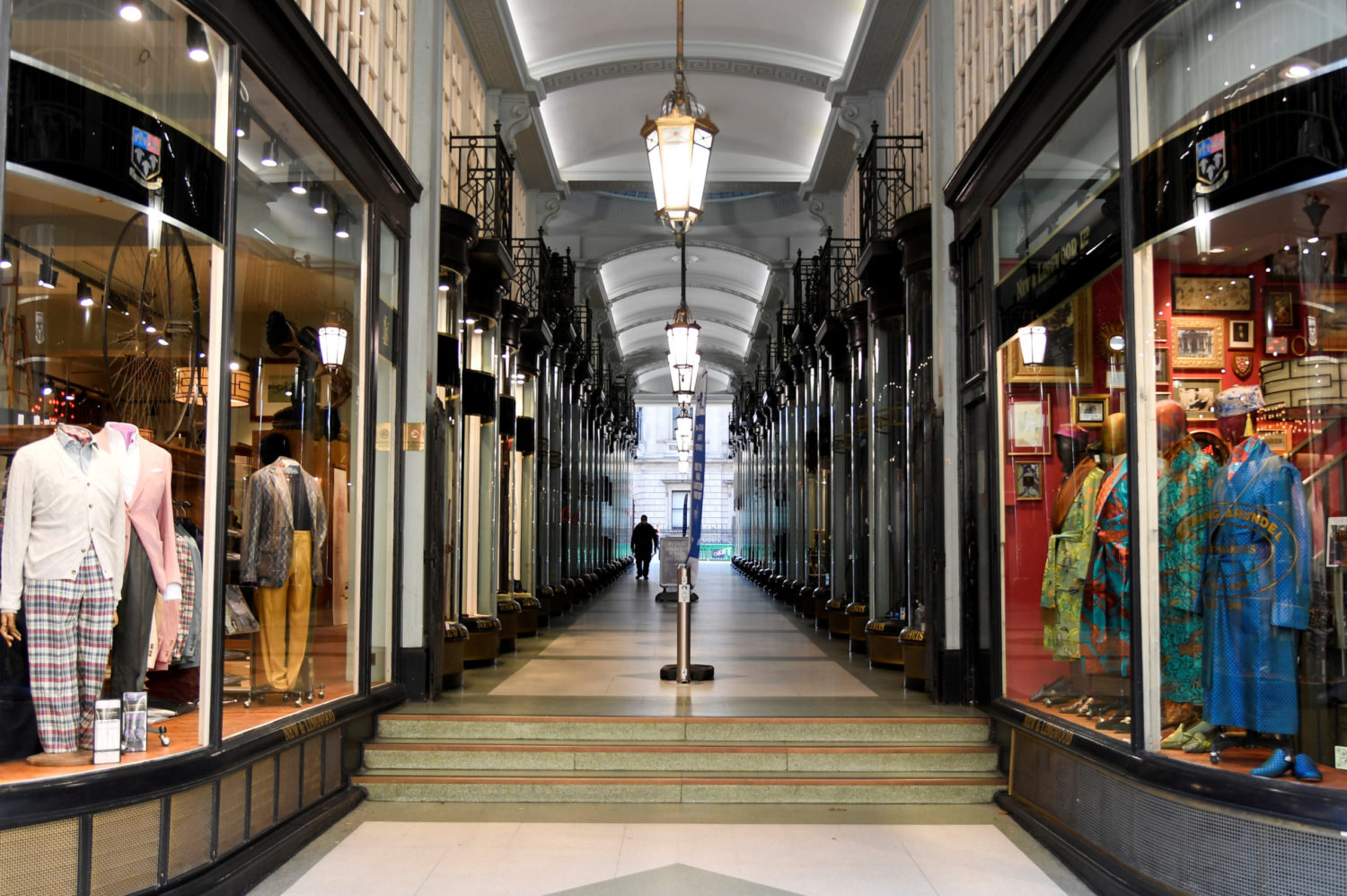
LONDON (Reuters) -Britain’s government will extend until March 2022 a ban on evictions of businesses that stopped paying rent due to the coronavirus crisis, a junior finance minister said.

The extension to the moratorium – which had been due to expire at the end of this month – was welcomed by a trade body representing retailers, but landlords said allowing rent arrears to build up for a further nine months was wrong.

In April last year the government blocked legal attempts to evict shops, restaurants and other businesses that had stopped paying rent, as part of emergency measures to soften the economic impact of the pandemic.

The measures had been due to expire on June 30 but calls for an extension grew after Prime Minister Boris Johnson said on Monday that a lifting of most remaining social-distancing rules in England would be delayed by a month until July 19.

“Existing measures will remain in place, including extending the current moratorium to protect commercial tenants from eviction to March 25, 2022,” Steve Barclay, chief secretary to the Treasury, told parliament on Wednesday.

Under current COVID rules, many businesses can only serve customers at reduced capacity, which restaurants in particular say makes them unprofitable.

Businesses were also concerned that landlords would immediately demand repayment of rent that went unpaid while they were shut during the pandemic.

“Retailers need time to trade their way out of debt; this announcement does exactly that,” the British Retail Consortium’s chief executive Helen Dickinson said.

Barclay told parliament on Wednesday that the government planned to introduce legislation to support the “orderly resolution” of debts resulting from COVID-19 business closures via binding arbitration if other negotiations fail.

The extension of the moratorium would cover the period until that new legislation was effective, he said.

But a law firm representing landlords called the delay “extremely disappointing”.

“Nothing is done here to address or recognise the financial pressure landlords are facing, or that there are tenants out there who can pay but have been taking advantage of the government’s measures,” said Danielle Drummond-Bassington, a real estate disputes partner at law firm CMS.

(Reporting by William Schomberg and Alistair Smout, editing by David Milliken, William Maclean)

California urges consumers to prepare to save energy amid impending heatwave

(Reuters) – The California power grid operator urged consumers to prepare to conserve energy this week to prevent the possibility of rotating or controlled outages as homes and businesses crank up their air conditioners to escape a brutal heatwave.

The California ISO, which operates most of the state’s electric system, projected that demand plus reserves required in case something goes wrong would exceed power supplies for several days this week.

High temperatures are expected to be in the low 90s Fahrenheit (about 33 Celsius) in Los Angeles on Wednesday through Saturday, which is more than 20 degrees Fahrenheit over the normal high for the time of year, according to AccuWeather.

The ISO projected the biggest deficit would occur Thursday after the sun goes down and solar power is no longer available.

A heatwave last August forced California utilities to impose rotating blackouts that left over 400,000 customers without power for up to 2-1/2 hours when supplies ran short.

The grid operator forecast peak demand would rise from 40,919 megawatts (MW) on Wednesday to 43,820 MW on Thursday. That compares with an all-time peak of 50,270 MW in July 2006.

The ISO said Thursday’s peak plus reserves was more than 3,300 MW over supplies expected to be available at that time.

The ISO has said it expects to have about 50,734 MW of supply available this summer, but some of that comes from solar.

At the start of June, the ISO, which does not count all solar as being available since it only works when the sun is out, said it had over 14,100 MW of solar capacity that produced a record 13,205 MW in May.

Moreover, the ISO warned it may not be able to rely on neighboring states for much more power because the heatwave baking California was also blanketing much of the West.

The ISO was currently getting 29% of its power, or more than 7,200 MW, from imports. That compares with a peak of 9,956 MW in May and a record 11,894 MW in September 2019.

(Reporting by Scott DiSavino; Editing by Bernadette Baum)