Tropical Storm Elsa passes by Key West, heads towards Florida Gulf Coast

(Reuters) -Tropical Storm Elsa was moving past the Florida Keys on Tuesday morning and heading toward the west coast of the state, where it was expected to make landfall on Wednesday morning after dumping heavy rain over Cuba.

The U.S. National Hurricane Center (NHC) said in a Tuesday morning advisory the center of Elsa was about 65 miles west-northwest of Key West and moving in the north-northwest direction at around 10 mph (17 kph), with maximum sustained winds of around 60 mph (95 kph).

A hurricane watch was in effect from Egmont Key, in the Tampa Bay region, to the Steinhatchee River some 180 miles north along the Gulf Coast.

“Slow strengthening is forecast through tonight, and Elsa could be near hurricane strength before it makes landfall in Florida,” the Miami-based weather forecaster said.

After a Wednesday morning landfall along Florida’s Gulf Coast, the storm is forecast to move north-northeastward across the southeast of the United States through Thursday, dropping 2-4 inches of rain across the Florida peninsula.

The arrival of tropical storm-force winds and rain was threatening to impede the search and rescue effort at the site of a condominium building collapse in Surfside, Florida, near Miami, where crews have sifted through rubble for 12 days in hopes of finding survivors. As of Tuesday morning, 32 people were confirmed dead and 113 were still unaccounted for, Miami-Dade Mayor Daniella Levine Cava said.

Tornadoes were possible on Tuesday across Florida and possible on Wednesday in north Florida, southeast Georgia and the low country of South Carolina, the NHC said.

Elsa has already killed at least three people and caused damage to infrastructure and agriculture in Caribbean islands southeast of Cuba, such as St Lucia and the Dominican Republic.

More than 100,000 people in Cuba were evacuated from flood-prone areas or unsafe housing in the potential path of the storm, most going to homes of family and friends, but thousands also went to government shelters, state-run media reported.

The NHC said tropical storm conditions would continue over parts of Cuba during the next several hours, with flooding possible.

(Reporting by Gabriella Borter and Maria Ponnezhath in Bengaluru; Editing by Alison Williams and Andrea Ricci)

COVAX aims to resolve Venezuela COVID-19 vaccine roadblocks after Maduro ‘ultimatum’

CARACAS (Reuters) – The COVAX vaccine-sharing facility is aiming to overcome roadblocks to the shipment of coronavirus shots to Venezuela “as soon as possible,” a spokesman for the GAVI alliance said on Tuesday.

The comments from GAVI, the Vaccine Alliance which runs COVAX with the World Health Organization, came after President Nicolas Maduro on Sunday said he was giving the COVAX system an “ultimatum” to send doses to the crisis-stricken South American country or return the money Venezuela had already paid.

Officials from the OPEC nation said in June that several payments to cover the $120 million fee have been made, but that the final four payments have been blocked by Swiss bank UBS. Maduro’s allies have attributed that to U.S. sanctions aimed at ousting him from the presidency.

“We are working to resolve this matter as quickly as possible,” a GAVI spokesperson said.

Washington in 2019 blacklisted Venezuela’s state oil company, central bank and other government institutions, though it exempts humanitarian transactions from the sanctions.

Still, the measures have left many banks wary of processing even authorized Venezuela-related transactions.

Venezuela’s COVAX payments are not subject to any sanctions, but pose compliance problems for UBS because the government has not satisfactorily spelled out to the bank exactly what the payment is for, a person familiar with the matter said, adding that UBS will execute the transaction as soon as the open questions are clarified.

Venezuela’s information ministry did not immediately respond to a request for comment.

Several of the payments to COVAX were made by local Venezuelan banks on the government’s behalf, Reuters reported last month.

Venezuela has received 3.5 million vaccine doses from allies Russia and China, and is also conducting trials for Cuba’s Abdala vaccine.

(Reporting by Mayela Armas and Michael Shields; Writing by Luc Cohen; Editing by Bill Berkrot)

Russia reports record 737 COVID-19 deaths, changes entry rules

MOSCOW (Reuters) – Russia on Tuesday reported a record 737 deaths from coronavirus-linked causes in the past 24 hours as the country stepped up efforts to vaccinate its population of more than 144 million people.

A new surge in COVID-19 cases in June was blamed on the new, highly infectious, Delta variant. Moscow responded with mandatory vaccination for a wide group of citizens, a model adopted by other regions, sparking wide public discontent ahead of September parliamentary elections.

Health minister Mikhail Murashko said up to 850,000 people were being vaccinated against COVID-19 in Russia every day, and that building immunity across the population was key, the TASS new agency reported.

Murashko said foreign producers of COVID-19 vaccines had applied to register in Russia, without disclosing their names.

Russia has so far offered its own vaccines against the novel coronavirus, launching a mass vaccination campaign in late 2020.

From Wednesday, Russia will change the rules for citizens returning from abroad, scrapping the obligation to undergo two PCR tests upon arrival, a decree published on Tuesday and signed by Anna Popova, head of the consumer health watchdog, showed.

From July 7, all those vaccinated or officially recovered from COVID-19 do not need to take a PCR test. Those who do not fall into these two categories when they enter Russia, will need to self-isolate before receiving results of one PCR test.

In the past day, Russia has confirmed 23,378 new COVID-19 cases, including 5,498 in Moscow, taking the official national tally since the pandemic began to 5,658,672.

The Kremlin said it would not support the idea of closing borders between Russia’s regions to stop the virus from spreading, although some regions may take swift and harsh measures to withstand the pandemic.

The recent surge in COVID-19 cases, along with the need to raise interest rates to combat inflation, are seen challenging economic growth in Russia this year.

(Reporting by Andrey Ostroukh and Gleb Stolyarov; additional reporting by Olzhas Auyezov; Editing by Catherine Evans, William Maclean)

No survivors from plane crash in Russia’s far east, rescue officials say

MOSCOW (Reuters) -There are no survivors after a plane carrying 28 people crashed in the far east of Russia on Tuesday, Russian news agencies cited rescue officials as saying.

The Antonov An-26 twin-engine turboprop was en route from the regional capital Petropavlovsk-Kamchatsky to Palana, a village in the north of the Kamchatka peninsula, when it lost contact with air traffic control, the emergencies ministry said.

Citing sources, Interfax reported that the plane was thought to have crashed into a cliff as it was preparing to land in poor visibility conditions.

Russia’s civil aviation authority confirmed that the plane’s crash site had been found after the emergencies ministry dispatched a helicopter and had deployed teams on the ground to look for the missing aircraft.

There were 22 passengers and six crew on board, the ministry said. Olga Mokhireva, the mayor of Palana, was among the passengers, the TASS agency quoted local authorities as saying.

The weather in the area was cloudy at the time the plane went missing, Russian news agencies reported. TASS said the aircraft involved had been in service since 1982.

Russian aviation safety standards have improved in recent years but accidents, especially involving ageing planes in far-flung regions, are not uncommon.

The Soviet-era plane type, still used for military and civilian flights in some countries, has been involved in dozens of deadly crashes since it entered service around 50 years ago.

An Antonov-28, a similar plane, slammed into a Kamchatka forest in 2012 in a crash that killed 10 people along the same route. Investigators said both pilots were drunk at the time of the crash.

(Reporting by Maria Kiselyova, Gabrielle Tétrault-Farber and Gleb Stolyarov; Editing by Kim Coghill, John Stonestreet and Alison Williams)

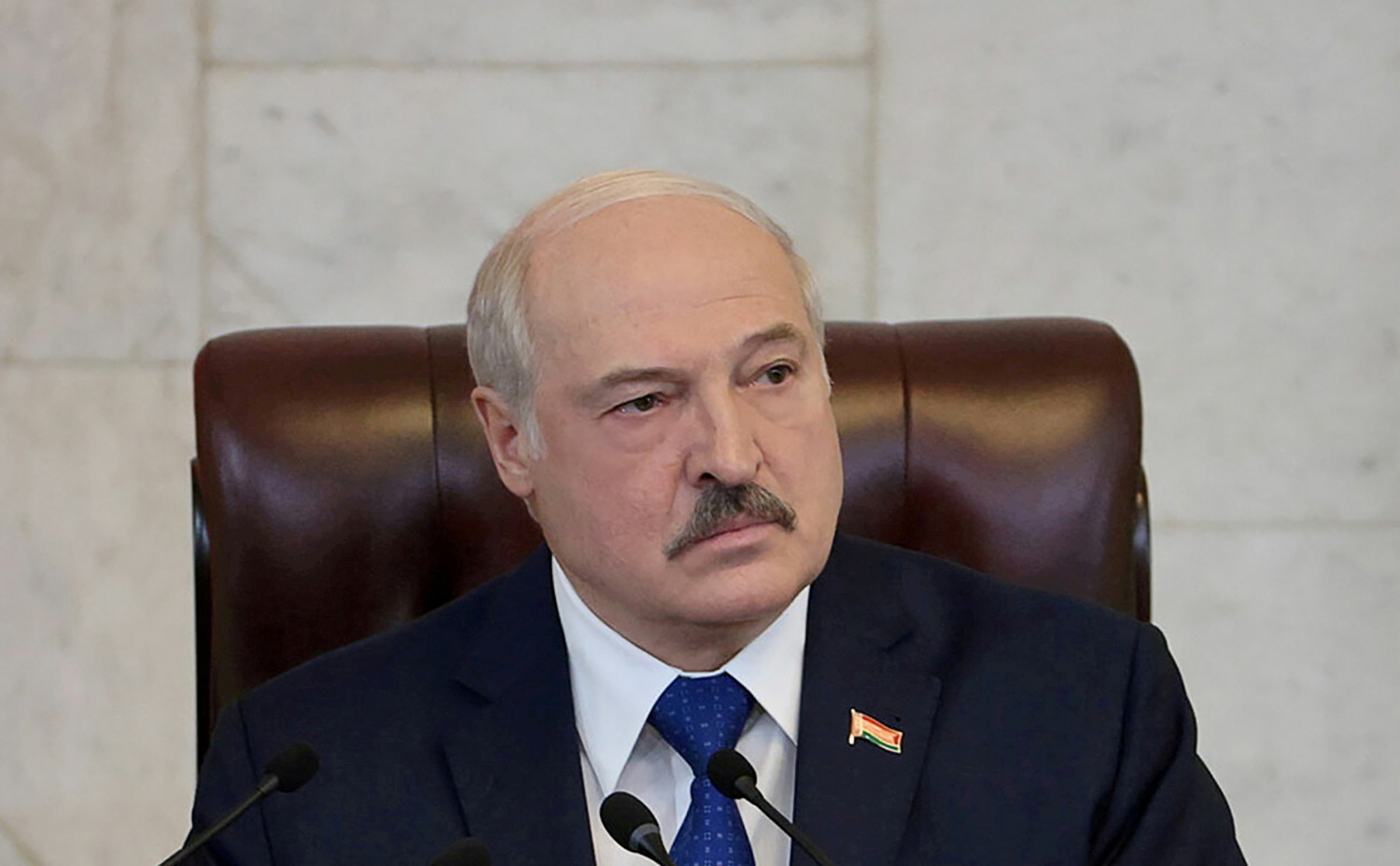
Belarus leader threatens to halt transit of EU goods via his country to east

KYIV (Reuters) – Alexander Lukashenko, the president of Belarus, on Tuesday threatened to stop the transit of European Union goods via his country to Russia and China in retaliation for EU sanctions.

The 27-nation bloc imposed wide-ranging economic sanctions on Belarus last month, targeting its main export industries and access to finance after Minsk forced a Ryanair flight to land and arrested a dissident blogger.

Rating agencies and analysts say the sanctions will leave Lukashenko largely unscathed and able to continue financing the economy and his security forces.

But officials in Belarus have spoken of economic warfare being waged on their country, and Lukashenko on Tuesday raised the prospect of counter sanctions that would halt the transit of EU goods via Belarus eastwards.

“First: not a step inside the Belarusian market; second: not a step through Belarus either,” Lukashenko told a government meeting.

“Exactly the same should be done with the Germans. Let (them) supply their products to China and Russia through Finland. Or through Ukraine,” he added.

Lukashenko did not specify when transit could be blocked and which countries, beyond Germany, could be affected.

When asked about the potential transit block earlier on Tuesday, the Kremlin said disruption to supply chains could not be ruled out and that serious work would be required to minimize such problems if they occurred.

Belarusian Prime Minister Roman Golovchenko said his government would “look at the behavior of our European partners” and take what he called appropriate measures that would not damage the Belarusian economy.

(Reporting by Pavel Polityuk; Editing by Andrew Osborn)

PM Bennett seeks to energize Israeli economy by slashing regulations

By Steven Scheer

JERUSALEM (Reuters) – Israeli Prime Minister Naftali Bennett, a former software entrepreneur, pledged on Tuesday to slash regulations to cut the cost of living and help Israel’s small and medium-size businesses flourish as well as its globally successful hi-tech sector.

“We want to ‘hi-tech-icise’ the rest of the economy,” he told a news conference. “We’re going to turn ourselves into a paradise for small and medium businesses … to make it easy and compelling to open a business and succeed.”

Bennett, who took office last month, took a swipe at his predecessor Benjamin Netanyahu, saying Israel had endured 12 years of talk and “minimal execution”.

Finance Minister Avigdor Lieberman said there were 209 regulators in Israel, and that they acted mainly in their own interests instead of aiming to improving productivity, competition and growth.

He pointed to a 2018 report by the Organization for Economic Cooperation and Development which said that reducing the level of regulation to the OECD average would increase Israel’s per-capita GDP by 3.75% in five years, and 5.75% – 75 billion shekels ($23 billion) – over a decade.

A report by the prime minister’s office and finance and justice ministries says Israel’s per capita GDP and productivity have lagged Western peers for a decade due to over-regulation.

Under a framework law, the government plans to establish a single authority to oversee regulatory processes, and to factor speed of processing, competitiveness and pricing into corporate regulations.

($1 = 3.2630 shekels)

(Reporting by Steven Scheer; Editing by Kevin Liffey)

Funeral for family of 4 to be first for victims of Miami condo collapse

By Francisco Alvarado

SURFSIDE, Fla. (Reuters) -The first funeral for victims of a collapsed Miami-area condo building will be held on Tuesday as mourners gather to lay to rest a family of four, including two young children, nearly two weeks after the disaster struck.

Also, officials updated the death toll to 32 after four more bodies were found in the partially collapsed 12-story Champlain Towers South building in Surfside, Florida. Some 113 people were still missing as rescue workers battled high winds from approaching Tropical Storm Elsa. Officials said they still have not determined what caused the collapse.

The lives of Marcus Guara, 52, his wife Ana Guara, 42, and their daughters, Lucia, 10, and Emma, 4, will be memorialized in a service at the St. Joseph Catholic Church in Miami Beach starting 2:30 p.m. ET.

Marcus Guara had just started a new job in November as a sales manager for a maker of towels and linens and often raised funds for charities, including St. Jude Children’s Research Hospital, according to his Facebook account.

Nobody has been pulled alive from the mounds of pulverized concrete, splintered lumber and twisted metal since the early hours of June 24 when roughly half of the building came tumbling down in an oceanfront town adjacent to Miami Beach.

Surfside Mayor Charles Burkett told a briefing that rescue workers have been bothered by strong winds as Elsa approaches from the south.

“The wind is hampering the large cranes moving very heavy debris,” Burkett said, adding that he met with a family hoping rescuers will find their daughter, a recent law school graduate who married in January, and their son-in-law.

Experts and officials have warned that the probability of finding survivors was remote given how much time has passed.

Miami-Dade County Fire Chief Alan Cominsky said rescuers have not found any “livable spaces”. He said workers had removed more than 124 tons, or 5 million pounds worth, of debris to date.

Forecasters predict the area will be spared the worst of the storm. Still, concerns over the impact of Elsa prompted officials to order the demolition of the half of building that had been left standing, which was carried out on Sunday night.

Investigators have not determined what caused the 40-year-old complex to collapse. A 2018 engineering report found structural deficiencies that are now the focus of inquiries that include a grand jury examination.

Miami-Dade Mayor Daniella Levine Cava cautioned that it could take some time to find the root cause.

“The whole world wants to know what happened here,” Cava told the briefing. “I look forward to learning the truth.”

(Reporting by Franciso Alvarado; Additional reporting by Barbara Goldberg in Maplewood, New Jersey and Nathan Layne in Wilton, Connecticut; Editing by Andrea Ricci and David Gregorio)

China, U.S. can coexist in peace but challenge is enormous – White House

By David Brunnstrom and Humeyra Pamuk

WASHINGTON (Reuters) – White House Indo-Pacific coordinator Kurt Campbell said on Tuesday that it was possible for China and United States to coexist in peace but the challenge was enormous and Beijing had become increasingly assertive.

At an event hosted by the Asia Society think tank, Campbell said President Joe Biden will host a summit later this year with the leaders of Australia, India and Japan – the so-called “Quad” grouping that Washington see as a means of standing up to China.

Asked when he expected a first meeting between Biden and Chinese leader Xi Jinping and whether this could come at the G20 summit in October, he replied: “My expectation will be that we’ll have some sort of engagement before too long.”

Campbell said the challenge for the United States would be to come up with a strategy that presented China with opportunities, but also a response if it takes steps “antithetical to the maintenance of peace and stability”.

There were likely to be “periods of uncertainty, perhaps even periods of occasional raised tensions,” he said.

“Do I think it’s possible that the United States and China can coexist and live in peace? Yes I do. But I do think the challenge is enormously difficult for this generation and the next,” he said.

He said Beijing had been increasingly assertive in recent times, taking on many countries simultaneously, a strategy that contrasted with how it operated in the 1990’s.

​ He criticized China’s approach to U.S. ally Australia.

“I’m not sure they have the strategic thinking to go back to a different kind of diplomacy towards Australia right now. I see a harshness in their approach that appears unyielding”

On Taiwan, the self-ruled U.S.-backed island China sees as part of its territory and wants to reclaim, Campbell maintained a cautious approach.

He said the United States supports having a strong unofficial relationship with Taiwan but does not support its independence.

“We fully recognize, understand the sensitivities involved here,” he said. “We do believe that Taiwan has a right to live in peace. We want to see its international role, particularly in areas like vaccines, and issues associated with the pandemic, they should have a role to play here, they should not be shunned in international community.”

(Reporting by David Brunnstrom and Humeyra Pamuk; Editing by Angus MacSwan)

Lack of side effects doesn’t mean mRNA vaccine not working; mRNA shots limit breakthrough infection severity

By Nancy Lapid

(Reuters) – The following is a roundup of some of the latest scientific studies on the novel coronavirus and efforts to find treatments and vaccines for COVID-19, the illness caused by the virus.

Lack of vaccine side effects no cause for concern

While a variety of side effects after receiving an mRNA COVID-19 vaccine may be a sign of the immune system kicking into high gear, a lack of such reactions does not mean it has failed to respond, researchers have found. They tested 206 hospital employees for antibodies against the coronavirus before and after receipt of the vaccine from Pfizer and BioNTech and surveyed them about vaccine-related reactions. As in clinical trials, arm pain was the most common symptom, reported by 91% after the first shot and 82% after the second. Systemic symptoms, such as feeling weak or tired, or having body aches or pains, were reported by 42% and 28%, respectively, after the first shot and by 62% and 52% after the second shot. But there was no correlation between vaccine symptom severity and antibody levels one month after vaccination, the researchers reported on Friday in a paper posted on medRxiv ahead of peer review. The researchers said the findings should reassure people that a lack of side effects after getting the mRNA shots does not mean the vaccine is not working as intended. The Moderna shot also uses mRNA technology.

mRNA vaccines limit severity of rare breakthrough infections

In the rare cases of COVID-19 that occur after vaccination, patients are likely to be sick for less time and have milder symptoms than if they were unvaccinated, according to a U.S. study of nearly 4,000 healthcare personnel, first responders, and other frontline workers. In participants who were tested weekly since mid-December, COVID-19 has been diagnosed in five who were fully vaccinated with an mRNA vaccine from either Pfizer and BioNTech or Moderna, 11 who were partially protected, having received either one shot or were less than 14 days out from their second, and 156 who were unvaccinated. Most unvaccinated patients were sick for at least two weeks, compared with only one week for vaccinated patients, the researchers reported on Wednesday in The New England Journal of Medicine. Patients who were fully or partially vaccinated had 58% lower odds of fever and spent an average of 2.3 fewer days in bed than unvaccinated patients. Their viral loads also averaged 40% lower. “If you get vaccinated, about 90% of the time you’re not going to get COVID-19,” coauthor Dr. Jeff Burgess of the University of Arizona said in a statement. “Even if you do get it, there will be less of the virus in you and your illness is likely to be much milder.”

J&J vaccine shows promise against Delta variant in lab test

The single-shot COVID-19 vaccine from Johnson & Johnson showed promise against the highly contagious Delta coronavirus variant in a laboratory study posted on Thursday on bioRxiv ahead of peer review. Analyses of blood from eight recipients of the vaccine showed that its neutralizing antibody activity against the Delta variant, first identified in India, was reduced by 1.6-fold compared to an earlier version of the virus but is still higher than against the Beta variant, first identified in South Africa. In trials last year while the Beta variant was circulating in South Africa, the J&J vaccine showed 66% efficacy against moderate and severe disease. “We believe that our vaccine offers durable protection against COVID-19 and elicits neutralizing activity against the Delta variant,” J&J Chief Scientific Officer Paul Stoffels said. So far, preliminary data has shown that vaccines made by Pfizer and BioNTech, AstraZeneca and Moderna are largely protective against Delta, with the concentration of virus-neutralizing antibodies being somewhat reduced. Delta has become the variant of most concern around the world as it is more easily transmitted, may lead to more severe disease even in younger people, and is becoming the dominant virus version in many countries.

High COVID-19 rate seen in patients’ pets

In 20% of households where humans had COVID-19 or had recovered from it, cats and dogs also had antibodies to the virus, researchers from The Netherlands found. They visited 196 households where humans had tested positive within the previous 200 days, to test pet cats and dogs for the coronavirus and for antibodies that would indicate past infection. Thirteen animals – six cats and seven dogs – or 4.2%, had COVID-19, and 54 – 31 cats and 23 dogs (17.4%) – had coronavirus antibodies. There was no evidence that pets were passing the infection to each other. Owners reported no or mild symptoms in the infected animals. “If you have COVID-19, you should avoid contact with your cat or dog,” Dr. Els Broens of Utrecht University, whose team presented the data on Wednesday at the European Congress of Clinical Microbiology & Infectious Diseases, said in a statement. “The main concern, however, is not the animals’ health … but the potential risk that pets could act as a reservoir of the virus and reintroduce it into the human population.” To date, however, no pet-to-human transmission has been reported, he added. “It seems unlikely that pets play a role in the pandemic.”

(Reporting by Nancy Lapid, Aakriti Bhalla and Manas Mishra; Editing by Bill Berkrot)

Ethiopia denies blocking aid to Tigray where WFP trucks waited days to unload

By Dawit Endeshaw

ADDIS ABABA (Reuters) – Ethiopia on Friday denied blocking humanitarian aid to its northern Tigray region where hundreds of thousands face starvation, and said it was rebuilding infrastructure amid accusations it is using hunger as a weapon.

The Tigray People’s Liberation Front, provincial authorities which Ethiopian forces and troops from neighboring Eritrea had driven out last year, returned to regional capital Mekelle this week to cheering crowds, in a dramatic reversal of eight months of war.

The Ethiopian government declared a unilateral ceasefire which the TPLF dismissed as a joke. There are reports of continued clashes in some places as pressure builds internationally for all sides to pull back.

“The allegation that we are trying to suffocate the Tigrayan people by denying humanitarian access and using hunger as weapon of war is beyond the pale,” Deputy Prime Minister Demeke Mekonnen told diplomats in Addis Ababa.

“We have been exerting every possible effort to rebuild damaged infrastructure and restore electricity, telecoms, internet and banking services.”

Just before Mekelle was taken, Reuters saw a convoy of 34 trucks – each laden with 43 tons of food aid – stopped in the Tigray town of Mai Tsebri. Blue flags from the U.N.’s World Food Program (WFP) hung from the cabins, sodden with rain.

The trucks had waited four days at a checkpoint controlled by government-allied Amhara regional forces. Finally, they unloaded the food, without having reached the area where it was needed.

Aid has been completely blocked since the TPLF took the capital, a senior diplomat in Addis Ababa told Reuters.

In a speech on Tuesday, Prime Minister Abiy Ahmed said Tigrayans needed to reflect on who they chose as leaders.

“If they are cheering after we left – while we were the ones who had been giving them wheat – they need a time of silence,” he said.

‘ACT OF WAR’

The United Nations said in early June at least 350,000 people in Tigray faced famine. The U.S. Agency for International Development last week estimated the number at 900,000.

The TPLF dominated the central government for decades before Abiy came to power in 2018. His government has been battling the TPLF since late last year, when it accused the TPLF of attacking military bases in Tigray. Thousands have been killed.

TPLF spokesperson Getachew Reda has repeatedly told Reuters this week that the group condemns the government’s shutdown of services as a continued act of war.

He accused the military and Amhara regional forces of destroying one of three bridges across the Tekeze River on Thursday. He said that the forces also damaged the two other bridges, calling the destruction “a deliberate effort” to ensure that aid doesn’t reach the people of Tigray.

Demeke’s comments denying that the government was blocking aid “fly fully in the face of the reality on the ground”, said Getachew, alleging that the government had systematically destroyed infrastructure, including farming tools needed for the planting season.

The WFP also raised alarm at the destruction on Thursday of a bridge across the Tekeze, saying that even prior to that, the agency had food destined for people in famine conditions that was being held up.

With the bridge out, a WFP official told reporters in Geneva on Friday: “We currently have one possible road into Tigray that is much longer and will take much more time to reach hard hit areas of Tigray.”

The WFP has resumed deliveries in Tigray, but faces continuing access problems and is “way behind” in bringing supplies to people facing starvation, its emergency coordinator, Tommy Thompson, said.

Speaking by satellite phone from Mekelle, he said fighting continued in some “hot zones”, and that its 35 staff had been “trapped” during the hostilities.

“WFP suspended its operations for only about 48 hours and we began operating in the northwest fairly quickly thereafter, managing to reach probably by the end of this weekend probably about 40,000 people,” he told a Geneva briefing.

But Thompson said he was “cautiously optimistic” an air bridge could be set up in coming days to speed aid delivery.

Government official Redwan Hussein told reporters that airspace would be opened “in case U.N. airplanes need to transport aid”.

But he added that once the planes landed in Tigray: “For anything that happens on the ground, the government will not take responsibility because that chance is now closed.”

(Reporting by Dawit Endeshaw in Addis Ababa, Katharine Houreld and Giulia Paravicini in Mai Tsebri, Ethiopia, Maggie Fick in Nairobi and Stephanie Nebehay and Emma Farge in Geneva; Writing by Nick Macfie; Editing by Giles Elgood and Peter Graff)