U.S. labor market powers ahead with strong job gains, lower unemployment rate

By Lucia Mutikani

WASHINGTON (Reuters) – U.S. employers hired the most workers in nearly a year in July and continued to raise wages, giving the economy a powerful boost as it started the second half of what many economists believe will be the best year for growth in almost four decades.

The Labor Department’s closely watched employment report on Friday also showed the unemployment rate dropped to a 16-month low of 5.4% and more people waded back into the labor force. The report followed on the heels of news last week that the economy fully recovered in the second quarter the sharp loss in output suffered during the very brief pandemic recession.

“We are charting new economic expansion territory in the third quarter,” said Brian Bethune, professor of practice at Boston College in Boston. “The overall momentum of the recovery continues to build.”

Nonfarm payrolls increased by 943,000 jobs last month, the largest gain since August 2020, the survey of establishments showed. Data for May and June were revised to show 119,000 more jobs created than previously reported. Economists polled by Reuters had forecast payrolls would increase by 870,000 jobs.

The economy has created 4.3 million jobs this year, leaving employment 5.7 million jobs below its peak in February 2020.

President Joe Biden cheered the strong employment report. “More than 4 million jobs created since we took office,” Biden wrote on Twitter. “It’s historic – and proof our economic plan is working.”

Hiring is being fueled by pent-up demand for workers in the labor-intensive services sector. Nearly $6 trillion in pandemic relief money from the government and COVID-19 vaccinations are driving domestic demand.

But a resurgence in infections, driven by the Delta variant of the coronavirus, could discourage some unemployed people from returning to the labor force.

July’s employment report could bring the Federal Reserve a step closer to announcing plans to start scaling back its monthly bond-buying program. The U.S. central bank last year slashed its benchmark overnight interest rate to near zero and is pumping money into the economy through the bond purchases.

“This is the last employment report Chair (Jerome) Powell sees before Jackson Hole, and we have to imagine that he lays the groundwork for a potential September tapering announcement,” said Conrad DeQuadros, senior economic advisor at Brean Capital in New York. “We think the odds continue to rise that tapering begins before the end of 2021.”

Stocks on Wall Street rose, with the Dow Jones Industrial Average and the S&P 500 index hitting record highs. The dollar jumped against a basket of currencies. U.S. Treasury prices fell.

BROAD EMPLOYMENT GAINS

Employment in the leisure and hospitality sector increased by 380,000 jobs, accounting for 40% of the job gains, with payrolls at restaurants and bars advancing by 253,000.

Government payrolls increased by a whopping 240,000 jobs as employment in local government education rose by 221,000. Education jobs were flattered by a seasonal quirk.

Hiring was also strong in the professional and business services, transportation and warehousing, and healthcare industries. Manufacturing payrolls increased by 27,000 jobs, while construction employment rebounded by 11,000 jobs. Retail trade and utilities were the only sectors to shed jobs.

Details of the smaller household survey from which the unemployment rate is derived were also upbeat. Household employment shot up by 1.043 million jobs, leading the unemployment rate to decline half a percentage point to its lowest level since March 2020.

The jobless rate, however, continued to be understated by people misclassifying themselves as being “employed but absent from work.” Without this misclassification, the unemployment rate would have been 5.7% in July.

About 261,000 people entered the labor force, lifting the participation rate to 61.7% from 61.6% in June. The employment-to-population ratio, viewed as a measure of an economy’s ability to create employment, rose to 58.4% from 58% in June.

Even more encouraging, the number of long-term unemployed dropped to 3.4 million from 4 million in the prior month. They accounted for 39.3% of the 8.7 million officially unemployed people, down from 42.1% in June. The duration of unemployment fell to 15.2 weeks from 19.8 weeks in June.

There was also an improvement in the number of people who have permanently lost their jobs. With economic growth this year expected to be around 7%, which would be the fastest since 1984, further recovery is expected.

Faced with a record 9.2 million job openings, employers continued to raise wages to attract workers. Average hourly earnings increased 0.4% last month, with sharp gains in the hospitality industry. That followed a similar rise in June and lifted the year-on-year increase in wages to 4.0% from 3.7%.

Lack of affordable child care and fears of contracting the coronavirus have been blamed for keeping workers, mostly women, at home. There also have been pandemic-related retirements as well as career changes. Republicans and business groups have blamed enhanced unemployment benefits, including a $300 weekly payment from the federal government, for the labor crunch.

Half of the nation’s states led by Republican governors have ended these federal benefits before their Sept. 6 expiration. Economists are cautiously optimistic that the worker shortage will ease in the fall when schools reopen for in-person learning and sustain the strong pace of hiring.

“August should be another big month, and September as well, as there are still millions who need to find work quickly,” said Chris Low, chief economist at FHN Financial in New York.

(Reporting by Lucia Mutikani; Editing by Dan Burns and Paul Simao)

Poland, Lithuania call for EU help with migration surge at Belarusian border

WARSAW (Reuters) – Poland and Lithuania on Friday called on European institutions to help them deal with a surge in illegal migration from Belarus over their borders, as tensions between EU countries and Minsk continues to grow.

On Thursday Poland accused Belarus of sending a growing number of migrants over the border in retaliation for Warsaw’s decision this week to give refuge to Krystsina Tsimanouskaya, a Belarusian athlete who refused to return home from the Tokyo Olympics.

“We condemn the weaponization of irregular migration by the Lukashenko regime with a goal of exerting political pressure on the EU and its individual Member States,” Polish Prime Minister Mateusz Morawiecki and Lithuanian Prime Minister Ingrida Simonytr said in a joint statement.

In the past two days alone 133 illegal migrants were stopped at the Belarusian border with Poland, compared to 122 during the whole of last year, a spokesperson for the Poland Border Guard said.

In recent weeks, Lithuania has also reported a surge in illegal border crossings from Belarus and said Minsk was flying in migrants from abroad and dispatching them into the EU.

Belarusian President Alexander Lukashenko on Thursday accused Lithuania and Poland of fueling the migrant issue on the border.

In the statement, Poland and Lithuania appealed to the European Commission, Frontex, EASO, other EU member states, and partners outside the EU for political and practical support and called to strengthen EU migration and asylum policy.

“We firmly believe that the protection of external Schengen borders is not just the duty of individual member states but also the common responsibility of the EU,” the statement says.

European Union home affairs ministers and representatives of the EU border agency Frontex and Europol are set to discuss the issue on Aug. 18, a letter by Slovenia to EU diplomats seen by Reuters showed.

(Reporting by Alicja Ptak and Anna Wlodarczak-semczuk; Editing by Angus MacSwan and Raissa Kasolowsky)

U.N. says Afghan war has entered ‘deadlier and more destructive phase’

By Michelle Nichols

UNITED NATIONS (Reuters) -The U.N. special envoy for Afghanistan on Friday questioned the Taliban’s commitment to a political settlement, telling the U.N. Security Council the war has entered a “deadlier and more destructive phase” with more than 1,000 civilians killed in the past month during a Taliban offensive.

“A party that was genuinely committed to a negotiated settlement would not risk so many civilian casualties, because it would understand that the process of reconciliation will be more challenging, the more blood is shed,” Deborah Lyons said.

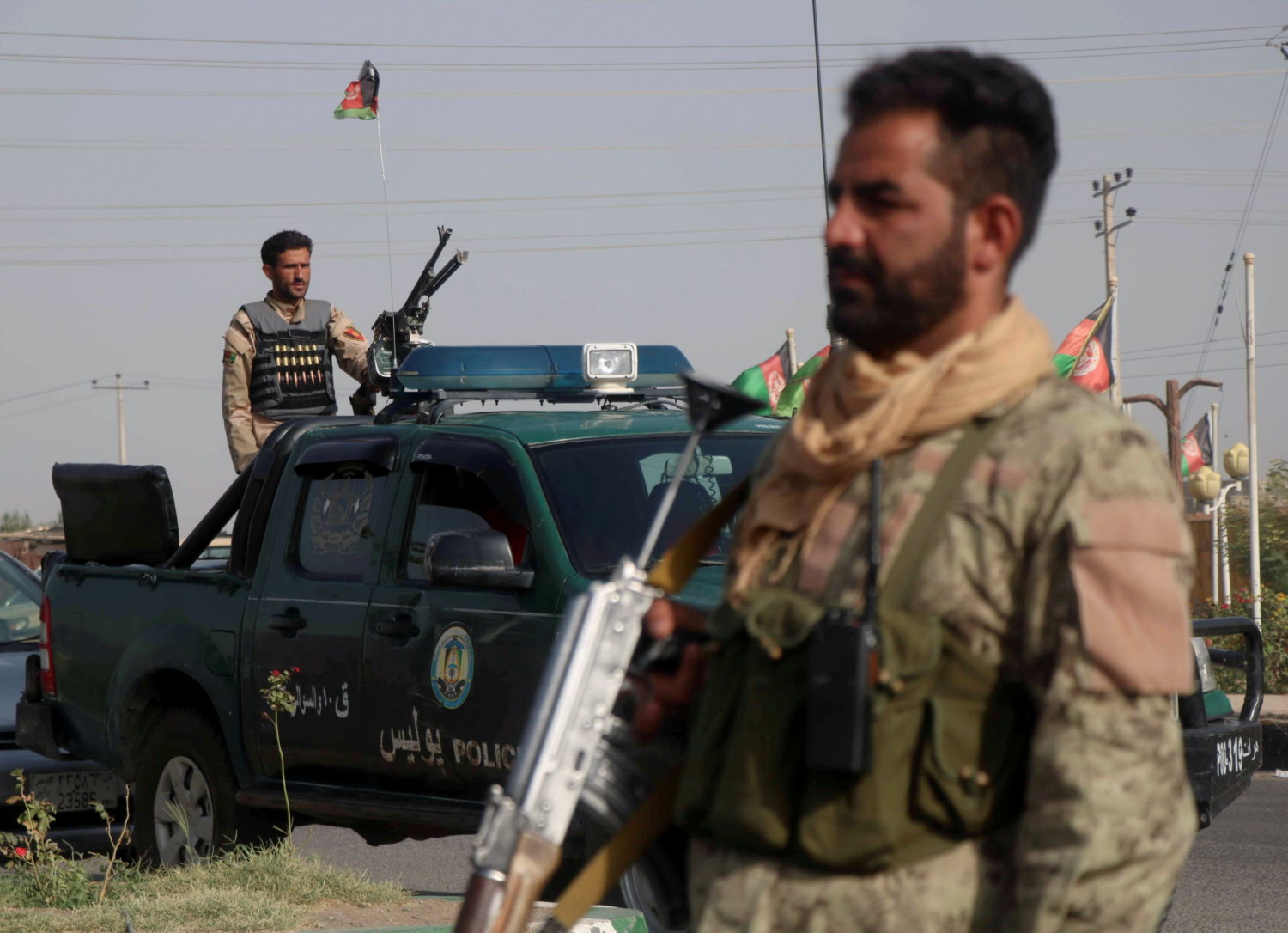
The Taliban has stepped up its campaign to defeat the U.S.-backed government since April as foreign forces complete their withdrawal after 20 years of war. The Taliban captured an Afghan provincial capital and assassinated the government’s top media officer in Kabul on Friday.

“This is now a different kind of war, reminiscent of Syria, recently, or Sarajevo, in the not-so-distant past,” Lyons said.

“To attack urban areas is to knowingly inflict enormous harm and cause massive civilian casualties. Nonetheless, the threatening of large urban areas appears to be a strategic decision by the Taliban, who have accepted the likely carnage that will ensue,” she said.

She said the United Nations expected both irregular and legal migration numbers to double this year.

Peace talks between the Afghan government and Taliban negotiators started last year in the Qatari capital of Doha, but have not made any substantive progress.

Russia’s U.N. Ambassador Vassily Nebenzia told the council that the deteriorating situation in Afghanistan was of increasing concern and “with the withdrawal of foreign forces, the outlook looks grim.”

“The prospects of Afghanistan slipping into full scale and protracted civil war, unfortunately, is a stark reality,” Nebenzia said.

CONSEQUENCES

Britain’s U.N. Ambassador Barbara Woodward said the council “should leave the Taliban in no doubt that there will be consequences for them if they continue to pursue this military offensive” and pledged that Britain would not recognize a Taliban government that comes to power by force.

The U.N. Security Council has the ability to impose targeted sanctions on Taliban individuals or entities who constitute a threat to the peace, stability and security of Afghanistan.

Senior U.S. diplomat Jeffrey DeLaurentis urged the Taliban to halt its offensive, pursue a political settlement and protect Afghanistan’s infrastructure and people.

“The Taliban must hear from the international community that we will not accept a military takeover of Afghanistan or a return of the Taliban’s Islamic Emirate,” he said.

Foreign forces aim to be completely out of Afghanistan by Sept. 11. U.S.-backed Afghan forces ousted the Taliban from power in 2001 for refusing to hand over al Qaeda’s Osama bin Laden after the Sept. 11, 2001, attacks on the United States.

Deputy Chinese U.N. Ambassador Dai Bing said foreign forces withdrawing from Afghanistan should be “more transparent with regional countries and avoid leaving behind all the problems and wash their hands of them.”

“The U.S. recently expressed its intention to assist Afghanistan in maintaining stability. We hope that the U.S. can earnestly fulfill its commitment and step up efforts,” Dai told the council.

Afghanistan’s U.N. Ambassador Ghulam Isaczai urged the Security Council to act to “prevent a catastrophic situation.” He told reporters after the meeting that he was confident the Afghan army could withstand the Taliban offensive and that the country was not yet in a civil war.

“We have a six months security plan to stabilize the situation. And not only that, we have seen an outpouring of support from communities and villages that were recently attacked by the Taliban … so we have a lot of interest among the population to support the army,” he said.

(Reporting by Michelle NicholsEditing by Dan Grebler and Mark Potter)

Blinken expresses U.S. concern about China’s growing nuclear arsenal

WASHINGTON (Reuters) -U.S. Secretary of State Antony Blinken expressed deep concern about China’s growing nuclear arsenal during a meeting with foreign ministers of Asian countries and partner nations, the State Department said on Friday.

Addressing a virtual meeting of the ASEAN Regional Forum (ARF), which groups more than two dozen countries, Blinken also called on China to cease “provocative” behavior in the South China Sea and “raised serious concerns about ongoing human rights abuses in Tibet, Hong Kong, and Xinjiang,” the department said in a statement.

“The Secretary also noted deep concern with the rapid growth of the PRC’s nuclear arsenal which highlights how Beijing has sharply deviated from its decades-old nuclear strategy based on minimum deterrence,” it added, using the acronym for China’s official name, the People’s Republic of China.

In his address, Blinken urged all ARF member states to press Myanmar’s military government to end violence and support the people of the country as they work to return to democratic governance, the statement said.

Both the Pentagon and State Department have aired concerns recently about China’s buildup of its nuclear forces following think-tank reports based on satellite imagery saying that China appears to be constructing hundreds of new silos for nuclear missiles.

Washington has repeatedly called on China to join it and Russia in a new arms control treaty and last month the State Department urged Beijing to engage with it “on practical measures to reduce the risks of destabilizing arms races.”

A 2020 Pentagon report estimated China’s nuclear warhead stockpile in “the low 200s” and said it was projected to at least double in size as Beijing expands and modernizes its forces.

Analysts say the United States has around 3,800 warheads, and according to a State Department factsheet, 1,357 of those were deployed as of March 1.

Beijing says its arsenal is dwarfed by those of the United States and Russia and it is ready to conduct bilateral dialogues on strategic security “on the basis of equality and mutual respect.”

Blinken has taken part in a series of regional meetings this week at which he has sought to reinforce the U.S. message that it is serious about engaging with Asian countries to push back against Beijing.

(Reporting by David Brunnstrom and Lisa Lambert in Washington; Editing by Jonathan Oatis, Matthew Lewis and Dan Grebler)

Wildfire leaves historic, ‘quirky’ California town in smoldering ruins

By Fred Greaves

GREENVILLE, Calif. (Reuters) -The main thoroughfare in a historic California gold-rush town was in smoldering ruins on Thursday, hours after the state’s largest wildfire engulfed the hamlet of Greenville in the Sierra Nevada Mountains.

Fire crews were still working on Thursday to extinguish fires in Greenville, about 160 miles (260 km) north of Sacramento, after the Dixie Fire roared through on the previous night.

As apocalyptic images from the burnt-out center of town spread, showing Greenville’s quaint main strip in heaps of ashes and debris as smoke rose into the hazy sky, people from the area grew emotional.

“We lost Greenville tonight. And there’s just no words for how us in government haven’t been able to get the job done,” U.S. Representative Doug LaMalfa, who represents the area, said in a video posted on Facebook, pausing to gather himself.

“My heart is just aching for what people are dealing with up there right now,” LaMalfa said, a huge billow of smoke appearing in the distance over his shoulder.

Greenville, population 800, was founded more than 150 years ago when nearby gold mines attracted settlers and merchants to the picturesque town in the Indian Valley.

“My defiantly quirky, beautiful adopted hometown turned into a ghost town last night,” wrote Meg Upton, a reporter for the Plumas News, in an online article.

The Dixie Fire has been raging in the area for three weeks, burning 322,000 acres (130,000 hectares), and was 35% contained as of Thursday morning, officials said.

It was among the more than 12 wildfires burning around the state.

The River Fire, which started on Wednesday and has charred 2,400 acres in Nevada and Placer Counties, forced thousands of people to evacuate including most of the town of Colfax. More than 50 homes or other structures were destroyed and another 30 damaged, while the fire was zero percent contained, Cal Fire said.

California, which typically experiences peak fire season later in the year, was on pace to suffer even more burnt acreage this year than last year, which was the worst fire season on record.

California’s five largest wildfires in history have all occurred in the last three seasons, burning more than 2.5 million acres and destroying 3,700 structures. The Dixie Fire is the sixth-largest in state history.

It was unclear how many structures were destroyed in Greenville as fire crews were still assessing the damage, Cal Fire spokesperson Mitch Matlow told Reuters. There were no injuries or deaths reported, he said.

But one man was missing after he told his sister he was evacuating, the Plumas News reported. The Plumas County Sheriff’s Office had ordered Greenville residents to evacuate on Wednesday.

The Dixie Fire started on July 14 in the area of the Feather River Canyon, about 20 miles from Paradise, a town destroyed by a wildfire in 2018 that killed 86 people.

The California Office of Emergency Services said on Thursday that about 16,000 people had been evacuated from several fires burning across five counties in the northern part of the state.

(Reporting by Fred Greaves in Greenville, Calif.; Additional reporting by Brendan O’Brien in Chicago and Daniel Trotta in Carlsbad, Calif.; Editing by Alistair Bell and Matthew Lewis)

Texas power demand expected to hit 2021 high during heatwave next week

(Reuters) – The Texas power grid operator on Friday forecast demand next week would reach its highest so far this year as homes and businesses crank up air conditioners to bring relief during another heatwave.

The United States has been beset by several extreme weather events this year, including February’s freeze in Texas that knocked out power to millions and record heat this summer in the Pacific Northwest.

High temperatures in Dallas were expected to reach the upper 90s Fahrenheit (35 Celsius) every day from Aug. 7-17, according to AccuWeather. The city’s normal high is 97 F at this time of year.

The Electric Reliability Council of Texas (ERCOT), which operates most of the state’s grid, projected power use will reach 72,884 megawatts (MW) on Aug. 9, 73,472 MW on Aug. 11 and 73,628 MW on Aug. 12.

Those peaks would top this year’s current high of 72,856 MW on July 26, but would fall short of the grid’s all-time August 2019 high of 74,820 MW. One megawatt can power around 200 homes on a hot summer day.

The February freeze left millions of Texans without power, water and heat for days during a deadly storm as ERCOT scrambled to prevent an uncontrolled collapse of the grid after an unusually large amount of generation shut due to freezing natural gas pipes and wind turbines.

On-peak power at the ERCOT North hub, which includes Dallas, traded around $44.50 per megawatt hour (MWh) for Friday.

That is well below the average of $199 per MWh seen so far in 2021 due primarily to price spikes over $8,000 during the freeze, but is above 2020’s average of $26 and the five-year (2016-2020) average of $33.

(Reporting by Scott DiSavino; Editing by Kirsten Donovan)

Resurgent Taliban take provincial capital, kill Afghan gov’t spokesman

KABUL (Reuters) -The Taliban captured an Afghan provincial capital and assassinated the government’s top media officer in Kabul on Friday, dealing twin high-profile blows to the Western-backed administration.

A police spokesman in southern Nimroz province said the capital Zaranj had fallen to the hardline Islamists because of a lack of reinforcements from the government.

Fighting to reimpose strict Islamic law after their 2001 ousting by U.S.-led forces, the Taliban have intensified their campaign to defeat the U.S.-backed government as foreign forces complete their withdrawal after 20 years of war.

The insurgents have taken dozens of districts and border crossings in recent months and put pressure on several provincial capitals, including Herat in the west and Kandahar in the south, as foreign troops withdraw.

Zaranj was the first provincial capital to fall to the group since the United States reached a deal with the Taliban in February 2020 for a U.S. troop pullout. A local source said the Taliban had seized the governor’s office, the police headquarters and an encampment near the Iranian border.

Taliban sources said the group was celebrating, and Zaranj’s fall would boost the morale of their fighters in other provinces. A Taliban commander, speaking on condition of anonymity, said it has strategic importance as it is on the border with Iran.

“This is the beginning and see how other provinces fall in our hands very soon,” he said.

In Kabul, Taliban attackers killed Dawa Khan Menapal, head of the Government Media and Information Centre, in the latest in a series of assassinations aimed at weakening President Ashraf Ghani’s democratically elected government.

‘AN AFFRONT’

In a tweet, U.S. Charge d’Affaires Ross Wilson said he was saddened and disgusted by the death of Menapal, whom he called a friend who provided truthful information to all Afghans.

“These murders are an affront to Afghans’ human rights & freedom of speech,” he said.

Scores of social activists, journalists, bureaucrats, judges and public figures fighting to sustain a liberal Islamic administration have been assassinated by Taliban fighters in a bid to silence voices of dissent in the war-torn country.

An official in the federal interior ministry said “the savage terrorists killed” Menapal during Friday prayers.

“He (Menapal) was a young man who stood like a mountain in the face of enemy propaganda, and who was always a major supporter of the (Afghan) regime,” said Mirwais Stanikzai, a spokesperson for the interior ministry.

Elsewhere Taliban fighters intensified clashes with Afghan forces and attacked militias allied with the government, officials said, stretching their dominance of border towns and closing in on two provincial capitals.

At least 10 Afghan soldiers and a commander of armed members belonging to the Abdul Rashid Dostum militia group in the northern province of Jowzjan were killed.

“The Taliban launched violent attacks on the outskirts of (provincial capital) Sheberghan this week and during heavy clashes a pro-government militia forces’ commander loyal to Dustom was killed,” said Abdul Qader Malia, the deputy governor of Jowzjan province.

Another provincial council member said nine of the 10 districts of Jowzjan were now controlled by the Taliban and the contest to control Sheberghan was under way.

(Reporting by Afghanistan bureau, Writing by William Maclean;Editing by Nick Macfie and Andrew Cawthorne)

Tunisian president says there is ‘no turning back’

TUNIS (Reuters) – Tunisia’s President Kais Saied said on Thursday there was “no turning back” from his decision to freeze parliament and assume executive power, moves his opponents have branded a coup.

Speaking in a video published by his office, Saied also rejected calls for talks over the crisis, saying “there is no dialogue except with the honest” and that no dialogue was possible with “cancer cells.”

The biggest party in parliament, the moderate Islamist Ennahda, which has been the most vocal opponent of Saied’s moves, had called for dialogue in a statement earlier on Thursday.

Some 11 days after his intervention, Saied has not named a new prime minister, announced any steps to end the emergency or declared his longer-term intentions.

The powerful labor union, as well as both the United States and France, have called on him to quickly appoint a new government. The union is preparing a roadmap to end the crisis that it says it will present to Saied.

U.S. Senate Foreign Relations Committee Chairman Bob Menendez and ranking member Jim Risch said on Thursday they were deeply concerned by the situation.

“President Saied must recommit to the democratic principles that underpin U.S.-Tunisia relations, and the military must observe its role in a constitutional democracy,” they said in a joint statement.

Ousted Prime Minister Hichem Mechichi appeared in public for the first time on Thursday since he was dismissed. He was shown in pictures published by the anti-corruption watchdog that it said were taken on Thursday at its office.

(Reporting by Tarek Amara; writing by Angus McDowall; Editing by Angus MacSwan)

U.S. probes Phoenix police use of force, treatment of protesters

By Jan Wolfe

(Reuters) -The U.S. Justice Department has opened an investigation into whether police in Phoenix unlawfully have used deadly force, retaliated against peaceful protesters and violated the rights of homeless people in the latest such inquiry involving a major American city, officials said on Thursday.

Since President Joe Biden took office in January, the department also has launched civil rights investigations into police conduct in Minneapolis and Louisville, Kentucky. Those were among the U.S. cities where large 2020 protests were held after high-profile killings of Black people by police officers.

The inquiries mark a shift in the department’s focus under the Democrat Biden, who has made racial justice a priority in contrast with the administration of his Republican predecessor Donald Trump.

Phoenix, with a population of roughly 1.7 million, is Arizona’s capital and largest city – and the fifth most populous city in the United States.

Attorney General Merrick Garland and Kristen Clarke, head of the Justice Department’s Civil Rights Division, announced the investigation at a news conference. Garland said such probes are “aimed to promote transparency and accountability.”

Racial justice activists have accused Phoenix police of carrying out unlawful surveillance, arrests and malicious prosecutions of protesters. Last month, Phoenix police responding to a mental health call shot and killed a man who pointed an object at them that turned out to be a water gun, authorities said.

Clarke said the Phoenix investigation has the full support of the city’s mayor and police chief.

“We look forward to working together with the city and the Phoenix police department toward the shared goals of ensuring constitutional policing and fostering greater cooperation between law enforcement officers and the community that they serve,” Clarke said.

Justice Department lawyers have met with close to 1,000 community members in Minneapolis and Louisville, and received written messages from hundreds more, Clarke said. Justice Department lawyers have also met with command staff of police departments in Louisville and Minneapolis, Clarke added.

“We will take the same approach in Phoenix,” Clarke said.

Phoenix Mayor Kate Gallego in a statement welcomed the Justice Department review, adding, “Comprehensive reform of policing in the city of Phoenix has been my priority since the first day I took office.”

U.S. police use of force has been in the spotlight in the aftermath of a series of deadly incidents in various cities in recent years, with protests around the country following the death of a Black man named George Floyd in Minneapolis in June 2020 – a crime in which a police officer as been convicted of murder. Louisville officers last year fatally shot Breonna Taylor, an unarmed Black woman, in a botched raid.

Clarke said police officers must use their authority in a manner that does violate the constitutional rights of people, complies with federal civil rights laws and “respects human dignity.”

(Reporting by Jan Wolfe; Additional reporting by David Schwartz in Phoenix; Editing by Will Dunham, Scott Malone and Richard Chang)

Mexico’s electoral judges should resign due to ‘rot,’ says president

MEXICO CITY (Reuters) – Mexican President Andres Manuel Lopez Obrador called on the members of the top electoral court to resign on Thursday, accusing the panel of “rot” while stressing the need for broader elections reforms.

Five of the federal court system’s electoral tribunal voted on Wednesday to remove and replace the body’s former chief, accusing him of being disrespectful and failing to comply with the law.

“They should all resign as a show of dignity and respect for the citizens,” Lopez Obrador said at his daily morning news conference, referring to both the members of the electoral court and the councilors of the national electoral institute INE, which runs elections.

Lopez Obrador for years has criticized the independent electoral authorities, including claims of widespread vote fraud in 2006 and 2012 when he ran and lost previous bids for the presidency.

“We’re in a crisis situation with the electoral court, a rot, and as a result we need reform,” he said.

Lopez Obrador also put up on a big screen behind him what he said was a tweet from the electoral court’s new chief, Reyes Rodriguez, that purported to crudely insult him.

But the president made no mention of the fact that Rodriguez last year stated publicly he did not write the message and that his account had been hacked.

(Reporting by Raul Cortes Fernandez; Editing by David Alire Garcia and Grant McCool)