Exclusive: U.S. considers discouraging some travelers from cruises – sources

By David Shepardson, Alexandra Alper and Ted Hesson

WASHINGTON (Reuters) – The United States is considering ways to discourage U.S. travelers from taking cruises as part of a broader Trump administration effort to limit the spread of coronavirus, according to four officials familiar with the situation.

The officials, who asked to remain anonymous, said no decision had been made. The discussions were taking place ahead of a meeting this weekend between Vice President Mike Pence, who is in charge of leading the U.S. response to the coronavirus, and the cruise industry.

The administration could advise some or all U.S. travelers to temporarily avoid taking cruises in the face of a growing number of coronavirus cases on cruise ships or potentially impose travel restrictions related to cruises, officials said.

Pence’s office did not immediately comment.

Shares of cruise operators in U.S. trading turned negative after the Reuters report. Carnival Corp  and Royal Caribbean  shares dropped nearly 2% and Norwegian Cruise Lines  stock was down nearly 1%.

Shares in Royal Caribbean Cruises, Carnival and Norwegian Cruise Line Holdings have fallen around 50% since January.

U.S. President Donald Trump signed a bill on Friday allocating $8.3 billion to bolster the country’s capacity to test for the new coronavirus and fund other measures to stem an outbreak that has now infected some 100,000 people worldwide.

Democrats have said Trump – a Republican who faces re-election on Nov. 3 – has not adequately prepared the country for the possibility of a pandemic.

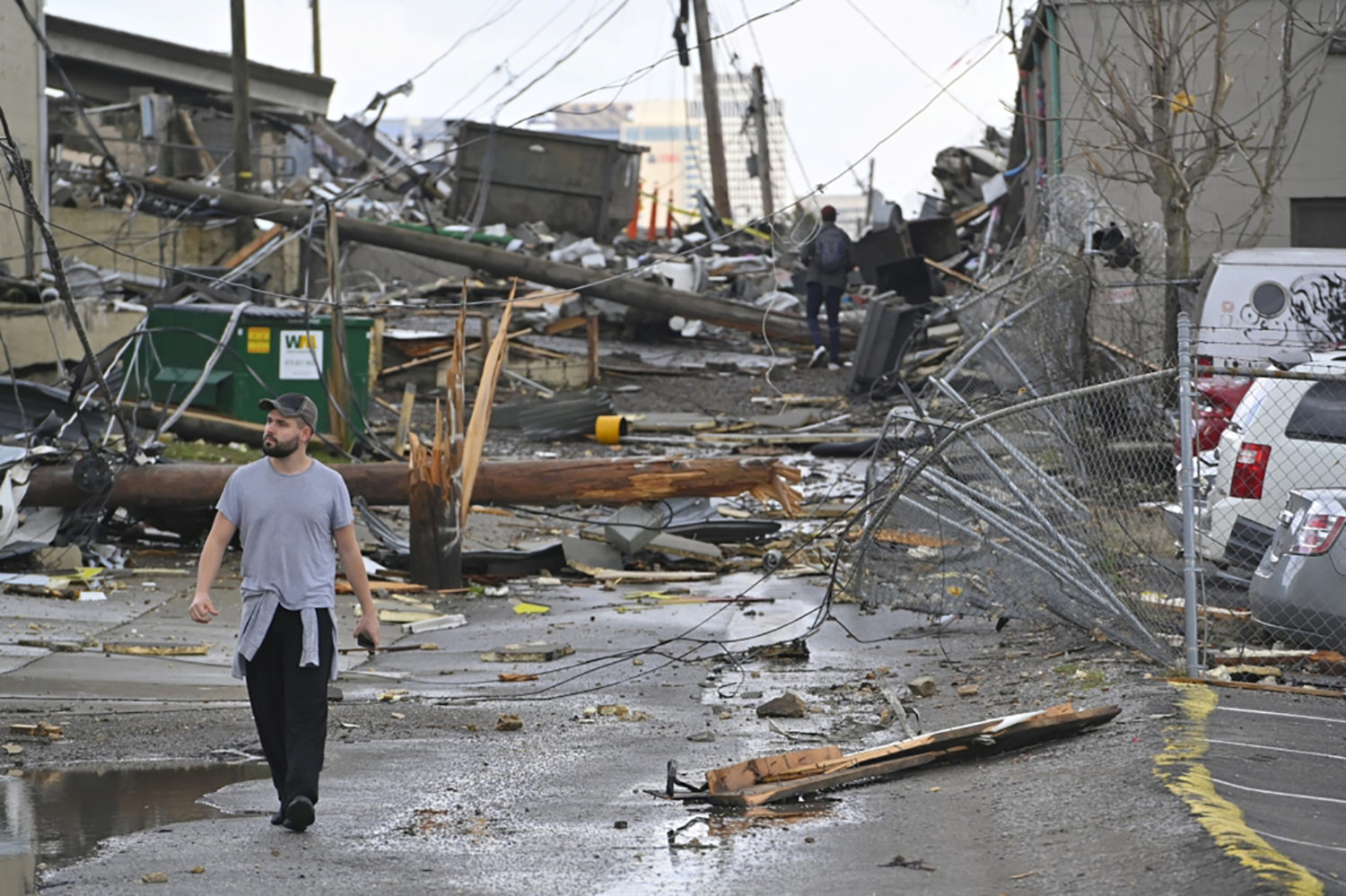
Trump said during a visit to a tornado-stricken area in Tennessee on Friday that his administration was exploring options to help airlines and other industries hurt by the coronavirus outbreak, according to a pool report. White House economic adviser Larry Kudlow also told CNBC that the administration was considering “targeted and timely” tax relief for such industries.

DEBATING MEASURES

Trump said on Friday that he had spoken to Democratic California Governor Gavin Newsom about a cruise ship that was barred from docking in San Francisco after at least 35 people developed flu-like symptoms. The ship has been linked to two confirmed cases of the illness caused by the virus.

The administration is urgently debating measures aimed at reducing outbreaks on board cruise ships with several officials confirming the administration has reviewed potential restrictions on U.S. cruise ship travel.

Officials differed on whether the dramatic step of temporarily barring new cruises was being seriously considered. Cruise lines in recent days have liberalized cancellation and rebooking policies and some cruise travelers reported ships are traveling with far less than maximum capacity.

The Cruise Lines International Association said this week cruise lines would take steps to limit coronavirus concerns, denying boarding to all persons who had traveled from hot spots including South Korea, Iran, China and parts of Italy. The group also said cruise lines would conduct illness screening for U.S. citizens who have recently visited those destinations.

The cruise industry contributed nearly $53 billion to the U.S. economy in 2018 and generated more than 420,000 jobs, according to an analysis by the association.

Senior Trump administration officials discussed the cruise ship issue on Thursday and expected to revisit it during a meeting on Friday, according to a White House official.

The official called the ships “huge incubators” and said older cruise ship passengers could be especially vulnerable.

The U.S. Centers for Disease Control and Prevention (CDC) has said its current information suggests that older people and people with severe chronic health conditions such as heart disease, lung disease and diabetes, have a higher risk of developing a serious illness as a result of the virus.

The U.S. State Department said in guidance last month that Americans should reconsider travel on cruise ships in Asia due to the coronavirus outbreak.

The department said the situation remained “dynamic” and that any travel by ship could be subject to restrictions and quarantine by local authorities.

(Reporting by David Shepardson, Alexandra Alper and Ted Hesson in Washington; Editing by Chris Sanders and Howard Goller)

‘Fear of the unknown’: U.S. pregnant women worried by lack of virus research

By Gabriella Borter

(Reuters) – After the first two cases of the novel coronavirus in the state of Georgia were confirmed this week, Leigh Creel, who is 20 weeks pregnant and lives outside Atlanta, made a nervous phone call to her doctor to ask about the risk to her and her fetus.

The response she got was not comforting. Health experts do not know if pregnant women are more susceptible to the virus or if contracting it will increase the likelihood of adverse pregnancy outcomes, such as pre-term labor or transmission of the virus in utero.

They are racing to learn more about the sometimes fatal respiratory disease that has rapidly spread worldwide from China, including how it might uniquely affect pregnant women.

For expectant mothers, the mystery surrounding the virus is worrying.

“It’s concerning to me when I feel like I know as much as the healthcare professionals,” said Creel, who works in sales and lives with her husband and toddler.

The U.S. death toll from COVID-19 now stands at 14, most of them in Washington state, where 12 people have died in a cluster of at least 50 infections in the Seattle area. More than 3,400 people have died worldwide.

Public health officials in Washington’s Seattle and King Counties have advised that people at “higher risk of severe illness,” including pregnant women, should avoid physical contact and going out in public.

Dr. Laura Sienas, an obstetrician-gynecologist at the University of Washington Medical Center, said most of her pregnant patients have asked what they can do to protect themselves.

Sienas said her hospital has stopped short of urging pregnant women to quarantine themselves, contrary to local public health official guidelines.

Instead, she has emphasized diligent hygiene and avoiding close contact with others, the same guidance the U.S. Centers for Disease Control has offered on its website.

To that end, Sienas has tried to arrange check-ups via telephone, aiming to limit the number of in-person visits pregnant patients make to the hospital.

“There’s definitely that fear of the unknown, and pregnancy is a time when there are a lot of things that you don’t know and can’t control,” Sienas told Reuters. “Trying to give people small steps that they are able to control, like handwashing, has been a bit reassuring to patients.”

‘WE DON’T REALLY KNOW’

Scientists have not yet developed a vaccine against the virus, and research on its transmission and effects on pregnant women has been limited.

A narrow study of nine coronavirus-positive pregnant women in the Wuhan region of China, all in their third trimester, found no evidence that COVID-19 was transferred in utero. The women showed symptoms similar to non-pregnant adult patients.

The World Health Organization published an analysis of 147 pregnant women (64 of whom were confirmed to have COVID-19, 82 who were suspected and 1 who was asymptomatic) and found that 8% had a severe condition and 1% were critically ill.

“There’s some suggestion from other coronaviruses such as SARS that pregnant women may have a more severe disease, but we really don’t know,” said Dr. Denise Jamieson, chief of gynecology and obstetrics at Emory Healthcare in Atlanta and a former epidemic intelligence officer at the CDC.

Normal immunologic and physiologic changes in pregnant women might make them more susceptible to viral infections, including COVID-19, according to the CDC.

“There doesn’t seem to be any great answers out there for anyone, so your mind can really run wild with the possibilities,” said Rachel Storniolo, 36, who lives in Philadelphia and is due to give birth in May.

The study of the Chinese women, published in the scientific magazine The Lancet, found no traces of the virus in breast milk. Still, Jamieson said she would warn coronavirus-positive mothers that they risk transmitting the virus to their infants through respiratory droplets if they choose to breastfeed.

“If a woman has confirmed coronavirus, the safest thing in terms of ensuring that the infant does not get infected from the mother is to separate the mom and baby,” she said, adding that separation might be necessary for several days until the mother is asymptomatic.

Officials have not reported any cases of pregnant women with coronavirus in the United States, and they believe pregnant women – and the rest of the general public – who live outside the outbreak areas are at low risk.

But some women, like Brandi Cornelius, 36, of Portland, Oregon, who is 23 weeks pregnant, are not taking any chances.

“I went to the bank and I used hand sanitizer three times while I was there,” she said. “It helps my body to go to prenatal yoga, for example, but do I want to be in a room full of people?”

(Reporting by Gabriella Borter in New York; Editing by Frank McGurty and Dan Grebler)

U.S. coronavirus death toll rises; New York, Los Angeles region confirm new cases

By Steve Gorman and Laila Kearney

LOS ANGELES/NEW YORK (Reuters) – Two more people have died of the new coronavirus in the United States, bringing the toll to 11 and new confirmed cases were reported on Wednesday around the two most populous cities: four near New York and six in Los Angeles.

The first California death from the virus was announced by health officials as an elderly adult with underlying health conditions. It was also the first coronavirus death in the United States outside of Washington state.

Placer County’s public health department said in a statement that the patient tested presumptively positive on Tuesday at a California lab and was likely exposed from Feb. 11-21 on a Princess cruise ship to Mexico from San Francisco.

“Preliminary understanding from the contact investigation is that this patient had minimal community exposure between returning from the cruise and arriving at the hospital by ambulance on Feb. 27,” the statement said.

The person was the second confirmed case of the respiratory disease called COVID-19 in Placer County in Northern California.

In the greater Seattle area, the total number of coronavirus cases climbed to 39 on Wednesday, including 10 deaths, up from 27 cases and nine deaths a day earlier, the Washington State Health Department announced.

The Seattle area has the largest concentration of coronavirus cases detected to date in the United States. Several cases were connected to a long-term care facility for the elderly in the Pacific Northwest state.

In New York state, three family members and a neighbor of an infected man have tested positive, bringing the total in the state to six, officials said. About 1,000 people in the New York City suburb of Westchester County where the family lives were under self-quarantine orders because of possible exposure to the virus, Governor Andrew Cuomo said.

“We are, if anything, being overcautious.” Cuomo said.

Los Angeles officials announced six new confirmed travel-related cases in Los Angeles County, including three people who had been to Northern Italy, one of the areas hardest hit in the global outbreak.

Of the six, only one has been hospitalized. The other five are recovering in home isolation.

Los Angeles County declared a local emergency and a public health emergency intended to expand and hasten preparedness efforts.

EMERGENCY FUNDS

In Washington, D.C., U.S. lawmakers reached bipartisan agreement on an $8.3 billion emergency bill to help fund efforts to contain the virus, a congressional aide said. The bill was expected to be introduced in the U.S. House of Representatives later on Wednesday.

Once the full House approves the bill, the Senate is expected to act quickly so President Donald Trump can sign the measure into law, putting funds into the pipeline to fight the virus.

More than $3 billion would be devoted to research and development of coronavirus vaccines, test kits and therapeutics. There are currently no approved vaccines or treatments for the fast-spreading illness.

In a bid to also help control the spread of the virus outside the United States, $1.25 billion would be set for international efforts, the aide said.

The administration is working to allow laboratories to develop their own coronavirus tests without seeking regulatory approval first, U.S. Health Secretary Alex Azar said.

The latest data https://www.cdc.gov/coronavirus/2019-ncov/cases-in-us.html from the U.S. Centers for Disease Control and Prevention (CDC) listed 129 confirmed and presumed cases in the United States, up from the previous 108. They were 80 reported by public health authorities in 13 states plus 49 among people repatriated from abroad, according to the CDC website.

Those figures do not necessarily reflect Wednesday’s updates from three states.

CLASSES CANCELED

On Tuesday, officials said a man in his 50s who lives in a New York City suburb and works at a Manhattan law firm tested positive for the virus, the second identified case in the state.

The four new cases include three family members of the man, who is hospitalized, and a neighbor. Health authorities said one of his children was a student at Yeshiva University, which canceled classes as a precautionary measure.

The hospitalized patient had not traveled to countries with large numbers of cases. The outbreak began in China in December and is now present in nearly 80 countries and territories, killing more than 3,000 people. The first New York case, reported last week, was in a woman who had returned from Iran, where at least 92 people have died.

Governor Cuomo said about 300 students from New York’s college systems, the State University of New York (SUNY) and the City University of New York (CUNY), were being recalled from five hard-hit countries – China, Italy, Japan, Iran and South Korea – and would be flown on a chartered plane and then be quarantined for 14 days.

(Reporting by Maria Caspani, Laila Kearney and Hilary Russ in New York, David Morgan and Richard Cowan in Washington; Steve Gorman in Los Angeles; writing by Grant McCool; Editing by Bill Berkrot)

Third person tests positive for new coronavirus in New York

(Reuters) – The number of people ill with the new coronavirus has risen to six in New York state, Governor Andrew Cuomo said on Wednesday.

New York’s Yeshiva University said one of its students had tested positive for COVID-19, and it was canceling all classes on Wednesday at one of its four New York City campuses as a “precautionary step” while it worked with authorities on how to best prepare and keep its students safe.

On Tuesday, officials said a man in his 50s who lives in a New York City suburb and works at a Manhattan law firm tested positive for the virus, the second identified case in the state. Health authorities said one of his children was a student at Yeshiva.

The man has severe pneumonia and is hospitalized, officials said. The patient had not traveled to countries hardest hit in the coronavirus outbreak, which began in China in December and is now present in nearly 80 countries and territories, killing more than 3,000 people.

Of the six cases of people with coronavirus in New York, only one is hospitalized, Cuomo said at a news conference.

The four new cases include three family members of the hospitalized man, New York Mayor Bill De Blasio said in a statement. The fourth was a neighbor, according to media reports.

“There are going to be many, many people who test positive. By definition, the more you test, the more people you will find who test positive,” Cuomo said.

New York wants to get the state’s capacity for testing for the virus to up to 1,000 a day, he said.

“The people who we are most concerned about, who are most vulnerable are senior citizens, people with immune comprised situations. What we’re worried about: nursing home setting, senior care setting. That’s what we’ve seen in other places and that’s where the situation is most problematic.”

At least one school in the Bronx neighborhood of New York City closed on Tuesday. The SAR Academy and SAR High School remained closed on Wednesday, but online classes were taking place, according to a man with a child at the school.

A synagogue in New Rochelle, New York, where the family of the hospitalized man lives said on Tuesday it was halting “all services immediately and for the foreseeable future.”

The latest data from the U.S. Centers for Disease Control and Prevention (CDC) listed 108 confirmed and presumed cases in the United States. That tally consists of 60 reported by public health authorities in 12 states plus 48 among people repatriated from abroad, most of them from an outbreak aboard the Diamond Princess cruise liner in Japan.

Nine people have died in the Seattle area, health officials said. Washington state in the Pacific Northwest has the largest concentration of coronavirus cases detected to date in the United States with 27 people infected as of Tuesday.

(Reporting by Maria Caspani, Laila Kearney and Hilary Russ in New York; writing by Grant McCool; Editing by Bill Berkrot)

FBI needs to do more to fight domestic extremist threats, watchdog says

By Andy Sullivan and Mark Hosenball

WASHINGTON (Reuters) – The FBI has not done enough to fight homegrown extremist threats and has yet to figure out how to determine whether people it investigates who have mental health issues pose an actual threat to national security, the U.S. Justice Department’s internal watchdog said on Wednesday.

Justice Department Inspector General Michael Horowitz also found that the FBI did not follow up on some cases that had been flagged as potential threats.

The report found shortcomings in the FBI’s efforts to prevent mass attacks by U.S. residents who have been inspired by international militant groups like Islamic State and al Qaeda, which the agency says its highest counterterrorism priority.

The FBI did not immediately respond to a request for comment.

So-called homegrown violent extremists have carried out more than 20 attacks in the United States since Sept. 11, 2001 – some perpetrated by people the FBI had already investigated.

Horowitz found that the FBI conducted reviews after those attacks to find out what it had missed, but didn’t make sure that agents followed through with its proposed improvements.

The FBI concluded in 2017 that it should have conducted about 6 percent of its counterterrorism assessments more thoroughly. But the agency did not re-examine nearly half of those cases for 18 months, Horowitz wrote.

(Reporting by Andy Sullivan and Mark Hosenball; Editing by Chizu Nomiyama and Jonathan Oatis)

Americans heed warning to wash hands often to control coronavirus, Reuters/Ipsos poll finds

By Gabriella Borter and Chris Kahn

(Reuters) – Americans appear to be heeding the warning of health experts to wash their hands more frequently and use disinfectant wipes to prevent the coronavirus from spreading, according to a Reuters/Ipsos public opinion poll released on Wednesday.

As Covid-19 spreads across the country, nearly half of all Americans say they have started more rigorously cleaning themselves and surfaces they touch to avoid contracting the virus, according to the March 2-3 national poll.

It found that some 42% of respondents were washing their hands and using disinfectant more than usual, and 18% said they have avoided physical contact with others more often.

The rise in caution was recorded days after the virus caused its first U.S. fatality in Washington state and began spreading from person to person on the West Coast.

Some 28% of Americans believe the coronavirus poses an “imminent threat” in the country, according to the survey, a slight increase from the 22% who said they considered the seasonal flu to have the same level of threat.

As few as 9% of the respondents said the coronavirus has had an impact on their work or business, including declining sales, postponed conferences or meetings and problems with supply chains.

Another 84% said it has had no impact, and 7% said they do not know.

The disease, which first surfaced in China in December, has now infected more than 100 people in the United States and killed at least nine. Health experts say it spreads primarily through tiny droplets coughed or sneezed from an infected person and then inhaled by another. Vigilant hygiene can prevent transmission, they say.

On its website, the U.S. Centers for Disease Control lists frequent handwashing for at least 20 seconds and disinfection of surfaces with an alcohol-based cleaner as methods of prevention. Scientists have yet to develop a vaccine to prevent the disease.

Coronavirus can survive on surfaces, such as handrails and door knobs, for “a very long period of time” and be picked up by hand that way, though the virus is “very susceptible” to cleaning products, Dr. Christopher Braden, deputy director of the emerging and zoonotic infectious disease center at the Centers for Disease Control and Prevention, told reporters on Friday.

Health officials also recommend that people avoid touching their face, eyes or mouth, and stay home from work if they feel ill.

The general public’s risk of exposure remains low, the CDC says, but that risk is elevated for healthcare workers and people who live in communities where spread is occurring, such as in Washington and California.

The number of coronavirus cases diagnosed in Washington state rose on Tuesday to 27, including nine deaths in the largest U.S. outbreak to emerge from local transmission. That was up from 18 cases and six deaths a day earlier, state health authorities reported.

Only a small minority of Americans say they have pursued more deliberate ways of avoiding the virus, according to the survey. As few as 5% said they are working from home, 6% said they have canceled or altered travel plans and 8% said they have purchased surgical masks.

Click here for the poll results

(Reporting by Gabriella Borter in New York; Editing by Frank McGurty and Dan Grebler)

U.S. carries out air strike on Taliban, calls for halt to ‘needless attacks’

By Abdul Qadir Sediqi and Charlotte Greenfield

KABUL (Reuters) – The United States on Wednesday carried out its first air strike on Taliban fighters in Afghanistan since the two sides signed a troop withdrawal agreement on Saturday.

A U.S. forces spokesman confirmed the incident in southern Helmand province, hours after President Donald Trump spoke by phone with chief Taliban negotiator Mullah Baradar Akhund on Tuesday, the first known conversation between a U.S. leader and a top Taliban official.

The Taliban fighters “were actively attacking an (Afghan National Security Forces) checkpoint. This was a defensive strike to disrupt the attack,” said Colonel Sonny Leggett, a spokesman for the U.S. Forces in Afghanistan in a tweet.

He said Washington was committed to peace but would defend Afghan forces if needed.

“Taliban leadership promised the (international) community they would reduce violence and not increase attacks. We call on the Taliban to stop needless attacks and uphold their commitments,” he said.

The air strike was the first by the United States against the Taliban in 11 days, when a reduction in violence agreement had begun between the sides in the lead up to Saturday’s pact.

Since the signing, the Taliban had decided on Monday to resume normal operations against Afghan forces, though sources have said they will continue to hold back on attacks on foreign forces.

The Taliban has declined to confirm or deny responsibility for any of the attacks.

Taliban spokesman Suhail Shaheen said in a Tweet that “according to the plan (the Taliban) is implementing all parts of the agreement one after another in order to keep the fighting reduced.”

A Taliban senior commander in Helmand who declined to be named said that a drone had targeted their position.

“As far as I know we didn’t suffer any human losses but we are working on it and sent our team to the area,” he told Reuters, adding that the group’s senior leadership in Afghanistan had called an emergency meeting to discuss what he described as a “major violation” of the agreement.

“THINGS COULD SPIRAL”

Experts said the public agreement was vague on details around ongoing violence in the country, but that the air strike and comments from U.S. officials suggested the United States had a plan to ensure reduced violence against Afghan forces and civilians.

“It is significant. I don’t think it signals the collapse of the whole U.S.-Taliban agreement…(but) you can easily see how things could spiral,” said Andrew Watkins, a senior analyst covering Afghanistan at International Crisis Group.

A spokesman for Helmand’s provincial governor said the Taliban had attacked a security checkpoint in Washer district – a different district to the one in which the U.S. carried out its air strike – on Tuesday evening, killing two police officers.

An interior ministry spokesman, Nasrat Rahimi, said on Wednesday the Taliban had conducted 30 attacks in 15 provinces in the previous 24 hours, killing four civilians and 11 security and defense force members. Seventeen Taliban members had been killed, he said.

The weekend agreement envisages a full withdrawal of all U.S. and coalition forces within 14 months, dependent on security guarantees by the Taliban, but faces a number of hurdles as the United States tries to shepherd the Taliban and Afghan government toward talks.

(Reporting by Abdul Qadir Sediqi and Charlotte Greenfield in Kabul; additional reporting by Zainullah Stanekzai in Helmand, Sardar Razmal in Kunduz, Orooj Hakimi in Kabul and Jibran Ahmad in Peshawar; editing by John Stonestreet, William Maclean and Timothy Heritage)

Tornadoes rip Tennessee, leaving at least 19 dead, many missing

By Timothy Ghianni

NASHVILLE (Reuters) – At least 19 people were killed early on Tuesday after powerful tornadoes ripped through Nashville and other parts of Tennessee, flattening buildings and leaving tens of thousands of people without power, authorities said.

The death toll, provided by the Tennessee Emergency Management Agency, may rise given the number of people who remain missing statewide, Governor William Lee said at a news briefing.

Debris covers a car near after a tornado touched down at Donelson Christian Academy in Nashville, Tennessee March 3, 2020. Shelley Mays/The Tennessean via USA TODAY via REUTERS

Rescue teams were going door to door, searching damaged structures for trapped or injured individuals, the Nashville Fire Department said.

At least 30 people were injured in Nashville, the state capital, and least 48 buildings were destroyed, with many more damaged, Fire Department Director Chief William Swann said.

Tennessee is one 14 states that will be holding primary elections on Super Tuesday. Despite the widespread destruction, polling sites at schools and elsewhere will be open for voting unless otherwise noted, officials said.

“We want people to exercise their rights and get out there and vote,” Lee said.

Lightning that accompanied the tornado lit up the darkened sky as the storm rumbled through central Nashville, video posted on Twitter showed.

At daybreak, video footage on local television revealed leveled houses and crumbled businesses in Nashville, a city of 691,000.

Crushed vehicles, piles of debris and power lines snapped in two were strewn about, and rescue vehicles blocked streets as residents carried their belongings away from their destroyed homes.

The police department in the Mt. Juliet suburb east of Nashville reported multiple homes damaged and people injured.

“This was obviously a very strong tornado. There are multiple homes damaged, multiple people injured, multiple people still trapped,” Mt. Juliet Police Captain Tyler Chandler said in a video posted on Facebook. “We need your help. And that means if you can stay at your house, please stay home.”

SUPER TUESDAY

Schools, district offices and courts will close on Tuesday due to the tornado damage throughout Nashville, apart from the public buildings set to be used for polling.

Voting in Nashville and the surrounding area will start an hour later at 8 a.m. local time due to extensive storm damage, state election officials said. Polling will still close at 7 p.m., as earlier planned. Authorities will relocate some polling places.

Officials told residents of Nashville, among the country’s fastest-growing cities, to try not to travel, especially through the damaged areas.

Lee said he had spoken to the White House about federal assistance and that he planned to assess the damage in a helicopter on Tuesday.

“Prayers for all of those affected by the devastating tornadoes in Tennessee,” President Donald Trump said on Twitter. “We will continue to monitor the developments.”

The twister knocked down power lines, and one utility pole dangled horizontally in the street in the Donelson area, home to country music’s most famous concert stage, the Grand Ole Opry, news pictures showed.

Nashville Electric, the city’s public utility, said http://bit.ly/38dQBMo there were more than 44,000 customers without power early in the morning, with reported damage to four substations, 15 primary distribution lines, and multiple power poles and lines.

John C. Tune Airport (JWN), located 8 miles from downtown Nashville, “sustained significant damage” and several hangars were destroyed, the airport said on its website.

The National Weather Service said there were eight reported tornadoes that touched down in Missouri, Tennessee and Kentucky.

This is not the first tornado to occur on Super Tuesday in Tennessee. In 2008, a nighttime tornado caused significant damage across the middle part of the state, the weather service said in a Twitter post.

(Additional reporting by Brendan O’Brien in Chicago; Editing by Bernadette Baum)

‘Very strong’ tornado rips through Nashville, killing at least nine

By Bhargav Acharya

(Reuters) – At least nine people were killed by a powerful tornado that struck Nashville, Tennessee in the early hours of Tuesday morning, flattening buildings, damaging an airport and leaving tens of thousands of people without power.

The fatalities included four people in Putnam County, two in the state capital Nashville, two in Wilson County and one in Benton County, ABC News reported, citing the Tennessee Emergency Management Agency.

Search and rescue teams were out searching damaged structures for trapped or injured individuals, the Nashville Fire Department said. Earlier in the morning, the department had said it was responding to reports of approximately 40 collapses of structures around the city.

The police department in the Mt. Juliet suburb east of Nashville reported multiple homes damaged and people injured.

“This was obviously a very strong tornado. There are multiple homes damaged, multiple people injured, multiple people still trapped,” Mt. Juliet Police Captain Tyler Chandler said in a video posted on Facebook. “We need your help. And that means if you can stay at your house, please stay home.”

Schools, district offices and courts will be closed on Tuesday due to the tornado damage throughout Nashville, officials said, but election polling sites at schools and elsewhere will be open “unless otherwise noted.”

Tennessee is one 14 states that will be holding primary elections on Super Tuesday, but voting in Nashville and the surrounding area will start an hour later at 8 a.m. local time due to extensive storm damage, state election officials said. Polling will still close at 7 p.m., as earlier planned.

Some polling places will also be relocated, they said.

Nashville Electric, the city’s public utility, said http://bit.ly/38dQBMo there were more than 44,000 customers without power early in the morning, with reported damage to four substations, 15 primary distribution lines, and multiple power poles and lines.

John C. Tune Airport (JWN), located 8 miles from downtown Nashville, “sustained significant damage” due to severe weather and several hangars had been destroyed, the airport said on its website.

Lightning that accompanied the tornado lit up the darkened sky as the storm rumbled through central Nashville, according to video posted by Twitter user Brian Bates.

The twister knocked down power lines, and one utility pole dangled horizontally in the street in the Donelson area, home to country music’s most famous concert stage, the Grand Ole Opry, news pictures showed.

Images also showed rubble and debris scattered across the parking lot of the Donelson Christian Academy in Nashville.

This is not the first tornado to occur on Super Tuesday in Tennessee, according to the National Weather Service in Nashville.

“The one many remember is the 2008 Tornado Outbreak. That was also a nighttime tornado event (but AFTER the voting) that caused significant damage across Middle Tennessee,” the NWS said in a post on Twitter.

Nashville, with a population of 691,000, is among the country’s fastest-growing cities and is the informal country music capital of the United States.

(Reporting by Bhargav Acharya in Bengaluru; additional reporting by Daniel Trotta and Maria Caspani; Editing by Peter Graff and Bernadette Baum)

Six dead of coronavirus in Seattle area, U.S. officials scramble to prepare for more cases

By Steve Holland and Michael Erman

(Reuters) – Six people in the Seattle area have died of illness caused by the new coronavirus, health officials said on Monday, as authorities across the United States scrambled to prepare for more infections, with the emphasis on ratcheting up the number of available test kits.

Dr. Jeff Duchin, chief health officer for Seattle and King County Public Health agency, announced the increase in fatalities from the previous two in Washington state. He told a news conference that the county was not recommending school closures or cancellation of any events at this point, but they do expect the increase in cases to continue.

The total number of cases in Washington state was now at 18. Five of the deaths were in King County and one from Snohomish County, also in the Puget Sound region just north of Seattle.

New York Governor Andrew Cuomo, whose state has one confirmed case, welcomed the U.S. Centers for Disease Control and Prevention (CDC) allowing New York to test for the virus that has killed more than 3,000 people worldwide since it emerged in China in December.

New York Governor Andrew Cuomo and New York City Mayor Bill de Blasio deliver remarks at a news conference regarding the first confirmed case of coronavirus in New York State in Manhattan borough of New York City, New York, U.S., March 2, 2020. REUTERS/Andrew Kelly

“I would like to have a goal of 1,000 tests per day capacity within one week because again the more testing the better,” Cuomo said at a briefing on Monday.

Federal health officials have said the number of test kits for coronavirus would be radically expanded in coming weeks. The United States appeared poised for a spike in cases, partly because there would be more testing to confirm infections.

The number of cases in the United States as of March 1 had risen to 91, according to the CDC. There has been a jump in presumed cases reported by the states to 27 from seven. The CDC will confirm the tests sent by states with their own diagnostics. So far, 10 states including California and New York have confirmed or presumed coronavirus cases.

Protective gear and test kits were being distributed to U.S. military facilities with a priority on distribution to the Korean Peninsula, U.S. Chairman of the Joint Chiefs of Staff Mark Milley said at a briefing.

South Korea is one of the hardest hit countries with 4,335 cases and 26 deaths.

U.S. government military laboratories were working to develop a vaccine, Milley said.

President Donald Trump said his administration has asked pharmaceutical companies to accelerate work on the development of a coronavirus vaccine, but provided no details.

Top U.S. health officials have said any vaccine is up to 18 months away and there is no treatment for the respiratory disease, although patients can receive supportive care.

Trump and his task force on the outbreak will meet with drug company executives on Monday afternoon. Executives from GlaxoSmithKline Kline Plc, Sanofi SA , Johnson & Johnson and Pfizer Inc will attend the meeting, according to representatives for the companies.

The White House is also expected to meet this week with top executives from U.S. airlines and the cruise industry over the impact of the virus to their businesses, two people briefed on the matter said.

There have been more than 87,000 cases worldwide and nearly 3,000 deaths in 60 countries, the World Health Organization said. The global death toll was up to 3,044, according to a Reuters tally.

Dr. Anthony Fauci, the head of the infectious diseases unit at the U.S. National Institutes of Health, said he was concerned the number of U.S. cases could jump in coming weeks.

“When you have a number of cases that you’ve identified and they’ve been in the community for a while, you’re going to wind up seeing a lot more cases than you would have predicted,” he told CNN.

The U.S. Congress is expected to take up a spending measure in coming days that could allocate billions more dollars for the virus response.

World stock markets, after a week-long slide, on Monday regained a measure of calm amid hope of a possible stimulus, while U.S. stocks were up around 3%. [MKTS/GLOB]

(Reporting by Steve Holland, David Shepardson, Susan Heavey, Lisa Lambert, Makini Brice, David Morgan, Idrees Ali and Phil Stewart in Washington, Michael Erman and Caroline Humer in New York and Manas Mishra in Bengaluru, Steve Gorman in Los Angeles; Writing by Grant McCool; Editing by Bill Berkrot)