Ford, GM, Tesla getting ‘go ahead’ to make ventilators: Trump

Ford, GM, Tesla getting ‘go ahead’ to make ventilators: Trump
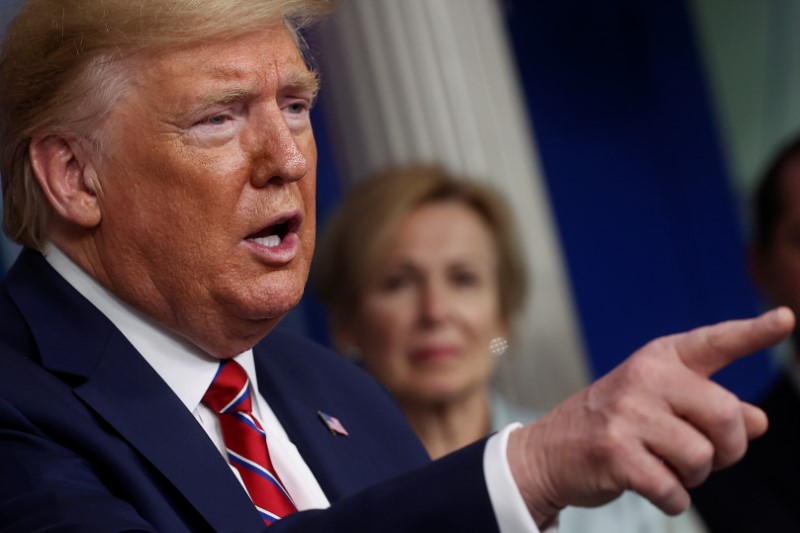
WASHINGTON (Reuters) – U.S. President Donald Trump said on Sunday that U.S. automakers Ford Motor Co, General Motors Co and Tesla Inc had been given the green light to produce ventilators and other items needed during the coronavirus outbreak.

“Ford, General Motors and Tesla are being given the go ahead to make ventilators and other metal products, FAST! @fema Go for it auto execs, lets see how good you are?” he said on Twitter.

(Reporting By Susan Heavey and Arshad Mohammed; Editing by Daniel Wallis)

NYC hospitals 10 days from crisis as coronavirus cases explode: mayor

By Jonnelle Marte and Barbara Goldberg

NEW YORK (Reuters) – The mayor of New York City, the epicenter of the nation’s coronavirus epidemic, on Sunday described the outbreak as the biggest domestic crisis since the Great Depression and called for the U.S. military to mobilize to help keep the healthcare system from becoming overwhelmed.

“If we don’t get more ventilators in the next 10 days people will die who don’t have to die,” said Mayor Bill de Blasio, as the nation’s most populous city saw COVID-19 cases top 8,000 and deaths hit 60.

Nationwide, cases have topped 29,000 with at least 385 dead, according to a Reuters tally.  The number of cases of the highly contagious respiratory illness in the United States and Spain are exceeded only by China and Italy. Italy reported record numbers of daily coronavirus deaths last week.

“This is going to be the greatest crisis domestically since the Great Depression,” de Blasio told CNN, referring to the economic crisis of the 1930s. “This is why we need a full-scale mobilization of the American military.”

Nearly one in four Americans, or 80 million, were under orders to shelter at home as New York, California, Illinois, Connecticut and New Jersey instituted statewide lockdowns.

Around the globe, billions are adapting to a new reality, with countries like Italy, Spain and France on lockdown and several South American nations taking similar measures to try to stay ahead of the contagion, as global cases exceeded 300,000 and deaths top 13,000.

The lockdown affecting large segments of the American public to try to curb the spread of the coronavirus is likely to last 10 to 12 weeks, or until early June, U.S. Treasury Secretary Steven Mnuchin said on Sunday.

Lawmakers in Washington are nearing a deal that could pump a record $1 trillion into the economy to limit the economic damage from the coronavirus.

Speaking on “Fox News Sunday,” Mnuchin said the package would give an average U.S. family of four a one-time payment of $3,000.

MEDICAL CRISIS

De Blasio said the city is not getting needed medical supplies from the federal government to contend with the rapid spread of the sometimes deadly illness.

“If the president does not act, people will die who could have lived otherwise,” de Blasio told NBC.

Hospitals are scrambling for protective equipment for healthcare workers and for ventilators as they brace for a wave of patients who will need help breathing as severe cases often lead to pneumonia and decreased lung function.

New York Governor Andrew Cuomo urged the federal government to take over acquisition of medical supplies so states do not have to compete with each other for desperately needed resources. He also repeated a request for the Army Corps of Engineers to build temporary hospitals.

Over the past week, U.S. President Donald Trump’s administration has been pushing for aggressive steps to stem the economic hit, after Trump spent several weeks downplaying the virus’ risks.

Trump said on Twitter on Sunday that U.S. automakers Ford Motor Co, General Motors Co and Tesla Inc had been given the green light to produce ventilators and other items in short supply during the coronavirus outbreak.

Anthony Fauci, director of the U.S. National Institute of Allergy and Infectious Diseases, on Sunday said the White House recognized the urgency of New York’s situation.

“Not only is New York trying to get resources themselves, but we’re going to be pouring it in from the federal government,” he told CBS News.

U.S. drugmaker Merck & Co Inc said it delivered 500,000 donated masks to New York City on Sunday morning.

The help is not coming quickly enough, Cuomo said.

“Time matters, minutes count, and this is literally a matter of life and death,” he said.

He also chastised New York residents who were congregating in parks and other places and not practicing social distancing. He noted 53% of the cases in New York are between the ages of 18 and 49.

“It’s insensitive, arrogant, self-destructive…and it has to stop, and it has to stop now,” he said. “This is not a joke and I’m not kidding.”

(Reporting by Jonnelle Marte and Barbara Goldberg in New York; Additional reporting by Andrea Shalal and Susan Heavey in Washington; Writing by Lisa Shumaker; Editing by Bill Berkrot)

U.S. may convert thousands of New York hotel, college rooms into care units

WASHINGTON (Reuters) – The U.S. Army Corps of Engineers is looking at converting more than 10,000 New York rooms, potentially in hotels and college dorms, into medical care units to help address the fast-spreading coronavirus, the commanding general of the Army Corps said on Friday.

The pandemic has upended life in much of the United States, shuttering schools and businesses, prompting millions to work from home, forcing many out of jobs and sharply curtailing travel.

Lieutenant General Todd Semonite told reporters at the Pentagon that the Army Corps was looking at converting the rooms and other large spaces into intensive care unit-type facilities and it would need to happen within weeks, not months.

“We’re talking about over 10,000 that we are looking at right now,” Semonite said, adding that a decision would be made by the Federal Emergency Management Agency.

Earlier this week, the White House said it was in talks with the Pentagon about how the military can be deployed to deal with the coronavirus, including setting up field hospitals in states with a surge in cases.

New York Governor Andrew Cuomo has called for the Army Corps to increase hospital capacity. The Army Corps of Engineers is made up of 37,000 soldiers and civilians providing engineering services in more than 130 countries, its website says.

(Reporting by Idrees Ali and Phil Stewart; Editing by Leslie Adler and Howard Goller)

Coronavirus stay-at-home directives multiply in major U.S. states

By Steve Gorman and Gabriella Borter

(Reuters) – New Jersey’s governor was expected on Saturday to follow four other states – California, New York, Illinois and Connecticut – demanding that millions of Americans close up shop and stay home to slow the spread of coronavirus infections.

The sweeping state-by-state public health restrictions, unprecedented in breadth and scope, added to the distance being experienced among ordinary Americans.

“I know people want to hear it’s only going to be a matter of weeks and then everything’s going to be fine,” New York Governor Andrew Cuomo said at a news conference on Saturday. “I don’t believe it’s going to be a matter of weeks. I believe it is going to be a matter of months.”

Meanwhile, the global pandemic seemed to close in on the highest levels of power in the nation’s capital.

An aide to U.S. Vice President Mike Pence, leading the White House task force formed to combat the outbreak, tested positive for the virus, but neither President Donald Trump nor Pence have had close contact with the individual, Pence’s press secretary, Katie Miller, said in a statement late on Friday.

Pence’s office was notified of the positive test on Friday evening, and officials were seeking to determine who the staffer might have exposed, Miller said.

The aide was not publicly identified, and the vice president’s office did not immediately respond to a request for further details of the diagnosis or whether Pence would be tested.

“He’s recovering and has very, very mild symptoms,” Pence’s chief of staff Marc Short told CNN on Saturday.

The White House said last week that Pence did not require testing after dining with a Brazilian delegation, at least one member of which later tested positive for the respiratory illness. Trump has tested negative for the virus, his doctor said last week.

Two members of the U.S. House of Representatives tested positive on Wednesday, becoming the first members of Congress known to have contracted the disease, which has killed 266 people in the United States.

The total number of known U.S. coronavirus cases has risen exponentially in recent days, climbing past 19,000 in a surge that health officials attributed in large part to an increase in diagnostic testing. More than 270 Americans have died.

Click  for a GRAPHIC on U.S. cases.

Cuomo said New York state was sending 1 million N95 respirator masks to New York City on Saturday. He said the state has identified 6,000 ventilators for purchase, which he described as a major step, but added that it needs 30,000.

“We are literally scouring the globe for medical supplies,” the governor said. New York state has recorded 10,356 cases, he said, 6,211 of them in New York City.

SOCIAL-DISTANCING GOES STATEWIDE

Expanding on social-distancing measures increasingly adopted at the local level, California Governor Gavin Newsom instituted the first statewide directive requiring residents to remain indoors except for trips to grocery stores, pharmacies, gas stations and other “essential businesses.”

Newsom’s order, announced late on Thursday, made allowances for the state’s 40 million people to venture outside for exercise so long as they kept their distance from others.

On Friday, his counterparts in New York state, Illinois and Connecticut followed suit, and New Jersey Governor Phil Murphy said he planned to issue similar directives on Saturday.

The five states where governors have banned or will soon ban non-essential businesses and press residents to stay inside are home to 84 million people combined, about a quarter of the entire U.S. population and account for nearly a third of the nation’s economy.

The state directives were for the most part issued without strict enforcement mechanisms to back them up.

“What we want is for people to be in compliance and we’re going to do everything that we can to educate them,” Chicago Mayor Lori Lightfoot said at a briefing on Saturday. Police officers would “admonish” those found to be on non-essential outings to go home, she said.

“That’s what we hope is the end of any kind of contact that anyone might have with the police department,” Lightfoot said.

Cuomo said there will be a civil fine and mandatory closure for any business that is not in compliance.

Even before the flurry of statewide stay-at-home orders, the pandemic had virtually paralyzed parts of the U.S. economy and upended lifestyles over the past week, as school districts and colleges canceled classes and many companies were shuttered, either voluntarily or by local government mandates.

Washington state, which documented the first known U.S. coronavirus case in January and now accounts for the greatest number of deaths – 83 as of Friday – has since March 16 closed bars, restaurants, recreation venues and entertainment facilities, while banning all gatherings of more than 50 people.

(Reporting by Steve Gorman in Los Angeles and Gabriella Borter in New York; Additional reporting by Caroline Spezio in New York; Editing by Gerry Doyle and Daniel Wallis)

Trump blasts media as anxious Americans come to grips with coronavirus pandemic

WASHINGTON (Reuters) – U.S. President Donald Trump on Friday capped a tumultuous week as Americans faced sweeping life changes and massive Wall Street losses amid the fast-spreading coronavirus outbreak by turning to a familiar playbook: attacking the media.

In a contentious press briefing, the Republican president lashed out at an NBC reporter who noted Trump’s tendency to put an optimistic spin on the situation and asked what his message was to the American people who may be scared.

“I say that you’re a terrible reporter. I think that is a nasty question,” Trump said.

Two of the nation’s most populous states – California and New York – have enacted their toughest restrictions yet affecting some 60 million people, while federal authorities this week moved to close the borders with Canada and Mexico. More than 200 people have died in the United States and over 14,000 cases of the highly contagious respiratory illness had been confirmed by Friday.

Trump and top administration officials for weeks downplayed the outbreak, which began in China in December, before shifting their tone about the severity of the health crisis more recently.

The president, who is running for re-election on Nov. 3, has long sparred with the media, blasting coverage of him as “fake news” and “hoaxes,” and slamming news outlets and journalists on his Twitter feed. His re-election campaign also recently filed lawsuits against several outlets, including the New York Times and the Washington Post.

Yet the crises has propelled Trump recently to give briefings with news outlets nearly every day in the White House briefing room, a place he eschewed during his first three years in office.

On Friday, in a particularly unusual twist, Trump’s first White House press secretary, Sean Spicer, attended the briefing and asked a question in his role working for Newsmax. Spicer repeatedly sparred with reporters during his time as a spokesman early in Trump’s term.

During his recent engagements with the press, Trump has sought to display unabashed optimism despite more sober comments from public health officials, medical experts, state governors and others who have sounded the coronavirus alarm.

One reporter on Thursday asked about the impact on the economy as many businesses have had to dramatically shift operations or shut down entirely during drastic measures to slow the spread of the virus.

“Thanks for telling us. We appreciate it,” Trump said. “What’s the rest of your question? We know that. Everybody in the room knows that.”

Asked last week about his role regarding the disbanding of a National Security Council pandemic preparedness team on his watch, Trump told a PBS reporter: “That’s a nasty question… When you say me, I didn’t do it.”

(Reporting by Steve Holland, Alexandra Alper, and Jeff Mason; writing by Susan Heavey; editing by Bill Berkrot)

California issues ‘stay home’ order; U.S. death toll hits 200

By Dan Whitcomb and David Shepardson

LOS ANGELES/WASHINGTON, (Reuters) – California issued an unprecedented statewide “stay at home” order on Thursday for its 40 million residents and Washington warned Americans to return home or stay abroad indefinitely, as the number of coronavirus deaths in the country hit 200.

Governor Gavin Newsom’s directive, effective immediately, marks the largest and most sweeping government clampdown yet in the worsening public health crisis brought on by the COVID-19 outbreak, which he predicted could infect more than half the state within eight weeks.

As authorities ramped up measures to keep the virus from spreading, Washington could announce restrictions on travel across the U.S.-Mexico border as soon as Friday, limiting crossings to essential travel, two officials briefed on the matter said. That would follow a similar measure on Wednesday closing the border with Canada.

The fast-spreading respiratory illness has shattered most patterns of American life: shuttering schools and businesses, prompting millions to work from home, forcing many out of jobs and sharply curtailing travel.

The U.S. State Department told citizens that if they travel internationally, “your travel plans may be severely disrupted, and you may be forced to remain outside of the United States for an indefinite timeframe.”

STIMULUS PACKAGE

With the economy swooning, Senate Republicans unveiled a $1 trillion economic stimulus plan to provide funds directly to businesses and the American public. President Donald Trump has been eagerly calling for that package.

It would be Congress’ third emergency coronavirus bill following a $105 billion-plus plan covering free coronavirus testing, paid sick leave and expanded safety-net spending, and an $8.3 billion measure to combat the spread of the highly contagious pathogen and develop vaccines.

The plunging stock market and surging U.S. death toll has caused Trump to sharply change his tone on the disease this week, demanding urgent action after spending weeks downplaying the risks.

Over 13,000 people across the United States have been diagnosed with the illness called COVID-19 and 200 have died, with the largest numbers so far in Washington state, New York and California.

Newsom said his ‘stay at home’ order was essential as modelling showed 56% of California’s 40 million people would contract the virus in the next eight weeks, and require nearly 20,000 more hospital beds than the state could provide.

“We are confident the people of California will abide by it, they will meet this moment,” Newsom, a first-term Democrat told a news briefing from the state capital in Sacramento.

Los Angeles, as the nation’s second-largest city, would likely be “disproportionately impacted” in the coming weeks, he said.

Two Los Angeles Lakers players have the coronavirus, the NBA franchise said on Thursday, after four players from the Brooklyn Nets tested positive for the disease a day earlier.

The virus has taken the greatest toll in Washington state, which reported eight more deaths on Thursday, bringing the toll there to 74.

Hospitals across the country say they face shortages of medical gear, with doctors in Seattle reduced to making their own face masks out of sheets of plastic.

“We’re days away from running out of the equipment we need,” said Melissa Tizon, Associate Vice President of Providence St. Joseph Health, which runs 51 hospitals across five western states. “We’re expecting more shipments later on but until then we’ve got to improvise.”

TEST DELAYS

With the United States slow to roll out mass testing for the virus that has infected more than 244,000 people worldwide, officials fear the number of known cases of the respiratory illness that can lead to pneumonia lags far behind reality.

There are no approved treatments or vaccines for COVID-19, but several options are being tested.

New York City, where many young people last weekend packed local bars and restaurants, has been eerily deserted after nightfall.

“It’s a skater’s dream,” said Dyanna Hernandez, 20, who had joined a dozen friends in Manhattan’s Union Square to enjoy the freedom of what she called a “ghost city” after three days stuck at home. “I can’t really be quarantined.”

The epidemic, which has killed over 10,000 globally so far, has drawn comparisons with traumatic periods such as World War Two, the 2008 financial crisis and the 1918 Spanish flu pandemic.

The number of Americans filing for unemployment benefits surged by the most since 2012 to a 2-1/2-year high last week, as companies in the services sector laid off workers with businesses shutting down due to the pandemic.

Katie Vetere, 32, general manager of One 53, a small restaurant near Princeton, New Jersey, applied for benefits for the first time in her life after the restaurant was forced to shut down when state authorities banned table service.

Vetere expects her benefits to be less than half her regular weekly paycheck.

“I go from ‘I’m sad’ to ‘I’m scared’ to ‘I’m angry,'” she said. “Do I consider my job lost? I don’t know.”

(Additional reporting by Lawrence Hurley and Jeff Mason in Washington, Laila Kearney, Jonathan Allen, Gabriella Borter and Leela de Kretser in New York, Steve Gorman and Dan Whitcomb in Los Angeles and Rich McKay in Atlanta; Writing by James Oliphant and Bill Tarrant; Editing by Scott Malone, Daniel Wallis & Simon Cameron-Moore)

U.S. urges Americans to avoid all overseas travel due to the coronavirus

By David Shepardson and Humeyra Pamuk

WASHINGTON (Reuters) – The United States on Thursday raised its travel alert to the highest for the entire world, urging Americans not to go overseas while calling those abroad to return to the United States immediately due to the impact of the coronavirus outbreak.

“In countries where commercial departure options remain available, U.S. citizens who live in the United States should arrange for immediate return to the United States, unless they are prepared to remain abroad for an indefinite period,” the U.S. State Department said in its advisory.

It also asked Americans to have a travel plan that does not rely on the U.S. government.

“If you choose to travel internationally, your travel plans may be severely disrupted, and you may be forced to remain outside of the United States for an indefinite timeframe,” the advisory said.

Politico first reported the news ahead of the announcement.

The move comes a day after the State Department said it was suspending all routine visa services as of Wednesday in most countries worldwide due to the virus, a move that will potentially impact hundreds of thousands of people.

The coronavirus, which emerged in China late last year, has now infected over 236,000 people and killed more than 9,700, an epidemic that has stunned the world and drawn comparisons with painful periods such as World War Two, the 2008 financial crisis and the 1918 Spanish flu.

Normal life has come to a standstill pretty much across the globe with schools shut down, flights and industries halted, sports and arts events postponed and people are advised or at times forced by their governments to remain indoors to prevent the spread.

Earlier U.S. President Donald Trump had declined to confirm the plan. “We haven’t had the meeting yet,” Trump told reporters at a news conference at the White House.

(Reporting by David Shepardson, Humeyra Pamuk, Jeff Mason, Alexandra Alper and Ted Hesson; Writing by Susan Heavey and Humeyra Pamuk, Editing by Franklin Paul, Bill Berkrot and Marguerita Choy)

America’s cleaners: fighting on the coronavirus front line

By Jonnelle Marte

NEW YORK (Reuters) – It’s been roughly two weeks since Amazon encouraged most employees at its Seattle headquarters to work remotely after one tested positive for coronavirus.

Since then, Ismahan Ali and other janitors who clean the tech giant’s offices say they have been getting paid to work overtime to wipe down stairwells, conference rooms and other high-traffic areas.

Ali, 29, doesn’t clean the building where the infected Amazon employee worked, but she shares a break room with some janitors who do. So every cough or sneeze is a reminder that coronavirus could be lingering on a surface they’ve cleaned, or that one may already have been exposed, she said.

“Everyone is scared,” said Ali, who works for ABM, a maintenance and cleaning firm that employs more than 140,000 people. “We just keep going, let’s do what we can.”

For the three million janitors, housekeepers and maids across America, remote working is not an option. They are on the front line of the war against the virus, often working overnight and weekends to deep clean offices, airports and hotels.

Ali said at first she was not used to the stronger cleaning product she was asked to use as part of an enhanced cleaning protocol put in place because of the virus. The chemical irritated her eyes, throat and skin, but she has since been provided with goggles and a mask, which she said is helping.

ABM did not respond to multiple emails and phone calls requesting comment.

A spokeswoman for Ali’s union, Service Employees International Union Local 6, said ABM had been responsive to its concerns and has committed to providing janitors with more protective gear and training. A janitor with experience of using stronger chemicals is also now providing guidance to other staff at Amazon, the union representative said.

Amazon said safety was a top priority and that it had notified employees and service providers, including janitors, who may have been in close contact with its employee who tested positive for COVID-19, the disease caused by the coronavirus. Amazon also said it was committed to paying hourly workers who cannot come to work because of coronavirus.

“We continue to pay all hourly employees that support our offices around the world – from food service, to security guards to janitorial staff – during the time our employees are asked to work from home,” an Amazon representative said in a statement.

‘PAYCHECK TO PAYCHECK’

Other cleaning professionals have seen demand for their services dry up as major events are canceled, malls and movie theaters close, and business travel is put on hold.

Those working in the hospitality and entertainment industry have been hit hard, with lost wages adding a new layer of uncertainty to their already precarious financial lives.

Earlier this month, Larrilou Carumba, a 47-year-old housekeeper at the San Francisco Marriott Marquis hotel, applied to rent a two-bedroom apartment.

But then she got her work schedule: she wasn’t needed for at least two weeks. Suddenly unsure of when her next paycheck would land, she withdrew her application.

“I’m more afraid about my bills than the coronavirus,” she said, adding that she would struggle to afford groceries, her car payments and insurance, and other outgoings. “Being a single mom, you live paycheck to paycheck.”

Janitors earned a median hourly wage of $12.55 in 2018 while housekeepers made $11.43. Low-wage workers without unions are also less likely to have fundamental health benefits, including health insurance or sick leave, according to surveys from the Economic Policy Institute.

Think-tank Pew Research Center estimates https://www.pewresearch.org/fact-tank/2017/03/16/immigrants-dont-make-up-a-majority-of-workers-in-any-u-s-industry more than a third of cleaners and maintenance workers in America are immigrants.

“I’m going to keep cleaning because I have to help my family,” said Ali, who is studying to become a nurse and sends money to her family in Somalia. “I don’t have a choice to stay home. I have to go.”

‘FALLING OFF A CLIFF’

Hotel companies are reeling from a sharp drop in business over the past couple of weeks as conferences are canceled, vacations scrapped and casinos shut down.

Occupancies in the second week of March were 24.4% lower than the same week last year, according to data firm STR. Of the 25 markets it studied, the San Francisco region reported the second biggest hit to occupancy, which fell by 51.6% from 2019.

“Our industry is falling off a cliff,” said D. Taylor, president of the UNITE HERE, a union that represents about 300,000 members in the hotel, gaming, food, transport and other service industries in the United States and Canada.

Taylor said hospitality workers were under significant pressure as schools close, and traffic at hotels, casinos and airports plummets. He is advocating for more workers to receive paid sick leave so they can afford to stay home if they are unwell, or need to be quarantined.

For people who are laid off, the union is pushing for fast access to unemployment benefits and extended access to health insurance. “The coronavirus is a pretty scary thing and often our folks are on the front lines,” Taylor said.

Marriott International <MAR.O> said a significant drop in demand worldwide was forcing it take remedial measures.

“Unfortunately, occupancy dictates staffing levels – we are adjusting global operations accordingly and working quickly to mitigate the impact to our business,” it said in a statement.

U.S. regulators and lawmakers are considering different options that could provide relief to low-income workers affected by the pandemic, including leniency with loans, expanding unemployment benefits and providing other financial assistance.

After withdrawing her bid for the apartment, Carumba submitted a different application – for unemployment benefits.

She is still waiting to hear whether she will get any assistance until she can return to work.

“I have a strong faith that this will end,” she said. “I just don’t know when.”

(Reporting by Jonnelle Marte; Editing by Heather Timmons and David Clarke)

New York expects spike in coronavirus cases after big batch of overnight tests

By Maria Caspani

NEW YORK, (Reuters) – The state of New York tested 8,000 people for the coronavirus overnight in what may be the largest batch of testing to date in the United States, likely leading to a spike in positive cases once results come in, Governor Andrew Cuomo said on Thursday.

With the United States slow to roll out mass testing for the virus – which has spread rapidly to become a global pandemic – some health officials have feared the number of known cases lags far behind reality.

Nearly 9,000 cases of the novel coronavirus have been reported in the United States, more than 3,000 of them in the New York state, according to state health departments.

Some 151 deaths had been reported nationwide, including 21 in New York and 66 in Washington state as of 11 p.m. Wednesday.

“I think the spread of the virus is well in advance of any of these numbers,” Cuomo told MSNBC television. “We did 8,000 overnight, which is one of the largest number I think ever done in the country. We haven’t gotten this morning’s tally, but you’re going to see a jump astronomically – I have no doubt – because we did so many tests.”

The real number of cases may be 10 times the number of confirmed positives, or even more, Cuomo said.

As a result, the state may see 110,000 hospitalizations and about 25,000 to 37,000 people needing intensive care unit beds at peak time in five to six weeks, the governor projected.

U.S. health experts fear the country is on a similar trajectory as Italy, the worst-hit European country where the government reported a record 475 deaths on Wednesday alone, increasing that nation’s death toll to 2,978.

The total number of cases in Italy rose to 35,713, up 13 percent from the previous day, its Civil Protection Agency said.

U.S. stock markets fell again for the third time this week, signaling that panic-stricken equity investors remained unconvinced that sweeping policy actions would avert a global recession over the coronavirus. In early trading, the Dow Jones Industrial Average <.DJI> the S&P 500 index <.SPX> were down around 2%.

President Donald Trump, who declared a national emergency last week and had stepped up the federal response after initially downplaying the threat, plans to visit Federal Emergency Management Agency headquarters in Washington, where he will hold a video teleconference with state governors on the coronavirus.

Treasury Secretary Steven Mnuchin on Thursday urged Congress to move quickly to pass a $1 trillion economic relief measure by early next week, saying he expects bipartisan support for the bill to get cash payments to Americans during the crisis.

Mnuchin, in an interview on Fox Business Network, said the federal government was focused on being able to provide liquidity to companies and had no problem issuing more debt, but that it expected loans to businesses to be paid back.

Congress is taking up its third legislative package to address the pandemic, which has caused widespread economic disruption.

Lawmakers already have passed a $105 billion-plus plan to limit the damage from the outbreak through free testing, paid sick leave and expanded safety-net spending, as well as an $8.3 billion measure to combat the spread of the pathogen and develop vaccines. Trump has signed both into law.

“We’re going to get through this,” Mnuchin said. “This is not the financial crisis that will go on for years.”

U.S. House of Representatives Speaker Nancy Pelosi called on the Republican president to speed up mass production of medical and protective equipment using powers under the Defense Production Act, citing shortages in the country. Trump on Wednesday said he would invoke the decades-old law.

“Right now, shortages of critical medical and personal protective equipment are harming our ability to fight the coronavirus epidemic, endangering frontline workers and making it harder to care for those who fall ill,” Pelosi, a Democrat, said in a statement.

Surgeon General Jerome Adams, the United State’s top public health official, said on Thursday the virus is affecting people across a wide age range and authorities continue to learn more about it every day.

“Right now there is a not a big fear that the virus is mutating,” Adams told Fox News. “But what we are seeing is the virus is playing out differently in different populations based on their mitigation efforts, based on their access to healthcare and based on who is getting sick.”

Adams stressed that Americans should continue to self-isolate and follow precautionary guidelines.

“It’s about social distancing, it’s about washing your hands. It’s about ensuring that you’re protecting yourself and protecting others. It’s not about partying on beaches during spring break,” Deborah Birx, White House coronavirus response coordinator, told CBS “This Morning.”

But clearly, many Americans were ignoring expert advice.

“Get off the beach,” U.S. Senator Rick Scott of Florida said on Thursday as people still gathered on the state’s beaches despite warnings. While people could walk alone on the beach away from others, “that’s not what’s happening” as college students still congregated during spring break.

If people failed to heed social isolation warnings, government officials might need to act, Scott told CNN in an interview.

“You’ve got to figure out how to get these people off the beach,” he said.

(Reporting by Maria Caspani, Doina Chiacu and Susan Heavey; Writing by Daniel Trotta; Editing by Jonathan Oatis)

U.S. states scramble to slow virus spread, prevent hospital collapse

By Andrew Hay

(Reuters) – From cancelling Broadway shows to closing schools, U.S. states are scrambling to slow the spread of coronavirus and stop hospitals from being overwhelmed with a surge in critically ill patients, as has been the case in Italy.

After weeks of federal officials telling Americans they faced low risk from the virus, and with no widescale testing to track its spread, hospitals in hard-hit cities like Seattle are now fighting to save lives as COVID-19 tears through communities.

One Seattle, Washington hospital has triage tents outside, two for possible COVID-19 cases, one for anything else. Nearby walk in clinics ask patients who think they have the virus wait in cars to avoid the potential of infecting others.

In Hawaii, another state that rapidly responded to the outbreak, urgent care clinics offer drive-through testing.

U.S. hospitals are being helped by a rapid shift in state strategy from containing the virus to mass mitigation measures to slow its spread.

These measures, ranging from bans on large gatherings in Washington state and California to a containment zone in New York and school closures in Maryland and Ohio, are meant to reduce the rate at which people are infected and seriously-ill patients show up at emergency departments.

The goal is to prevent the kind of surges that overwhelmed Italy – a country with more doctors and hospital beds per capita than the United States – causing fatality levels to leap as doctors ran out of equipment to help people breathe.

U.S. states that wait too long to stem the spread of contagion may find hospitals trapped in this doom spiral, experts warn.

Italy’s confirmed cases of coronavirus have leapt from around 300 cases at the end of February to over 12,000 Thursday, providing a preview of what awaits America if measures aren’t taken quickly to mitigate the spread. The Italian College of Anesthesia, Analgesia, Resuscitation and Intensive Care published guidelines instructing healthcare workers to provide scarce hospital resources to those who stand “the highest likelihood of survival.”

LIKE MAJOR QUAKE

The biggest U.S. battle is in greater-Seattle, an area with over a quarter of the country’s more than 1,300 U.S. COVID-19 cases and the bulk of the 39 deaths.

On the front lines, with limited testing, it can be an individual nurse practitioner or doctor who decides if a person is treated as a COVID-19 patient, or not.

“Our staff can use their clinical judgment and consider that patient to be likely positive if they choose,” said Megan Farnsworth, an emergency room doctor in Everett, Washington dealing with high patient volumes at clinics she oversees.

Washington officials have prepared residents for a large-scale outbreak of the virus ten times as deadly as the flu that would double in size every five to eight days.

“It’s something similar to the infectious-disease equivalent of a major earthquake that is going to shake us for weeks and weeks,” said Jeff Duchin, health officer for Seattle’s King County.

Few places in the United States are better prepared for this fight than the cities of Seattle and Everett, where their hospitals have been readying for a largescale community spread since late January when the area reported the country’s first COVID-19 case. Despite limitations, greater-Seattle may have the best testing in the country.

“Being able to know who has the virus and who does not is able to free up beds, isolation units,” said Alex Greninger, assistant director of University of Washington Medicine Clinical Virology Laboratories, which is testing over 1,000 people a day.

Doctor Janet Englund can get a test result back in between 12 and 36 hours.

“I think other states and sites are looking at what we are finding and what we are doing,” said Englund, an infectious disease specialist at Seattle Children’s, which has yet to see a high number of COVID-19 patients.

PROTECTIVE GEAR

Emergency medicine professionals in other U.S. states tell a different story, with doctors only able to test acutely ill patients and colleagues not wearing protective gear.

“None of the nurses, no one is wearing them. I put on my own N95 mask and everyone laughed at me,” said an emergency room doctor in a southern U.S. state, who asked not to be named. “We don’t know who has it and, especially healthcare workers need to be tested, because we can give it to everybody else.”

Jeremy Konyndyk, a senior policy fellow at the Center for Global Development in Washington, has heard similar accounts.

“Many hospitals in this country, as of last week, really had not woken up to what this was about to throw at them and had not begun putting measures in place to be ready for that,” said Konyndyk, describing the federal government’s “wait and see” public health guidance as “unspeakably irresponsible.”

Personal protective equipment such as CAPR respirator masks used by emergency room staff are in high demand, Farnsworth said. Her hospital network is shifting supplies to areas in greatest need.

Ultimately, the ability of hospitals to save lives will rest on the speed at which states apply mitigation. If taken early enough, aggressive measures like lockdowns can all but flatten the spread of the disease.

“I think we do need to take more of a no regrets approach,” said Konyndyk, adding that it might be impossible to enforce Wuhan-style, mandatory lockdowns in the United States.

(Reporting by Andrew Hay; editing by Bill Tarrant and Diane Craft)