Taliban are rounding up Afghans on blacklist – private intel report

OSLO (Reuters) – The Taliban have begun rounding up Afghans on a blacklist of people they believe have worked in key roles with the previous Afghan administration or with U.S.-led forces that supported it, according to a report by a Norwegian intelligence group.

The report, compiled by the RHIPTO Norwegian Center for Global Analyses and seen by Reuters, said the Taliban were hunting individuals linked to the previous administration, which fell on Sunday when the Islamist militant movement took Kabul.

“Taliban are intensifying the hunt-down of all individuals and collaborators with the former regime, and if unsuccessful, target and arrest the families and punish them according to their own interpretation of Sharia law,” said the report, dated Wednesday.

“Particularly at risk are individuals in central positions in military, police and investigative units.”

The non-profit RHIPTO Norwegian Center for Global Analyses, which makes independent intelligence assessments, said the Afghanistan report was shared with agencies and individuals working within the United Nations.

“This is not a report produced by the United Nations, but rather by the Norwegian Center for Global Analyses,” said a U.N. official, when asked for comment.

A Taliban spokesman did not immediately respond to a request for comment on the report. Since seizing Kabul, the Taliban have sought to present a more moderate face to the world, saying they wanted peace and would not take revenge against old enemies.

The four-page report reproduced a letter it said had been written to one alleged collaborator who was taken from his Kabul apartment this week and detained for questioning over his role as a counter-terrorism official in the previous government.

Reuters could not independently verify its authenticity.

The letter, dated Monday, from the Islamic Emirate of Afghanistan’s Military Commission, noted that the detainee had travelled to the UK as part of his role “which indicates you have had excellent relations with the American and British”.

“If you do not report to the commission, your family members will be arrested instead, and you are responsible for this. You and your family members will be treated based on Sharia law,” the letter said, according to a translation given in the report.

The detainee’s name was redacted.

Separately, a senior member of the security forces of the ousted administration sent a message to journalists saying that the Taliban had obtained secret national security documents and Taliban were arresting former intelligence and security staff.

(Reporting by Gwladys Fouche; additional reporting by Michelle Nichols and Charlotte Greenfield; Writing by Mark Bendeich; Editing by Mike Collett-White)

Man claiming to have bomb near U.S. Capitol surrenders to police

By Julio-Cesar Chavez and Sarah N. Lynch

WASHINGTON (Reuters) – A man who claimed to have a bomb in a pickup truck near the U.S. Capitol surrendered to police on Thursday after a standoff that paralyzed a swath of Washington for more than five hours.

Capitol Police Chief J. Thomas Manger told reporters that the man, identified as Floyd Ray Roseberry, parked his vehicle on a sidewalk outside the U.S. Library of Congress at about 9:15 a.m. EDT (1315 GMT) and told an officer who approached him that he had a bomb while holding what appeared to be a detonator.

Police shut down streets and evacuated nearby buildings as they negotiated with Roseberry.

“He gave up and did not resist and our folks were able to take him into custody without incident,” said Manger.

Police did not say whether he had any explosives.

A video livestreamed on Facebook showed Roseberry, a bald white man with a goatee, speaking inside a black truck parked on a sidewalk.

“The revolution’s on, it’s here,” he said in the video, while appearing to hold a large metal cannister on his lap. “I’m trying to get (U.S. President) Joe Biden on the phone.”

His ex-wife, Crystal Roseberry, told Reuters that he had been diagnosed with schizophrenia and had threatened her with firearms in the past. She said she divorced him about eight years ago.

“He’s crazy. He pulled a gun on me and his sister, and shot at me numerous times,” said the woman.

Facebook deactivated the livestream and removed the man’s profile after about four hours.

Federal agents raided Roseberry’s home in Grover, North Carolina, during the standoff in the U.S. capital.

Neighbors said Roseberry would set off explosives in his yard and disrupt deer hunters by shooting his gun repeatedly.

“He didn’t want nobody killing no deer,” neighbor Wayne Davis told Reuters.

In Washington, the ordinarily crowded Capitol Hill area was relatively deserted, with the U.S. House of Representatives and Senate out of session.

Police blocked off roads surrounding the Capitol complex as fire and rescue trucks headed to the area. The Bureau of Alcohol, Tobacco, Firearms and Explosives said it was sending a bomb technician to support police. The Federal Bureau of Investigation also responded.

Nearby buildings, including the U.S. Supreme Court, were evacuated.

High-security fencing was erected in the area after the deadly Jan. 6 attack on the Capitol by supporters of then-President Donald Trump, but it was removed by mid-July.

(Reporting by Lisa Lambert, Lawrence Hurley, Sarah N. Lynch, Mark Hosenball, Julio-Cesar Chavez and Elizabeth Culliford; Writing by David Morgan; Editing by Andy Sullivan, Chizu Nomiyama and Sonya Hepinstall)

U.S. lets states use federal pandemic funds to extend jobless aid

WASHINGTON (Reuters) -U.S. states can use federal pandemic-related funds passed this year to extend unemployment aid, President Joe Biden’s administration said on Thursday, saying the Delta variant impact on some local economies may mean people need help for longer.

“There are some states where it may make sense for unemployed workers to continue receiving additional assistance for a longer period of time, allowing residents of those states more time to find a job in areas where unemployment remains high,” U.S. Treasury Secretary Janet Yellen and U.S. Labor Secretary Martin Walsh told congressional leaders in a letter.

“The Delta variant may also pose short-term challenges to local economies and labor markets,” they added.

Extra federal unemployment benefits will expire as planned on Sept. 6, they said. But states can tap funds from a law enacted in March called the American Rescue Plan, they told the heads of the Senate Finance Committee and the House of Representatives Ways and Means Committee.

COVID-19 deaths in the United States reached a five-month high this week, with cases most prevalent in the U.S. South as the highly contagious Delta variant continued to spread, according to a Reuters tally.

Surging infections have threatened to upend the nation’s battle with the pandemic as well as its economic recovery.

Still, data released on Thursday showed U.S. weekly jobless claims hit a 17-month low as the ranks of the unemployed continued to shrink despite threats from rising COVID-19 cases.

(Reporting by Susan HeaveyEditing by Will Dunham and Chizu Nomiyama)

Maskless flyers face $9,000 fines as U.S. FAA tackles unruly passengers

By David Shepardson

WASHINGTON (Reuters) -The U.S. Federal Aviation Administration on Thursday proposed $531,545 in civil penalties against 34 airline passengers over unruly behavior – with some facing $9,000 fines for defying mask requirements – pushing its total for the year past $1 million.

The United States has seen a significant jump in reported cases of passengers causing disturbances on airplanes, including ignoring a federal mandate to wear face masks during the COVID-19 pandemic. Numerous videos of confrontations have drawn attention on social media.

The FAA, which regulates U.S. civil aviation, since Jan. 1 has received 3,889 reports of unruly passengers, including 2,867 reports of people refusing to comply with the mask mandate. In total, the agency has proposed more than $1 million in fines this year for unruly passengers.

The agency has initiated three times as many such enforcement cases in the first seven months of 2021 compared to all of 2020. The FAA said some passengers were hit with $9,000 fines for not wearing masks, while other maskless people faced higher penalties for engaging in additional onboard bad behavior.

The Transportation Security Administration on Tuesday said it would extend existing mask requirements for airports, airplanes, trains and transit hubs through Jan. 18.

FAA Administrator Steve Dickson this month asked U.S. airports to assist in the effort to crack down on disruptive air passengers https://www.reuters.com/world/us/faa-urges-airports-assist-unruly-air-passenger-crackdown-2021-08-05. Dickson in March extended indefinitely a “zero tolerance policy” on unruly air passengers. Dickson noted that alcohol often contributes to unsafe behavior and urged airports to prevent passengers from taking alcoholic drinks on planes.

American Airlines confirmed on Thursday it would extend a ban on main cabin alcohol sales through Jan. 18.

Airlines for America, a trade group representing major U.S. carriers, said it appreciates “the FAA’s continued support and enforcement of the ‘zero tolerance’ policy for travelers who do not follow crewmember instructions and who do not abide by federal law.”

Among new FAA fines announced Thursday:

* $45,000 against a JetBlue passenger flying from New York to Florida in May for throwing objects “including his carry-on luggage at other passengers; refusing to stay seated; lying on the floor in the aisle, refusing to get up, and then grabbing a flight attendant by the ankles and putting his head up her skirt.” The passenger was placed in handcuffs and the flight made an emergency landing in Virginia.

* $42,000 against a JetBlue passenger on a May flight from New York to San Francisco for failing to comply with the face mask mandate and other misbehavior including “making stabbing gestures towards certain passengers; and snorting what appeared to be cocaine from a plastic bag, which the cabin crew confiscated.” The flight diverted to Minneapolis, where police removed the passenger.

* $30,000 against a Frontier Airlines passenger on a January flight from Atlanta to New York who during deplaning “attempted to gain entry to the flight deck by physically assaulting two flight attendants, threatening to kill one of them, and demanding them to open the door.”

(Reporting by David Shepardson; Editing by Gerry Doyle and Will Dunham)

Trucks rolling across Afghanistan border as trade resumes

QUETTA, Pakistan (Reuters) – Commercial traffic across Afghanistan’s border with Pakistan at the Spin Boldak/Chaman crossing picked up on Thursday, traders said, as the shock of the Taliban’s lightning seizure of power began to ease and confidence returned.

Despite the Ashura religious holiday, truckloads of agricultural produce from Kandahar province were driven across the border, a sign that trade was beginning to return to normal.

“Today, many trucks loaded with fresh fruit (from Afghanistan), including famous ‘Sunder-Khani’ grapes, were cleared at Customs House Chaman,” a senior Custom Officer told Reuters via WhatsApp.

He said movement was strong in both directions, with long-bodied trucks loaded with export and Afghan transit goods also going from Pakistan to Afghanistan’s Spin Boldak and the nearby provincial capital of Kandahar.

Along with the Tokham crossing near Peshawar, Chaman is one of the main trade routes between Afghanistan and Pakistan, providing a clear picture of economic activity between them.

The Pakistani official, who could not be quoted by name, said trade had picked up over recent days after fighting ended in Kandahar last week and the fall of Kabul on Sunday gave the Taliban complete control of the country.

“After the Taliban took control over Kabul, trade was increased from both sides and empty trucks were also coming back to Chaman without any difficulty,” he said.

The Vice President of Pak-Afghan joint Chamber of Commerce and Industry, Imran Khan Kakar, told Reuters that Pakistani drivers had previously faced problems returning from Afghanistan.

He said the police and other armed people had been allowing empty trucks to proceed only after taking payments ranging from 10,000-20,000 Pakistani rupees ($61-$122).

“Since the return of the Taliban, there have been no such problems,” Kakar added.

($1 = 163.6000 Pakistani rupees)

(Reporting by Gul Yousafzai; Writing by James Mackenzie; Editing by Catherine Evans)

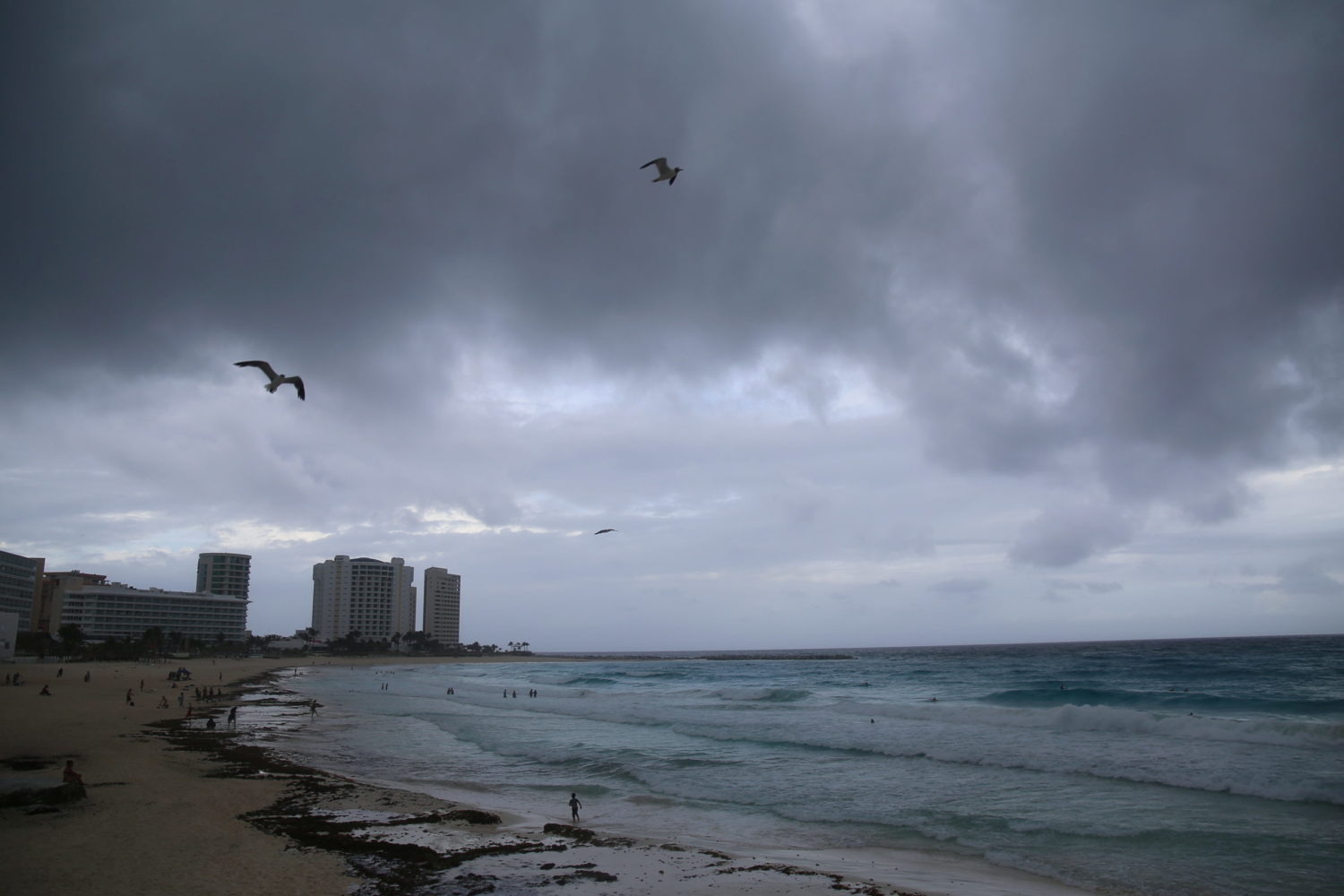
Storm Grace pounds Mexico’s Caribbean coast with heavy rain

MEXICO CITY (Reuters) -Hurricane Grace weakened into a tropical storm after passing the Mexican beach resort of Tulum on Thursday, but was expected to regain strength again and cause flooding as it churns across the country’s southeast.

The storm made landfall on the Yucatan peninsula early Thursday as a Category 1 hurricane. Social media images showed downed street signs and palm trees flailing in the wind near Tulum and authorities reported some floods, power outages and toppled trees.

Grace was now heading west and was expected to hit the coast of Veracruz state as a hurricane late on Friday, the Miami-based National Hurricane Center (NHC) said. There were warnings of hurricane conditions and dangerous storm surge.

The NHC said Grace would dump 4-8 inches (10-20 cm) of rain over the Yucatan peninsula through Friday, and up to 12 inches in some areas. The heavy rainfall would likely cause areas of flash and urban flooding, it added.

Mexican officials said preparations had been made for the hurricane’s arrival, with dozens of military and rescue workers as well as staff from the national power utility, the Comision Federal Electricidad, gearing up to help.

“We’re ready,” Laura Velazquez, head of Mexico’s civil protection authority, told a regular news conference standing alongside President Andres Manuel Lopez Obrador.

Velazquez said the states of Quintana Roo, Campeche, Yucatan and Tabasco were likely to receive heavy rainfall.

Grace unleashed downpours and flooding over Haiti and Jamaica earlier this week. By Thursday morning it was about 85 miles west of Tulum, with top sustained winds of 65 mph (100 kph) the NHC said. The storm was moving west at 18 mph (29 kph).

(Reporting by Dave Graham, Daina Beth Solomon and Diego OreEditing by Mark Porter and Frances Kerry)

Afghan protests spread to Kabul in early challenge to Taliban

KABUL (Reuters) – Protests against the Taliban’s takeover in Afghanistan spread to more cities on Thursday, including the capital Kabul, and a witness said several people were killed when the militants fired on a crowd in Asadabad in the eastern province of Kunar.

“Our flag, our identity,” a crowd of men and women waving black, red and green national flags shouted in Kabul, a video posted on social media showed, on the day Afghanistan celebrates independence from British control in 1919.

A witness reported gunshots near the rally, but they appeared to be Taliban firing into the air.

Marchers chanted “God is greatest.” At some protests elsewhere, media have reported people tearing down the white flag of the Taliban.

A Taliban spokesman was not immediately available for comment.

Some demonstrations are small, but combined with a scramble by thousands of people to flee the country via Kabul airport they underline the challenge the Taliban will face to govern.

The Islamist movement conquered Afghanistan at lightning speed as foreign troops withdrew, surprising even its leaders and leaving them to fill power vacuums in many places.

Since seizing Kabul on Sunday, the Taliban have presented a more moderate face, saying they want peace, will not take revenge against old enemies and will respect the rights of women within the framework of Islamic law.

During their previous rule from 1996-2001, they severely restricted women’s rights, staged public executions and blew up ancient Buddhist statues.

In Asadabad, several people were killed during a rally, but it was unclear if the casualties resulted from Taliban firing or from a stampede that it triggered.

“Hundreds of people came out on the streets,” witness Mohammed Salim said. “At first I was scared and didn’t want to go but when I saw one of my neighbors joined in, I took out the flag I have at home.

“Several people were killed and injured in the stampede and firing by the Taliban.”

Protests flared in the city of Jalalabad and a district of Paktia province, also both in the east.

On Wednesday, Taliban fighters fired at protesters waving flags in Jalalabad, killing three, witnesses and media reported.

“Salute those who carry the national flag and thus stand for dignity of the nation,” First Vice President Amrullah Saleh, who is trying to rally opposition to the Taliban, said on Twitter.

Saleh said on Tuesday he was the “legitimate caretaker president” in Afghanistan after President Ashraf Ghani fled.

In an op-ed for the Washington Post, Ahmad Massoud, leader of the National Resistance Front of Afghanistan, based in an old anti-Taliban stronghold northeast of Kabul, called for Western support.

“I write from the Panjshir Valley today, ready to follow in my father’s footsteps, with mujahideen fighters who are prepared to once again take on the Taliban,” wrote Massoud, the son of Ahmad Shah Massoud, a veteran guerrilla leader killed by suspected al Qaeda militants in 2001.

Other former Afghan leaders, including ex-president Hamid Karzai, have held talks with the Taliban.

U.S. President Joe Biden said the Taliban must decide if they want international recognition.

“I think they’re going through a sort of existential crisis about: Do they want to be recognized by the international community as being a legitimate government? I’m not sure they do,” Biden said in TV interview.

AIRPORT CHAOS

Kabul has been generally calm, but 12 people have been killed in and around the airport amid chaotic scenes, a NATO and a Taliban official said. The deaths were caused either by gun shots or stampedes, according to the Taliban official.

In one incident captured on social media, a small girl was hoisted over the airport’s high perimeter wall and handed to a U.S. soldier, underlining the desperation many people feel.

Gunmen fired into the air on Thursday at several entrances, scattering crowds including women clutching babies. It was not clear if the men firing were Taliban or security staff helping U.S. forces inside the airport.

The Taliban are “keeping their word” by providing foreign powers with support in evacuating their nationals, a Taliban official said.

“We are facilitating safe exit passage not just for foreigners but also to Afghans,” the official told Reuters.

U.N. agencies and international aid groups appealed for $800 million more in humanitarian funding.

About 8,000 people have been flown out of Kabul since Sunday, a Western security official said.

Under a pact negotiated by former President Donald Trump’s administration, the United States agreed to withdraw its forces in exchange for a Taliban guarantee they would not let Afghanistan be used to launch terrorist attacks.

The Taliban also agreed not to attack foreign forces as they leave.

Biden said U.S. forces would remain until all Americans were evacuated, even if that meant staying past an Aug. 31 U.S. deadline for withdrawal.

(Reporting by Kabul and Washington newsrooms; Writing by Lincoln Feast and Robert Birsel; Editing by Simon Cameron-Moore, Jane Merriman, Nick Macfie, Mike Collett-White and Catherine Evans)

Planes, guns, night-vision goggles: The Taliban’s new U.S.-made war chest

By Idrees Ali, Patricia Zengerle and Jonathan Landay

WASHINGTON (Reuters) – About a month ago, Afghanistan’s ministry of defense posted on social media photographs of seven brand new helicopters arriving in Kabul delivered by the United States.

“They’ll continue to see a steady drumbeat of that kind of support, going forward,” U.S. Defense Secretary Lloyd Austin told reporters a few days later at the Pentagon.

In a matter of weeks, however, the Taliban had seized most of the country, as well as any weapons and equipment left behind by fleeing Afghan forces.

Video showed the advancing insurgents inspecting long lines of vehicles and opening crates of new firearms, communications gear and even military drones.

“Everything that hasn’t been destroyed is the Taliban’s now,” one U.S. official, speaking on the condition of anonymity, told Reuters.

Current and former U.S. officials say there is concern those weapons could be used to kill civilians, be seized by other militant groups such as Islamic State to attack U.S.-interests in the region, or even potentially be handed over to adversaries including China and Russia.

President Joe Biden’s administration is so concerned about the weapons that it is considering a number of options to pursue.

The officials said launching airstrikes against the larger equipment, such as helicopters, has not been ruled out, but there is concern that would antagonize the Taliban at a time the United States’ main goal is evacuating people.

Another official said that while there are no definitive numbers yet, the current intelligence assessment was that the Taliban are believed to control more than 2,000 armored vehicles, including U.S. Humvees, and up to 40 aircraft potentially including UH-60 Black Hawks, scout attack helicopters, and ScanEagle military drones.

“We have already seen Taliban fighters armed with U.S.-made weapons they seized from the Afghan forces. This poses a significant threat to the United States and our allies,” Representative Michael McCaul, the top Republican on the U.S. House of Representatives Foreign Affairs Committee, told Reuters in an email.

‘MORE LIKE TROPHIES’

The speed with which the Taliban swept across Afghanistan is reminiscent of Islamic State militants taking weapons from U.S.-supplied Iraqi forces who offered little resistance in 2014.

Between 2002 and 2017, the United States gave the Afghan military an estimated $28 billion in weaponry, including guns, rockets, night-vision goggles and even small drones for intelligence gathering.

But aircraft like the Blackhawk helicopters have been the most visible sign of U.S. military assistance, and were supposed to be the Afghan military’ biggest advantage over the Taliban.

Between 2003 and 2016 the United States provided Afghan forces with 208 aircraft, according to the U.S. Government Accountability Office (GAO).

In the last week, many of those aircraft were most useful for Afghan pilots to escape the Taliban.

One of the U.S. officials said that between 40 and 50 aircraft had been flown to Uzbekistan by Afghan pilots seeking refuge. Even before taking power in Kabul over the weekend, the Taliban had started a campaign of assassinating pilots https://www.reuters.com/world/asia-pacific/afghan-pilots-assassinated-by-taliban-us-withdraws-2021-07-09.

Some planes were in the United States for maintenance and will stay. Those en route to Afghan forces will instead be used by the U.S. military to help in the evacuation from Kabul.

Current and former officials say that while they are concerned about the Taliban having access to the helicopters, the aircraft require frequent maintenance and many are complicated to fly without extensive training.

“Ironically, the fact that our equipment breaks down so often is a life-saver here,” a third official said.

Retired U.S. Army General Joseph Votel, who oversaw U.S. military operations in Afghanistan as head of U.S. Central Command from 2016 to 2019, said most of the high-end hardware captured by the Taliban, including the aircraft, was not equipped with sensitive U.S. technology.

“In some cases, some of these will be more like trophies,” Votel said.

FIGHTING AT NIGHT

There is a more immediate concern about some of the easier- to-use weapons and equipment, such as night-vision goggles.

Since 2003 the United States has provided Afghan forces with at least 600,000 infantry weapons including M16 assault rifles, 162,000 pieces of communication equipment, and 16,000 night-vision goggle devices.

“The ability to operate at night is a real game-changer,” one congressional aide told Reuters.

Votel and others said smalls arms seized by the insurgents such as machine guns, mortars, as well as artillery pieces including howitzers, could give the Taliban an advantage against any resistance that could surface in historic anti-Taliban strongholds such as the Panjshir Valley northeast of Kabul.

U.S. officials said the expectation was that most of the weapons would be used by the Taliban themselves, but it was far too early to tell what they planned to do – including possibly sharing the equipment with rival states such as China.

Andrew Small, a Chinese foreign policy expert at the German Marshall Fund of the United States, said the Taliban was likely to grant Beijing access to any U.S. weapons they may now have control over.

One of the U.S. officials said it was not likely China would gain much, because Beijing likely already has access to the weapons and equipment.

The situation, experts say, shows the United States needs a better way to monitor equipment it gives to allies. It could have done much more to ensure those supplies to Afghan forces were closely monitored and inventoried, said Justine Fleischner of UK-based Conflict Armament Research.

“But the time has passed for these efforts to have any impact in Afghanistan,” Fleischner said.

(Reporting by Idrees Ali, Patricia Zengerle and Jonathan Landay; Additional reporting by Michael Martina; Editing by Mary Milliken and Daniel Wallis)

Factbox-Evacuations from Afghanistan by country

(Reuters) – The United States and other Western powers are pressing on with the evacuation from Afghanistan of their nationals and some of their Afghan staff from Kabul airport, from where about 8,000 people have been flown out since Sunday, a Western security official said.

Thousands of people have desperately tried to get past Taliban roadblocks and U.S. troops to reach the airport. On Thursday the Taliban urged crowds of Afghans waiting outside it to return home, saying they did not want to hurt anyone, a day after firing at protesters and killing three.

EUROPEAN UNION

The European Union’s foreign policy chief Josep Borrell said on Thursday about 100 EU staff and 400 Afghans working with the EU and their families had been evacuated, but that 300 more Afghans were still trying to leave.

UNITED KINGDOM

Britain is unable to evacuate unaccompanied children from Afghanistan, Defense Secretary Ben Wallace said on Thursday when asked about footage of a young child being handed over a wall to Western soldiers at Kabul airport.

Britain’s ambassador said his team had evacuated about 700 people on Tuesday and hoped to scale up the operation in coming days.

A spokeswoman for Britain’s foreign ministry said that since Sunday, approximately 1,200 people had left Kabul on flights for the United Kingdom.

UNITED STATES

U.S. Deputy Secretary of State Wendy Sherman said on Wednesday that in the previous 24 hours U.S. military flights had evacuated approximately 2,000 more people.

The Pentagon is aiming to evacuate up to 22,000 Special Immigrant Visa (SIV) applicants, their families and other at-risk people.

U.S. Defense Secretary Lloyd Austin said there were about 4,500 U.S. military personnel in Kabul and there “have been no hostile interactions with the Taliban and our lines of communication with Taliban commanders remain open.”

AUSTRALIA

Prime Minister Scott Morrison, facing criticism over plans to evacuate citizens and some Afghans from Kabul, said on Thursday that bad weather in the coming days may delay rescue flights.

Australia has evacuated 26 people on one flight from Afghanistan, and Morrison said a further 76 were transported out of Kabul late on Thursday on a British plane.

GERMANY

Germany has evacuated some 500 people from Afghanistan since Sunday, Foreign Minister Heiko Maas said on Wednesday, adding that a fifth of the rescued people were Afghan nationals.

FRANCE

Twenty-five French nationals and 184 Afghans were evacuated from Afghanistan overnight, French Foreign Affairs Minister Jean-Yves Le Drian said on Wednesday.

SPAIN

Spain plans to airlift around 500 people including Spanish embassy staff and Afghans who worked with them and their families from Kabul, radio station Cadena SER said on Wednesday, citing sources close to the evacuation.

NETHERLANDS

The Netherlands said it got 35 of its citizens and 20 other foreign nationals out of Afghanistan on Wednesday, in a slow start to its evacuation operation amid chaos outside Kabul airport.

A flight, which included 16 Belgians, two Germans and two British passport holders landed in Amsterdam late on Wednesday, the Foreign Ministry said on Twitter. It added that brought the total number of Dutch nationals evacuated to 50.

CZECH REPUBLIC

Czech Prime Minister Andrej Babis said on Thursday his country’s rescue operation to evacuate Czechs and Afghans who worked for the Czech embassy or as interpreters had ended. The country sent three flights to Kabul since Sunday, evacuating Czech citizens, as well as 170 Afghans.

DENMARK

Denmark’s prime minister said 84 people were evacuated on Wednesday from Afghanistan on a military plane.

HUNGARY

Hungary said on Wednesday it had organized the evacuation of a group of 26 Hungarian nationals working as contractors from Afghanistan and they would return to Hungary shortly on a flight organised by another country.

POLAND

Poland has evacuated around 50 people from Afghanistan, a deputy foreign minister said on Wednesday, a day after Poland said it had around 100 people on an evacuation list.

JAPAN

Japan is in close contact with a “small number” of its nationals still in Afghanistan, seeking to ensure their safety after Taliban militants took over Kabul, the government’s top spokesman said on Wednesday.

Japan has closed its embassy and evacuated the last 12 personnel, officials said this week.

CANADA

Canada plans to resume military flights to Afghanistan to evacuate civilians as the United States regains control of the Kabul airport, the Canadian Armed Forces (CAF) said late on Tuesday.

INDIA

An Indian air force plane evacuated over 170 people from Kabul on Tuesday, including India’s ambassador to Afghanistan, a government official said.

TURKEY

President Tayyip Erdogan said Turkey has evacuated 552 citizens from Afghanistan so far, including around 200 people flown from Kabul to Islamabad by a military plane on Wednesday. A Turkish Airlines plane was scheduled to bring them to Istanbul from Islamabad later the same day.

SWITZERLAND

The Swiss government said it was working to evacuate 230 local aid agency workers and their families from Afghanistan and bring them to Switzerland.

Around 40 local employees who worked for the Swiss Development Agency in Kabul and their families will be allowed into Switzerland in a humanitarian operation, the government said.

(Compiled by Catherine Evans and Hugh Lawson; Editing by Matthew Lewis)

‘Painful days ahead’ as Haitians struggle to count lives lost in quake

By Laura Gottesdiener

CAVAILLON, Haiti (Reuters) -Haitian officials slowly tallied the dead and disappeared in remote villages on Thursday, after the toll from last weekend’s devastating earthquake passed 2,000 and Prime Minister Ariel Henry warned the Caribbean nation faced painful times ahead.

In the small town of Cavaillon, local officials huddled over pieces of paper where they recorded the number of damaged houses, schools and churches in each of the surrounding villages, along with the number of dead and missing.

“We think there are still bodies in the ruins because we can smell them from underneath the rubble,” said Jean Mary Naissant, one of the officials of Cavaillon, which is near the southern city of Les Cayes, one of the areas worst hit by the earthquake.

Haiti’s civil protection agency said late on Wednesday the death toll from Saturday’s powerful 7.2 magnitude earthquake had risen to 2,189, with most of the fatalities in the country’s south, and that the number of wounded stood at 12,200.

Les Cayes residents were jolted from their beds by a fresh aftershock overnight, but there were no immediate reports of damage, a police officer said. Families slept on mattresses on the streets across the city, nervous about the state of buildings.

The poorest country in the Americas, Haiti is still recovering from a 2010 quake that killed over 200,000. The latest disaster struck just weeks after President Jovenel Moise was assassinated on July 7, plunging the nation of 11 million people into political turmoil.

According to the tallies for Cavaillon and the small villages that belong to it, there were 53 fatalities and more than 2,700 wounded in the area. But there were still 21 people unaccounted for six days after the quake, local officials said.

Residents had staged a protest on Monday to demand more assistance to dig out the collapsed buildings, Naissant said, but government help had yet to arrive from the capital, some 180 km (110 miles) to the east.

A village market and hotel nearby were bustling with people when the quake struck on Saturday morning, reducing the area to a great heap of shattered cement and twisted iron rods.

Residents had managed to recover two bodies from the site, said Jimmy Amazan, another local official, but the stench that emanated from underneath the pile during the rescue efforts suggested there were more that were beyond reach.

Prime Minister Henry said late on Wednesday the whole country was physically and mentally devastated.

“Our hearts are tearing apart; some of our compatriots are still under the rubble,” he said, appealing for the troubled nation to come together at a time of crisis. “The days ahead will be difficult and often painful.”

In Boileau, a farming village about a 20 minutes’ drive from Cavaillon, residents said that officials had not arrived yet to document the victims or destroyed buildings, leaving them to wonder whether the damage there was part of the official record.

Renette Petithomme, a police officer, stood in the grass outside her partially collapsed home with her toddler daughter.

She was worried: her father had departed earlier in the day for the capital Port-au-Prince to seek medical care for the head wound he sustained when the home’s walls fell in, but the public bus had broken down en route.

“Since the earthquake, he’s been losing his senses, having trouble speaking and walking,” she said, adding that the family finally decided to send him to the capital for treatment after learning that all the nearby hospitals were full.

Several days since the earthquake, scant aid has arrived in remote areas across the country’s south, according to residents and Reuters witnesses.

In Camp-Perrin, another rural town inland from Les Cayes, more than 100 displaced people, including children and disabled residents, were camped out in a field under the cover of trees after their homes were destroyed by the quake.

A mudslide from two nights of heavy rain earlier this week had partly blocked the main road leading to the area. Any more precipitation could lead to it being impassable, locals said.

(Reporting by Laura Gottesdiener in Cavaillon and Gessika Thomas in Port-au-Prince Additional reporting by Henry Romero in Camp-Perrin; Editing by Ana Nicolaci da Costa and Nick Zieminski)