Culture war on education rages in Virginia governor’s race

By James Oliphant, Gabriella Borter and Joseph Ax

McLEAN, Virginia (Reuters) -Suparna Dutta, an Indian immigrant, is incensed that new admissions standards aimed at boosting Black and Latino enrollment at her son’s Alexandria, Virginia high school have resulted in fewer Asian Americans being admitted.

Across town, Marie Murphy, a white mother of an 8th grader, is alarmed by anti-racism discussions at her son’s school, which she believes force white children to feel bad about their race.

In the upcoming election for Virginia governor in November, both women say they will vote for Republican candidate Glenn Youngkin, betting he will fight what they claim is a dangerous leftward drift in the state’s public education system. Classroom instruction about race has emerged as a flashpoint in the contest – and a potential harbinger of what’s in store for 2022 nationwide elections to decide control of Congress.

“I don’t want my child to be taught that race is an issue,” Murphy said.

Women are central to the Republican Party’s national strategy to win in the suburbs, where it has lost considerable ground to Democrats in recent years. Gearing up for 2022, Republicans have been test-driving a variety of messages. Pro-gun, anti-abortion, anti-transgender planks aren’t big draws for suburban voters. Neither is Republican criticism of COVID-19 restrictions and vaccines.

But public schools are a huge deal for suburban parents, many of whom moved to quality school districts to give their kids a leg up. Hoping to persuade these voters, Republicans across the country have mounted a campaign against so-called critical race theory or CRT, an academic construct that emerged in the 1970s to examine how U.S. law and institutions have perpetuated racial inequality.

Some Republican politicians and conservative groups have seized on the term to attack all manner of speech and academic policy related to race, denouncing concepts such as “social justice” and “white privilege” as a Democratic-led effort to indoctrinate children into turning against their country. One Alabama lawmaker claimed falsely that CRT called for white men to be sent to re-education camps.

In recent months, states such as Oklahoma and Texas have passed laws to restrict what can be taught in public schools about America’s troubled legacy of race relations.

School districts in Virginia and elsewhere insist they are not teaching CRT. They say critics are misconstruing their efforts to teach America’s history of slavery and civil rights, celebrate diversity, train teachers and promote better outcomes for students of color. Still, angry parents have packed school board meetings here and nationwide to demand that CRT be scrubbed from the curriculum.

For now, it remains unclear whether Republicans’ strategy will succeed in clawing back suburban and independent voters or will simply appeal to the party’s conservative base.

But in Virginia, Youngkin is betting the controversy will propel his candidacy. The former private equity executive recently announced his education plan in suburban Loudoun County, whose school system has been roiled https://www.reuters.com/world/us/partisan-war-over-teaching-history-racism-stokes-tensions-us-schools-2021-06-23 by some of the country’s most virulent anti-CRT protests. He has pledged to replace the state Board of Education and has accused Democrats of lowering the state’s academic standards.

“We have to press forward with having a curriculum that teaches our children how to think, not what to think. We will not allow critical race theory in our schools,” Youngkin said at a campaign event for women supporters last week in McLean, a wealthy Virginia suburb. Attendees erupted in applause.

Once a reliably Republican state, Virginia has slid firmly into the Democratic column, led by suburban voters. Democrat Joe Biden thumped incumbent Republican Donald Trump here by a 10-point margin in November.

Virginia’s gubernatorial race, coming a year after the presidential election, historically has served as a barometer of the public’s mood. It also provides a preview of arguments Democrats and Republicans are likely to make in next year’s midterm elections.

With the U.S. economy recovering, Republican candidates may resort to fighting a culture war, said Bob Holsworth, a longtime Virginia political analyst. He said education issues could resonate with suburban and Asian voters who left the party under Trump over his flame-throwing style of politics.

“If the Democrats have an Achilles’ heel, it might be that,” Holsworth said.

Youngkin’s Democratic opponent, former governor Terry McAuliffe, said Youngkin is emulating Trump with a campaign aimed at spreading disinformation and stoking grievance.

“What he’s doing is dividing us,” McAuliffe told Reuters.

McAuliffe has released an education plan that includes raising teacher pay and eliminating racial disparities in achievement, among other things.

Youngkin’s spokesperson, Macauley Porter, said McAuliffe “mocks parents’ concerns instead of offering them solutions.”

McAuliffe, who held the office from 2014 to 2018 and is running for a second term, is favored by analysts to win the election. But a poll conducted by the Trafalgar Group this month gave him just a 2-point lead, suggesting a close race.

Underscoring the importance of the race to Democrats, Biden is scheduled to campaign with McAuliffe on Friday – more than three months before Election Day.

‘DEHUMANIZING’

Last week, some of the women who attended Youngkin’s campaign event in McLean singled out education as their most important issue.

Claudia Stine, an immigrant from El Salvador whose children attended local public schools in Fairfax County, said CRT is “dehumanizing” because she says it “defines people by their skin color and teaches kids to resent and disrespect each other for it.”

While school systems across Virginia have denied criticisms that they teach CRT, state leaders have pushed to promote racial equity in public education. In February, the Democratic-led general assembly passed a law requiring “cultural competency” to be part of teacher evaluations.

Some parents approve. Theresa Kennedy, a mother of two sons in Richmond who works in finance and supports McAuliffe, believes schools should teach more about systemic racism in America.

“It’s hard to see your kids wrestle with stuff, but that’s also how they become full adults,” Kennedy said.

The issue has spilled out of the governor’s race to other contests as part of what Republican officials say is their overall strategy for the congressional midterms.

“House Democrats who embrace Critical Race Theory are doing so at their own peril and will have to answer for it in 2022,” said Samantha Bullock, a spokeswoman for the National Republican Congressional Committee, the arm of the party that oversees U.S. House of Representatives races. Last week, Republican Taylor Keeney jumped into the race against Democratic U.S. Representative Abigail Spanberger, who represents a Virginia district outside of Richmond, considered to be a major battleground in next year’s elections.

One of Keeney’s battle cries: Schools should be “for education, not indoctrination.”

ASIAN-AMERICAN VOTE

Some are dubious the CRT flap will help Republicans conquer the suburbs because the controversy so far has resonated mostly with the party’s most fervent supporters. Whit Ayres, a veteran Republican strategist in Virginia, predicts its biggest achievement may be to fire up the base in a typically low-turnout, off-year election.

But for Virginians like Dutta, race in the classroom is the single issue now guiding their votes.

Dutta said she built a career in technology after arriving in the United States in 1993 to attend college with just a few hundred dollars in her pocket, and has largely avoided politics. That changed after her son’s top-ranked school, Thomas Jefferson High School for Science and Technology, last year eliminated standardized admission tests and adopted a “holistic review” process that considers socioeconomic factors as well as grade point average.

The incoming class, announced in May, saw the proportion of Asian-American students drop to 54% from 73% with corresponding increases in the numbers of Black, Hispanic and white students.

Dutta argues the changes have lowered academic standards and amount to targeted discrimination against Asians. The Fairfax County school system refutes that, saying admission remains race-blind and that there has been no impact on the school’s academic standing.

Dutta now chairs an education support group for Youngkin, tasked with seeking out like-minded parents. “Asians typically vote for Democrats, but it won’t be that way this year,” she said.

Fairfax County alone is home to more than 200,000 Asian Americans, the most of any county in Virginia. Asian Americans make up around 8% of the electorate statewide.

Nationwide, Asian-American and Pacific Islander voters supported Biden over Trump by at least a 2-to-1 margin, pre-election surveys and exit polls showed.

Christine Chen, executive director of the nonprofit Asian and Pacific Islander American Vote, said studies by her organization have shown that a majority of Asian Americans support affirmative-action policies to help disadvantaged minorities.

And after a wave of anti-Asian violence over the past year, Chen said they also likely recognize the value of incorporating diverse viewpoints into education, including the Asian-American experience — exactly the type of efforts that some Republicans have decried as CRT.

(Reporting by James Oliphant in Arlington, Virginia; Gabriella Borter in McLean, Virginia; and Joseph Ax in Princeton, New Jersey. Editing by Soyoung Kim, Colleen Jenkins and Marla Dickerson)

Biden administration releases COVID funds to boost local economies

WASHINGTON (Reuters) -The Biden administration on Thursday released $3 billion in COVID-19 rescue funds aimed at helping localities bolster their economies in the wake of the pandemic, calling on communities to seek funding for a range of revitalization projects.

The funding, authorized by the $1.9 trillion American Rescue Plan Act, is part of President Joe Biden’s “Build Back Better” agenda to rebuild the nation after the novel coronavirus triggered widespread shutdowns and led to more than 600,000 U.S. deaths so far. The Democrat-backed bill was passed in March.

New funding will be available to communities nationwide through six programs run through the Department of Commerce targeting jobs, for instance, in tourism, the agency said in a statement.

“This investment will ensure that they have the resources to recover from the pandemic and will help create new jobs and opportunities, including through the development or expansion of a new industry sector,” the Commerce Department said.

Commerce Secretary Gina Raimondo told reporters the initiative could create as many as 300,000 jobs “in the near term.”

Of the total funding, $1 billion will be allocated for up to 30 localities that apply for money for up to eight community projects such as building infrastructure or training workers, it said.

There is also $100 million “specifically for Indigenous communities, which were disproportionately impacted by the pandemic,” the department added.

State and local governments, universities and colleges, nonprofit organizations, unions and tribes may apply for the funds, which must be awarded by September 2022, the Commerce Department said. For-profit companies and individuals are excluded.

Some $300 million in funding will also be set aside to aid hard-hit communities dependent on coal and other energy-sector work.

(Reporting by Susan Heavey; Additional reporting by Jeff Mason and Trevor Hunnicutt; Editing by Steve Orlofsky and Leslie Adler)

U.S. sanctions Cuban security minister, special forces unit over protest crackdown

By Matt Spetalnick and Daphne Psaledakis

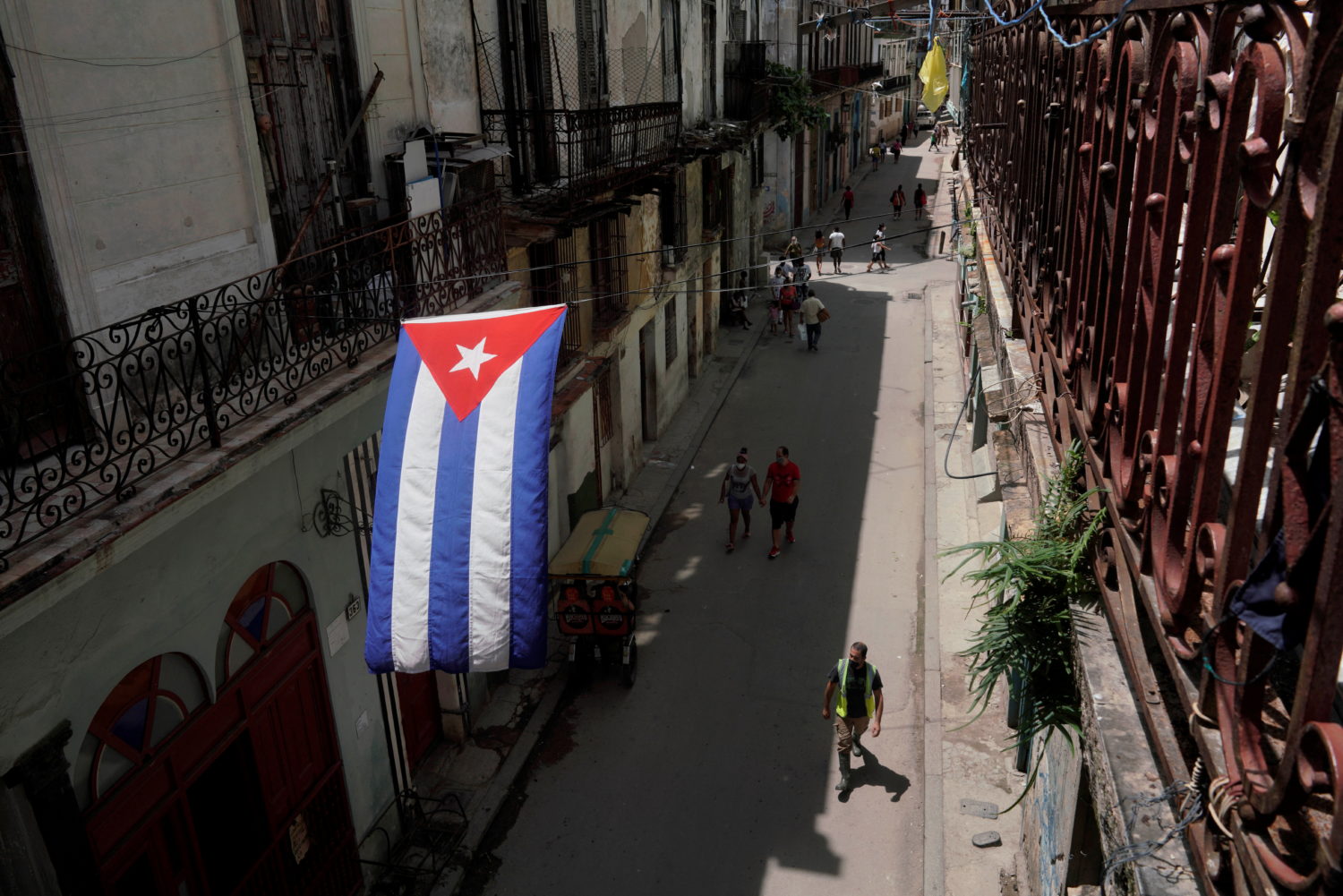
WASHINGTON (Reuters) -The United States on Thursday imposed sanctions on a Cuban security minister and an interior ministry special forces unit for alleged human rights abuses in a crackdown on anti-government protests earlier this month.

The move marked the first concrete steps by President Joe Biden’s administration to apply pressure on Cuba’s Communist government as it faces calls from U.S. lawmakers and the Cuban-American community to show greater support for the biggest protests to hit the island in decades.

The speed with which the administration has crafted new sanctions further signals Biden is highly unlikely to soften the U.S. approach to Cuba any time soon after his predecessor, Donald Trump, rolled back a historic Obama-era détente with Havana.

“This is just the beginning,” Biden said in a statement, expressing condemnation for “mass detentions and sham trials.”

“The United States will continue to sanction individuals responsible for oppression of the Cuban people,” he said.

Cuban Foreign Minister Bruno Rodriguez, in a message on Twitter, rejected the sanctions as “unfounded and slanderous” and urged the United States to apply such measures to its own record of “daily repression and policy brutality.”

The Treasury Department said the sanctions had been placed on an entire Interior Ministry security unit and on General Alvaro Lopez Miera, minister of the Revolutionary Armed Forces, describing him as leader of an entity “whose members have engaged in serious human rights abuse.”

Thousands of Cubans staged protests a week ago to demonstrate against an economic crisis that has brought shortages of basic goods and power outages. They were also protesting the government’s handling of the coronavirus pandemic and curbs on civil liberties. Hundreds of activists were detained.

Biden had promised during the 2020 campaign to reverse some of Trump’s Cuba policies, but Thursday’s announcement suggests little appetite for a return to rapprochement.

At the same time, the administration is still seeking ways to ease the humanitarian plight of the Cuban people.

The White House said on Tuesday that Biden would form a working group to examine remittances to Cuba in the wake of the protests. The aim is to determine how Cuban-Americans can send money to families on the island while keeping the funds out of the hands of the Cuban government.

Trump had imposed tight restrictions on remittances, which are believed to have previously amounted to several billions of dollars annually.

The White House, in a statement, cautioned that the remittances issue was complex and “requires a measured and thoughtful approach in coordination with experts.”

Biden reiterated on Thursday that his administration is looking for ways to help ordinary Cubans regain internet access after Havana restricted access to social media and messaging platforms including Facebook and WhatsApp.

“We will work closely with our partners throughout the region, including the Organization of American States, to pressure the regime,” Biden said.

The Cuban government has blamed the protests mostly on what it calls U.S.-financed “counter-revolutionaries” exploiting economic hardship caused by U.S. sanctions.

GLOBAL MAGNITSKY SANCTIONS

The sanctions were imposed under the Global Magnitsky Act, used to punish human rights violators with U.S. asset freezes and bans on travel to the United States.

But U.S. officials have acknowledged that Cuban officials rarely have U.S. financial dealings and seldom travel to the United States, limiting the practical impact of such measures.

The unrest appears to have injected a new sense of urgency into Biden’s broad Cuba policy review, which began shortly after he took office in January. Until now, Cuba had not been treated as a top agenda item while the administration dealt with the economic recovery and coronavirus pandemic at home and challenges such as China, Russia and Iran abroad.

Cuba, a State Department official told Reuters, is now a “top priority.”

Analysts say conciliatory moves are unlikely in the near term. Complicating matters was Biden’s poorer-than-expected showing with voters in south Florida’s anti-communist Cuban-American community, which backed Trump’s tough policies toward Havana and Caracas and helped him win the battleground state.

Many analysts say Biden may have to tread carefully on Cuba policy ahead of the 2022 congressional elections.

(Reporting By Matt Spetalnick and Daphne Psaledakis, additional reporting by Jarrett Renshaw and Doina Chiacu in Washington and Sarah Marsh and Marc Frank in Havana; Editing by Dan Grebler, Cynthia Osterman and Sonya Hepinstall)

China rejects WHO plan for study of COVID-19 origin

By Gabriel Crossley

BEIJING (Reuters) -China rejected on Thursday a World Health Organization (WHO) plan for a second phase of an investigation into the origin of the coronavirus, which includes the hypothesis it could have escaped from a Chinese laboratory, a top health official said.

The WHO this month proposed a second phase of studies into the origins of the coronavirus in China, including audits of laboratories and markets in the city of Wuhan, calling for transparency from authorities.

“We will not accept such an origins-tracing plan as it, in some aspects, disregards common sense and defies science,” Zeng Yixin, vice minister of the National Health Commission (NHC), told reporters.

Zeng said he was taken aback when he first read the WHO plan because it lists the hypothesis that a Chinese violation of laboratory protocols had caused the virus to leak during research.

The head of the WHO said earlier in July that investigations into the origins of the COVID-19 pandemic in China were being hampered by the lack of raw data on the first days of spread there.

Zeng reiterated China’s position that some data could not be completely shared due to privacy concerns.

“We hope the WHO would seriously review the considerations and suggestions made by Chinese experts and truly treat the origin tracing of the COVID-19 virus as a scientific matter, and get rid of political interference,” Zeng said.

China opposed politicizing the study, he said.

The origin of the virus remains contested among experts.

The first known cases emerged in the central Chinese city of Wuhan in December 2019. The virus was believed to have jumped to humans from animals being sold for food at a city market.

In May, U.S. President Joe Biden ordered aides to find answers to questions over the origin, saying that U.S. intelligence agencies were pursuing rival theories potentially including the possibility of a laboratory accident in China.

White House press secretary Jen Psaki said on Thursday that the Biden administration is “deeply disappointed” in China’s decision and told reporters that “their position is irresponsible and, frankly, dangerous.”

Zeng, along with other officials and Chinese experts at the news conference, urged the WHO to expand origin-tracing efforts beyond China to other countries.

“We believe a lab leak is extremely unlikely and it is not necessary to invest more energy and efforts in this regard,” said Liang Wannian, the Chinese team leader on the WHO joint expert team. More animal studies should be conducted, in particular in countries with bat populations, he said.

However, Liang said the lab leak hypothesis could not be entirely discounted but suggested that if evidence warranted, other countries could look into the possibility it leaked from their labs.

One key part of the lab leak theory has centered on the Wuhan Institute of Virology’s (WIV) decision to take offline its gene sequence and sample databases in 2019.

When asked about this decision, Yuan Zhiming, professor at WIV and the director of its National Biosafety Laboratory, told reporters that at present the databases were only shared internally due to cyber attack concerns.

(Reporting by Gabriel Crossley and Stella Qiu; Additional reporting by Jeff Mason and Trevor Hunnicutt in Washington; Editing by Shri Navaratnam, Robert Birsel, Ana Nicolaci da Costa and Steve Orlofsky)

Colombia arrests 10 over bombing, shooting of president’s helicopter

By Oliver Griffin

BOGOTA (Reuters) – Colombia arrested 10 people accused of involvement in attacks on a helicopter carrying President Ivan Duque and a military base last month that officials said on Thursday were planned by former FARC rebel leaders based in Venezuela.

The car bombing at the base in the northeastern city of Cucuta, home to the army’s 30th brigade, wounded 44 people, including two U.S. military advisers. Later in June, a helicopter approaching city with Duque and other officials aboard was strafed by bullets.

The 10 people captured in Norte de Santander province are former FARC rebels who reject a 2016 peace deal, Attorney General Francisco Barbosa said in a press conference broadcast via social media, and belong to the dissidents’ 33rd front.

Three took part in the planning and execution of both attacks and have been detained and charged, while another is a retired army captain, Barbosa said.

Orders to carry out the attacks came from former FARC leaders who are operating from Venezuela, Defense Minister Diego Molano said during the conference.

He said the incidents demonstrated the government of Venezuelan President Nicolas Maduro sheltered FARC dissidents, calling them “terrorists”.

“It’s clear that this attack against the president, against the 30th brigade, was planned from Venezuela,” Molano said.

The Venezuelan government did not immediately respond to a request for comment.

Colombia’s government has long accused Maduro of turning a blind eye to the presence of Colombian rebels on his country’s territory. Maduro, in turn, has said Venezuela is a victim of criminals from Colombia.

(Reporting by Oliver Griffin in Bogota; Additional reporting by Vivian Sequera in Caracas; Editing by Joe Bavier)

UK should be concerned at Chinese gene data harvesting, lawmaker says

By Alistair Smout

LONDON (Reuters) -Britain should be concerned about the harvesting of genetic data from millions of women by a Chinese company through prenatal tests, a senior British lawmaker told Reuters.

A Reuters review of scientific papers and company statements found that BGI Group developed the tests in collaboration with the Chinese military and is using them to collect genetic data around the world for research on the traits of populations.

“I’m always concerned when data leaves the United Kingdom, that it should be treated with the respect and privacy that we would expect here at home, and the concern that this raises is that it may not be so,” Tom Tugendhat, chairman of the British parliament’s Foreign Affairs Select Committee, told Reuters.

“The connections between Chinese genomics firms and the Chinese military do not align with what we would normally expect in the United Kingdom or indeed many other countries.”

The privacy policy on the website for the Non-Invasive Prenatal Test (NIPT), sold under the brand name NIFTY in Britain, says data collected can be shared when it is “directly relevant to national security or national defense security” in China.

BGI says it has never shared data for national security purposes and has never been asked to.

The company said that it fully complied with European GDPR data protection rules and also had the British certification for personal information management.

“BGI’s NIPT test was developed solely by BGI – not in partnership with China’s military. All NIPT data collected overseas are stored in BGI’s labs in Hong Kong and are destroyed after five years,” it said in an email to Reuters, adding that it took data protection, privacy and ethics extremely seriously.

Tugendhat is one of nine British lawmakers who has been sanctioned by China for highlighting alleged human rights abuses in Xinjiang, which Beijing describes as “lies and disinformation.”

He co-leads the China Research Group, a group of Conservative lawmakers which looks to rebalance the strategic relationship with China.

He said that any British companies using the tests should be clear where the data is going, who holds it, and what access others, including other governments, would have to it.

“Unless a company has done that, I think it’s perfectly reasonable for British people to be extremely concerned with these connections,” he said.

(Reporting by Alistair Smout in London, additional reporting by Kirsty Needham in Sydney; Editing by Kate Holton and Pravin Char)

Exclusive-Cyber attack disrupts major South African port operations

By Zandi Shabalala and Tanisha Heiberg

JOHANNESBURG (Reuters) – A cyber attack disrupted container operations at the South African port of Cape Town, an email seen by Reuters on Thursday said.

Durban, the busiest shipping terminal in sub-Saharan Africa, was also affected, three sources with direct knowledge of the matter told Reuters.

Cape Town Harbor Carriers Association said in an email to members, seen by Reuters: “Please note that the port operating systems have been cyber-attacked and there will be no movement of cargo until the system is restored.”

Transnet’s official website was down on Thursday showing an error message.

Transnet, which operates major South African ports, including Durban and Cape Town, and a huge railway network that transports minerals and other commodities for export, confirmed its IT applications were experiencing disruptions and it was identifying the cause.

It declined to comment on whether a cyber attack caused the disruption. The sources, who asked not to be named because they are not authorized to speak to the press, said an attack occurred early on Thursday.

The state-owned company already suffered major disruptions to its ports and national freight rail line last week following days of unrest and violence in parts of the country.

The latest disruption has delayed containers and auto parts, but commodities were mostly be unaffected as they were in a different part of the port, one of the sources said.

It will also create backlogs that could take time to clear.

Transnet said its container terminals were disrupted while its freight rail, pipeline, engineering and property divisions reported normal activity.

Most of the copper and cobalt mined in the Democratic Republic of Congo and Zambia, where miners such as Glencore and Barrick Gold operate, use Durban to ship cargo out of Africa.

(Reporting by Zandi Shabalala and Tanisha Heiberg; additional reporting by Helen Reid, editing by Susan Fenton, Pratima Desai and Barbara Lewis)

U.S. retailers scramble to stock shelves as kids head back to school

By Lisa Baertlein and Joyce Philippe

LOS ANGELES/NEW YORK (Reuters) -At Stationery and Toy World, a family-owned shop in New York’s Upper West Side, manager Gary Rowe is having difficulty getting all the pens and folders he ordered for the important back-to-school season.

His usual vendors have low stocks of Pilot’s erasable FriXion pens and Paper Mate Flair marker pens – and prices are high on stationery and other in-demand school supplies.

And Rowe is not alone, retailers are navigating a storm of challenges – higher production costs, cargo delays from China and other Asian countries, and sky-high shipping rates – as they gear up for the industry’s second-biggest selling season.

“I’m hoping that when everything catches up, we get more stock,” Rowe said at his store packed wall-to-wall with a colorful array of pens and markers. “Business has been really slow.”

After a year of keeping their kids at home, parents are eager for classes to start again.

Stimulus checks and advance child tax credits from U.S. President Joe Biden’s administration are expected to boost sales of back-to-school merchandise, especially shoes and clothing, following last year’s outlays on laptops, headphones and other equipment for remote learning. The National Retail Federation expects total back-to-school spending to rise 6.4% to $108.1 billion this year. Average spending for all age groups is forecast to be $2,049, up 10.8%.

But following retailers’ moves to prune inventories, shoppers may find fewer discounts, smaller markdowns and less merchandise in stores. Retailers “just don’t know how much to stock,” said Stacy DeBroff, founder of marketing data firm Influence Central, which works with retailers such as JCPenney, Dick’s Sporting Goods and Skechers. “There continues to be lingering supply-side issues because manufacturing was done abroad,” DeBroff said. JCPenney, Dick’s Sporting Goods and Skechers declined to comment on inventory.

Some – most likely bigger retailers – will have stored away backpacks and other products from last year that did not sell, said Matt Kramer, KPMG’s consumer and retail national sector leader. “I think they’re being very careful about giving further discounts as their inventory starts to dwindle,” Kramer said.

Macy’s worked to bring in denim clothes, school uniforms and small electronics, Chief Financial Officer Adrian Mitchell said at a recent investor conference. “We believe it’s better to potentially lose a sale due to the lack of supply than to over buy and have markdown merchandise at higher rates,” Mitchell said.

Target started putting backpacks on its sales floors much earlier this year, around the end of May, a month or more earlier than usual, data firm StyleSage said. Target told Reuters the introduction was inline with other years, and that it is working with partners to manage and move inventory faster than ever.

“We’re still moving backpacks and crayons,” said Brett Rose, chief executive officer at United National Consumer Suppliers, a wholesale distributor whose retail clients include Walmart’s Sam’s Club, Amazon and Five Below.

Rose said he is usually finished bringing such products in by May or June – at the latest.

During the second quarter, retailers imported lower volumes of popular back-to-school items compared with the same period in 2019, before the pandemic, according to S&P Global Market Intelligence’s trade data firm Panjiva. For instance, retailers’ imports of backpacks, up 9.8% versus the second quarter of 2020, were 15.2% lower than the same period in 2019, Panjiva said. Imports of kids’ shoes and clothing, up 64.4% versus 2020, were 12.6% below the amount imported during the same period in 2019.

Overall, retailers so far have marked down a smaller proportion of backpacks, and discounts are smaller on average, according to the data firm StyleSage. It sees similar patterns in other clothing categories.

Experts say back-to-school may offer a preview of what to expect at Christmastime as retailers pare offerings to limit risk.

(Reporting by Lisa Baertlein and Joyce Philippe; Additional reporting by Richa Naidu in Chicago; Editing by Lisa Shumaker and Steve Orlofsky)

Factbox-Five ways fraudsters try to claim U.S. unemployment benefits

By Paresh Dave

(Reuters) – The U.S. government’s preliminary “conservative” estimates show improper unemployment benefits payments during the pandemic could exceed $87 billion nationwide.

Here are some of the tactics people with stolen identities have attempted to siphon funds.

MASKS

Twenty-seven states have adopted a system from ID.me requiring applicants to take pictures of themselves and their photo IDs, which are then compared against each other using software from ID.me.

But ID.me says some users have tried to fool the system by wearing costume masks, some with wrinkles, beards or other distinctive features.

PHOTO TRICKS

Carlos Moran, a former ID.me contractor who reviewed applicants for several months, said he saw purported Social Security cards with the wrong fonts, driver’s licenses with expiration dates clearly altered with photo-editing software and photos of applicants that were actually just a screengrab of someone else’s online selfies.

EMAIL MANIUPLATION

To avoid creating hundreds of fake email accounts, fraudsters try to use features of Gmail and Yahoo email systems. Gmail properly directs email regardless of where periods are placed in a Gmail address. A similar issue arises with “+” in Gmail addresses and a “-” in Yahoo addresses. Some fraudsters also use the period trick on physical addresses, aiming to evade systems that detect too many claims from the same location.

PROXY SERVERS

With many states now checking on the location of users’ devices, people have taken to use virtual private networking software to pretend they are applying from an area that would make sense.

FAKE WEBPAGES

Hackers have gone as far as texting or emailing identity theft victims with phishing links, hoping to trick them into taking a selfie or revealing login information for government benefits systems. Some even have created fake job listings to draw information.

(Reporting by Paresh Dave; editing by Edward Tobin)

1.5 million children have lost parents to pandemic; potential brain gateway for virus found

By Nancy Lapid

(Reuters) – The following is a roundup of some of the latest scientific studies on the novel coronavirus and efforts to find treatments and vaccines for COVID-19.

1.5 million children lost parents to COVID-19 so far

During the first 14 months of the pandemic, an estimated 1.5 million children worldwide experienced the death of a parent, custodial grandparent, or other relative who cared for them, as a result of COVID-19, according to a study published in The Lancet on Tuesday. The orphanhood estimates are drawn from mortality data from 21 countries that account for 77% of global COVID-19 deaths and from the United Nations Population Division. “For every two COVID-19 deaths worldwide, one child is left behind to face the death of a parent or caregiver,” Dr. Susan Hillis from the U.S. Centers for Disease Control and Prevention COVID-19 Response Team, who led the study, said in a statement. The number of COVID-19 orphans will increase as the pandemic progresses, she added. There is an urgent need to prioritize these children and “support them for many years into the future,” Hillis said. Said study coauthor Lucie Cluver of Oxford University: “And we need to respond fast because every 12 seconds a child loses their caregiver to COVID-19.”

Potential brain gateway found for coronavirus

Researchers have found a potential route of entry for the coronavirus into the human brain that may help explain the effects of COVID-19 on the brain and nervous system that have plagued many patients. To date there is no evidence that the virus directly infects neurons – the brain cells that receive and send messages to and from the body. In a new study, experimenting with an artificially grown mass of cells created to resemble the brain, researchers found that neurons seemed “impervious” to the coronavirus, said Joseph Gleeson of the University of California, San Diego. But cells called pericytes, which wrap around blood vessels and carry the surface protein the virus uses for entry, proved to be a different story. When researchers added pericytes to their artificial brain and then added the virus, “we found incredibly robust infection,” not just of the pericytes but also of the neurons, Gleeson said. They report in Nature Medicine that the pericytes served as “factories” for the virus, from which it could multiply. The primary targets were astrocytes, which have crucial roles in regulating the brain’s electrical impulses, providing neurons with nutrients, and maintaining the “blood-brain barrier” that shields the brain from foreign substances. The findings, Gleeson said, suggest “pericytes could serve as an entry point for SARS-CoV-2,” which could either lead to local increases in the virus or to inflammation of blood vessels that can cause stroke.

Vaccine boosters not yet needed, researchers say

Two doses of an mRNA vaccine from Pfizer/BioNTech or Moderna are effective at neutralizing the highly contagious Delta variant of the coronavirus that is or will soon be dominant in most places, suggesting immediate booster doses are not likely needed, researchers said. They did not measure the vaccines’ ability to protect against infection in the real world. In their lab experiments using blood samples from vaccinated volunteers, however, Delta’s mutations caused only low reductions in the proportion of antibodies that could neutralize the virus, they said. Mutations in the less prevalent Beta and Gamma variants reduced antibody neutralization capacity more significantly, but not to a point where vaccine recipients would appear to be unprotected, the researchers reported on Sunday in a paper posted on medRxiv ahead of peer review. Vaccine boosters may be needed in the future to help overcome some variants, coauthor Akiko Iwasaki of Yale University said in a tweet on Tuesday. Her team also found that overall, neutralizing antibody levels after vaccination were higher in COVID-19 survivors than in uninfected vaccine recipients. “This is not surprising,” Iwasaki told Reuters, “because infection itself induces immune responses, which were boosted by the two doses of vaccines.”

(Reporting by Nancy Lapid; Editing by Bill Berkrot)