India says new COVID variant is a concern

By Uday Sampath Kumar and Bhargav Acharya

BENGALURU (Reuters) -India on Tuesday declared a new coronavirus variant to be of concern, and said nearly two dozen cases had been detected in three states.

The variant, identified locally as “Delta plus,” was found in 16 cases in the state of Maharashtra, Federal Health Secretary Rajesh Bhushan told a news conference.

The ministry said Delta plus showed increased transmissibility and advised states to increase testing.

On Monday, India vaccinated a record 8.6 million people as it began offering free shots to all adults, but experts doubted it could maintain that pace.

“This is clearly not sustainable,” Chandrakant Lahariya, an expert in public policy and health systems, told Reuters.

“With such one-day drives, many states have consumed most of their current vaccine stocks, which will affect the vaccination in days to follow.”

With the currently projected vaccine supply for the next few months, the maximum daily achievable rate is 4 to 5 million doses, Lahariya added.

The effort has so far covered about 5.5% of the 950 million people eligible, even though India is the world’s largest vaccine producer.

A devastating second wave during April and May overwhelmed health services, killing hundreds of thousands. Images of funeral pyres blazing in car parks raised questions over the chaotic vaccine rollout.

Since May, vaccinations have averaged fewer than 3 million doses a day, far less than the 10 million health officials say are crucial to protect the millions vulnerable to new surges.

VACCINE DRIVE FALTERING

Particularly in the countryside, where two-thirds of a population of 1.4 billion lives and the healthcare system is often overstretched, the drive has faltered, experts say.

Maintaining the pace will prove challenging when it comes to injecting younger people in such areas, Delhi-based epidemiologist Rajib Dasgupta said.

The capital is also facing difficulties. Authorities in New Delhi said more than 8 million residents had yet to receive a first dose and inoculating all adults there would take more than a year at the current pace.

India has been administering AstraZeneca’s vaccine, made locally by the Serum Institute of India, and a homegrown shot named Covaxin made by Bharat Biotech.

Last week, Serum Institute had said it planned to increase monthly production to around 100 million doses from July. Bharat now estimates it will make 23 million doses a month.

On Tuesday, television channel CNBC-TV18 reported that phase-3 data for Covaxin showed an efficacy of 77.8%.

India may also soon have a mass rollout of Russia’s Sputnik V vaccine, and the government expects to import vaccines this year from major makers such as Pfizer.

Although new infections in India have dropped to their lowest in more than three months, experts say vaccinations should be stepped up because of the transmissibility of new variants.

Over the past 24 hours India reported 42,640 new infections, the lowest since March 23, and 1,167 deaths.

Infections now stand at 29.98 million, with a death toll of 389,302, health ministry data showed.

(Reporting by Uday Sampath Kumar and Bhargav Acharya, Ankur Banerjee in Bengaluru, Shilpa Jamkhandikar in Pune; Writing by Neha Arora; Editing by Clarence Fernandez, Angus MacSwan and Giles Elgood)

What special relationship? Canada grimaces amid hail of U.S. trade blows

By David Ljunggren

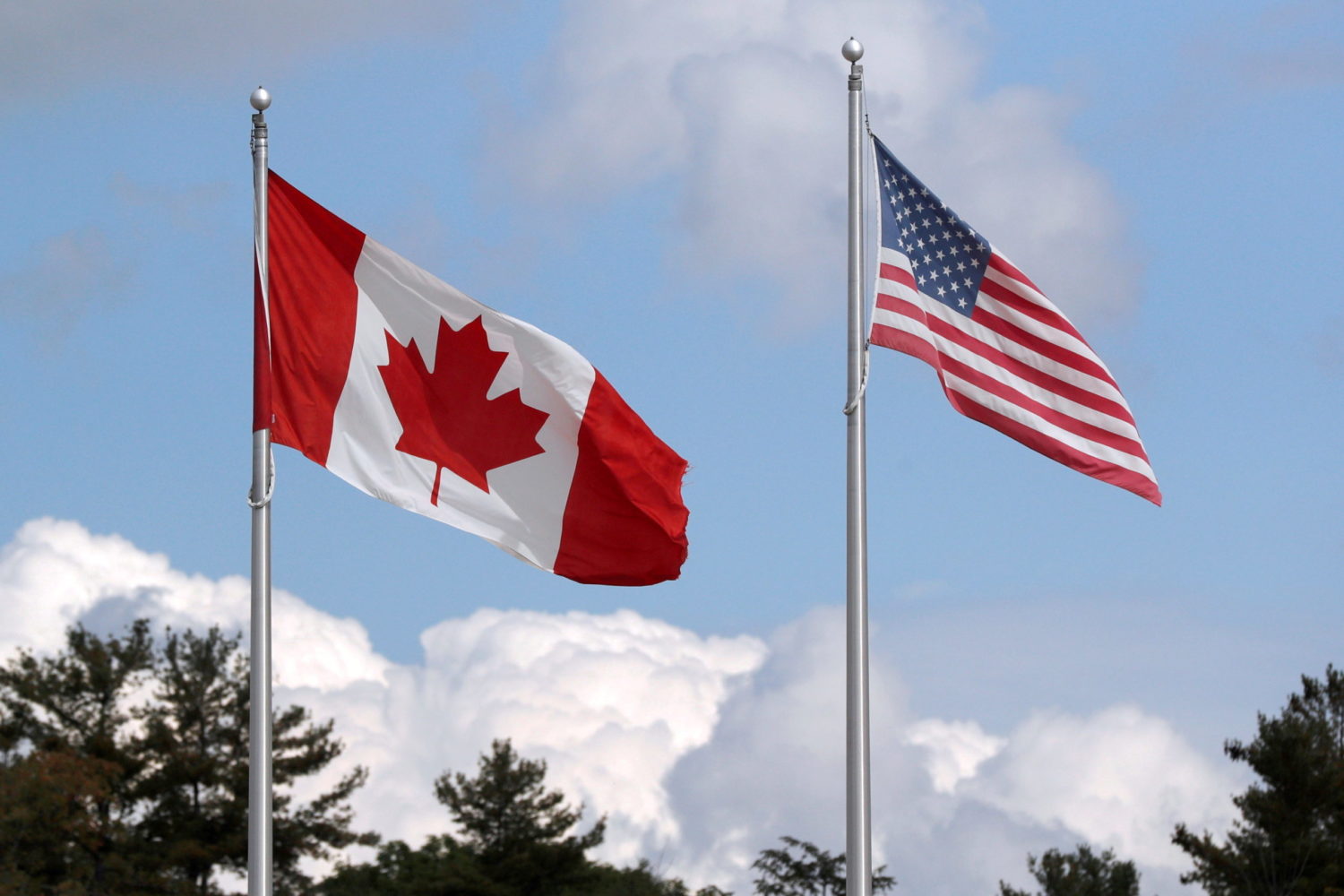
OTTAWA (Reuters) – After Prime Minister Justin Trudeau held a cordial first meeting with U.S. President Joe Biden in February, marking an end to years of battles with the Trump administration, a relieved Canadian official said, “We feel we are off to the races here.”

But old trade disputes that flared up during the Trump years show no signs of fading.

Last month Washington announced plans to double duties on imports of Canadian lumber and requested a dispute panel on Canada’s dairy import quotas. Biden is also promising a Buy America procurement plan that could hurt Canadian exporters.

The timing is awkward for Trudeau ahead of a likely election later this year, especially since his ruling center-left Liberals have traditionally enjoyed better relationships with the Democrats than the opposition Conservative Party.

“Canada’s economic relationship with the United States is breaking down rapidly,” said Candice Bergen, deputy Conservative leader, noting that “for months the Liberals have been telling us how much they agree with the Americans.”

The Trump era was exhausting for Canada, which sends 75% of its goods exports to the United States. At one point Trump called Trudeau “dishonest and weak” and threatened to tear up the North American Free Trade Agreement unless it could be renegotiated.

But the new-found cordial atmosphere has not blunted a dispute over U.S. allegations Canada is unfairly limiting imports of dairy products. Another contentious issue is Canadian softwood lumber exports, which U.S. producers have long complained are unfairly subsidized.

On lumber, “the United States has not been willing to reach an agreement; We are,” Natural Resources Minister Seamus O’Regan tersely told legislators last month.

Signs of trouble emerged early. Within hours of taking power, Biden revoked the permit needed to build the Keystone XL oil pipeline, killing an $8 billion project that would have brought Canadian crude to U.S. markets.

Canadian officials now want the White House to help solve another energy challenge in Michigan, where the governor wants to close a pipeline operated by Canada’s Enbridge Inc. The Biden team has declined to intervene.

Yet despite the recent unhappiness, there are big differences between the two U.S. administrations, Canadian officials say.

Biden, unlike Trump, is not threatening to scrap continental free trade. He has also not imposed tariffs on Canadian aluminum and steel on national security grounds.

Canadian Foreign Minister Marc Garneau played down suggestions of a rift.

“We can’t eliminate all the different issues that are important for the Americans. We have to deal with them one by one,” he told a Montreal business audience this month. “There is always going to be a bit of back and forth between our two nations.”

In private, however, Canadian officials are even blunter.

“The idea the Biden administration is bad for us on trade is nonsense,” said one senior source with direct knowledge of government thinking. “The Canada-U.S. trading relationship is largely open and free flowing.”

Chris Sands, head of the Canada Institute at the Washington-based Wilson Center, said Ottawa had been too optimistic about the potential for cooperation.

“I do think expectations ran ahead of the likely way that the Biden administration would unfold… most people thought something different was going to emerge,” he told Reuters.

The headaches show no signs of easing. Last Friday, Canada requested a dispute settlement panel to address U.S. tariffs on Canadian solar products.

“These tariffs are unwarranted and damaging,” complained Trade Minister Mary Ng.

The U.S. Trade Representative’s office did not directly address questions about increasing tensions.

“We have a close relationship with Canada and routinely collaborate on a range of topics,” said spokesman Adam Hodge.

(Additional reporting by Steve Scherer in Ottawa and Nia Williams in Calgary; Editing by Steve Scherer and Dan Grebler)

Even after Biden tax hike, U.S. firms would pay less than foreign rivals

By Tom Bergin

(Reuters) – U.S. companies pay less income tax than their overseas competitors and would likely continue to do so under a tax hike proposed by President Joe Biden, according to a Reuters analysis of filings by hundreds of U.S. and international firms.

The analysis undercuts arguments by some company executives and trade groups that Biden’s plan would leave U.S. firms paying some of the world’s highest taxes and struggling to compete against foreign rivals. Industry representatives have aggressively lobbied against the proposal, which would increase the corporate tax rate to 28%, from the current 21%. The president also wants a minimum tax of 21% on overseas income, up from 10.5%.

U.S. corporations typically pay less – sometimes much less – than those statutory rates because the U.S. tax code is unusually generous with tax breaks and deductions, and in allowing overseas tax planning, according to the Reuters analysis. The analysis was reviewed by four academics with experience in measuring corporate tax payments.

Reuters examined the effective tax rates – reflecting the actual tax payments companies reported – of 52 of the largest U.S.-based multinational firms, and then compared them to the rates paid by these companies’ main overseas competitors. The U.S. companies paid an average effective tax rate of 16% in 2020 compared to an average rate of 24% paid by 200 foreign companies that the U.S. firms named as their competitors in filings.

If Biden’s proposed tax rates were applied to the U.S. firms’ 2020 earnings, the companies would have paid effective rates averaging about five percentage points higher, or 21%, the Reuters analysis found.

That’s still lower than the average rate paid by their overseas competitors. Moreover, U.S. firms would likely retain a bigger tax advantage over their foreign rivals than the analysis shows, for two reasons. First, the Reuters calculations do not account for the impact of new tax breaks for U.S. firms that Biden proposes to encourage domestic manufacturing and clean-energy investments. Second, the Biden plan would also require foreign companies with U.S. operations to pay higher taxes on their U.S. income.

Business lobby groups have argued that the Biden proposal, which requires congressional approval, would leave domestic firms at the mercy of their foreign rivals.

“Such tax increases would make the United States uncompetitive as a place to do business and make U.S. companies uncompetitive globally,” said Joshua Bolten, chief executive of the Business Roundtable, which represents about 200 large U.S. companies, when the measures were first announced on March 31.

The trade group said comparisons of effective tax rates, as in the Reuters analysis, can be “informative” but are only one of many valid ways to analyze how taxes impact the global competitiveness of U.S. firms. The organization said that simpler comparisons of statutory tax rates among nations – without considering deductions, credits and overseas tax planning – also accurately reflect the incentives for firms to locate in one nation versus another.

Neil Bradley, chief policy officer at the U.S. Chamber of Commerce, declined to comment on Reuters’ findings but said: “Higher taxes will hinder investment and competitiveness for U.S. businesses, ultimately hurting U.S. workers.”

Senator Ron Wyden, an Oregon Democrat and chairman of the Senate finance committee, dismissed such arguments. “The data are clear: U.S. mega-corporations are contributing far too little to federal revenues, particularly in comparison to foreign counterparts,” Wyden told Reuters.

Reuters ran its findings by Biden’s Treasury Department and the White House. The White House said in a statement: “This reporting highlights that the corporate tax code is broken. The largest corporations don’t pay their fair share in the United States, and pay less in other competitor countries.” Biden’s proposal, the White House said, is designed to address “the tax games and giveaways that underlie the rock-bottom tax rates described by this reporting.”

Republican leaders who have said the proposed hikes will damage U.S. firms’ competitiveness, including Senator Pat Toomey of Pennsylvania and Congressman Kevin Brady of Texas, declined to comment on the Reuters analysis. Senate Minority Leader Mitch McConnell, a Kentucky Republican, did not respond to requests for comment.

Democrats in Congress are pushing a bill to implement Biden’s plan. It could come up for a vote any time in the divided Senate. Its success may rely on the support of one Democrat Senator, Joe Manchin of West Virginia, who has pushed for lower tax rates than Biden wants. All Republican senators are expected to oppose it.

All of the 52 U.S. firms Reuters examined, and in most cases their overseas rivals, published detailed reconciliations explaining the deviation between their actual tax bill and the statutory tax rate in their home countries. These disclosures show that the U.S. firms’ relatively low effective tax rates stem from business-friendly provisions unique to the United States.

For example, U.S. tax breaks to encourage research and other activities generate bigger savings than similar breaks in other nations. The U.S. allows tax deductions for many expenses – such as client entertainment, stock-based compensation and certain legal costs – that are not typically deductible elsewhere. And U.S. companies can save far more money by shifting profits into tax-haven nations than, for instance, their rivals in Japan, Germany or France, whose governments limit such maneuvers.

RIDDLED WITH LOOPHOLES

Analyses cited by several business groups have said U.S. businesses currently face an average combined state and federal statutory tax rate of nearly 26% and that Biden’s plan would raise their rates to 32%.

Consultancy PricewaterhouseCoopers noted the average nominal tax rate among developed countries was 23% – lower than Biden’s proposed rate of 28% – and urged companies to lobby against the increases. Johnson & Johnson’s Chief Financial Officer Joseph Wolk told analysts in April that Biden’s plan would make the U.S. rate the highest among developed countries.

Such simplified comparisons, however, do not reflect actual taxes paid after deductions, credits and other advantages enjoyed by U.S. firms. Johnson & Johnson, for instance, paid an effective tax rate of less than 11% in 2020, according to the company’s annual report. The pharmaceutical giant did not comment on Reuters findings but said tax policy should create a “level playing field” for U.S. firms internationally.

PricewaterhouseCoopers declined to comment.

In another typical example, Activision Blizzard Inc – the California-based publisher of hit video games such as Call of Duty and World of Warcraft – reported paying an effective tax rate of 16% last year. Two of its main competitors, Sony Corporation and Nintendo Co Ltd, are based in Japan and paid effective tax rates of 22% and 28%, respectively, according to their annual reports.

Activision declined to comment for this story.

The company slashed its tax payments through tax breaks and deductions and by operating subsidiaries in tax-haven nations. Activision has, for instance, saved hundreds of millions in taxes over the past decade, company filings show, by reporting billions of dollars in profits through a subsidiary based in Bermuda, an island with no corporate tax. Activision reported that it reduced its overall effective tax rate in 2020 by 4 percentage points because of the low tax rates paid by its foreign subsidiaries.

Activision rivals Sony and Nintendo each generate about three-fourths of their revenues outside of Japan, compared to about half for Activision. And yet Nintendo reported that taxes on overseas income reduced its effective tax rate by just 0.6 percentage points, while Sony reported a decrease of 2.4 percentage points.

Tax havens such as Bermuda don’t provide the same benefit to Japanese firms. Japan has a law that allows authorities to levy Japanese corporate taxes of about 30% on any income reported from operations in foreign jurisdictions with a tax rate of less than 20%. Similar rules are common in industrialized nations other than the United States.

STATE TAX BREAKS

Another reason Activision paid a relatively low effective tax rate is that its tax payments to U.S. states only increased the company’s total rate by 2 percentage points. That’s typical: On average, the effective rates of the 52 U.S. multinationals examined by Reuters were raised by just 1 percentage point by state tax payments. Business groups often cite 4% or 5% as the typical state tax burden, based on averages of statutory state rates that usually do not equate to actual taxes paid.

A host of factors lower companies’ state tax payments. States often lure companies with tax breaks, and compete with one another to offer the most generous incentives. Also, companies only pay state taxes on their U.S.-based income. And they can lower the bill further by apportioning earnings to relatively low-tax states.

At the federal level, companies drive down their tax bill through a host of deductions or credits that are often unavailable or limited in other nations. U.S. firms, for instance, can deduct the cost of share grants as compensation to executives and staff. Activision reported lowering its effective tax rate by 1 percentage point through such deductions. On average, the U.S. firms examined by Reuters reduced achieved savings of 2.6% from that provision.

The video game firm shaved an additional 3 percentage points off its tax bill by collecting tax credits for research and development spending. Its competitors Nintendo and Sony reported smaller tax savings from research credits.

Such credits are available to an array of U.S. firms, and not just in research-intensive sectors such as pharmaceuticals. Sport apparel giant Nike Inc, for instance, lowered its effective tax rate by 2 percentage points in 2020 through R&D credits. Two-thirds of the 52 U.S. companies Reuters examined reported similar benefits, with an average tax reduction of about 3 percentage points.

Research tax credits are common outside the United States, but typically worth less, often not enough to warrant company disclosure. Just 18 firms of the 200 foreign competitors to U.S. firms examined by Reuters reported benefits from research or other tax credits.

Some U.S. companies, to be sure, will take a bigger hit than others from Biden’s tax plan. But even if U.S. companies collectively sustain a bigger tax hit than foreseen, they would still be well-placed to compete, the analysis shows. On average, the 52 U.S.-based companies examined by Reuters had profit margins of 24%, well above than the average margin of 14% among their 200 foreign competitors.

“The argument on ‘competitiveness’ is code for ‘corporations should pay no taxes’,” said Senator Wyden, “and it doesn’t hold water.”

(Reporting by Tom Bergin; editing by Brian Thevenot)

Biden’s Justice Dept. may defend Trump in Capitol riot lawsuits

By Peter Eisler and Joseph Tanfani

WASHINGTON (Reuters) – Former U.S. President Donald Trump may have an unlikely ally to defend him against lawsuits alleging he incited the U.S. Capitol insurrection: President Joe Biden’s Justice Department.

The Biden administration paved the way for that possibility, say constitutional scholars and lawyers in the cases, by arguing in an unrelated defamation case against Trump that presidents enjoy sweeping immunity for their comments while in office – and the right to a defense by government lawyers. Biden’s Justice Department used that rationale in a surprise decision this month to continue defending Trump in a case filed by E. Jean Carroll, who contends Trump raped her 25 years ago and then lied about it while in office, defaming her.

That decision reaffirms the position the department took under the Trump administration. And it has profound implications for several ongoing lawsuits, including one filed by two U.S. Capitol Police officers seeking to hold Trump liable for injuries they suffered defending the building in the Jan. 6 attack.

Attorney Philip Andonian said he fears the Justice Department, under the same legal rationale, will also defend Trump in a case Andonian is pursuing on behalf of U.S. Representative Eric Swalwell, a California Democrat. Swalwell alleges Trump incited the deadly Jan. 6 riot in an effort to stop Congress from performing its duty to certify Biden as the election winner. Andonian called the logic behind the department’s decision to defend Trump against Carroll’s defamation suit “alarming.”

The Justice Department appears to put no limits on immunity for speech by a sitting president on any matter considered “of public concern,” Andonian said.

The Justice Department declined to comment on whether it would use the same argument as a basis for intervening in the other lawsuits Trump faces. The White House did not respond to a request for comment but has previously said it had no role in the department’s decision on whether to defend Trump in the Carroll case or others.

Trump faces more than a dozen active investigations and lawsuits involving a wide range of matters, including sexual misconduct allegations, financial disputes and government probes into his business dealings and his efforts to overturn the 2020 election. But the Justice Department’s assertion of presidential immunity in the Carroll case would only be relevant to other cases involving his statements or actions while in office.

The Justice Department laid out its rationale for defending Trump in a June 7 brief in the Carroll case. After Carroll, a former magazine writer, wrote in 2019 that Trump raped her, Trump – while in office – accused her of lying and said he’d never met her. Carroll is among about two dozen women who have accused Trump of sexual misconduct. The brief argues that Trump, like any president, is covered by federal laws, including the Westfall Act, that protect federal employees from being sued for actions taken as part of their jobs.

Although Trump’s remarks were “without question unnecessary and inappropriate,” the brief said, he was acting within the scope of his office when he made them. “Elected officials can – and often must – address allegations that inspire doubt about their suitability for office,” the argument says. “Speaking to the public and the press on matters of public concern is undoubtedly part of an elected official’s job.”

‘TITANIC’ LEGAL BLUNDER

One prominent constitutional scholar characterized the department’s position in the Carroll case as a blunder that will be difficult to undo.

“It would be very difficult for the Justice Department to change course now,” said Laurence Tribe, a Harvard University constitutional law professor and a frequent critic of Trump. “The Titanic is aimed at the iceberg.”

Tribe and other critics of the department’s position say it fails to draw obvious distinctions between a president’s official conduct and matters that clearly fall outside the duties of the office. When a president says or does something illegal, they say, it does not warrant a taxpayer-financed defense by government lawyers.

Tribe served as a legal adviser for the House of Representatives’ second impeachment of Trump, in which the former president was accused – but eventually acquitted – of trying to overturn legitimate election results to retain presidential power. Tribe said it would be “outrageous” for the department to defend Trump against the lawsuits related to the U.S. Capitol riots “on the basis that fomenting a violent insurrection, as charged in those suits, fell within the president’s job description.”

Trump has denied any responsibility for the violence at the Capitol. His lawyers have said he was making political arguments, protected by the First Amendment, and not inciting people to riot.

Jesse Binnall – a private lawyer defending Trump in the Capitol Police case, the Swalwell case and at least two other ongoing suits – declined to comment on whether he will seek the department’s intervention on Trump’s behalf in any of those matters. Such a request would require the Justice Department to take an official position.

Binnall has echoed the Justice Department’s immunity argument in briefs filed for some of those cases, but he so far has not directly requested that the department intervene in any of them.

If the Justice Department does end up defending Trump in any of the other cases pending against him, he still would be able to retain his private counsel, allowing him to protect his own interests if they diverge from those of the government.

‘MATTERS OF PUBLIC CONCERN’

While Trump was president, the Justice Department argued in the Carroll case that federal law gave him a “broad grant of immunity” against her lawsuit, adding that he was protected because he spoke about her in his role as president. A federal district court rejected that position in October, and the department filed an appeal in the waning days of Trump’s presidency. If the Justice Department wins on appeal, that would effectively end Carroll’s case against Trump.

Carroll’s lawyer, Roberta A. Kaplan, said it was “shocking” that the department would maintain the same argument under U.S. Attorney General Merrick Garland, who was appointed by Biden after the appeal was filed.

In testimony before Congress, Garland defended the position by saying the department had a duty to follow the law rather than to protect any administration. “Sometimes it means we have to make a decision about the law that we never would have made and that we strongly disagree with as a matter of policy,” he said.

The Justice Department’s appeal in the Carroll case is pending before the 2nd U.S. Circuit Court of Appeals. The outcome could have implications for at least four other federal lawsuits pending against Trump. Three of them seek to hold Trump liable for remarks in a speech on Jan. 6 shortly before the Capitol riots. They include the case filed by injured Capitol Police officers, as well as the cases filed by Representative Swalwell and U.S. Representative Bennie Thompson, a Mississippi Democrat. Thompson alleges that Trump violated federal law by inciting his supporters to block Congress from executing its official duties.

The fourth case was filed by the Michigan Welfare Rights Organization, an advocacy group for low-income people. The lawsuit claims Trump disenfranchised Black voters by trying overturn the results in Detroit, a majority Black city, after the 2020 election.

Andonian, the lawyer in Congressman Swalwell’s suit against Trump, said he fully expects that Trump’s lawyers now will adopt the Justice Department’s reasoning to argue that the former president was speaking on “matters of public concern” in his Jan. 6 speech. Trump that day continued his false claims that the election had been stolen from him through voter fraud; assailed Vice President Mike Pence for refusing to stop Congress from certifying Biden’s win; and called for his supporters to march to the Capitol.

Andonian and other attorneys argue there’s a legal distinction between Trump’s attacks on Carroll and his incendiary speeches seeking to reverse his election loss.

Ben Berwick, a lawyer representing the Capitol police officers, said that Trump’s appearance at the Jan. 6 gathering just before the Capitol insurrection amounted to a “campaign rally” unrelated to his official duties. That’s a different setting, he said, than the presidential news conference where Trump made the statements about Carroll.

“He is effectively acting as a candidate,” Berwick said. “He has no official role in the certification of electoral votes.”

Joseph Sellers, an attorney representing Congressman Thompson in his suit against Trump, concurred that Trump had stepped well beyond the cover of presidential immunity.

“I don’t think anyone would think it’s within the scope of the president’s legitimate duties to encourage people to interfere with the functioning of another branch of government,” Sellers said. “He was promoting an insurrection and a riot.”

(Reporting by Peter Eisler and Joseph Tanfani; additional reporting by Disha Raychaudhuri and Rick Linsk; editing by Jason Szep and Brian Thevenot.)

North Korea warns U.S. misinterpreting signals risks disappointment

By Josh Smith

SEOUL (Reuters) -The sister of North Korean leader Kim Jong Un warned the United States on Tuesday not to seek comfort in comments by her brother as this would end in disappointment, while a U.S. envoy met South Korea’s president aiming to revive talks with North Korea.

Kim Yo Jong, who is also a senior official in North Korea’s ruling party, released a statement in state media saying the United States appeared to be interpreting signals from North Korea in the “wrong way.”

She was responding to U.S. national security adviser Jake Sullivan, who on Sunday said he saw as an “interesting signal” a recent speech by Kim Jong Un on preparing for both confrontation and diplomacy with the United States.

“It seems that the U.S. may interpret the situation in such a way as to seek a comfort for itself,” she said in the statement, carried by the North’s KCNA state news agency.

“The expectation, which they chose to harbor the wrong way, would plunge them into a greater disappointment.”

North Korea’s nuclear weapons program has been an intractable problem for Washington for years and in trying to change that, President Joe Biden’s administration conducted a review of policy and said it would seek “calibrated and practical” ways to persuade Pyongyang to denuclearize.

The U.S. special representative for North Korea, Sung Kim, has been visiting South Korea to meet senior officials, including President Moon Jae-in.

Moon told the U.S. envoy he would do his best to get inter-Korean and U.S.-North Korea relations back on track and expressed hopes for progress toward denuclearization and peace on the Korean peninsula, his spokeswoman Park Kyung-mee said.

Sung Kim reaffirmed Biden’s support for meaningful inter-Korean dialogue and engagement and said he would “do his best for resumption of U.S.-North Korea talks”, Park said.

On Monday, Sung Kim said he was willing to meet the North Koreans “anywhere, anytime without preconditions” and that he looks forward to a “positive response soon.”

A U.S. official in Washington told Reuters the United States was aware of Kim Yo Jong’s comments and added: “Ultimately, we hope (North Korea) will respond positively to our outreach.

“We will continue to wait to see if these comments are followed up with any more direct communications about a potential path forward.”

The official, who did not want to be otherwise identified, said U.S. policy was not aimed at hostility, but “at solutions and ultimately achieving the complete denuclearization of the Korean Peninsula.”

“The United States is prepared to engage in diplomacy towards that ultimate objective, while working on practical measures that can help make progress along the way.”

‘CLEVER MOVE’

In a sign seen in South Korea as a positive U.S. gesture, the allies discussed scrapping a joint “working group” that analysts say Seoul has seen as an irritant in relations.

Sung Kim and his South Korean counterpart Noh Kyu-duk agreed to “look into terminating the working group,” while reinforcing coordination at other levels, South Korea’s Foreign Ministry said.

The working group was set up in 2018 to help coordinate approaches to North Korea on issues such as denuclearization talks, humanitarian aid, sanctions enforcement and inter-Korean relations, amid a flurry of diplomatic engagement with Pyongyang at that time.

The Moon administration has made building ties with North Korea a top priority and a former aide to Moon told parliament last year the working group was seen as an obstacle to that.

“From a South Korean perspective, this was basically a mechanism for the U.S. to block inter-Korean projects during the Trump years,” said Ramon Pacheco Pardo, a Korea expert at King’s College London.

“It would be a clever political move for the Biden administration to end the group since consultation between Washington and Seoul will take place anyway.”

North Korea has rebuffed U.S. entreaties for diplomacy since Biden took over from Donald Trump, who had three summits with Kim, but failed to persuade him to give up his nuclear weapons.

(Reporting by Josh Smith; Additional reporting by Hyonhee Shin and Sangmi Cha in Seoul and David Brunnstrom in Washington; Editing by Michael Perry, Robert Birsel and Howard Goller)

U.N. agency says 41 million on verge of famine

By Maytaal Angel

LONDON (Reuters) – Some 41 million people worldwide are at at imminent risk of famine, the United Nations World Food Program (WFP) warned on Tuesday, saying soaring prices for basic foods were compounding existing pressures on food security.

Another half a million are already experiencing famine-like conditions, said the WFP’s Executive Director David Beasley.

“We now have four countries where famine-like conditions are present. Meanwhile 41 million people are literally knocking on famine’s door,” he said.

The WFP, which is funded entirely by voluntary donations, said it needs to raise $6 billion immediately to reach those at risk, in 43 countries.

“We need funding and we need it now,” said Beasley.

After declining for several decades, world hunger has been on the rise since 2016, driven by conflict and climate change.

In 2019, 27 million people were on the brink of famine, according to the WFP, but since 2020 the COVID-19 pandemic has been added to the mix.

World food prices rose in May to their highest levels in a decade, U.N. figures show, with basics like cereals, oilseeds, dairy products, meat and sugar up a combined 40% versus year ago levels.

Currency depreciation in countries like Lebanon, Nigeria, Sudan, Venezuela and Zimbabwe is adding to these pressures and driving prices even higher, stoking food insecurity.

Famine-like conditions are present this year in Ethiopia, Madagascar, South Sudan and Yemen, as well as in pockets of Nigeria and Burkina Faso.

But Beasley warned against “debating numbers to death” as happened in Somalia in 2011 when 130,000 people – half the eventual toll from starvation – had already died by the time famine was declared.

The WFP, which was awarded the Nobel Peace Prize last year, says around 9 percent of the world’s population, equivalent to nearly 690 million people, go to bed hungry each night.

(Reporting by Maytaal Angel; editing by John Stonestreet)

Philippines’ Duterte threatens vaccine decliners with jail, animal drug

MANILA (Reuters) -Philippines President Rodrigo Duterte, frustrated by the slow pace of COVID-19 vaccinations in his country, threatened people who refuse to get inoculated with jail or an injection of Ivermectin, an anti-parasite drug widely used to treat animals.

Ivermectin has been touted as an alternative treatment for COVID-19 but U.S. and European regulators and the World Health Organization (WHO) have recommended against it.

“You choose, vaccine or I will have you jailed,” Duterte said in a televised address late on Monday, following reports of low turnout at several vaccination sites in the capital Manila.

“But for as long as you are here and you are a human being, and can carry the virus, get vaccinated.

“Otherwise, I will order all the village captains to have a tally of the people who refuse to be vaccinated. Because if not, I will have Ivermectin meant for pigs injected into you.”

Duterte is famous for his bellicose rhetoric and his remarks on Monday contradicted those of his health officials, who have said getting vaccinated against COVID-19 is voluntary.

“Don’t get me wrong, there is a crisis in this country,” Duterte said. “I’m just exasperated by Filipinos not heeding the government.”

With over 1.3 million cases, the Philippines is fighting one of Asia’s must stubborn COVID-19 epidemics.

But as of June 20, just 2.1 million people had been fully vaccinated of the 70 million people targeted for this year.

Duterte, who has been criticized for his tough approach to containing the virus, also stood by his decision not to let schools reopen.

In the same televised address, he took a swipe at the International Criminal Court, after an ICC prosecutor sought permission from the court for a full inquiry into thousands of killings by police in a war on drugs ordered by Duterte.

Duterte, who cancelled the Philippines’ membership of the ICC’s founding treaty, said he would not cooperate with the probe and described the ICC as “bullshit”.

“Why would I defend or face an accusation before white people. You must be crazy,” he said.

Human rights groups say authorities have summarily executed drug suspects, but Duterte maintains those killed had violently resisted arrest.

Asked for comment, ICC court spokesperson Fadi El Abdallah said: “The court is an independent judicial institution, and does not comment on political statements”.

(Reporting by Karen Lema; Additional reporting by Stephanie van den Berg in The Hague; Editing by Angus MacSwan, Martin Petty and Gareth Jones)

U.S. existing home sales decline as prices surge to record high

WASHINGTON (Reuters) – U.S. home sales fell for a fourth straight month in May as record high prices amid low inventory frustrated potential buyers, a trend that could persist for while, with builders unable to deliver more houses because of expensive lumber.

Existing home sales dropped 0.9% to a seasonally adjusted annual rate of 5.80 million units last month, back to their pre-pandemic level, the National Association of Realtors said on Tuesday. Sales fell in the Northeast, West and the densely populated South, but rose in the Midwest.

Economists polled by Reuters had forecast sales falling to a rate of 5.72 million units in May.

Home resales, which account for the bulk of U.S. home sales, surged 44.6% on a year-on-year basis. The annual increase was, however, distorted by the plunge in sales in May 2020, when the economy was reeling from mandatory shutdowns of non-essential businesses to slow the first wave of COVID-19 cases.

The COVID-19 pandemic fueled demand for houses as millions of Americans switched to remote work and schooling. Supply was already tight before the pandemic. Some homeowners were reluctant to list their homes because of fear of contracting the virus from potential buyers touring their properties.

Some elderly Americans likely delayed downsizing due to the pandemic. The virus has disrupted labor supply at saw mills and ports, causing shortages of lumber and other raw materials. That is limiting builders’ ability to ramp up construction of new homes. The government last week reported a moderate rebound in homebuilding in May and a drop in permits.

With inventory tight, bidding wars are rising, threatening to price some first-time buyers out of the market. The median existing house price accelerated a record 23.6% from a year ago to an all-time high of $350,300 in May.

Economists do not believe another housing bubble is developing, noting that the surge is being mostly driven by a mismatch between supply and demand, rather than poor lending practices, which triggered the 2008 global financial crisis. But the rapidly rising prices could feed inflation.

There were 1.23 million previously owned homes on the market in May, down 20.6% from a year ago. At May’s sales pace, it would take 2.5 months to exhaust the current inventory, down from 4.6 months a year ago. A six-to-seven-month supply is viewed as a healthy balance between supply and demand.

Properties typically remained on the market for 17 days in May, down from 26 days in May 2020. Eighty-nine percent of the homes sold last month were on the market for less than a month. First-time buyers accounted for 31% of sales in May, down from 34% a year ago.

(Reporting by Lucia Mutikani; Editing by Andrea Ricci)

Oshkosh to build new U.S. Postal delivery vehicles in South Carolina

By David Shepardson

WASHINGTON (Reuters) -Oshkosh Defense said Tuesday it will build next-generation U.S. Postal Service (USPS) delivery vehicles in Spartanburg, South Carolina, and expects to hire over 1,000 employees to do so.

USPS awarded a multibillion-dollar, 10-year contract to Oshkosh Defense, a subsidiary of Oshkosh Corp, in February. The contract could be worth more than $6 billion in total.

It allows for the delivery over 10 years of between 50,000 and 165,000 vehicles, with a mix of internal combustion-powered and battery-electric models.

Last week, electric vehicle company Workhorse Group filed a legal challenge to the decision after USPS rejected its bid.

Workhorse had proposed building an all-electric vehicle fleet for USPS, and has the support of many U.S. lawmakers.

Oshkosh Defense plans to repurpose a warehouse to fulfill the contract, and production is expected to begin in mid-2023.

USPS said last week “preproduction design, tooling and facility preparation are proceeding on schedule, with the first (next generation delivery vehicles) estimated to appear on carrier routes in 2023.”

Postmaster General Louis DeJoy has committed to at least 10% of the fleet being electric, but he said in a letter in March to lawmakers that with government assistance the USPS could commit to making a majority of the fleet electric within 10 years.

He added that the USPS needs about $8 billion to electrify the new fleet to the “maximum extent” feasible.

President Joe Biden and some lawmakers in Congress have called for government funding to speed USPS’s transition to more electric vehicles.

New USPS vehicles will include air conditioning and heating, improved ergonomics, and advanced vehicle safety technology including air bags and 360-degree cameras.

Most current delivery vehicles are at least 25 years old and do not have air conditioning or modern safety features.

A 2020 report said USPS spent $706.2 million in maintenance costs for 141,057 delivery vehicles.

(Reporting by David Shepardson; Editing by Chizu Nomiyama and Jan Harvey)

Myanmar anti-junta militia vow to take on army in a major city

(Reuters) – Myanmar security forces backed by armored vehicles clashed on Tuesday with a newly formed militia group in the second-biggest city of Mandalay resulting in at least two casualties, according to members of the group and media reports.

Since the army seized power on Feb. 1 and removed the elected government of Aung San Suu Kyi, the security forces have put down protests opposing military rule. In response, groups of opponents of the coup known as people’s defense forces have sprung up across Myanmar.

Up to now, fighting involving lightly armed militias has been mainly confined to small towns and rural areas, but a group claiming to be Mandalay’s new People’s Defense Force said its members responded after the army raided one of its bases.

“The fight has started. There will be more fights,” a member of the militia identified as Captain Tun Tauk Naing said by telephone.

The sound of repeated gun fire could be heard in video footage taken by a resident of the area.

About 20 soldiers had carried out the raid on the group sparking a gun fight with the military which deployed three armored cars to the area, Myanmar Now reported.

Another official from the militia group told the Mizzima news portal that six of its members had been arrested and two soldiers had been killed.

A spokesman for the junta did not answer calls seeking comment.

The army-owned Myawaddy Television (MWD), in a report on its Telegram message channel, said security forces had raided a house and “armed terrorists” had fought back with small weapons and bombs.

It said four “terrorists” had been killed and eight arrested while some security forces were seriously hurt.

Myanmar’s military rulers have branded a shadow National Unity Government opposing the junta a terrorist group and blamed it for bombings, arson and killings.

In earlier incidents in other parts of Myanmar, the army has responded with artillery and air strikes after militia groups launched attacks on soldiers, with casualties on both sides and tens of thousands of people displaced from their homes.

The United Nations General Assembly on Friday called for a stop to the flow of arms to Myanmar and urged the military to respect the results of a November election and release political detainees, including Suu Kyi.

On Saturday, Myanmar’s foreign ministry released a statement rejecting the U.N. resolution, which it said was “based on one-sided sweeping allegations and false assumptions”.

Security forces have killed at least 873 protesters since the coup, according to the Assistance Association for Political Prisoners activist group. The junta disputes that figure.

(Reporting by Reuters Staff; Writing by Ed Davies; Editing by Robert Birsel)